

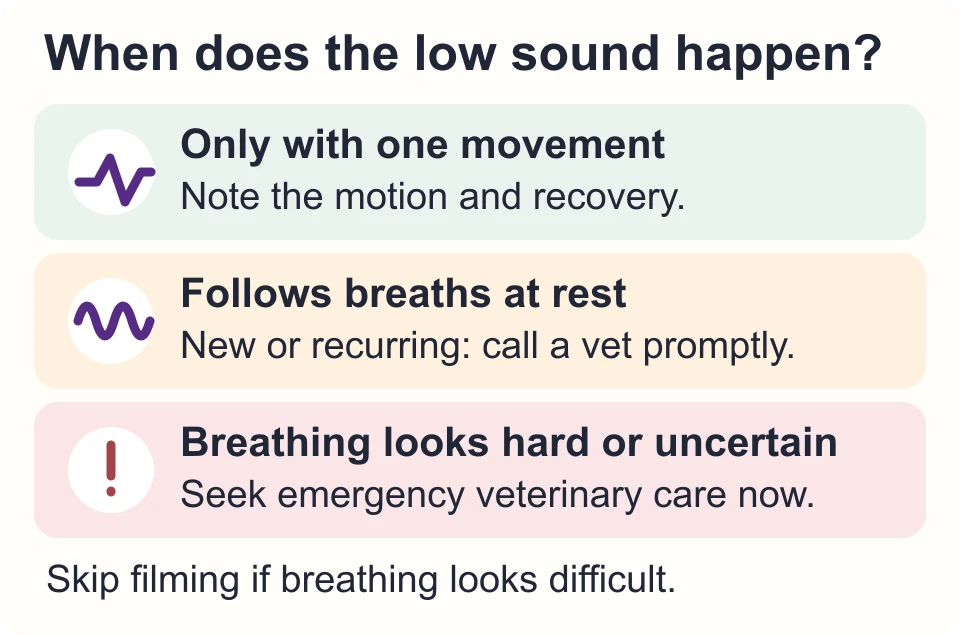
A cat grunt is usually described as a short, low sound. It may happen once as your cat changes position, or it may be a noise you hear repeatedly in time with breathing. Watch whether the sound ends when the movement ends. If a new noise keeps following your cat’s breaths, contact a vet promptly. Seek emergency veterinary care now if your cat is breathing with an open mouth at rest, visibly working to get air, or you cannot tell whether they are breathing comfortably. A brief sound tied to a movement with normal recovery gives you more time to observe.
Does the Sound Follow a Movement or a Breath?
Watch one ordinary episode from a distance. You might hear a brief sound when your cat pushes up from a cushion, climbs into a chair, or stretches after a nap. Does it stop as the cat completes the movement? Does the cat then walk normally or settle comfortably? One quiet noise that ends with a familiar action gives you something specific to record. It is different from a newly audible noise that continues while the cat is lying still.
Sometimes the same low sound belongs to breathing. Notice whether it comes and goes with visible chest movement. If you hear a series while your cat is resting, check for unusually rapid breathing, the belly working hard, or a head and neck held out as if the cat is trying to get air. Cornell's Feline Health Center advises getting veterinary help immediately whenever a cat seems unable to breathe comfortably. You do not need to finish counting breaths or take a video before calling.
The word “grunting” does not identify the structure making the sound. A meow can start low, a purr can sound rough, and some breath noises are audible only from close by. If a sound has a repeated relationship to each breath, say so when calling the clinic. If it follows only one movement, describe that movement instead. Both give the listener better information than a short recording without context.
When Grunting Happens During Movement
A cat that sometimes grunts when stretching may have a familiar pattern. Check whether the action is followed by their usual appetite, activity, and movement. If they have started choosing a lower jump, pausing longer before they rise, landing unevenly, or avoiding a favorite spot, those observations are more useful than the loudness of the sound itself. Cats can change their routes quietly before they show a pronounced limp.
For example, a cat that used to hop up to a window ledge now uses a chair as a step. There is a short grunting noise when their back legs push off the floor, after which they can sit normally. The noise alone does not tell you whether they are sore. The new route, the exact moment of the sound, and the repeatability are good reasons to call your vet for advice. Give the cat easier access to necessities while you arrange an assessment. Do not make them repeat a jump so you can film it.
Look for similar changes elsewhere. Does the cat pause at the high side of the litter box? Is grooming more difficult on one side? Do they stay in one sleeping place when they formerly used several? VCA's guidance on feline pain describes changes in posture, movement, social interaction, and everyday activities. Share what is different for your cat rather than relying on a single trait from a checklist. If your cat is also straining in the litter box and passing little or no urine, get urgent veterinary guidance.
What if the Sound Happens While Resting?
Listen briefly from across the room without disturbing the cat. A low, steady vibration during relaxed contact may resemble purring. A rough sound heard through several breaths while the cat is asleep may be harder to place. Write down whether it happens only in one position, whether it is new, and whether it is also present awake. Contact your vet promptly for a new recurring breath sound. If breathing looks labored or you are unsure whether your cat can breathe comfortably, seek emergency care now instead of comparing positions.
Coughing can also be mistaken for grunting. A cat that crouches, extends the neck, and makes a series of forceful sounds may be coughing or having another airway problem. Cornell's asthma guide describes coughing, wheezing, and increased breathing effort as signs that need veterinary evaluation. There are several possible causes, so the sound does not establish asthma. If the cat has obvious difficulty breathing, treat it as urgent.
Sound pattern | What to watch | Response |
|---|---|---|
One grunt as the cat stands up | Gait afterward and whether routes have changed | Note it and contact your vet for new or recurring discomfort |
A new repeated sound with breaths at rest | Whether breathing still looks comfortable | Contact your vet promptly |
Effort to breathe, open mouth at rest, or uncertain breathing comfort | Act on what you can see now | Seek emergency veterinary care now |
A repeated crouching or coughing episode | Length, posture, whether it happens again | Call the clinic, urgently if breathing is affected |
Brief noise during relaxed contact | Body tension and ordinary behavior afterward | Compare with the cat's familiar baseline |
Hearing the sound only in one room can give you a useful observation without identifying a cause. Soft furniture can muffle familiar noises, while a quiet bedroom makes them more noticeable. If you later hear the sound in another place, note whether the same action or posture was involved. A short record of ordinary moments is enough. Do not wait for more samples if your cat seems unsettled, is breathing with effort, or has a problem that warrants a call.
What to Report to the Clinic
Give the time the sound started, what you saw, and how the cat behaved afterward. Say whether you heard it once or through several breaths. If it happens in a reliable, ordinary setting and your cat is comfortable, a short recording can show the full body and sound together. Capture the moment naturally. Do not press the throat, handle a painful area, or stress the cat into making the sound again. If a familiar meow has become raspy, describe what happens to the voice and breathing between calls as a separate observation.
Keep a note about changes that might not be obvious on video, such as eating more slowly or no longer getting onto the bed. A report that says, “one low noise on rising, then favors the right back leg for a few steps” is more useful than “sounds funny.” If the sound happens with breathing at rest, lead with that fact. PetMira's cat noise guide can help with vocabulary if you are describing a familiar vocalization.
Check the recovery What the cat does after the sound can tell you more about comfort than the sound's pitch.
Tell the clinic about medication, injury, or changes at home if they coincide with the new sound. Give the order as accurately as you can. Even a short timeline helps the clinic decide what to ask about next.
Takeaway
A brief grunt on movement and a recurrent noise timed to breathing call for different responses. Contact your vet promptly for a new or recurring breath sound. If breathing looks difficult or you cannot tell whether your cat is breathing comfortably, seek emergency veterinary care now.
Everyday care
Keep your cat’s care profile handy
Set up a pet profile in PetMira for your cat’s normal daily care. Use your own notes to report when an unusual sound started and what you saw.
 Create a profile for your cat
- Review everyday care details
Available on the App Store
Download iOS App