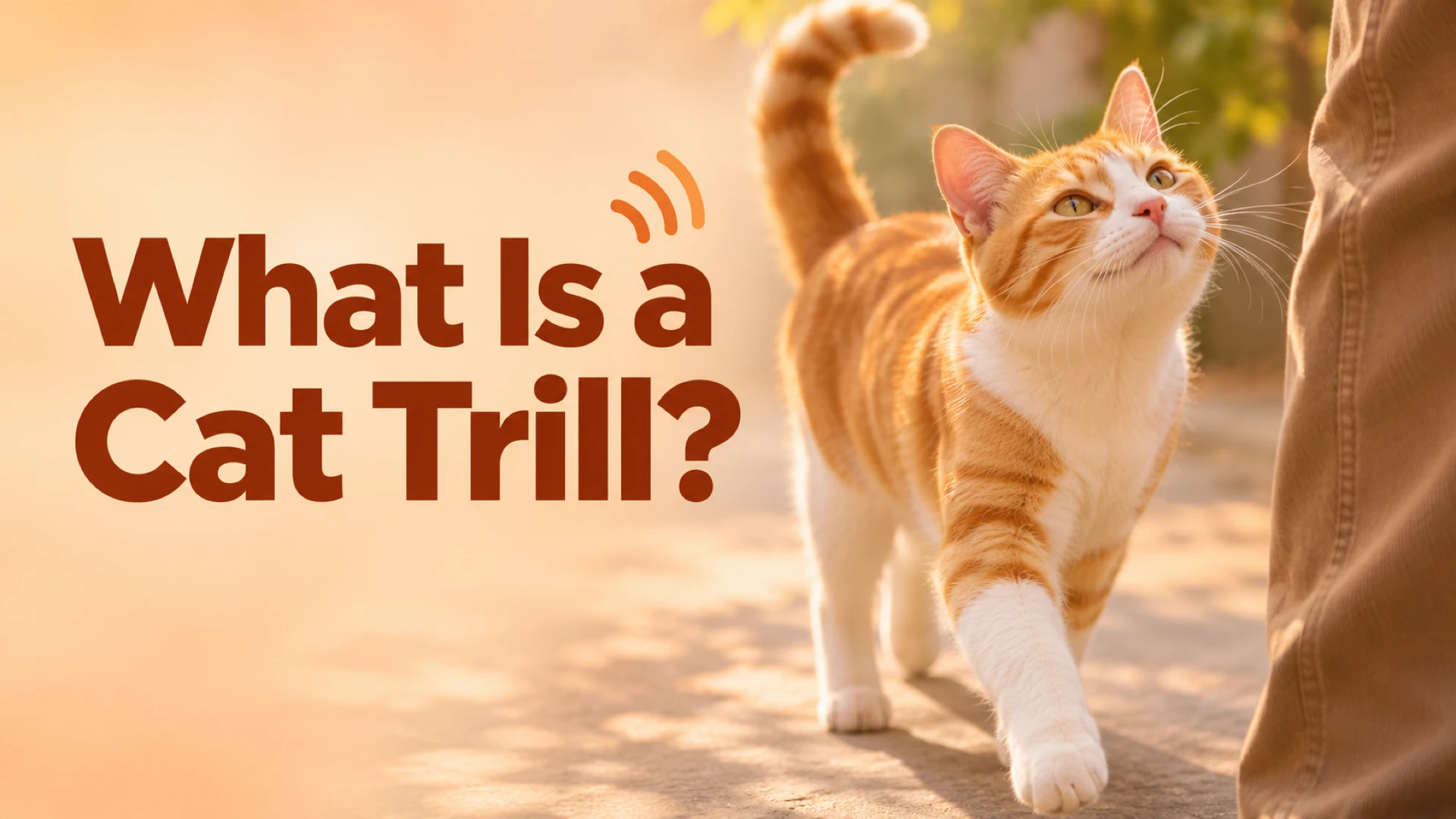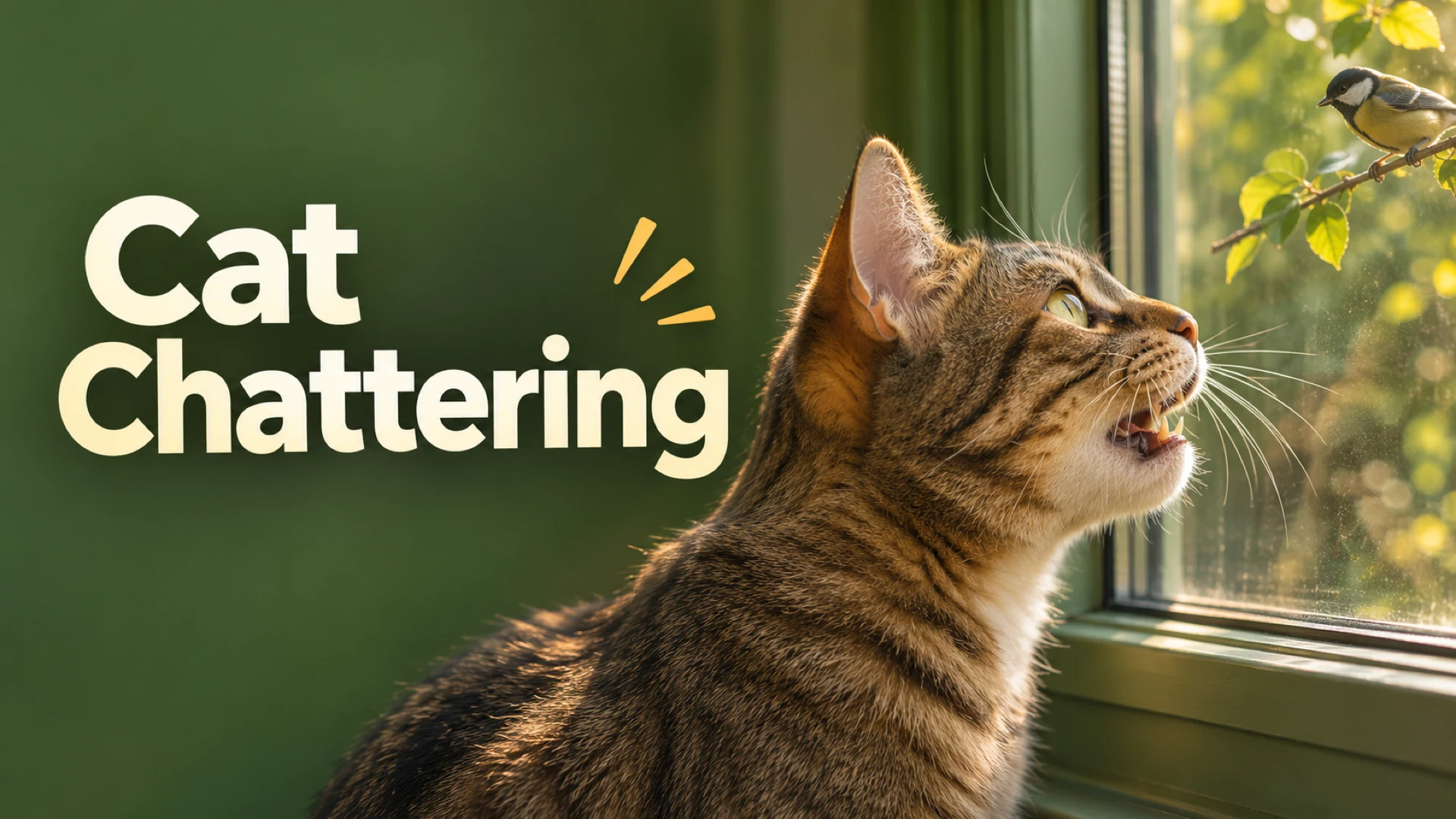
A quick “mrrp” as your cat walks up to you is often a trill. A string of clicks at the window, with the jaw visibly trembling, is more likely chatter. When you hear a cat noise you can’t place, notice whether it’s a burst, a rhythm, or a held note, then look at the mouth and what your cat is reacting to. Those three clues help you recognize the sound and decide what to do.
Check breathing first
Get veterinary help right away if your cat is struggling to breathe or panting with an open mouth at rest. Leave the recording for later.
What seven common cat noises sound like
Use these seven categories to narrow down what you heard. One sound can occur in several situations, so use the right column to check what was happening around your cat. The sound descriptions draw on the Meowsic research team’s work.
Cat sound | What it sounds like | What to check |
|---|---|---|
Meow | A clear note that changes shape as the mouth opens and closes | Who or what is your cat facing? |
Trill | One short, rolled “mrrp,” often with the mouth closed | Are they walking toward you or another cat? |
Purr | A steady low vibration across several breaths | Are they resting loosely or staying hunched and withdrawn? |
Chatter or chirp | A burst of jaw clicks (chatter) or a brief, high note (chirp) | Are their eyes fixed on something moving? |
Growl | A rough, low note that holds | Has a person or animal come close? Is your cat stiffening? |
Hiss | A sharp burst of air, sometimes ending abruptly | What startled them? Do they have room to move away? |
Yowl | A long, voiced wail, sometimes repeated | Is there an obvious trigger? Is it new or happening more often? |
Meow and trill: listen for a changing vowel or a short roll
A meow often rises or falls as your cat opens and closes their mouth. It can be a greeting or a request. Watch where they turn after making it. A cat who meows and immediately looks toward a toy gives you a different clue from a cat who makes the same sound and walks away. For the differences between short, repeated, and drawn-out meows, see our guide to cat meow meanings.
A trill is shorter, with a rolled, almost bubbly quality. It can accompany a greeting or a friendly approach. It can also happen as a cat moves or plays. If your cat makes one while passing you and carries on, there may be nothing you need to do. Listen for the roll at the start if it blends into a longer meow.
Purr, chatter, and chirp: listen for the pattern
A purr has a low, regular vibration that can carry across inhaling and exhaling. A cat stretched out on the sofa with a loose body may be settling in. If the same cat is purring while hiding, eating less, or moving differently, pay attention to that change and call your vet for advice. Cats can purr when stressed or in pain, too.
Chatter is a string of fast clicks, often with a visibly trembling jaw. A chirp has a brief note you can hear above the clicks. You might hear both as your cat watches birds or insects through a window. Check whether the sound stops when the target goes away. That gives you a useful clue about the setting without having to guess what the cat felt or whether they were imitating the bird.
Growl, hiss, and yowl: listen for a rumble, air, or a wail
A growl is low and rough and can continue while a person or animal stays close. You might hear one when a second pet approaches a resting spot. If your cat stiffens and growls as you reach toward them, take your hand away and give them room. When it repeatedly happens with ordinary handling, especially alongside a change in movement or appetite, ask your vet about it.
A hiss sounds like air being pushed out sharply. It can follow a sudden surprise or signal that your cat wants more space. For example, a cat who hisses when a dog comes around a corner may need the dog moved away and a clear path to retreat. Keep your hands clear and give the cat time to move on their own.
A yowl has a voice you can follow as the pitch stretches or changes. Two cats may yowl during a standoff. Your next step is to create distance safely, even if the sound shifts into a growl. A new wail that keeps returning without an obvious trigger is worth discussing with a vet, particularly if you also see changes in eating, movement, or litter box habits. For a longer or recurring wail, see what to check when your cat yowls.
How to tell similar cat noises apart
Open Meowsic’s labeled recordings and use the three exercises below to compare sounds you might confuse. In a study by Prato-Previde and colleagues, listeners often misidentified whether a recorded meow came from a cat waiting for food, being brushed, or left alone. Use the sound to narrow down the possibilities, then check what was happening around your cat.
Trill or chatter? Under “chirp and chatter,” find Rocky’s quick jaw clicks. Then find Turbo’s clip and listen for the change from a bird-directed chirp to a short roll as he jumps down. With your own cat, check whether the jaw is tapping and where their attention goes.
Purr or growl? Under “purr,” find Vincent. Under “growl,” find Vimsan in her carrier after she sees a dog. Both are low. Listen for the purr’s even vibration and the growl’s rougher note. At home, if the cat stiffens as another animal approaches, give space even if you can’t name the sound.
Hiss or yowl? Under “hiss and spit,” find Donna’s encounter with Vimsan. Listen for the first rush of air and then the longer, voiced sound that follows. One encounter can contain several calls. If your cat is tense and another animal is closing in, the distance matters more than the label.
Check What Happened Around the Sound
If two noises happen close together, write them down as two events before trying to name them. For example, you hear a low, even vibration while your cat lies on the rug. It stops when they stand. A moment later they make one higher note as they walk toward the door. The change in sound and the change in activity give you two separate observations to compare with the examples above.
Background noise can cover the beginning or end of a call. If the television was on and you only heard the middle, describe that part and note what you missed. At the next similar moment, turn the volume down if you can and see whether you can hear where the sound starts and stops. There is no need to repeat the event or move closer to a tense cat to get a better sample.
Decide what to do after you hear it
Start with how your cat is breathing and what else has changed. Choose the response that matches what you can see.
Get urgent help if breathing looks difficult, your cat is panting with an open mouth at rest, or they repeatedly strain in the litter box and pass little or no urine. Go straight to veterinary care.
Give space when the sound happens as someone approaches or reaches for a tense cat. Stop the interaction and leave an exit. If another pet is the trigger, move that pet away if you can do so safely.
Call your vet for a new sound that keeps returning, a clear increase from your cat’s usual pattern, or a sound paired with signs such as hiding or eating less. Mention those other changes when you call.
Observe when your cat is breathing comfortably, there’s a familiar trigger, and they return to their usual behavior. A few clicks that end when a bird flies away are an example.
Make a note your vet can use Note the rhythm, duration, mouth movement, and setting: “Three bursts of clicks in five seconds, jaw twitching at the window, stopped when the bird flew away.” If your vet asks for a video, include your cat’s body and surroundings when it’s safe to film.
What to Remember About Cat Noises
Use the rhythm, mouth movement, and situation to narrow down a cat sound. Give a tense cat space, and seek urgent veterinary help if your cat struggles to breathe. If a new sound keeps coming back or your cat’s usual behavior changes, share one specific example with your vet.
Start with what you hear and what you see. If you’re curious about a familiar sound your cat makes while relaxed, record it with PetMira’s Pet Translator on iPhone. Compare the AI’s suggestion with where your cat was looking and what they did next.
PETMIRA FOR IPHONE
Try PetMira with a familiar cat sound
Start with a call you hear during play or a greeting, when you can see what your cat is doing.
 Record your cat’s call
- Read an AI interpretation
- Ask a follow-up about the result
For everyday observation. If you’re concerned about your cat’s health, speak with a veterinarian.
Download iOS App