A cat trill is a brief, often soft rolling sound, like “mrrp” or “brrup,” usually made with the mouth closed. You might hear it when your cat walks up to you, pauses during play, or hops down beside you. To recognize it, check whether the sound rolls, whether the mouth stays closed, and what your cat is doing as it happens.
The scene helps you decide how to respond. A cat who brushes your leg after a quick mrrp may be greeting you. If a new sound comes with labored or open-mouth breathing, seek emergency veterinary care right away.
What Does a Cat Trill Sound Like?
Imagine a little hum that rolls upward and ends abruptly. Some trills sound bright and springy, while others are low enough to sound like a mutter. “Mrrp” captures the rolling quality. A sound you’d spell “coo” may have a softer hum with very little roll. Your spelling can be useful when describing it, especially if you can say whether it was one brief note or a series.
Susanne Schötz’s Meowsic trill examples show how the sound can vary. In one example, Donna alternates among trills, meows, and a blend of the two. A roll followed by a longer vowel and a visible mouth opening can be two sound shapes in the same call.
Try listening to the beginning and end separately. On the first pass, mark the moment the soft roll starts and stops. On the second, watch the mouth at the same moments. In a mixed call, a rolling start can give way to a longer vowel. If you only heard the end from the next room, describe that part as a vowel and leave the start open.
Pitch by itself is a poor tie-breaker here. Meowsic describes brighter trills and lower murmurs within the same family. Compare the texture and length first, then use pitch to describe what you heard. A quick note like “soft, low, one brief roll” says more than deciding whether it should be spelled mrrp or brrup.
Catch the beginning and the end If you miss the sound itself, notice what your cat did right after it. A turn toward you, a return to play, or a quiet landing gives you more to work with the next time you hear it.
Why Do Cats Trill When They See You?
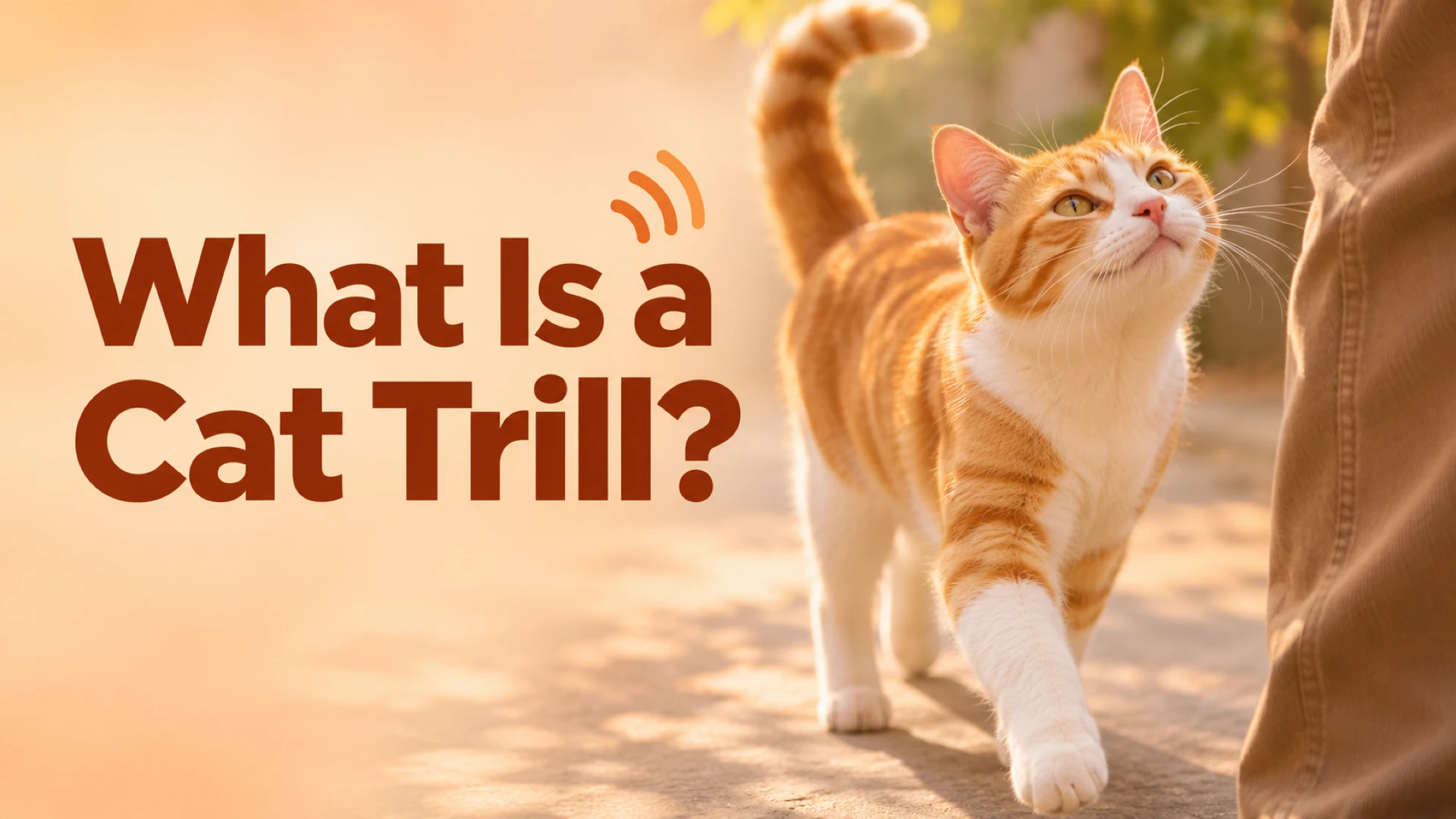
Cats often trill during a friendly approach. If your cat trots up, makes a soft roll, and rubs against your leg, a quiet greeting makes sense. Let them close the distance. If they walk by and settle somewhere else, you can carry on with what you were doing.
The same sound can fit a request. Picture a cat who trills when you sit down, glances at a wand toy, and returns to the toy when you look over. The repeated glance gives you a reason to offer play. If they trill and keep walking, see where they go before deciding what they wanted. A greeting, an invitation to play, and a bid for attention can sound much alike in isolation.
In a room with more than one person or pet, check who the cat turns toward. Imagine two people on a couch. The cat makes a mrrp, passes the person nearest the door, and stops beside the other person. The sound tells you something happened during the approach. The direction and stopping point give you a better clue about who was involved.
A brief pause can give you the rest of the scene. If the cat comes closer, you have more reason to offer a greeting. If they cross the room and join another cat, you can watch that interaction from where you are. This works even when the sound is too faint to name.
Cat Trill vs. Chirp, Meow, and Purr
Watch your cat’s mouth for the length of the sound. A closed mouth fits both a trill and a purr. The difference is easier to hear once you notice whether you’re hearing a brief roll or a rumble that keeps going through several breaths.
Sound | What you hear and see | What to check next |
|---|---|---|
Trill or chirrup | A short, voiced roll, often with the mouth closed | Did your cat approach, look up at you, or rejoin play? |
Meow | A changing vowel sound as the mouth opens and closes | Was there a roll at the start or did the whole call sound like a vowel? |
Purr | A low, steady vibration that continues through breaths | Does the rumble carry on after the quick note ends? |
Chirp | A brief, pitched peep or squeak | Did a bird or another moving target catch your cat’s attention? |
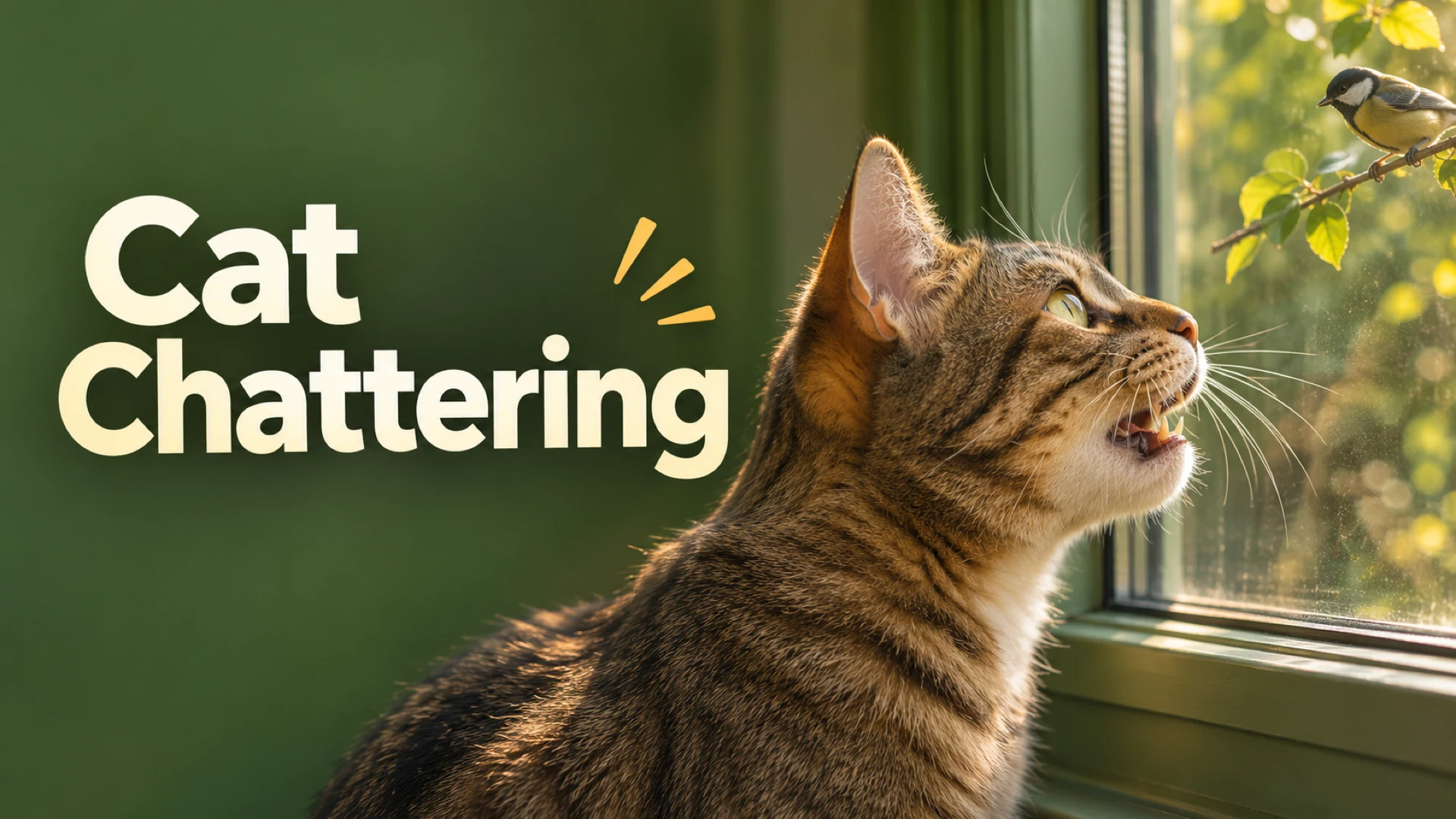
Chatter | A run of fast clicks with a trembling jaw | Does the jaw move with the clicks while your cat watches something? |
People sometimes call a bright greeting sound a chirp. In the Meowsic classification, a bright rolled trill is a chirrup, and a chirp is a short pitched call often heard when a cat watches prey. A cat can use both sounds in the same encounter. If what you heard was mostly an opening-and-closing vowel, start with our guide to different cat meows.
Why Do Some Cats Trill When They Jump?
A trill can happen during a familiar jump. In one Meowsic observation, a cat named Turbo chirps at a bird, loses interest, and trills while jumping down. The recording description separates two moments that could sound similar if you heard them from another room.
Watch the approach and landing
Suppose your cat gives one soft mrrp stepping off the sofa, lands smoothly, and keeps walking toward you. If the sound and the movement are familiar, you can simply watch where they go. If the noise is new and your cat starts hesitating before jumps, landing awkwardly, or avoiding a spot they usually reach, call your vet about the change in movement.
If you keep hearing the noise near the sofa, separate takeoff from landing. Did the sound begin while the cat was still on the cushion, while their feet were off the ground, or right as their paws touched down? A thud that coincides with landing may come from the surface. If a roll and a thud overlap, write down the timing and leave the source open.
Use a jump your cat chooses on their own. From one spot, watch whether the brief sound carries on after the cat starts walking. Compare that sequence with a naturally quiet jump from the same place. The comparison tells you whether the sound accompanies every landing, occurs during a greeting nearby, or only turned up that one time.
What to Check When the Sound Changes
Start with the moment you usually hear the sound. A single roll on the way to a favorite cushion gives you a reference point. If the noise starts happening repeatedly at rest, sounds tied to each breath, or comes with coughing, describe the change to your vet. Breathing difficulty calls for immediate help.
When you compare two moments, use enough detail to tell them apart later. A note might say, “Monday, one soft roll as she landed, then she walked toward the chair.” If the next sound happens while she is sitting still, write that down separately. The difference between those settings is more informative than whether both sounds could be written as mrrp.
If you missed what happened just before the sound, leave that part blank. You can still describe whether the call stopped, what the cat did next, and which details you are certain about.
What to Remember About Cat Trills
Listen for a brief roll, watch the mouth, then follow the cat’s movement. A familiar mrrp can fit several everyday moments. If the sound starts happening in a different setting, describe what changed and how your cat moved or breathed.
For a familiar mrrp in a relaxed moment, you can record it with PetMira’s Pet Translator on iPhone. Read the AI interpretation alongside what you saw. A call that came during a greeting and another that came as your cat hopped down can sound similar even though the situations were different.
PETMIRA FOR IPHONE
Get to know your cat’s little mrrp
Record a familiar trill during a greeting or play and compare the interpretation with what your cat did next.
 Record a brief call
- Read an AI interpretation
- Compare it with the moment you observed
For everyday observations. Contact your vet if your cat’s breathing or movement changes.
Download iOS App