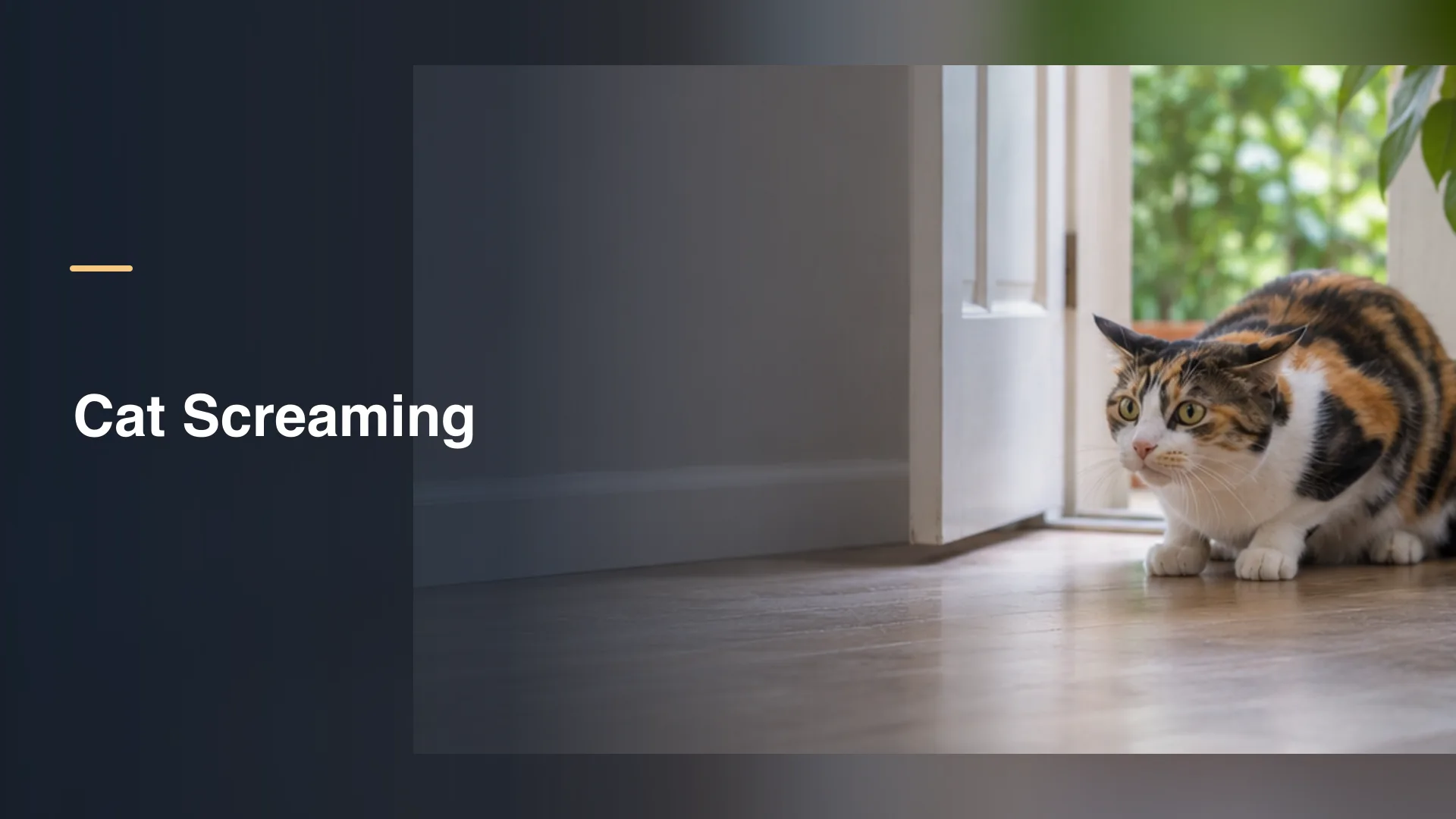
A cat yowl is usually a long, conspicuous call with a rising or falling sound. Start by checking what your cat was doing immediately before the call and whether they are moving, breathing, and using the litter box normally. A yowl can accompany social tension or mating behavior, and a new or repeated call can also signal discomfort. Get emergency help if your cat struggles to breathe, collapses, or repeatedly strains with little or no urine.
Sometimes the most useful clue comes just after the noise. A cat may stop when another cat moves off, settle once a familiar person comes into view, or keep calling while struggling to find a comfortable position. Those are different situations. Record the sequence in your own words before you decide what the call might mean.
Recognize a Yowl by Its Shape and Duration
Compare it with an ordinary greeting from the same cat. A meow may be short and end within a single breath. A yowl usually sounds drawn out and may sweep in pitch or repeat in a series. The distinction can be fuzzy when a cat starts with a normal meow and stretches the last part. Terms such as howl and caterwaul may describe similar sounds in everyday conversation.
Volume is one clue, and distance can change how loud a call seems. A sound from the stairs may echo through the house. A long call heard close up may sound less dramatic outdoors. Describe the duration, how the pitch changed, and whether there were breaks. VCA's discussion of caterwauling describes several settings in which cats make loud, persistent calls.
A video clip can show an example of one cat’s yowl, but it gives little information about a different cat’s reasons. If you already heard the call yourself, compare it with what your own cat normally does. A sudden long call from a normally quiet cat can matter even when it sounds similar to a common clip online. For a sudden, piercing scream, check the immediate scene for conflict or injury first.
Match the Call With What Was Happening
An unfamiliar cat at the edge of the yard may draw attention before the yowl. Your cat might fix their gaze on the visitor and keep calling as it lingers. Once the visitor leaves, see whether your cat returns to their usual activity. In a multi-cat home, the same kind of call can accompany a standoff. Give each cat room to move away. Keep your hands out of the space between them if they are tense.
Intact cats can give prolonged calls connected with mating. An intact female may also roll, rub, or show other changes as part of a repeated pattern. ASPCA guidance on meowing and yowling discusses these distinctions. If you think a pattern may be connected with heat, speak with your vet about what you are seeing and options for your cat.
A cat who begins yowling when rising, jumping, or using the litter box gives you a different setting to report. A change near movement can help your vet narrow the questions they ask. If your cat vocalizes from different rooms and stands as if unsure where to go, note how long the behavior lasts and whether something familiar helps them reorient. New confusion in an older cat warrants a vet call.
What happens near the yowl | What to look for next | Next step |
|---|---|---|
Another cat appears or approaches | Does calling stop after they separate? | Add distance and keep escape paths open. |
Several prolonged calls recur with rolling or rubbing | Is mating behavior possible? | Ask your vet about the pattern. |
The call begins during stairs, jumping, or touch | Is movement or behavior otherwise different? | Contact your vet about the change. |
The cat calls and strains repeatedly with little urine | Is the cat making repeated trips? | Seek emergency veterinary care now. |
If several notes say “long sound,” add one detail about the sound. Was it one uninterrupted call, two calls separated by silence, or a series that rose and fell? Describe what you heard before deciding which term fits. You can give the vet a useful account even if you never heard the beginning.
Write Down the Whole Yowl Episode
Write three observations from a call that happens naturally. First name the setting. Then describe the sound and what the cat did. Finally say how the episode ended. “Visitor outside the patio door, two long calls, then my cat moved to the back room and stopped” brings the behavior into focus. It also tells you which part to check next time.
If you hear a yowl from another room, it is fine to mark the beginning as unknown. Tell the next person in the home what to look for in an ordinary episode. Whether the cat had a view of another animal, whether they could move away, and whether they settled are more useful follow-up details than a contested label like “angry.”
Compare episodes in the same setting If your cat calls two days in a row, check whether the position of the cat, people, and any other animals was similar. A shared location alone tells you less than what changed right before the call.
For a familiar call from a comfortable cat, PetMira’s Pet Translator can record a sound that occurs naturally. Compare any suggested interpretation with your observations of the episode. If the call happened during distress or your cat is struggling, give them space or get veterinary help as appropriate.
Know Which Changes Are Worth a Call
Contact your vet about a new or recurring yowl, especially if the cat is eating, moving, sleeping, or using the litter box differently. Describe whether the change started suddenly or built up over time. If it happens when you touch a particular area during ordinary care, stop and tell the vet when it occurred. Leave that clue for the clinical examination.
Some cats make a loud recurring call that has been familiar to their household for years. A familiar sound still deserves a second look if the circumstances change. For example, a cat who calls on the stairs and normally trots up may start stopping halfway and hesitating before coming down. The movement change belongs in the same note as the call.
If one episode includes sudden extreme distress, collapse, labored breathing, or repeated attempts to urinate without a normal amount, seek urgent care now. You can describe the yowl later. Give the emergency clinic the specific sign and the time it started if that information is available.
When the yowling becomes predictable, compare the first event with the most recent one. A cat who calls as another cat approaches and then leaves may be repeating a recognizable encounter. A cat who starts to call away from that encounter as well is showing a wider change. Tell your vet which settings are new instead of adding them all to the same familiar explanation.
If you are still deciding how to describe the call, start with what different cat noises sound like.
Takeaway
A yowl is a sustained call whose meaning depends on what your cat is doing. Check safety first, then compare what happened just before the call and how your cat settled afterward. If the call is new, keeps returning, or comes with a change in daily activity, contact your vet.
PetMira for iPhone
Record a familiar call to review later
PetMira’s Pet Translator can record a natural vocalization. Compare a suggested label with what you saw before and after the call.
 Record a naturally occurring call
- Review the sound with your own notes
Available on the App Store
Download iOS App