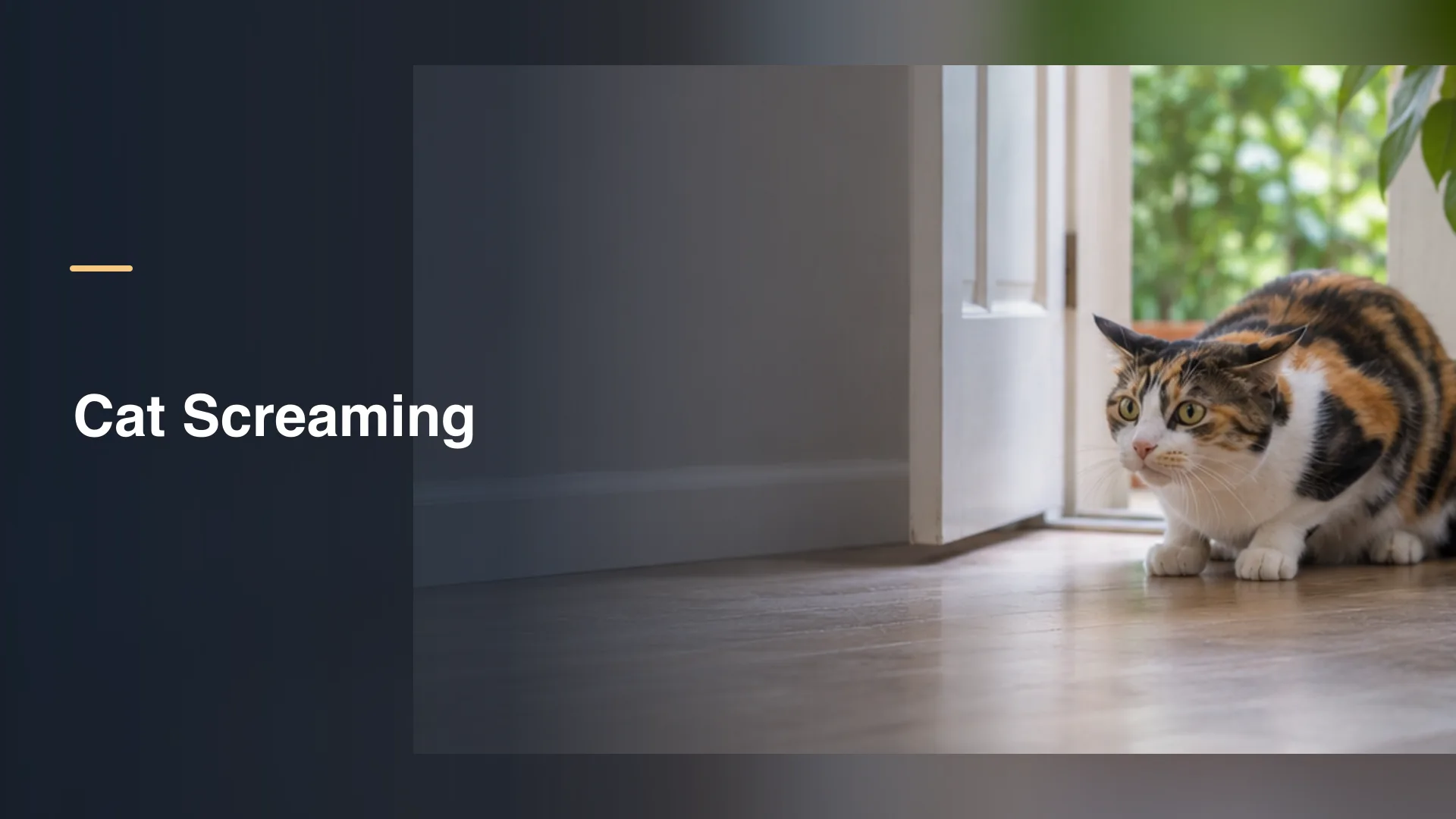
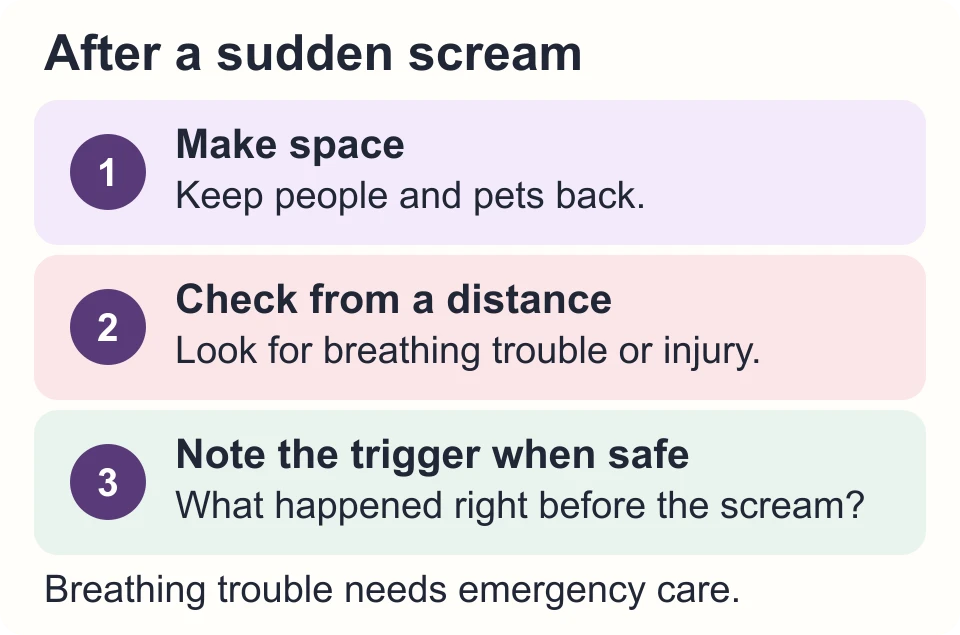
A cat screaming can sound sudden and piercing, especially during a frightening encounter, a conflict, or an event that hurts. Give the cat room and look for immediate danger before you approach. A cat that cannot breathe comfortably, collapses, seems badly injured, or continues to struggle after the incident needs emergency veterinary attention. If two cats are fighting, keep hands and feet out of reach and create distance only from a safe position.
What Counts as a Scream?
People use scream to describe a sharp, forceful call that stops them in their tracks. It can cut in at the end of growling or start abruptly when a cat jumps away. A long yowl can also become loud and rough, so ordinary words for the sounds overlap. For an owner, the useful distinction is between an abrupt event with an immediate trigger and a longer calling pattern that keeps coming back. The former calls for a scene check. The latter gives you more opportunity to map time, place, and routine.
You may hear only the last second from the other room. Avoid deciding who started a fight from what you heard. Look at where each animal is now, whether the way out is clear, and whether anyone is bleeding or moving unusually. A cat hiding under a chair may have fled from the loud event. A cat still fixed on the doorway may be preventing the other cat from using it. Those observations are separate from whether the sound was technically a scream.
What to Do in the First Moments
Stop approaching if your cat is pressed low to the floor, braced in a corner, or watching you with body tension. Keep children and other pets away. If animals can separate on their own, make sure the route does not funnel them into another confrontation. If you can close a door from a safe position after they move apart, give them separate spaces. Do not put your hands between fighting cats or try to pick up an aroused cat.
A sudden noise, an unfamiliar animal outside, or an inaccessible trigger can leave a cat focused and ready to react even after the original trigger is gone. VCA's behavior specialists describe cases where arousal at a window is redirected onto another animal or person nearby. That does not mean every scream near a window has the same cause. It does explain why walking straight up to a tense cat can make a difficult moment worse. Wait for relaxed movement and ordinary behavior, not just silence.
If the scream occurred as you touched a particular area, while the cat landed from a jump, or when the cat tried to stand, stop testing that movement. Check how the cat uses the body naturally without pressing on it. VCA's guide to pain in cats describes changes like hiding, altered posture, and reduced willingness to move. One reaction does not tell you which tissue is hurt. A repeated reaction or any ongoing difficulty with movement is a reason to contact a veterinarian.
Match the Response to the Scene
Scene you can see | Useful action |
|---|---|
Two cats stare or lunge across a narrow doorway | Separate them safely once there is space. Check both for injuries and keep routes apart |
Cat screams when a hand reaches for a painful-looking spot | Stop touching the area. Note the movement and speak to your vet |
Cat is caught in a loose item or trapped near a moving object | Stop the danger if safe. Call your veterinary clinic if the cat is injured or you cannot free them safely |
Calling repeats without one clear incident | Track the times, location, other behavior, and whether basic functions changed |
A household example can be more useful than a list of sound labels. One cat regularly takes shortcuts across the landing. A second cat waits at the top step. One evening there is a scream and the first cat runs downstairs. Opening two routes to key rooms and helping the cats stay apart gives you a way to keep both safer. Notice the next day's access to food, water, resting space, and litter boxes. If the conflict persists, contact a vet or qualified feline behavior professional.
In a second example, you hear a sharp cry on a jump down, but there is no other animal nearby. The cat sits with weight shifted to one side and chooses a lower route later. This gives your vet a clearer account than saying the cat sounded terrified. Give the cat a safe, quiet resting choice and describe the posture, timing, and any change in appetite or mobility when you call. Veterinary clinics can help decide how soon the cat needs to be seen.
Before opening a door between separated cats, check both spaces. Each cat should have a retreat, access to water, and a path to use the litter box without walking toward the other. A quiet cat who will not cross a threshold may still feel trapped. Keep watching the pattern in ordinary moments and ask your clinic about a plan if encounters recur, if one animal stops using a route, or if there was an injury.
What to Check After the Noise Stops
Quiet can mean that the cat has settled, gone to hide, or run out of room to retreat. Watch their breathing and movement from a distance. Look for a normal gait, the choice to move freely, and the ability to eat or use the box in peace. An apparent bite or puncture, bleeding, or ongoing limp is worth a vet call even if your cat has stopped vocalizing. Cats with obvious breathing trouble, serious trauma, or collapse need immediate veterinary care.
If the pattern is linked to an outdoor visitor, test a low-pressure change such as blocking part of the view or giving the cat another route away from it. Do not recreate the trigger for a recording. A note that says “outside cat appeared before the scream and our cat stayed fixated on the window” is useful by itself. Where a call is repeated at the same time every night and there is no abrupt confrontation, the next question is about the pattern over time. PetMira's overview of cat noises can help you compare how to describe the sound.
Hands back first When a cat is frightened or in a conflict, move people away and provide space before trying to get a closer look.
Write down whether the cat was able to leave the area independently. A clear escape route and a return to a familiar resting place help you describe what happened, even if you missed the start of the incident.
Takeaway
An abrupt scream is a reason to give the cat space and look for breathing trouble or injury from a safe distance. If the cat settles, write down what triggered the call and how they recovered. Seek veterinary help for injury or suspected pain, and seek emergency care now if the cat is struggling to breathe.
Everyday care
Organize your cat’s routine care
When your cat is settled, use a PetMira profile to keep everyday care details together.
 Create a profile for your cat
- Review routine care details
Available on the App Store
Download iOS App