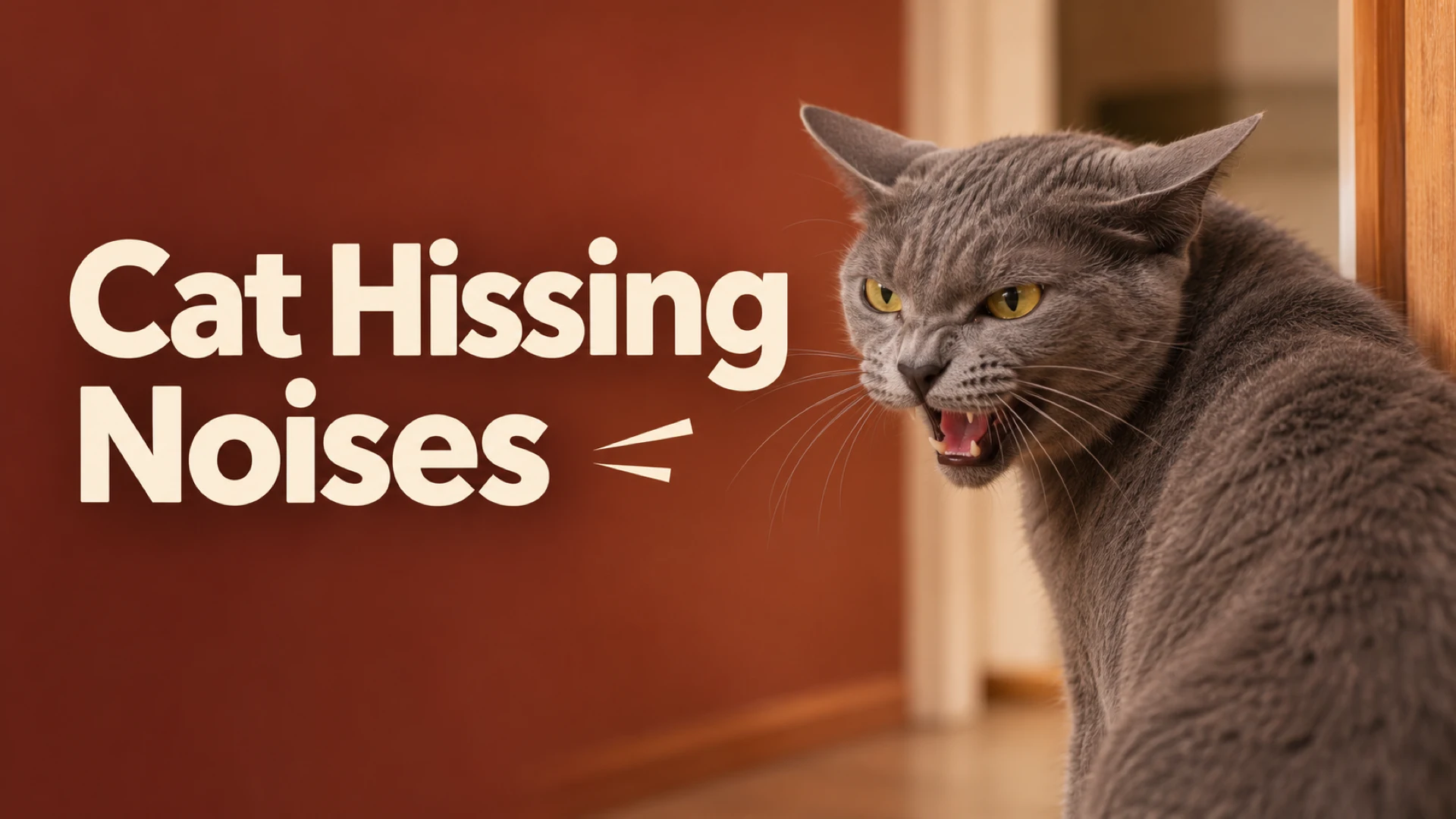
A cat hiss sounds like a sharp burst of air, often with the mouth open and ears pulled back. If it happens when you or another pet get close, stop and leave your cat a clear way out. What your cat turned toward and how they act once they have space can help you decide what to do next.
Check for trouble breathing first
A hiss ends after a short burst of air. If your cat is struggling to breathe or is panting with their mouth open at rest, seek emergency veterinary care right away.
What Does a Cat Hiss Sound Like?
Think of a sudden “ffffsh” that cuts off as the cat closes their mouth. The air comes out quickly and may sound sharper at the start if the cat spits. A growl has a lower, rougher pitch that can carry on after the hiss. Both can occur in one encounter, so hearing a rumble as well as a rush of air makes sense.
Look at the timing as well as the sound. A hiss may come at the instant a dog steps closer or a pan falls. If you heard a rising or falling voiced note instead of a rush of air, compare it with different cat meows. If you keep hearing noise as your cat breathes, follow the breathing guidance below.
If two cats were in the room, start with who moved first. One cat may walk past a chair, then turn when the other darts out. The hiss marks a moment to look at more closely. The loudest cat may be the one trying to leave, so watch which one backs away and where they can go. If you heard the sound from another room and missed the approach, leave that part of the story open. You can still give both cats room without deciding who started it.
Why Cats Hiss at People, Pets, and Sudden Noises
First notice where your cat’s head turned. A cat might spin toward a dropped pan and then hiss at the person who walks over to help. The noise may have startled them, and the person may now be too close. Give them room before trying to sort out the trigger.
If the hiss came during petting, think back to what changed before it. A cat that had been sitting loosely might stiffen, flick their tail, or turn their ears back after a few strokes. Cornell’s guide to feline behavior recommends stopping contact when you see signs of agitation. Let the cat get off your lap on their own. Tell visitors what to do before they reach down. A cat who sits next to someone may want company, so let them choose whether to approach and leave. A quieter vocal response also gives you a moment to pause. See what to do if your cat meows during petting.
When you hear it | Check from a distance | What to do |
|---|---|---|
Right after a bang or a sudden movement | Did your cat turn toward it and begin to settle once things got quiet? | Stop the noise if you can and let them retreat. Give them time to come back out. |
A person or pet gets close while your cat is under a chair or in a doorway | Can your cat move away without passing the person or pet? | Move the person or pet back so the cat can leave. Give them an open route to a quiet area. |
Hissing keeps happening during an ordinary routine | Does it happen at rest, when a person moves nearby, or during contact your cat used to accept? | Note when it happens and any other changes. Call your vet if this is new, recurring, or hard to explain. |
What to Do Right After Your Cat Hisses
Stop and take a step back. If your cat hissed at your hand, move it away. Ask children and guests to give the cat space.
Make the exit usable. If a dog is in the hallway, move the dog away if you can do so safely. If your cat is under a chair, give them a clear path and let them choose when to leave.
Let the room settle. Keep other pets and people from following your cat into their hiding spot. Give your cat time to come back out on their own.
Before the next encounter, change what you can control. Shut the door before you start the vacuum, ask visitors to let the cat approach first, or give the pets separate rooms before trying a slower introduction.
Check the route from your cat’s height
If your cat is backed under the dining table, stepping away from the table may still leave the dog between the cat and the hallway. Move the dog away from the route if you can do that safely. Once the path is clear, resist the urge to coax the cat out. They may feel safer staying put until the room is quiet.
Check where the open doorway leads before treating it as a clear exit. A person standing just around the corner or a dog waiting in the next room can still block it. If you are with someone else, one person can step out of the path while the other keeps the dog in a separate room, if safe. Once the route is clear, leave it open and let the cat decide when to use it. You can stay back without trying to guide them through the door.
A window can set up a different problem. If a cat stares at an outdoor animal and hisses when you approach, the window may be what got their attention first. Step away and let them settle before you adjust anything nearby. When the area is quiet, you can block that view if the same encounter keeps happening. Check whether the hissing still occurs when nobody approaches and there is nothing outside the window. The answer can help you describe the pattern if you need to ask your vet about it.
If it keeps happening during a cat introduction
End a close encounter if hissing keeps up or one cat keeps trying to get away. Let each cat settle in their own area. Start again with a step both cats can handle calmly, such as exchanging bedding while they’re separated. Introduce short, supervised glimpses through a secure barrier only when they’re comfortable with that earlier step. If the tension returns, go back a step.
When Repeated Hissing or Noisy Breathing Needs a Vet
Call your vet if hissing is new and keeps returning, happens during usual handling, or comes with changes such as hiding more or eating less. You can describe one episode plainly: “Hissed twice when I reached toward her back, then hid through dinner.” Avoid repeating the approach to see if it happens again.
If the noise returns with several breaths even after the room is quiet, call your vet for guidance even if breathing seems comfortable. If your cat is working hard to breathe or panting with their mouth open at rest, get emergency help immediately. Cornell’s guide to feline breathing difficulty describes additional signs you may see.
What happened between episodes is useful, too. Did your cat leave the area and then eat normally, or did they stay tense and skip something they usually do? If more than one person was there, ask each to describe what they saw just before the sound. A note that says “the dog came back into the hall” gives you more to work with than one that says “hissed all evening.” Only include details you actually saw. If you missed the start, say you heard the hiss before you entered the room.
What to Remember When Your Cat Hisses
When your cat hisses, pause the encounter and clear a way out. Once they have room, look at what changed and whether they return to their usual behavior. Ask your vet about a new pattern that keeps returning. Trouble breathing or open-mouth panting at rest needs emergency care.
If you want to explore how your cat sounds when they feel at ease, wait for a familiar call, such as a soft greeting as they enter the room. Record it with PetMira’s Pet Translator on iPhone and read the AI suggestion alongside what you saw. For example, did your cat walk over to greet you or stop by their usual feeding spot? Give a hissing cat space and seek veterinary help for breathing concerns.
PETMIRA FOR IPHONE
Explore the calls your cat makes when relaxed
Try Pet Translator with a familiar greeting and compare the AI suggestion with the scene you observed.
 Record a familiar cat call
- Review the AI’s suggestion
- Put the sound in context
For everyday observation. If your cat is having trouble breathing, seek emergency veterinary care immediately.
Download iOS App