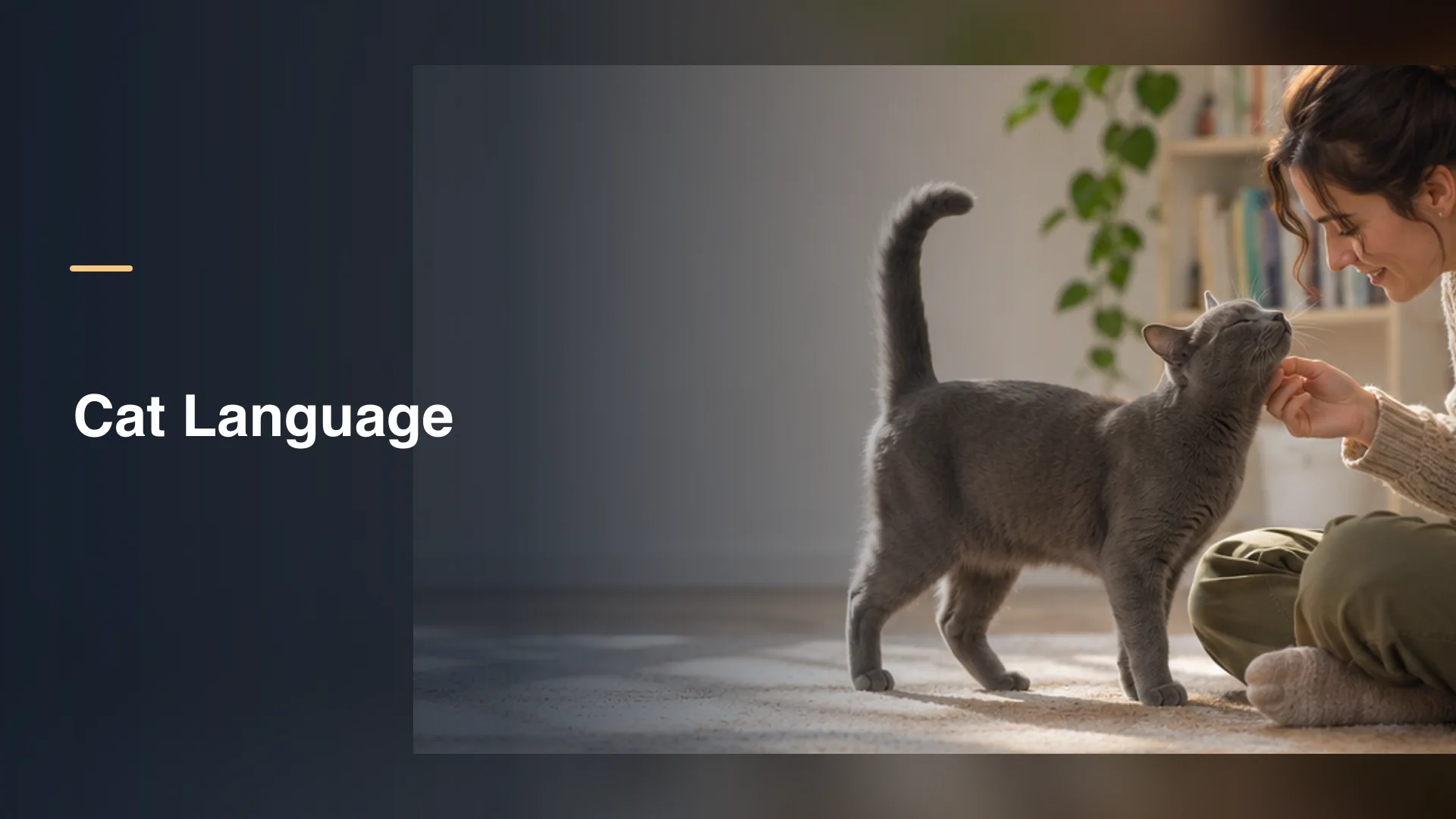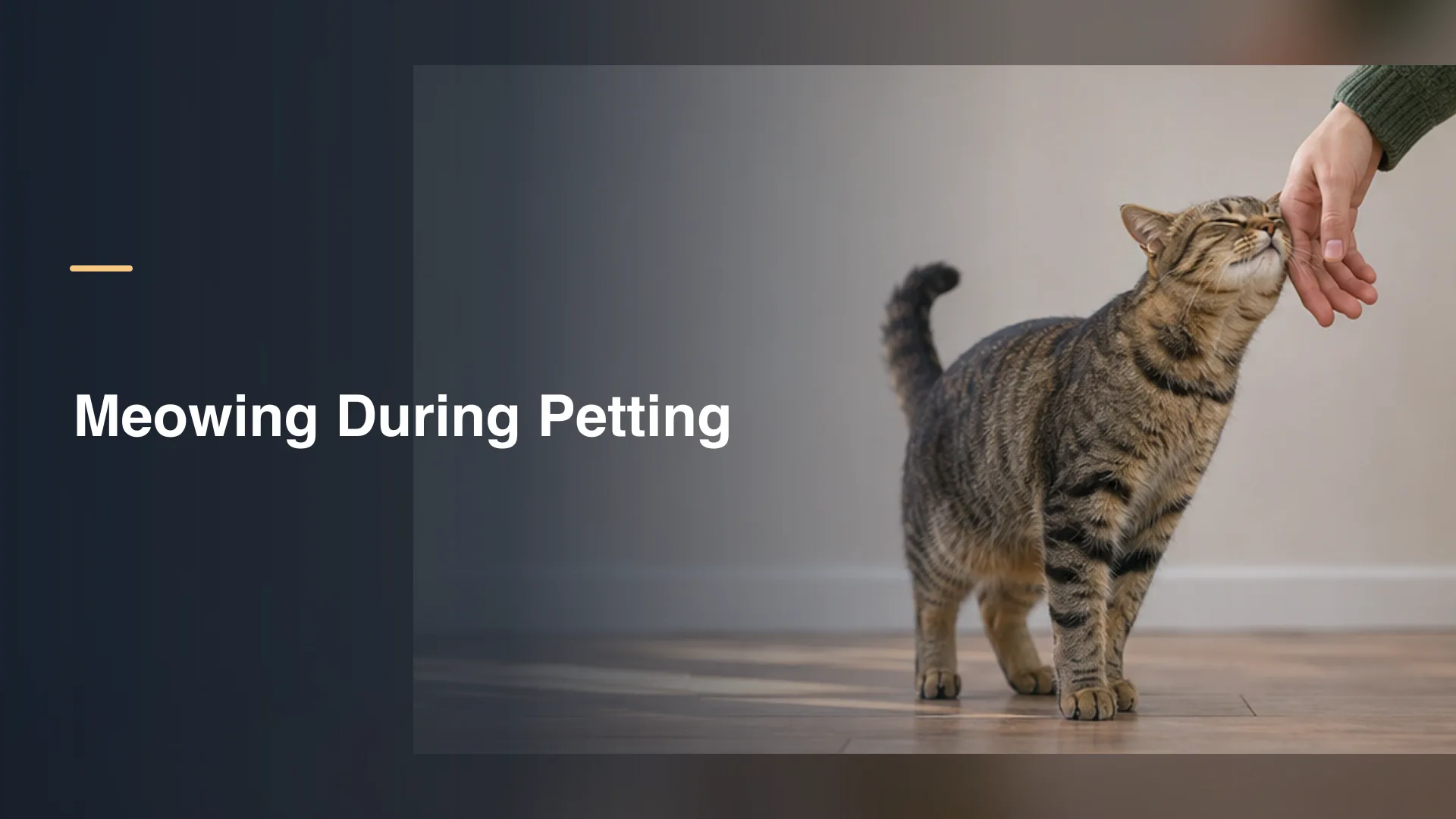
If your cat meows when you pet her, pause your hand and see what she does. A cat who comes back and rubs against your still hand may want more contact. If she turns away, freezes, flicks her tail, or leaves, let the interaction end. A new, consistent reaction when you touch the same area can indicate discomfort and warrants a call to your vet.
The sound alone can be hard to read. One cat makes a small noise as she leans into a cheek rub. Another makes a similar noise as the hand moves farther down her back. Pay attention to when she speaks, where your hand was, and whether she comes back after you stop.
Notice When the Sound Starts
If she meows before your hand reaches her, look at how she approached. A cat may call once and rub against a person when they sit down. A second cat may see a hand coming, lower her head, and shift away. Give both a moment with the hand still. One may choose to move closer. The other may be asking for room or focusing on something else.
If the sound begins during the first stroke, check what changed immediately afterward. A cat who stays loose and moves her cheek against your fingers gives you a different set of clues from a cat who goes still, turns toward the hand, or pulls back. If your cat stiffens, stop and give her space before you try to explain the sound.
Some cats approach readily but have a limited tolerance for repeated strokes. A meow near the end of a long petting session can come with skin twitching, tail movement, or ears rotating back. Cornell’s guide to feline aggression describes how signs such as these can precede a stronger reaction. The timing gives you a way to shorten the interaction before it reaches that point.
Pause and Let Your Cat Choose
Sit so your cat can step off the sofa or walk around you. When she approaches, keep your hand low and still. If she already seeks gentle cheek or head contact, offer a brief stroke where she usually welcomes it. Lift your hand away and wait. If she leans back toward it with easy movement, you can offer another brief stroke. If she turns aside, remains tense, or walks away, give her room and move on.
A study of human-cat interaction guidelines supports giving cats more control over contact, watching their body language, and paying attention to where they prefer touch. Try the pause with your own comfortable cat while they are free to leave. If she appears afraid or has shown a strong reaction to touch, skip the exercise and speak with your vet or a qualified behavior professional.
What she does after you pause | What that gives you | How to respond |
|---|---|---|
Rubs her cheek on your still hand | She has chosen to reinitiate contact. | Offer another brief stroke if her posture stays easy. |
Looks at you and sits nearby | She may simply want company. | Keep your hands relaxed. |
Turns away, shifts back, or leaves | The interaction can end here. | Give her a clear way out. |
Remains rigid or reacts sharply | She may be uncomfortable or worried. | Stop contact, and tell your vet if the reaction is new or repeatable. |
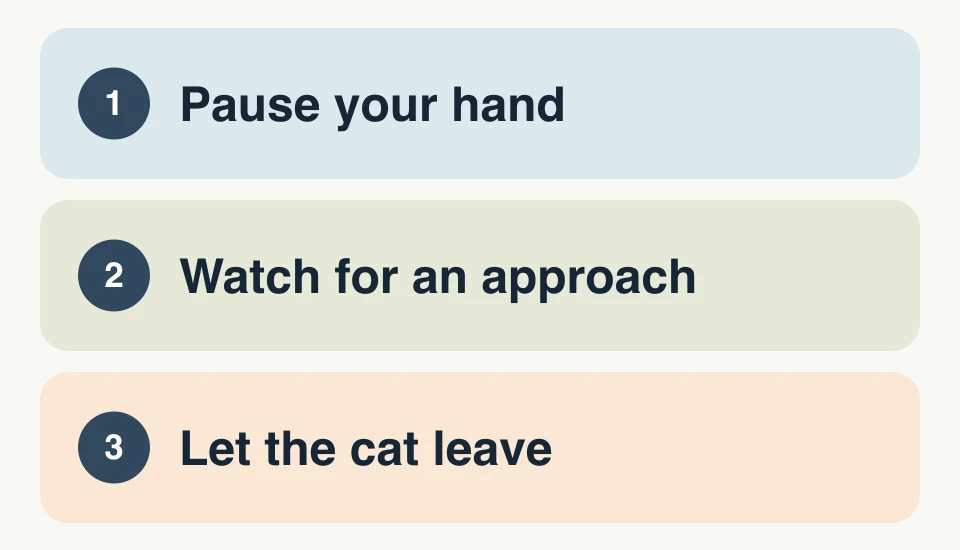
Put the pause before the usual reaction If your cat often calls after several strokes, end the next short interaction earlier. Give her time to show whether she wants another stroke instead of waiting for a louder signal.
A cat can come back to the same place without inviting another touch. If she returns to her cushion and looks away, let her settle. A cat who rubs on the sofa arm may simply be rubbing on the furniture. Keep your hand still until she chooses contact again.
Consider how the interaction starts on different days. A cat who rubs against a seated person can choose the angle and amount of contact. A cat who is reached for while balanced on an armrest has fewer ways to move away. Give her room on a stable surface, or leave her where she is and enjoy the company without touch.
Check for a Change in One Area or Position
If she cries when you touch one particular area in an otherwise ordinary interaction, stop. Think about when you first noticed it. Was she standing, curled up, or trying to jump? Is she also moving, grooming, or eating differently? Tell the vet where and when the reaction happened without pressing the spot again.
An older cat who used to welcome back strokes may now lower her body when a hand approaches her hips. A cat who pulls away from one cheek might also change how she eats. These are observations to share. They do not identify the reason. A vet can decide what needs to be examined. Never hold her in place to check whether the meow occurs again.
A single surprising meow may be hard to interpret if she was asleep or startled. Give her time to settle and watch ordinary activity afterward. If the reaction is repeated, gets stronger, or appears in other situations, call your vet with the timing and circumstances you already know.
Make the Same Approach Easy for the Household
Talk about the specific pattern you saw. “She stays beside me if I stop after a short cheek stroke” gives other people a clear choice they can repeat. “She hates being touched” may lead someone to attempt a long stroke just to see if it is true. A useful rule for guests is to let her come over first and to stop when she moves away.
Speak up before a guest reaches for a cat who is resting on a chair. Leave a clear space for the cat to jump down or move along the cushion. For a child, suggest sitting nearby and talking softly, or playing with an appropriate toy under supervision. Sharing the same response makes it easier to notice when the cat behaves differently with someone who also gives her space.
If two people are greeting her, one can stay back while the other sits still. Keep the route beside her clear. She may approach one person, stay nearby, or walk away. Leave her the same room to choose even if she usually welcomes either person on their own.
You can keep a short household note about where she usually welcomes touch and which movements reliably end a session. Add the actual behavior you saw so the next person knows what to watch for.
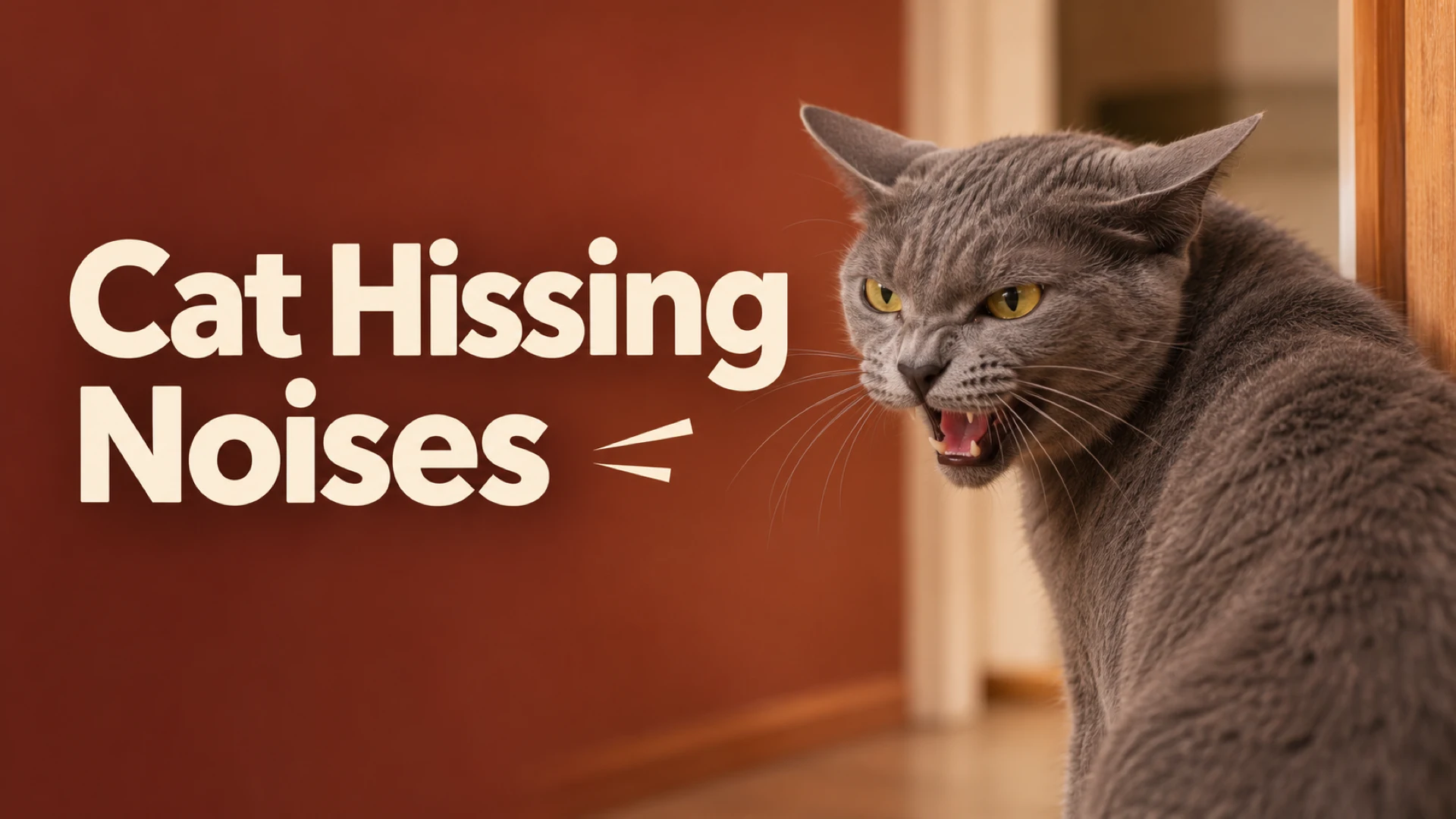
If the next sound is a hiss, read what a warning hiss can tell you.
Takeaway
Notice when your cat first meows, pause your hand, and let her decide what happens next. A cat who leaves gets space, and a cat who seeks contact can get a brief stroke if she stays comfortable. Tell your vet about a new or repeated reaction to one area.
PetMira for iPhone
Keep your cat’s routine details together
Create a PetMira profile to review everyday care details. Keep a separate note of when your cat wants to end contact.
 Create a profile for your cat
- Track ordinary care routines
Available on the App Store
Download iOS App