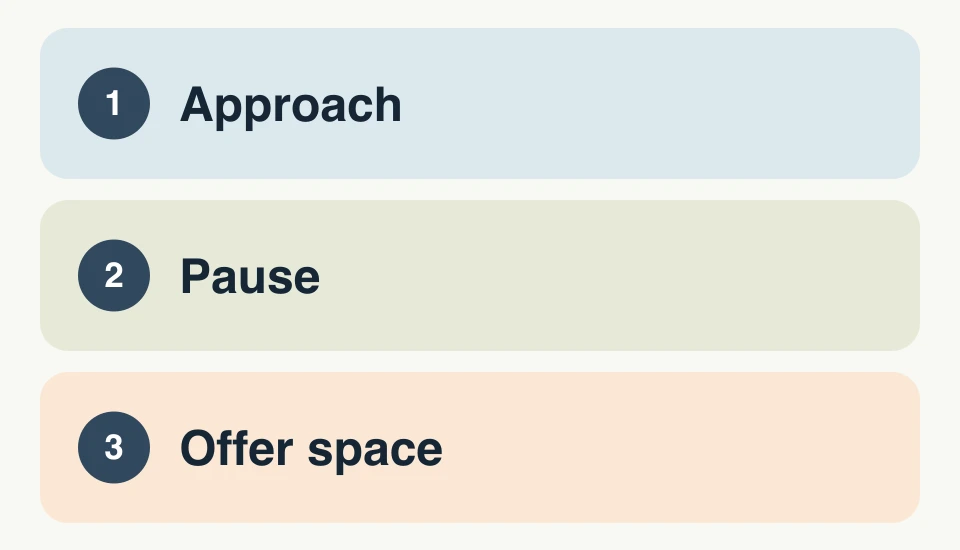
Cat language is easiest to read when you watch the whole cat and what happens next. Notice where your cat is looking, whether the posture is loose or tense, and whether they choose to come closer. If they turn away, crouch, or stop moving as you approach, pause and leave room. Their next move gives you more to work with than a single tail movement or ear position.
Start in an ordinary setting, such as when your cat enters the room or joins you on the sofa. There is no need to try to produce a signal. With a cat you do not know, leave more space and let them decide whether to approach.
Read a Signal as Part of a Sequence
Watch how your cat moves before you move. In a familiar room, notice their typical ear position and what a loose stance looks like. Compare that baseline with the moment that caught your attention. A cat who pauses briefly between steps can be deciding where to go. If the same cat freezes when a hand reaches down and resumes moving after the hand withdraws, the reach is an important part of the sequence.
Look outward too. Was a door just opened? Did an unfamiliar sound come from the street? Is there another cat across the room? Cats Protection’s guide to body language shows how several posture and facial cues work together. A large pupil, for example, can be easy to notice in low light. A crouch, a fixed gaze, and a newly blocked route tell you more about the interaction.
What you see | What to check next | A useful response |
|---|---|---|
Upright tail and loose walking | Does the cat choose to approach? | Stay still and give them room. |
Turning the head and shifting weight away | What moved closer before the change? | Pause and open a route away. |
Low tense posture and ears moving back | Is the cat trapped between people or furniture? | Increase distance and reduce activity nearby. |
Looking at you, then toward a toy or path | Does the cat move toward that spot? | Follow the signal with your eyes and see what happens. |
A person may see a lifted tail and reach out before the cat gets close. If your cat then stops or moves around you, wait where you are. They might be heading past you to a favorite chair. If they turn back and rub near you, you have new information about the contact they chose. Use both outcomes to check your first impression.
Start With Responses Your Cat Can Decline
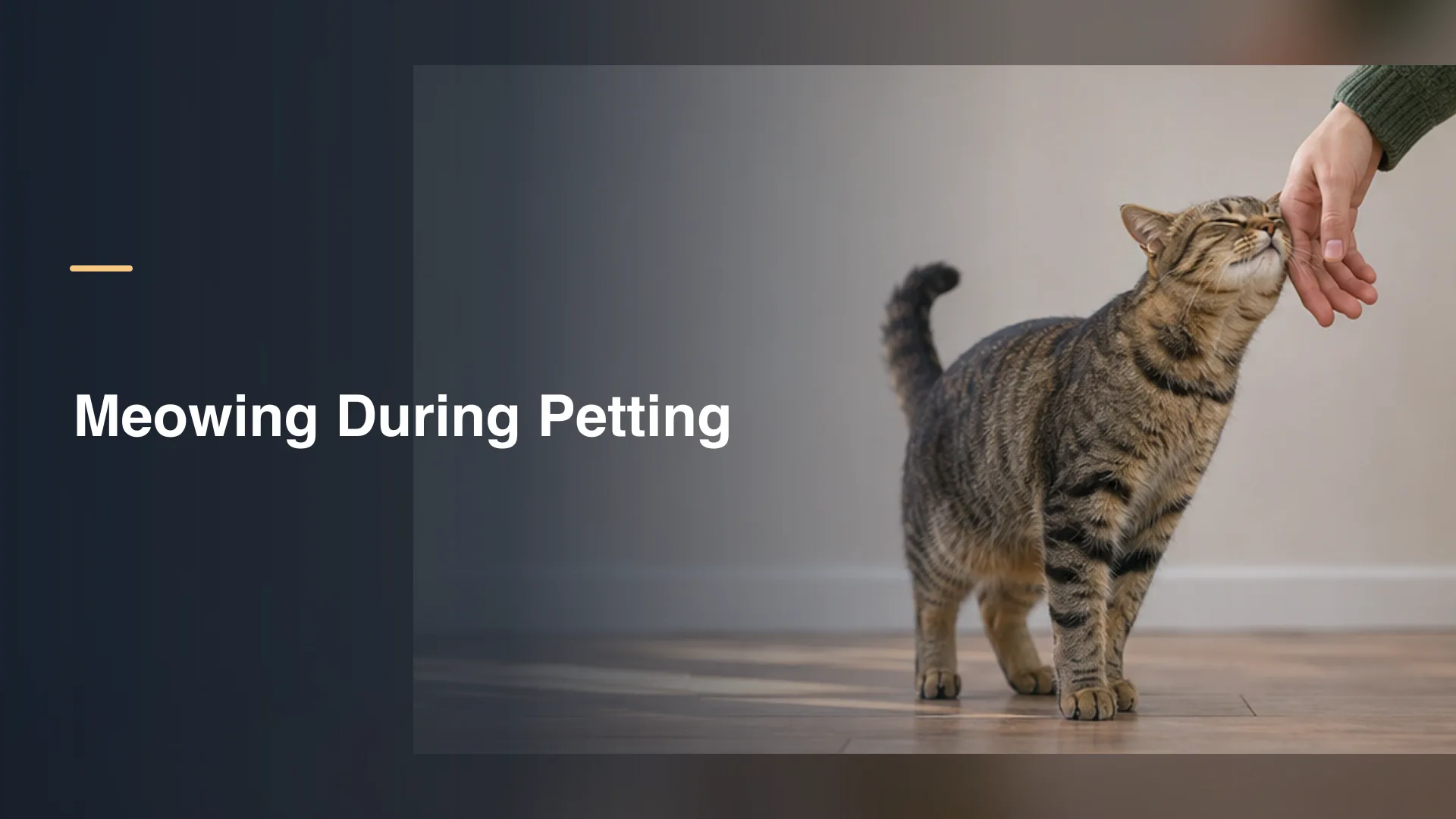
Sit at a comfortable distance and keep the route past you clear. A curious cat may come over to sniff, then cross the room. That brief visit can be the whole interaction. If they regularly settle nearby but move away when a hand appears, let them sit with you without reaching. Staying nearby is one way a cat can choose company. If your cat meows only after you start stroking them, check how they respond when you pause petting.
A blink is another low-pressure interaction. In a study of cat and human eye narrowing, cats were more likely to narrow their eyes after people made slow blinking movements. You can try a relaxed slow blink with a comfortable cat, then look away and let them decide what to do. They may blink, continue resting, or go elsewhere. One response tells you about that moment.
When a cat is trying to leave a tight space, pay attention to what you can change. A familiar cat might walk toward you on an open floor but hold still if you step into the entrance of a carrier or cupboard. Shift your position so they can see a clear exit. That usually gives you a better view of their choice than standing in the way and calling them toward you.
Notice what changes when you pause Take a small step back when your cat goes still as you approach. If the cat loosens up or moves away, leave the path clear so they can choose what to do next.
If you share the room with a child, give them an action they can do from a distance. Have them sit still and watch where the cat goes after coming in. If the cat makes a wide turn and passes behind them, ask the child to keep the route open. A child can learn to wait for the cat to make the first move even if they cannot yet pick out a subtle ear change.
Compare Signals Between Cats and People
A cat may use a quiet sound in a familiar exchange with a person, while approaching another cat with posture, movement, or scent cues first. An upright tail near a familiar companion may accompany a greeting. If one cat stiffens and holds its position while the other turns away, check for a clear way out and give each animal space.
Consider two cats passing a doorway. If both can walk away and they eventually settle, the encounter may resolve without help. A second situation looks similar at the start but ends with one cat waiting for the other to leave before they go to a favorite resting spot. Observe who actually gets to use the route. Separate paths to resources can reduce repeated standoffs in the same place.
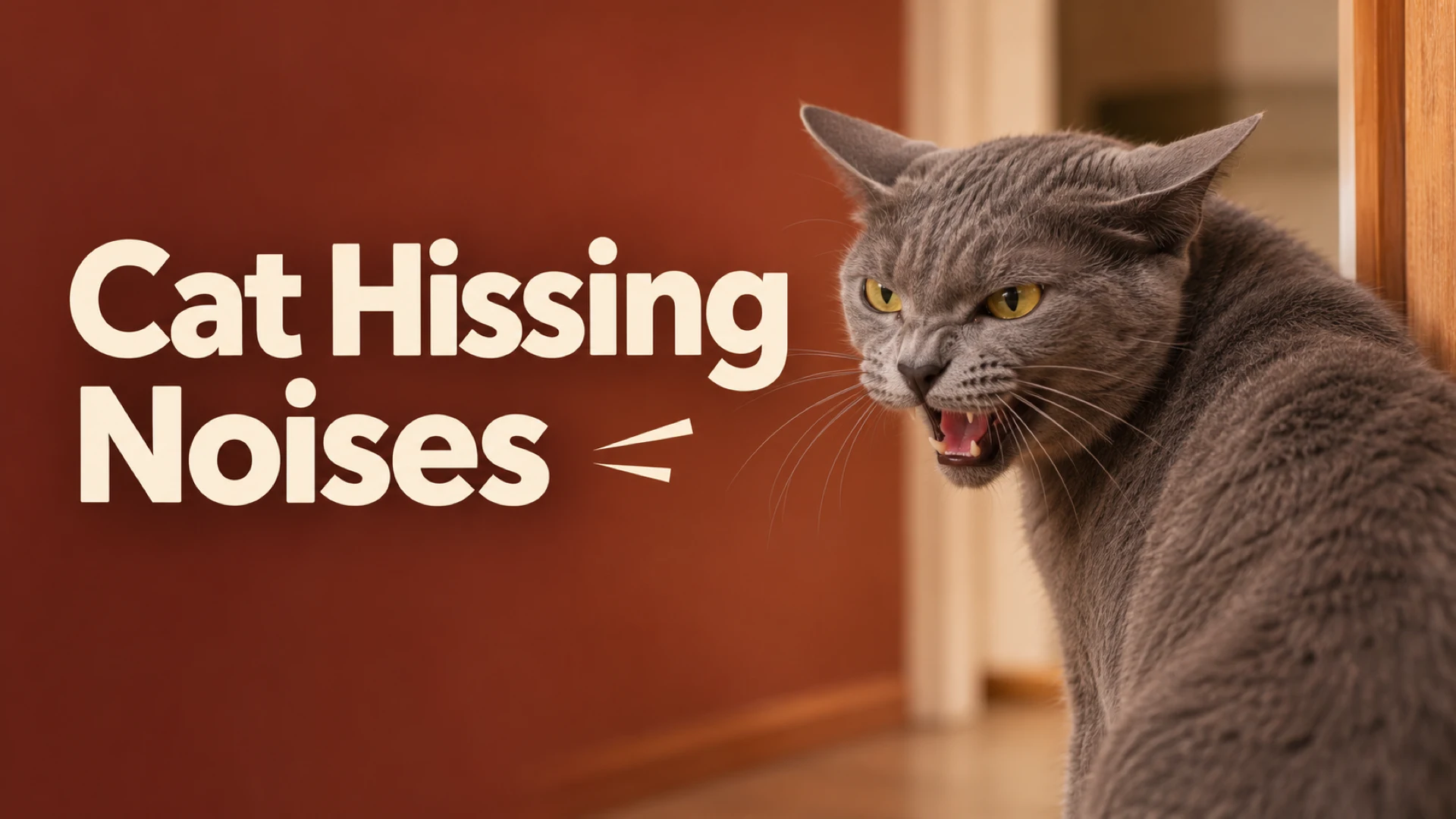
People sometimes assume a strong signal must come with a loud sound. A cat can stop, move its ears back, or quietly leave before vocalizing. If you hear a hiss or growl after those earlier actions, use the sequence to understand the distance the cat was already asking for. The PetMira cat sounds guide covers the calls themselves if you want to compare the sounds you heard.
A cat watching a toy may crouch and hold still before pouncing. A cat who crouches as a guest walks closer may shift away or search for a clear route. Look at what each cat is facing and what happens when the movement stops. In the first case, let the game continue. In the second, have the guest step back and let the cat decide where to go.
Adapt When a Familiar Pattern Changes
A cat who usually meets you in the hall may suddenly stay low and turn away when you arrive. Look for a change in the environment, such as an unfamiliar visitor, and whether your cat returns to familiar activities later. If withdrawal or sensitivity to touch is new or keeps recurring, tell your vet what changed and when, especially if your cat is also eating, moving, or using the litter box differently.
Instead of writing “she was angry,” describe the event. For example, “she stayed under the chair after the visitor left and missed her usual trip to the bowl.” That gives another caregiver an observation to check. You can add what seemed to help, including more space or a quieter room.
Ask other people in the household to describe the same observable details. One person may see a twitch at the tail, while another notices the cat moving out of reach. Putting those events in order often resolves the apparent disagreement.
Takeaway
Read cat language by watching where your cat looks, how they move, and what happens after you pause. When several signs suggest they want space, make the route clear and leave them a choice. Use the same questions the next time you see a familiar exchange.
PetMira for iPhone
Keep your cat’s everyday care details together
Create a pet profile so the everyday details you know about your cat have a home when you need to look back.
 Create a profile for your cat
- Track everyday care
Available on the App Store
Download iOS App