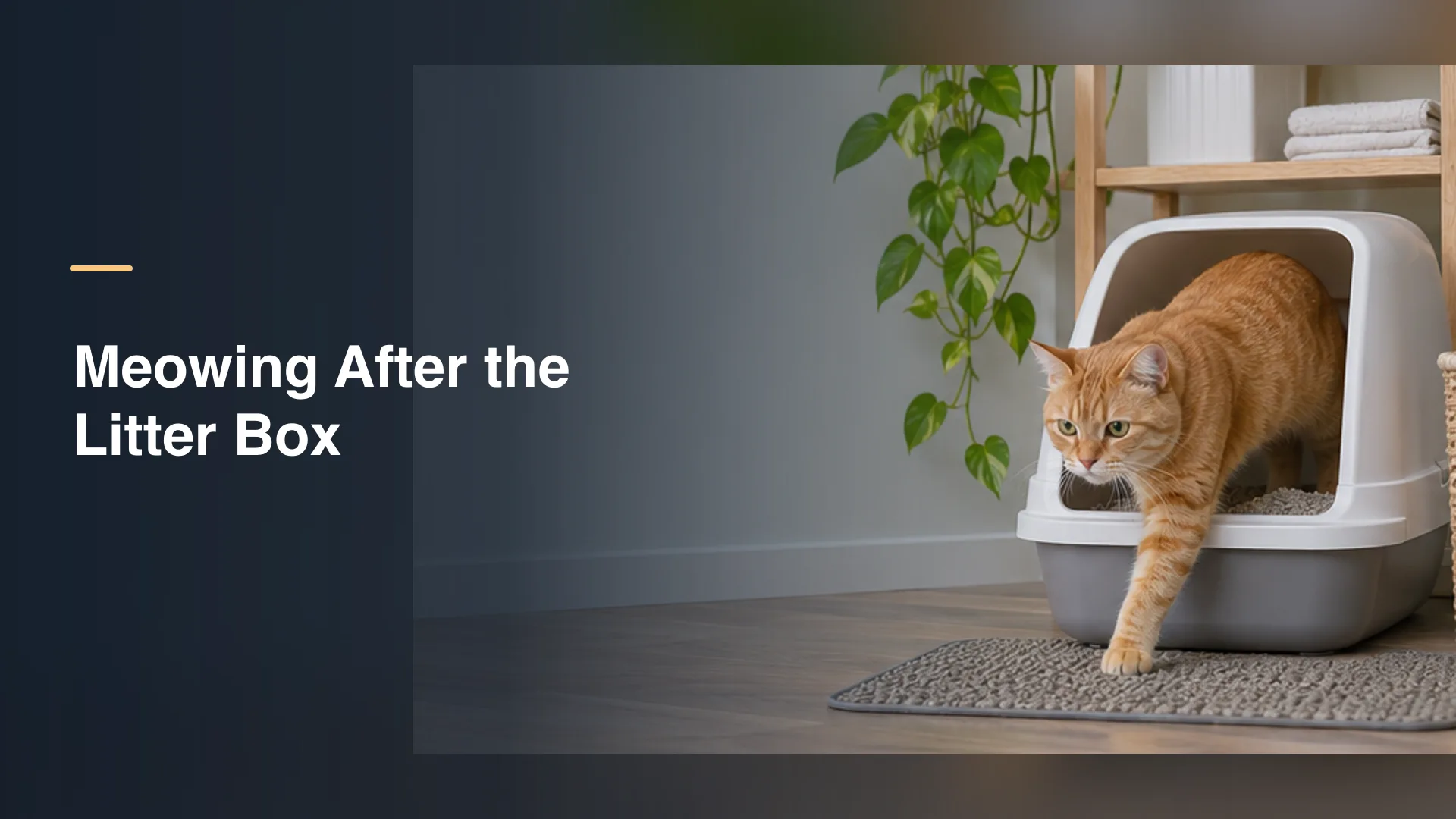
If your cat meows after using the litter box, first check whether they passed urine or stool and whether they strained. Repeated trips with little or no urine can mean a urinary blockage. If your cat strains and passes only drops or none at all, or you cannot tell whether any urine passed, call an emergency veterinarian now.
A familiar brief sound after a comfortable visit with normal output can have a different context. It might happen as your cat crosses the room or starts a burst of activity. The safest distinction starts with what happens before, during, and after the call. A meow heard only from the next room leaves that part open.
Pinpoint When the Meow Happens
If your cat is comfortable and a visit happens naturally, watch from far enough away to leave the cat alone. Was the first sound on the way to the box, while crouching, just as the cat stepped out, or after they crossed the room? Try to identify where the cat was when they first made the noise. Floor plans can make a call from the box sound as if it came from the hallway.
When your cat leaves on their own, look at the result. In clumping litter, consider whether there is a fresh clump that this cat made. With other litter, compare with the normal wet area this cat leaves. In a shared box it may be unclear which cat passed urine. A clump made earlier by another cat cannot answer what happened at this visit.
A brief call after walking away means something different from a cry during repeated squats. Normal movement and familiar habits may help explain a pattern, while an obvious change still deserves attention. A sudden meow followed by hiding is also a different observation from a meow followed by a relaxed return to the sofa.
What you observe | What to check | Response |
|---|---|---|
Repeated squats or crying while straining | Little or no urine, or you cannot tell if any passed. | Call an emergency veterinarian now. |
Crying or straining after normal urine output you just saw | Check whether the difficulty appears while passing stool. | Call your vet promptly. |
One familiar call after normal output | Does the cat walk away easily? | Keep the timing and output in mind. |
Normal urine, with new difficulty passing stool | Note changes in stool and appetite. | Contact your vet for advice. |
Understand Why Urine and Stool Are Both Important
A cat straining to urinate can look like a cat struggling to defecate. Some cats make frequent visits and pass only drops, or seem unsettled between visits. The Cornell Feline Health Center lists straining, frequent attempts, and vocalizing among signs of lower urinary tract disease. A blockage can become life-threatening. Male cats are at greater risk, and any cat with possible blockage needs urgent assessment.
Owners sometimes see a tiny wet mark and assume the bladder emptied. If the cat keeps trying without passing the usual amount, describe both findings to the emergency clinic. The fact that some litter looks damp does not tell you how much urine passed or when. The test is a clinical examination, so avoid pressing on the abdomen or trying to help the cat urinate on your own.
If you clearly saw a normal urination and later notice straining with stool, share what you saw and what the stool looked like. Hard dry stool, a change in the usual frequency, or vocalizing during a bowel movement can help the vet decide what to ask next. Also tell them about vomiting, appetite loss, or a change in activity. If your cat strains and you are unsure whether any urine passed, call emergency veterinary care now.
Say whose output you saw In a multi-cat home, tell the vet if you saw this cat pass urine or only found a clump in the shared box. If your cat is making repeated unsuccessful trips, seek emergency advice immediately.
Look at the Exit if Output and Movement Are Normal
Suppose your cat uses the box normally, steps out, and gives a short meow as they trot down a clear hallway. They later settle and follow their normal routine. It can help to notice whether the sound always occurs on that path, whether it happens when you are nearby, or whether it occurs when they encounter another cat. A recording is optional for a comfortable cat. The location and the sequence matter more than the exact pitch of the call.
Consider how easy it is to enter and leave. A covered box or one tucked into a narrow recess can leave a single escape route. A cat may pass urine normally and still seem uneasy if a second cat waits across the opening. If that happens, give them room to leave and offer a second accessible location. The Cornell house-soiling guide explains why the location, box preference, and social setting can matter. Box changes cannot address a suspected medical emergency.
An older cat might step in slowly, go normally, and hesitate at the high lip on the way out. A low-entry box may make access easier in ordinary care. If reluctance to step or jump is new, include it when you speak to the vet. There may be more than one reason a familiar visit changes.
If a second person cares for the cat, agree on the details you need to share. Describe a normal visit this cat made recently and compare it with the one that concerned you. The number of trips, time spent crouching, and whether the cat left easily can be clearer than descriptions like “using the box weirdly.”
Put Together a Short Account for the Vet
If the problem is ongoing, give the clinic the most recent time you personally saw this cat pass a usual amount of urine. Then add when the calls started, how many trips you noticed, and whether you saw a squat or strain. Mention hiding, restlessness, eating changes, or vomiting if present. A sentence like “he went back three times and I cannot identify a fresh clump from him” gives the clinic a clear picture of the uncertainty.
In less urgent cases, bring details from routine observation, including any recent change of litter or where the box is placed. If the cat cries only during one part of the visit, say which part. You can tell a clear story with three observations. In a possible emergency, call with whatever you already know.
Outside the litter-box episode, compare how meows change across familiar situations.
Takeaway
With a meow after the litter box, check the visit and the output before assigning a meaning to the sound. Repeated trips with little or no urine need emergency care. For a cat who passed urine normally and moved easily, use the timing, exit route, and changes from their usual routine to decide what to share with your vet.
PetMira for iPhone
Keep everyday care details easy to review
Create a cat profile in PetMira to keep everyday care details in one place.
 Track daily care
- Keep a profile for your cat
Available on the App Store
Download iOS App