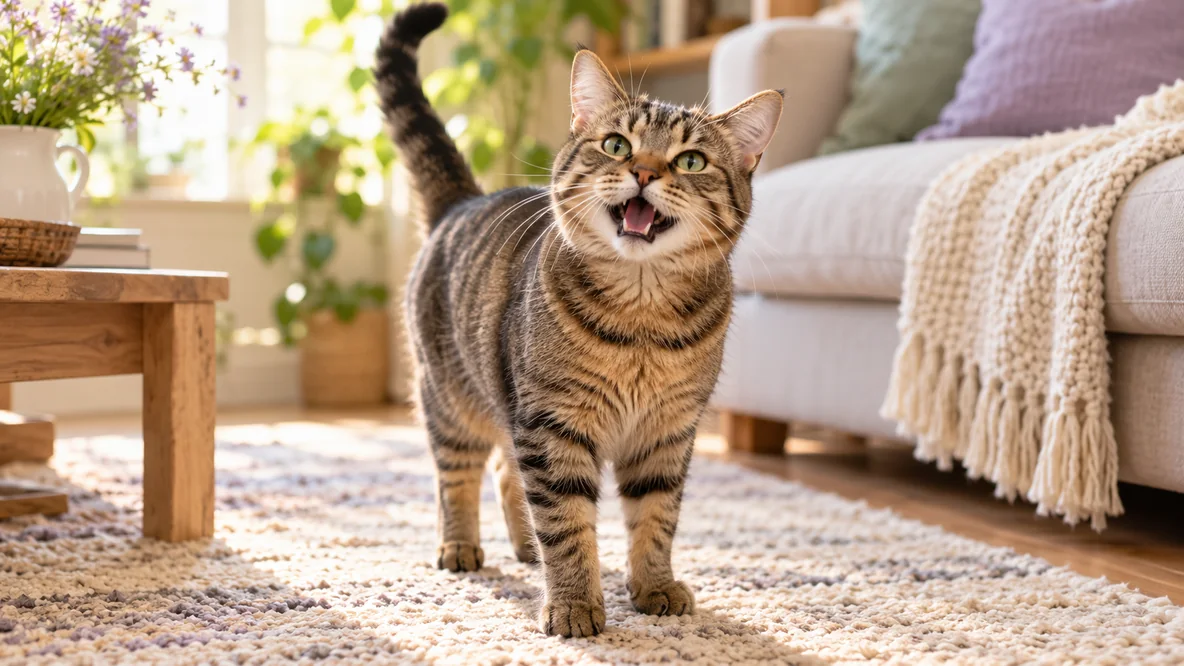
A silent meow is a mouth movement that resembles a meow, with very little or no sound you can hear. When a comfortable cat has always done this in a familiar greeting and still vocalizes normally at other times, it can be an ordinary part of their routine. If your cat suddenly cannot make the sounds they usually do, call your vet. Open-mouth breathing at rest or visible breathing effort needs immediate emergency care.
Compare this moment with the same kind of moment on an ordinary day. A cat who gives one quiet greeting at the kitchen doorway and makes a normal call later gives you a different pattern from a cat whose usual greeting, request, and other familiar calls have all changed.
Compare the Quiet Moment With the Usual Voice
Watch when a quiet movement happens on its own. Your cat might look at you, part the mouth briefly, then rub your leg or go back to resting. Notice whether the mouth closes again right away and what your cat does with the rest of their body. You are observing one event. There is little to gain from repeatedly asking the cat for another meow.
Compare that moment with situations in which you usually hear them. Do they still give their ordinary call when someone comes home? Is their familiar food request audible? If you have a cat who has always been quiet, you may only know one or two examples of their usual voice. Use the examples you have and leave the rest open.
Pattern | What changes or stays the same | What to do |
|---|---|---|
Quiet greeting your cat has made for a long time | Usual audible calls and activity continue. | Observe the context and let the cat choose what comes next. |
Several normally audible calls suddenly go quiet | The cat's usual voice seems changed. | Contact your vet. |
Silent mouth movement with repeated gagging, drooling, or difficulty swallowing | Other signs accompany the movement. | Contact a vet promptly. |
Mouth open between calls, with visible breathing effort | Breathing or comfort is affected. | Seek emergency veterinary care now. |
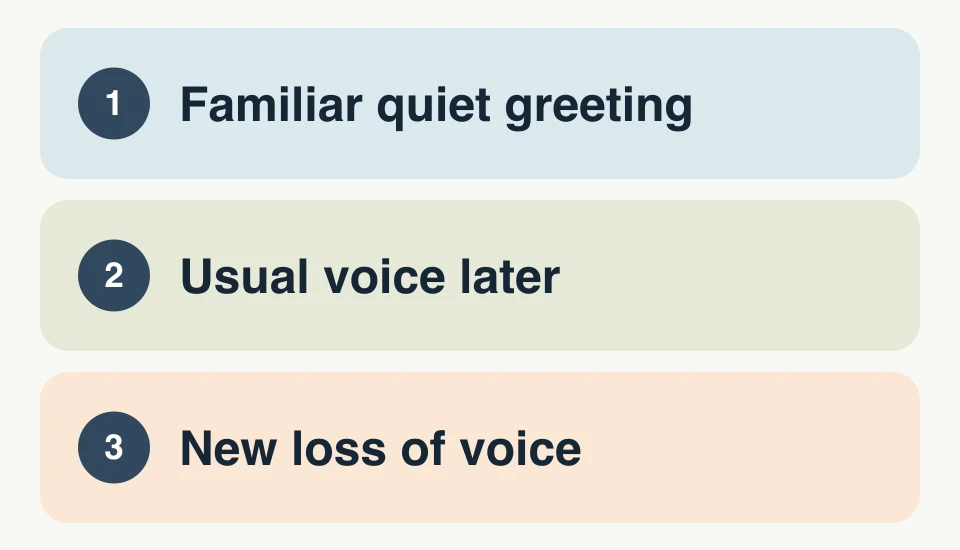
An example can be useful. A cat looks up quietly when people pass the sofa but still gives their usual clear meow at the food cupboard. If the greeting looks the same from week to week, you can describe it as a familiar quiet signal. A cat whose mouth now moves without a sound in all the situations that previously brought audible calls gives you a reason to report the change.
Read the Setting Around a Familiar Silent Meow
Look at where the cat is looking and moving. A settled cat might make the movement as you sit nearby. A cat that has just walked over may stay near you or cross to a favorite ledge. You can offer company by staying put and watching what they choose, without deciding that every quiet motion means the same thing.
Cats make different sounds depending on the cat and the setting. VCA’s overview of why cats meow describes how context shapes the interpretation. For a very quiet call, distance, ordinary background sound, and whether you were facing the cat can affect what you heard. “I couldn't hear anything from where I was” is a useful observation you can make with confidence.
When two people disagree about whether there was a sound, ask where each was standing and what the cat did next. One may have heard a faint noise close up that the other missed. A gesture can still be worth noticing when it is familiar and accompanied by easily observed behavior, such as coming near or turning toward a toy.
Check the familiar sound later Compare a quiet greeting with another call your cat already makes in their routine. Avoid repeating prompts to make them vocalize, especially if they seem uncomfortable.
A cat can open their mouth briefly after sniffing something, often with the upper lip drawn back. You may hear this described as a flehmen response. If that is what you saw, the movement followed an investigation of a scent and may look more like a held expression than a quick greeting. The immediate context gives you a better distinction than the absence of sound by itself.
Tell Apart a Brief Mouth Motion and a New Problem
An occasional quiet motion ends and the cat returns to ordinary breathing and activity. A repeated movement that occurs at rest or alongside swallowing, gagging, or retching may be something else. Describe what you actually see and where in the sequence it occurs. If your cat has trouble breathing, skip recording it and seek help immediately. Cornell’s Feline Health Center explains why cats with breathing difficulty need urgent care.
A sudden voice change can be meaningful even if the cat is eating and breathing comfortably. Call about the change and say whether all of their usual calls are affected or only one. If the cat is still able to give some sounds, describe which ones you heard. That can be easier for the clinic to use than a broad description such as “something is wrong with her voice.”
A change following a veterinary visit, illness, or another event is also useful to mention. It does not establish the reason. Give the approximate time and the changes you can see, and let the vet decide which questions and examination matter. If the voice is rough or quieter in some situations, state that separately from times the sound was absent.
Keep the Clues Short and Specific
If you are observing a comfortable cat, note what happened just before the silent meow and what the cat did after. For example, “at the sofa at noon, mouth opened briefly, walked over and curled up, gave normal call at dinner.” If it is a new pattern, compare the last usual audible call with what you are seeing now.
You can also note whether the event follows a particular person or place. A cat who does this with one familiar person may continue to vocalize at the door or with somebody else. If you need to tell another caregiver what to watch for, share the setting and the familiar audible call. That gives everyone the same reference without asking them to interpret the cat’s motives.
If you film a familiar, comfortable movement, include the seconds afterward. A close crop of an open mouth leaves out whether the cat resumed breathing easily, stood up, or kept swallowing. A short full-body view can add context if you already have one, and an accurate written description is also useful.
Compare the brief mouth movement with the range of ordinary cat calls.
Takeaway
An occasional, familiar quiet meow can be part of a cat’s usual communication. Check that the cat is comfortable and still makes familiar sounds at other times. Contact your vet about a newly absent voice, and seek emergency help for breathing effort.
PetMira for iPhone
Keep everyday details with your cat’s profile
Use PetMira to keep a profile and check everyday care details alongside your own notes about a change.
 Make a profile for your cat
- Track daily care details
Available on the App Store
Download iOS App