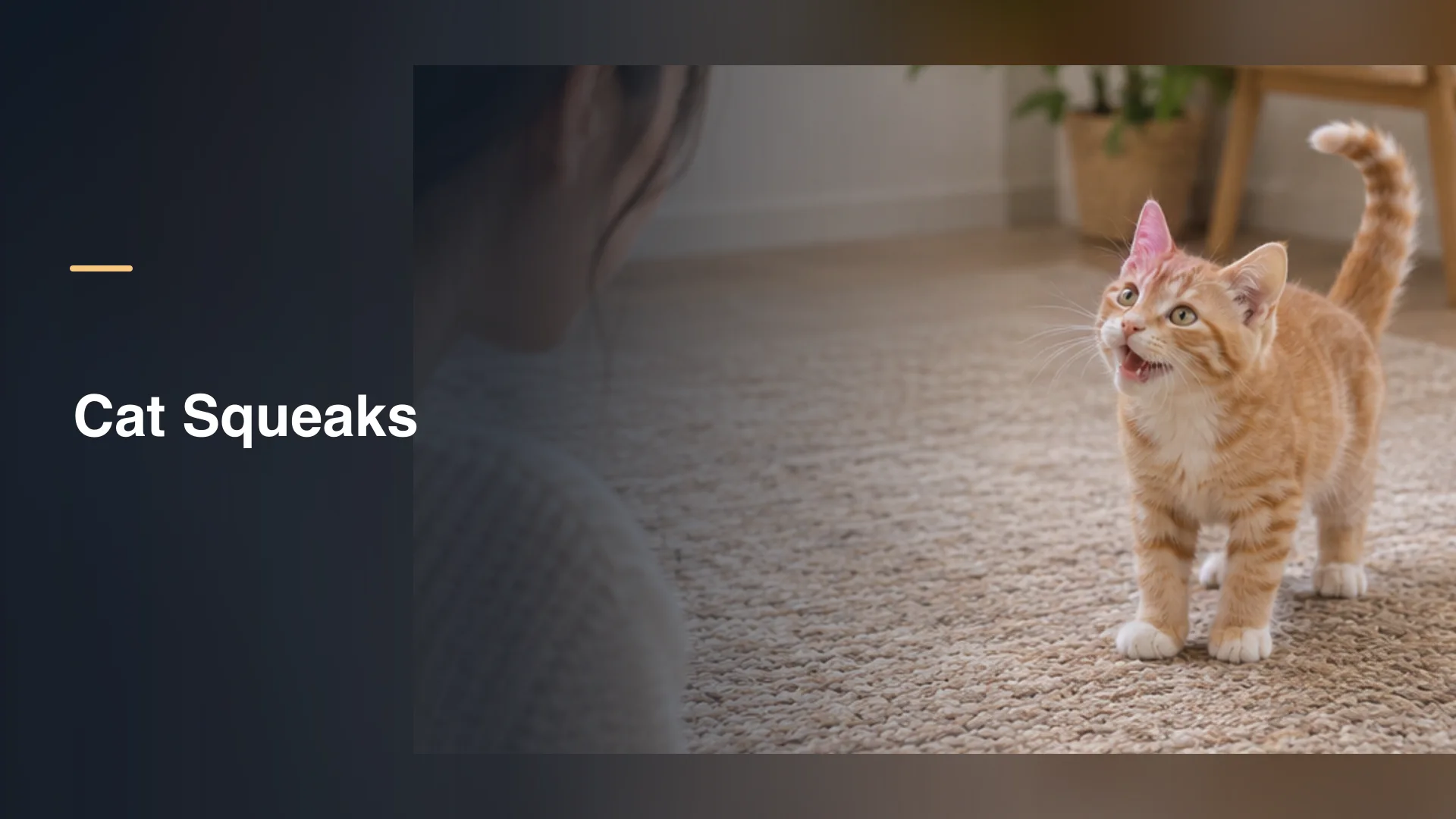
A squeak is a short, high sound that can be part of your cat's usual voice. Some cats greet people with a tiny squeaky meow, while others make a brief chirp during play. The most useful clue is whether your cat has always sounded this way. A newly squeaky, raspy, or nearly silent voice deserves attention, especially with coughing, trouble swallowing, or any change in breathing.
How a Squeak Can Sound Different From a Meow
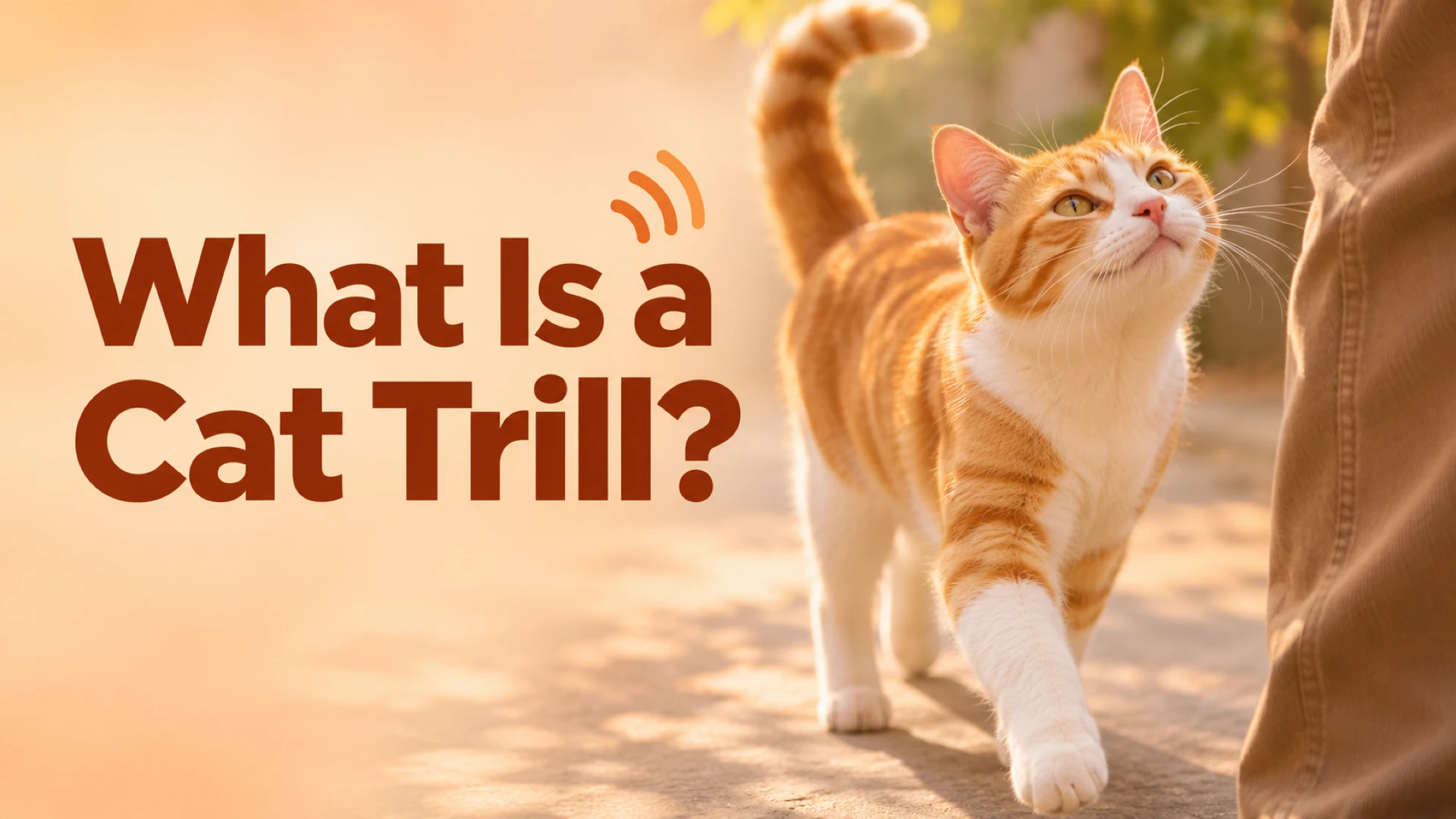
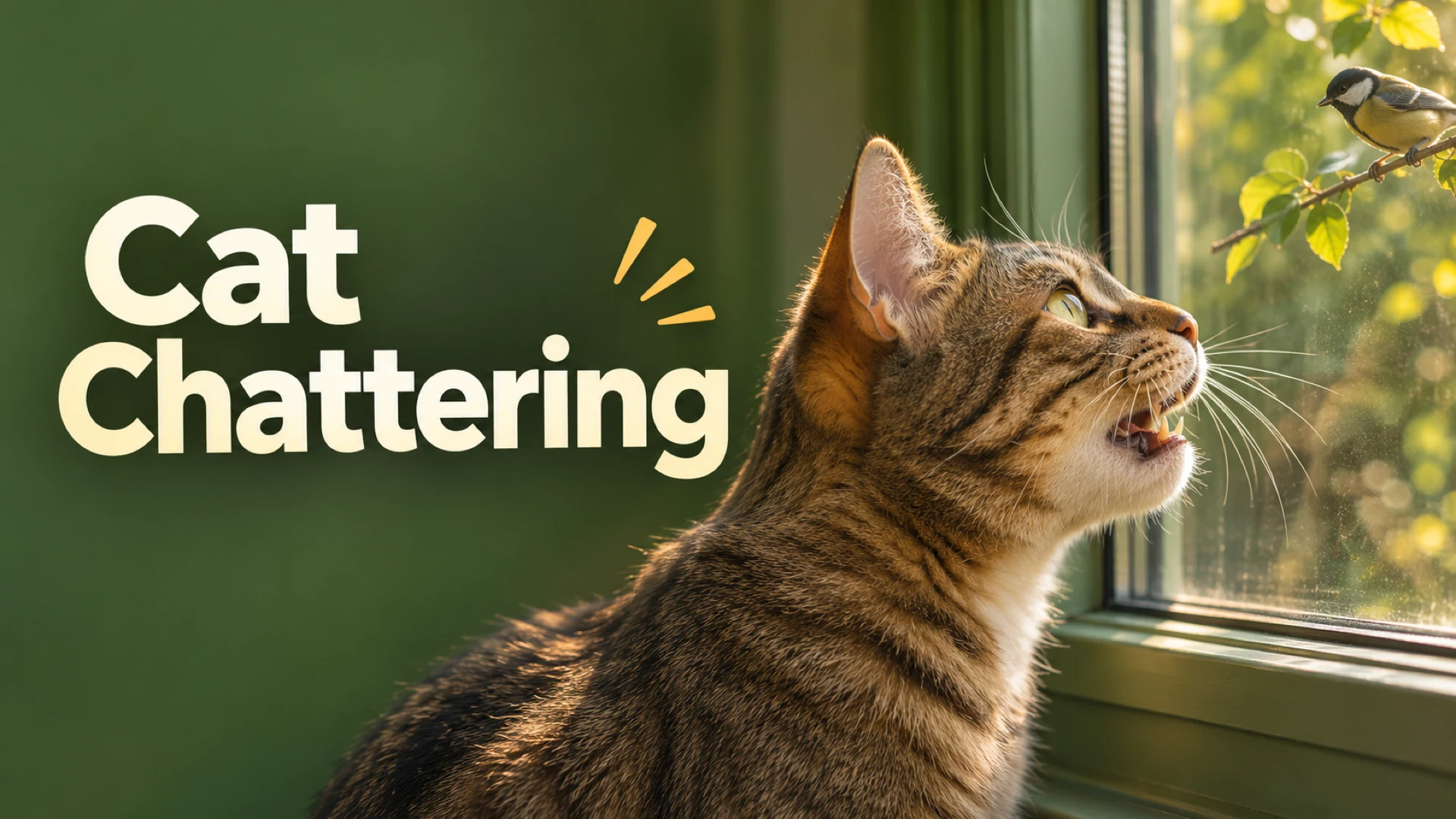
Squeak describes how a sound feels to the listener. It does not name a single call in all cats. Try noticing the length, whether the mouth opens, and what the cat is doing. A squeaky meow often sounds like a short version of the voice you already know. A chirp may have a quick rising or falling shape. Chattering can sound like several rapid clicks or broken notes, often when the cat is fixed on something beyond reach.
The Meowsic research team's feline sound examples offer a way to hear distinctions in recordings. Even among their examples, there is variation within each type. Your own cat's baseline is more useful than making a perfect match to someone else's recording. If you have heard the same quiet greeting for years and the cat is healthy and comfortable, that history is worth noting. If the voice completely changed after breakfast yesterday, the timing is worth noting too.
A high note can sound a little different depending on distance and room acoustics. A hallway makes brief calls sound sharper. A recording held near the cat's whiskers can emphasize mouth noise that you barely hear across the room. Keep one example of a familiar sound recorded from a normal distance if you want a comparison. Capture a few seconds of quiet before and after so you can hear whether the sound belongs to a call or to breathing.
Check the Scene Before Labeling It
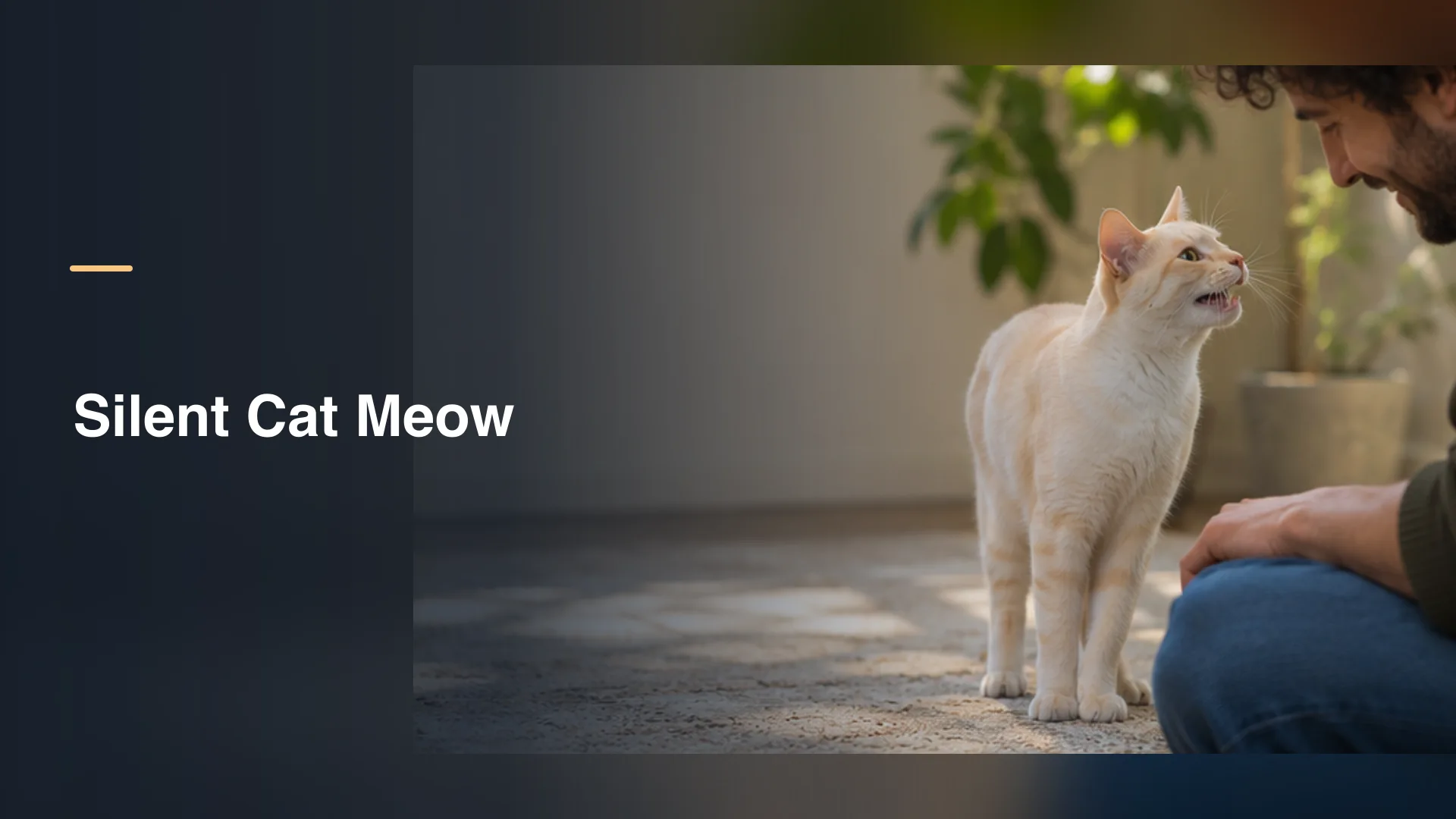
One cat sees their owner stand up in the morning, walks over with a loose body, makes a short squeak, and rubs against their leg. After a greeting, they move to a favorite chair. That pattern is consistent with a familiar social interaction. It does not establish that every squeak asks for petting. You can allow the cat to approach in their own time and see whether they return to the same comfortable behavior.
A cat on a window ledge may make a similarly high sound while looking at a bird. Watch the eyes and the body. A fixed gaze and a quick cluster of little notes point you toward the scene outside, while a cat turning toward you and walking closer does something different. PetMira's overview of cat noises explains how to describe repeated clicks and other kinds of calls. You can compare the descriptions and still use your own notes about the trigger.
Here is another situation: a cat squeaks at the sound of a toy, then chases it normally. If the same high note is later heard with every step away from a jump and the cat hesitates when walking, the change in movement matters more than whether it sounds familiar. Note both events separately. When there is a new difficulty moving, avoid recreating it to get a better recording.
When a Changed Voice Needs a Vet Call
A voice change is more important if it comes with poor appetite, lethargy, coughing, gagging, or trouble swallowing. It also matters when a cat keeps trying to vocalize and little or no sound comes out, although they previously had a clear voice. A video alone cannot tell which part of the throat or airway is involved. Call your veterinary clinic and describe what changed and how long it has been happening, particularly if the change persists or your cat seems uncomfortable.
Check that the sound is actually tied to calling. If a tiny whistle recurs with breathing while the cat is quiet, that is a different observation from a one-note greeting. Cornell's guide to breathing difficulty in cats notes that any question about a cat's ability to breathe comfortably deserves urgent attention. Open-mouth breathing at rest, visible effort to breathe, or collapse should prompt urgent veterinary care. Do not wait to capture a more convincing sound.
What you hear | What happens alongside it | A practical next step |
|---|---|---|
A familiar tiny note | Cat approaches, greets, and settles normally | Keep the context as a reference |
A cluster of quick high notes | Cat watches prey or a toy | Note the gaze and compare with chirping or chattering |
A sudden voice change | Cat used to meow clearly | Call your vet if it persists, recurs, or is accompanied by illness |
A high sound on repeated breaths | Visible breathing effort or open mouth at rest | Seek urgent veterinary care |
A young cat may have a higher call than an older cat in the same household, and two adults may make different sounds at the same door. Comparing the individuals by pitch alone does not tell you whether either is unwell. Pay attention to a change within the same cat and context. If you recently adopted the cat and have no earlier reference, make a note of that rather than treating the first squeak as either typical or abnormal. Other signs and how your cat settles give you better guidance.
Make a Simple Before-and-After Note
Write a single line with the scene, how the sound changed, and what happened next. “Usual one-note squeak when I came home, ate dinner afterward” describes a baseline. “New weak squeak instead of usual meow, then ate slowly and stopped” gives your vet more information. If you notice the same noise in both situations, keep the notes separate instead of deciding they mean the same thing.
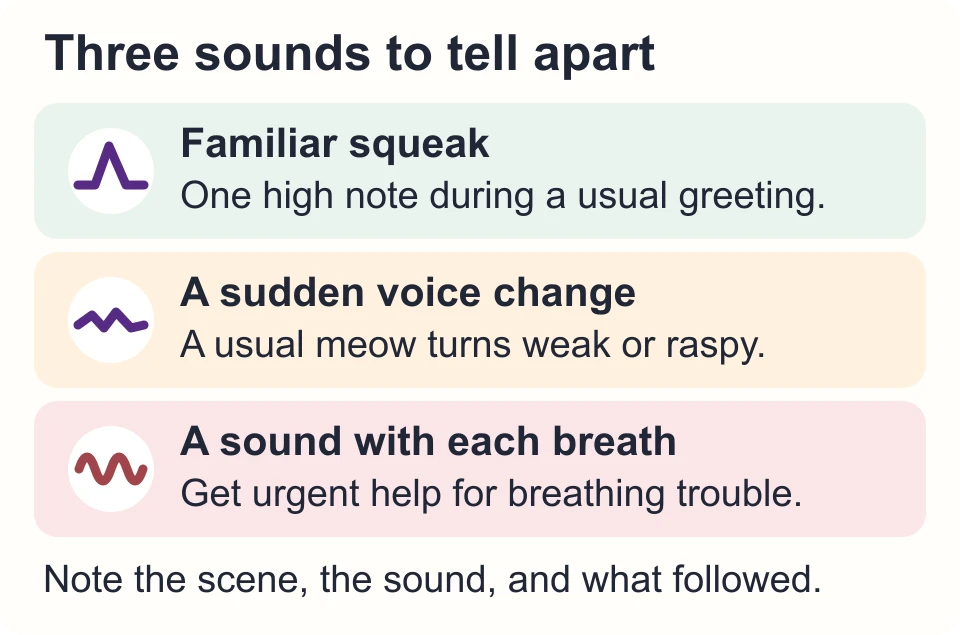
If different household members hear different sounds, agree on the observations you can both check. Use words such as single or repeated, mouth open or closed, moving or at rest. You may not agree whether a sound was a chirp or a squeak. You can agree that it happened when the cat crossed the room and stopped when they lay down. That shared description is enough to compare another day or to tell the clinic what happened.
Leave space around the sound A few seconds before and after a natural call can show its trigger and whether your cat settles normally.
If your cat looks comfortable and the event is over, check whether it repeats under the same conditions on an ordinary day. You can set a note on your phone without trying to provoke the sound. If there are worrying accompanying signs, contact your vet instead of collecting a longer sample.
Takeaway
A familiar squeaky greeting can be part of your cat's normal voice. Look for sudden changes, repeated breath sounds, or other changes in behavior. Use the scene and recovery to describe what you heard, and seek veterinary care promptly if breathing or swallowing is affected.
Everyday communication
Save a familiar squeaky greeting
When your cat is comfortable, use PetMira for iPhone to record a familiar squeak as it happens. Keep a separate note of what the cat was doing when you heard it.
 Record a naturally occurring call
- Compare timing with your own note
Available on the App Store
Download iOS App