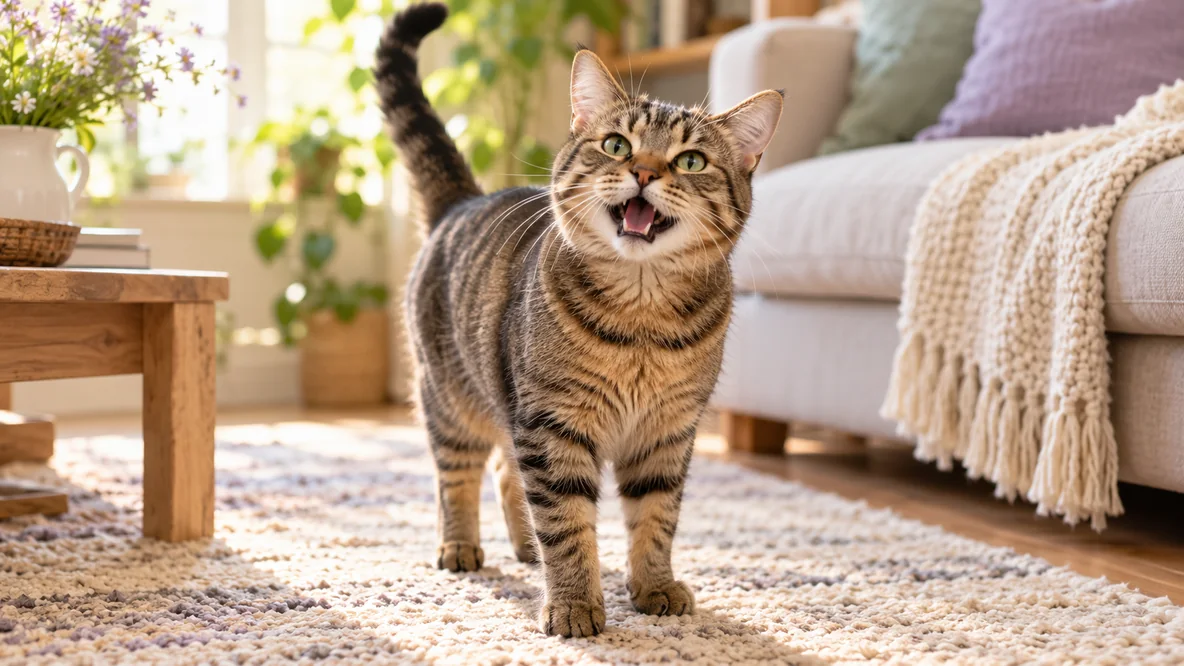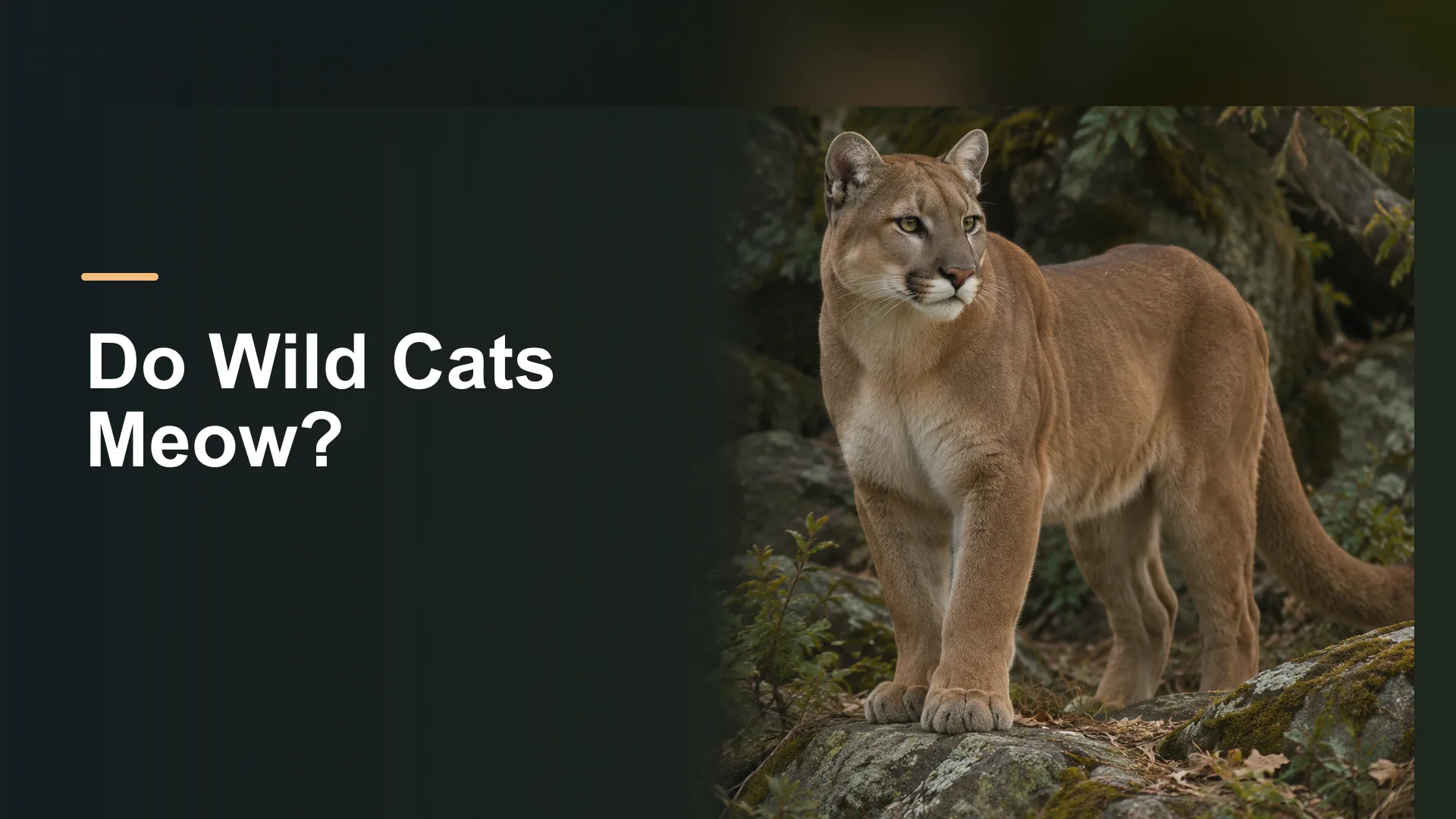
Yes, some wild cats meow or make calls that zoologists describe as mews. Researchers have recorded meows from African wildcats, and San Diego Zoo Wildlife Alliance lists a mew among a mountain lion’s sounds. Other species use a different set of vocalizations. The answer depends on the species and on what a source means by “meow.”
An African wildcat, a cougar, and a lion belong to the cat family, but they sound different and use their voices in different situations. A clip labeled “wild cat meowing” can mean anything from a documented call to a sound someone thought resembled their house cat. Start by finding out who identified the animal and what was recorded.
Which Wild Cats Make Meow-Like Calls?
Cat | Sound described in the cited sources | What to keep in mind |
|---|---|---|
African wildcat | Meows compared directly with domestic-cat recordings | In one study the wildcat calls differed in average length and pitch |
Mountain lion, also called cougar or puma | Mews, yowls, screams, and other calls | A physically large cat can make a mew as well as a loud scream |
Pallas’s cat | Honks, growls, chirps, and yelp-like calls | Smithsonian’s National Zoo distinguishes its usual sounds from a domestic cat’s meow |
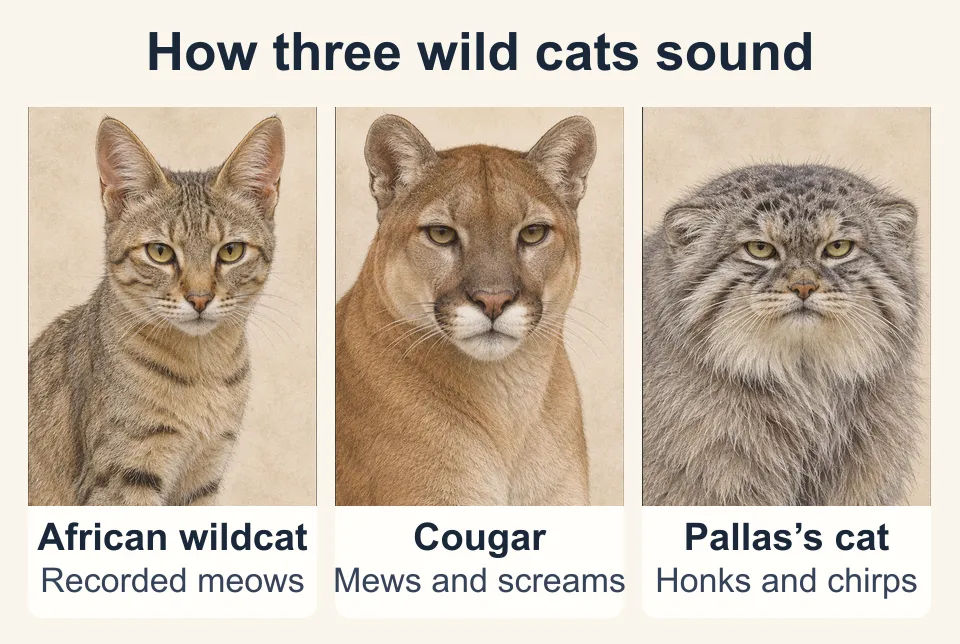
The African wildcat is the example with a direct acoustic comparison. Researcher Nicholas Nicastro compared its meows with recordings of domestic cats in a published study. The domestic-cat calls were shorter on average and had higher average fundamental frequencies, which relate to perceived pitch. The study gives a precise comparison between those recordings. A long or low sound from an unidentified cat is a different question. Nicastro’s wildcat and domestic-cat comparison
The mountain lion shows why size is an unreliable guide. Pumas are much larger than a typical pet cat, but the San Diego Zoo’s species account lists mewing alongside growling, yowling, purring, and other sounds. It also describes a high-pitched scream. You would hear very different things depending on which of those sounds was recorded. A clip that shows one call gives you a small part of an animal’s repertoire. San Diego Zoo’s mountain lion account
Pallas’s cats give you the opposite kind of example. The Smithsonian identifies honks, growls, chirps, and a yelp-like call in its account of the species, rather than the familiar house-cat meow. A small, compact wild cat can make a sound quite unlike the one you expected based on its appearance. This is useful when watching a clip billed as a meowing cat: look for the description from the people who know which animal made it. Smithsonian’s Pallas’s cat account
What Counts as a Meow in a Recording?
In an animal account, “mew” can be the name of a call. In a clip shared online, “meow” may simply describe what the sound reminded someone of. Check whether the source identifies the animal and has a recording or a written description. A field account may distinguish calls that sound alike to a casual listener.
Duration and pitch give you a way to describe what you actually heard. Say a call rises, holds, and ends quickly. Another might be repeated with short gaps or sound rougher near the end. Those comparisons give you more information than labeling either noise a house-cat meow. They also leave room for the recording setup, because distance, wind, background sounds, and speakers affect what reaches your ears.
Compare recordings with a named source Choose a zoo, wildlife institution, or research collection that identifies the species. Keep the call’s length and shape in your notes before deciding what familiar sound it resembles.
Why the Big-Cat Label Can Be Confusing
“Big cat” is sometimes used for any large-looking feline. It can also refer to a narrower group that includes lions and tigers. A cougar looks large and is often called a big cat in ordinary conversation, while its familiar species account includes a mew. That is why a general rule about what big cats “can” say can fall apart before you even listen to a recording.
Roars, chuffs, growls, and mew-like calls are better treated as words for kinds of sounds. Asking whether a lion has a roar is a different question from asking whether a particular soft sound in a short clip resembles a meow. The source matters in the second case. It can tell you whether someone observed the animal directly, which call they documented, and what happened around it. Without those details, you can still say how the clip sounds to you.
Age also matters when you compare examples. A recording of a young animal calling to another cat and a recording of an adult calling from a distance answer different questions. If a video shows a cub but the caption simply says “cats of this species sound like this,” keep the information about age with your description. A single recorded call gives you evidence that the animal in that scene made a sound. It leaves open which calls adults use, what is typical, and how often another individual makes the same sound.
How to Compare a Wild Call With Your Cat’s Meow
Use a naturally occurring sound from your own cat as a reference you know well. You might notice that it starts low and rises, or that it comes in two short bursts. Compare those details with a well-labeled wild-cat recording. If both rise in pitch, that tells you something about the resemblance. A similar curve does not mean the animals were doing similar things or making the sound for the same reason.
It also helps to watch and listen separately. An animal with wide eyes and an open mouth may strike you as making an urgent sound before you hear it. Listening first gives you a chance to describe its length and texture. Then watch the documented scene or read the record. That sequence helps you distinguish the sound, the identity of the caller, and the likely context.
When comparing a compilation, check whether the clips were recorded at similar distances and whether the editor adjusted the sound. An apparently louder call can come from a closer microphone. Use the sequence or shape of the call when loudness is uncertain.
If you hear an unfamiliar call outdoors, leave the caller unidentified unless you have enough information. Note the time, general location, and anything you saw without getting closer. Look for the local species in a wildlife agency’s account or a recording collection that identifies the caller. A similar sound alone leaves open whether it came from a wild cat or another animal.
For a house cat, start with what those similar sounds mean in a domestic-cat context.
Takeaway
Wild cats can meow or make meow-like sounds, but the details vary by species. African wildcats and mountain lions are documented examples. When a clip sounds familiar, check the animal, the source, and the setting before deciding what the resemblance tells you.
PetMira for iPhone
Record a familiar sound from your own cat
Capture a natural meow from your house cat in the PetMira iPhone app and compare its AI interpretation with what you noticed at home.
 Record your own cat in a familiar setting
- Compare the suggestion with your observations
Use an identified wildlife source for calls you hear away from home.
Download iOS App