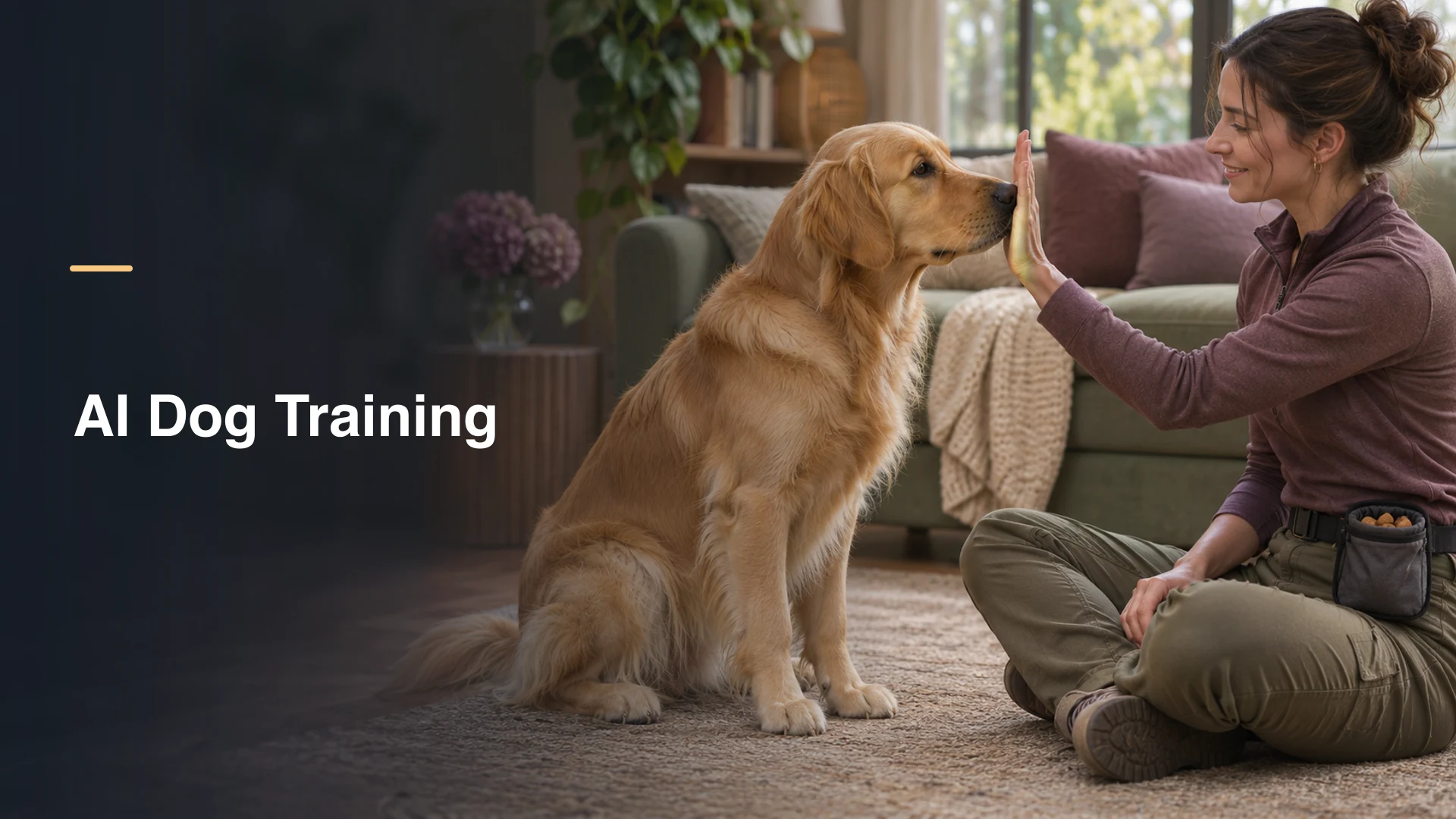
AI dog training tools can help you plan a short practice session, change the difficulty and track what happened. The dog learns from the environment and the consequences of its actions. A plan on a phone helps only when the suggested steps are humane, fit the individual dog and give you a way to observe progress. For ordinary skills, an AI tool is often most useful before or after practice, while your hands and attention are free during it.
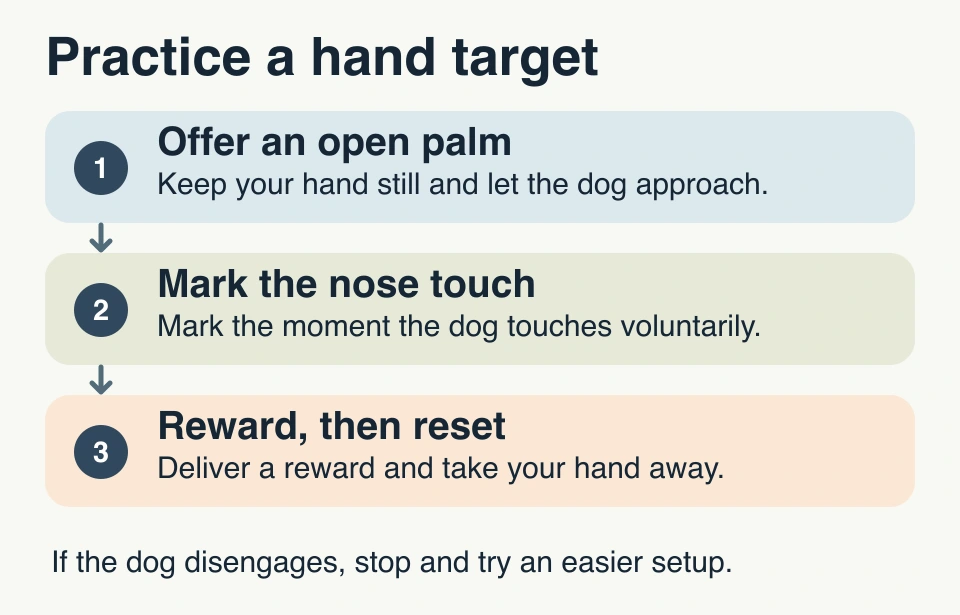
A reasonable first job is teaching a simple hand target in a quiet room. “Help my dog become obedient” leaves the tool too much to guess. “Give me a short, reward-based plan for a dog voluntarily touching my open hand with its nose in a quiet room” gives you a plan you can read and judge. You should be able to explain in one sentence what counts as success before you start.
Need | Useful support | Your check |
|---|---|---|
A small practice plan | Automated planner | One observable goal |
Demonstration | Trainer-created lesson | Clear reward timing |
Troubleshooting | Human video feedback | Include setup and what happened next |
Fear or bite risk | Qualified human support | Distance and safety first |
Ask the tool for something you can observe
Change one thing on the next attempt Keep the setup that worked and adjust distance, duration or distraction one at a time. Stop and simplify when your dog disengages.
Describe the setting, current skill and practical limit. For example, your dog already approaches your hand at home but ignores it outdoors, and you can provide a little quiet practice before dinner. Ask for one starter setup, an easier version if the dog walks away and a rule for stopping. If the response changes several things at once, pick the simplest part that you understand. Avoid instructions that promise speed on a fixed schedule regardless of the dog’s behavior.
For a hand target, begin somewhere the dog is comfortable and can move away. Offer a still open hand in easy reach, without blocking the dog’s head or following it. If the dog voluntarily touches the hand, mark the moment and deliver a reward the dog likes. Take your hand away and give the dog a chance to choose again. If it turns away or disengages, try fewer repetitions, less distraction or a more comfortable distance another time.
For a different example, suppose your dog can settle on a mat in the living room. An AI plan might put the mat by the front door and add a visitor immediately. That changes location and difficulty together. Keep the familiar room and practice moving the mat a small distance first. Then add a quiet person already in the room before trying a doorbell or a greeting. Separate changes so you can tell which part produced a different response.
Review every suggested step before using it
A usable plan names the behavior you want and what you will reward. It also gives the dog a way out of the situation. The American Veterinary Society of Animal Behavior recommends reward-based methods for training and behavior modification. If a tool suggests using fear, force, pain or a correction to suppress behavior, reject that instruction and use a humane plan. A confident answer or a large number of downloads does not validate a training recommendation.
Check whether the tool asks for information it cannot verify. A single clip without the moments before and after an event does not show the dog’s full experience. Light, camera angle and background noise can obscure the behavior you want to discuss. If you use a video for feedback, keep the dog’s whole body in view when doing so is safe. Describe the setup yourself so a coach can understand what is out of frame. Share recordings only where you are comfortable with the tool’s privacy and retention settings.
When someone could be bitten or a dog shows growing fear, stop the practice and create distance from the trigger. Contact a qualified reward-based professional or your veterinarian when appropriate. A chat tool cannot see a dog that is outside the camera frame or guide you reliably through a developing emergency. If behavior changes suddenly or might be connected to pain, ask a veterinarian about the change. For non-urgent changes, keeping a short health timeline for your veterinarian can help you explain what you noticed.
Decide whether you need a planner, lessons or human feedback
An automated planner can turn a goal into a routine and help you revise it when you get stuck. Check whether it adapts to new observations you provide, or simply gives you a prewritten sequence. PawCoach advertises plans based on a submitted video. Decide whether you are comfortable sharing a video from your home and look for a way to correct the system if it misreads what happens off-camera. A lesson app gives you examples of timing and setup that can be easier to follow than text. Woofz describes courses developed by trainers and access to a Dog Assistant; check the help available in your plan and whether a response is automated or from a person.
Human feedback can help when you repeatedly miss the timing or cannot tell what your dog is responding to. Dogo advertises personalized plans and trainer feedback on video. Compare what you need with what a particular plan provides, including how often feedback is offered and what kind of clip the reviewer needs. A product with written plans and an assistant has a different purpose from direct coaching, even when both call the plan personalized.
Make a quick note after each session. Record where you trained, what you asked for, what counted as a success and when the dog stopped engaging. If you use PetMira, its care guides cover everyday topics including behavior and training. Keep the actual practice note wherever you can find it next time. Choose a dedicated lesson or a qualified trainer when you need instruction or feedback on handling.
Change one variable at a time and leave a next step
A session that goes well can still finish early. Note what made that version easy, then try one change the next time. Increase distance, add a small distraction or practice in a new spot, one at a time. If the dog struggles, return to the version that worked. Ask the tool to simplify a single variable instead of starting over with an entirely new program.
Before adding a distraction, spend a session reading your dog’s posture and signals.
Keep the next step small enough to try later that day. “Practice in the hallway after dinner, before anyone comes to the door” is an action. “Improve around distractions” is a long-term goal. The tool can be useful for translating your note into the next practical move, while your dog’s willingness to engage tells you whether your choice fits.
The takeaway
Use AI to help plan and document reward-based practice, then judge the plan by what your dog can comfortably do. Write down the setup, the response and what you will change next time. Seek qualified human help when safety, fear or a persistent problem exceeds what you can safely address through a generic plan.
PetMira for iPhone
Find everyday dog behavior guides
Explore behavior and training topics in PetMira. Keep a short practice note separately so you can use it for your next session.
 Explore everyday behavior topics
- Record visible care observations
For hands-on training feedback, work with a qualified reward-based trainer.
Download iOS App