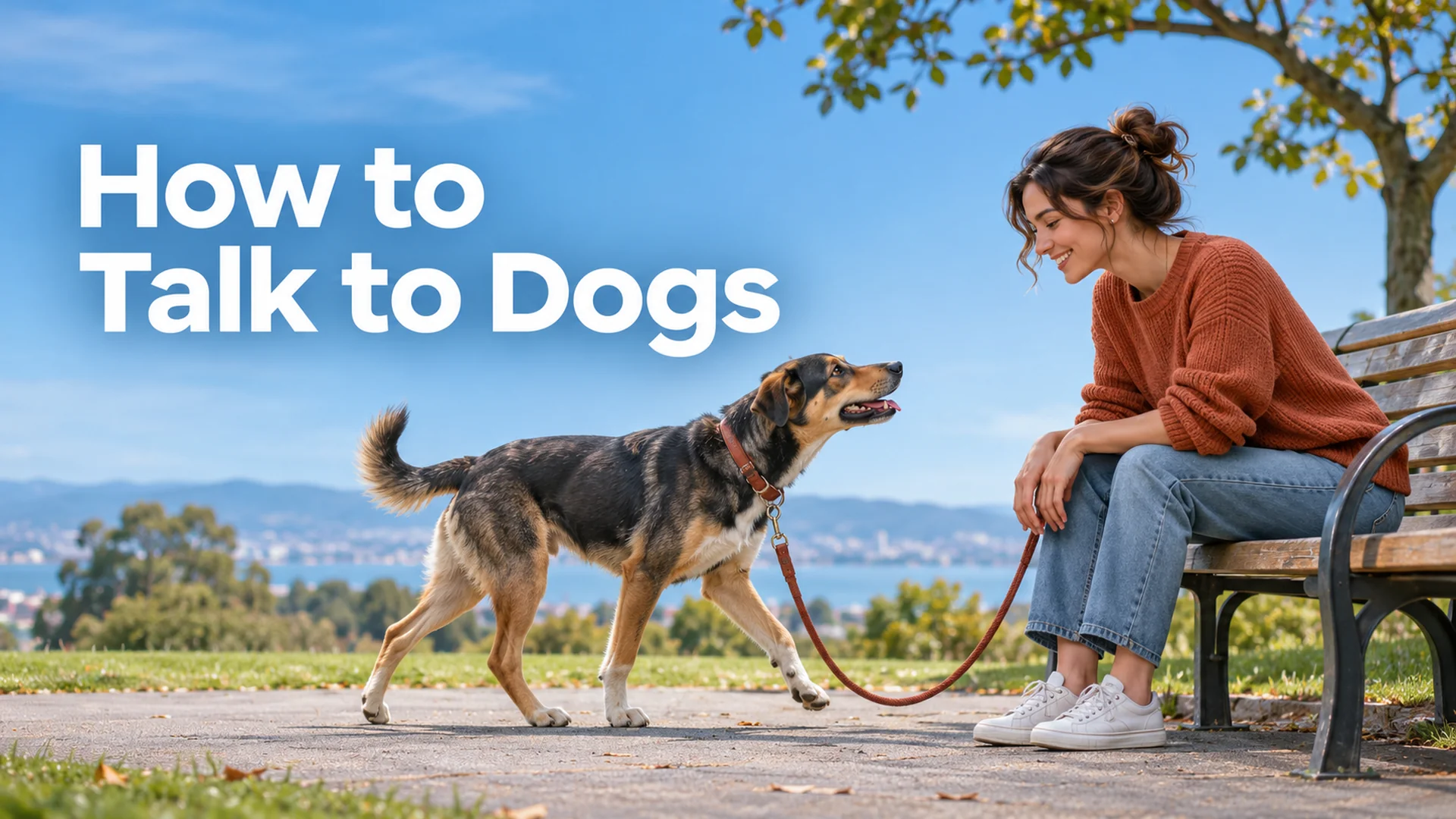
To talk to your dog, use a calm voice, give one familiar cue, and leave time for a response. When your dog does what you asked, mark the moment and offer a reward they value. If they’re busy sniffing, watching another dog, or trying to move away, start by changing the situation. It’s easier to respond when they feel comfortable and can pay attention.
You can chat to your dog as much as you like. For something you want them to learn, pick one short word or gesture and connect it to a clear action. Start with a small request you can practice safely at home, such as turning toward you when you say their name.
Pick a cue and decide what it means
Choose the action first. For a name cue, you might want your dog to turn their head toward you. For a hand cue, you might want them to touch their nose to your open palm. Be precise about what counts so everyone who practices with the dog can reward the same response. If one person says “down” for lying on the floor and another uses it for getting off the couch, each person can pick a different word for their request.
Practice when your dog is awake, comfortable, and free to move. Set out a few small treats they already enjoy, or choose a familiar toy if play keeps them engaged. The reward needs to matter to your dog in that situation. Some dogs will happily take a treat indoors and prefer to get back to sniffing once you’re outside. Start where you know what they’ll value and can deliver it quickly.
Try your normal speaking voice Say the cue at a volume you could use across the kitchen. If the room is loud or your dog has their attention on the window, move to a quieter spot before you practice again.
Give your dog time to answer
Stand or sit a few feet away in a quiet room. Wait for a moment when your dog is relaxed and looking slightly away.
Say their name once, in an easy voice. Keep your hands relaxed while you wait so the word is the clearest signal.
As soon as their head turns toward you, say a short marker such as “yes” and give the treat. Deliver the treat promptly so the marker and reward go together.
Let your dog turn away again before the next try. After a few easy repetitions, finish and let them go back to what they were doing.
If they keep watching something else after the first cue, give them a moment and then reset. Move to a quieter place or wait for the distraction to pass before trying again. If the head turn is new, reward a small glance at first. You can build toward a fuller turn as your dog catches on. VCA’s guide to voice and cues offers more on why the way you say a cue matters.
You’re ready to make the exercise a little harder once your dog consistently turns toward you on the first cue in that quiet setting. Try another familiar room before adding a busy yard or a longer distance. Change one thing at a time. If several tries get harder after you move, go back to the last spot where you both understood the game.
Give the cue a little space in ordinary conversation, too. If you say your dog's name repeatedly while talking to someone else, the name may be less clear as a request. For a dog who hears their name all day, try a separate cue such as “look.” Teach it with the same sequence. Each time you say it during practice, be ready to notice and reward the glance.
Match what you do to the moment
What’s happening | What to try | What to look for |
|---|---|---|
Your dog knows the word at home and misses it outside | Move farther from the distraction and try once. | They can turn toward you again. |
Your dog follows the hand cue and misses the spoken one | Say the word, then offer the familiar gesture and reward. | They begin to respond to the word before the gesture. |
Your dog is looking at the person holding the treat bag | Keep the treat out of view until after the response. | The cue gets a response with empty hands. |
Your dog moves away during an interaction | Pause and leave a clear path away. | They can choose whether to return. |
Your own movements may be more obvious than your words. You might discover that your dog sits when you lift your hand and stays standing when you only say “sit.” If you want both cues to work separately, say the word first, pause briefly, then give the hand signal if needed. Reward the sit either way while the word becomes familiar. When they start sitting on the word, reward that response and leave the hand motion out.
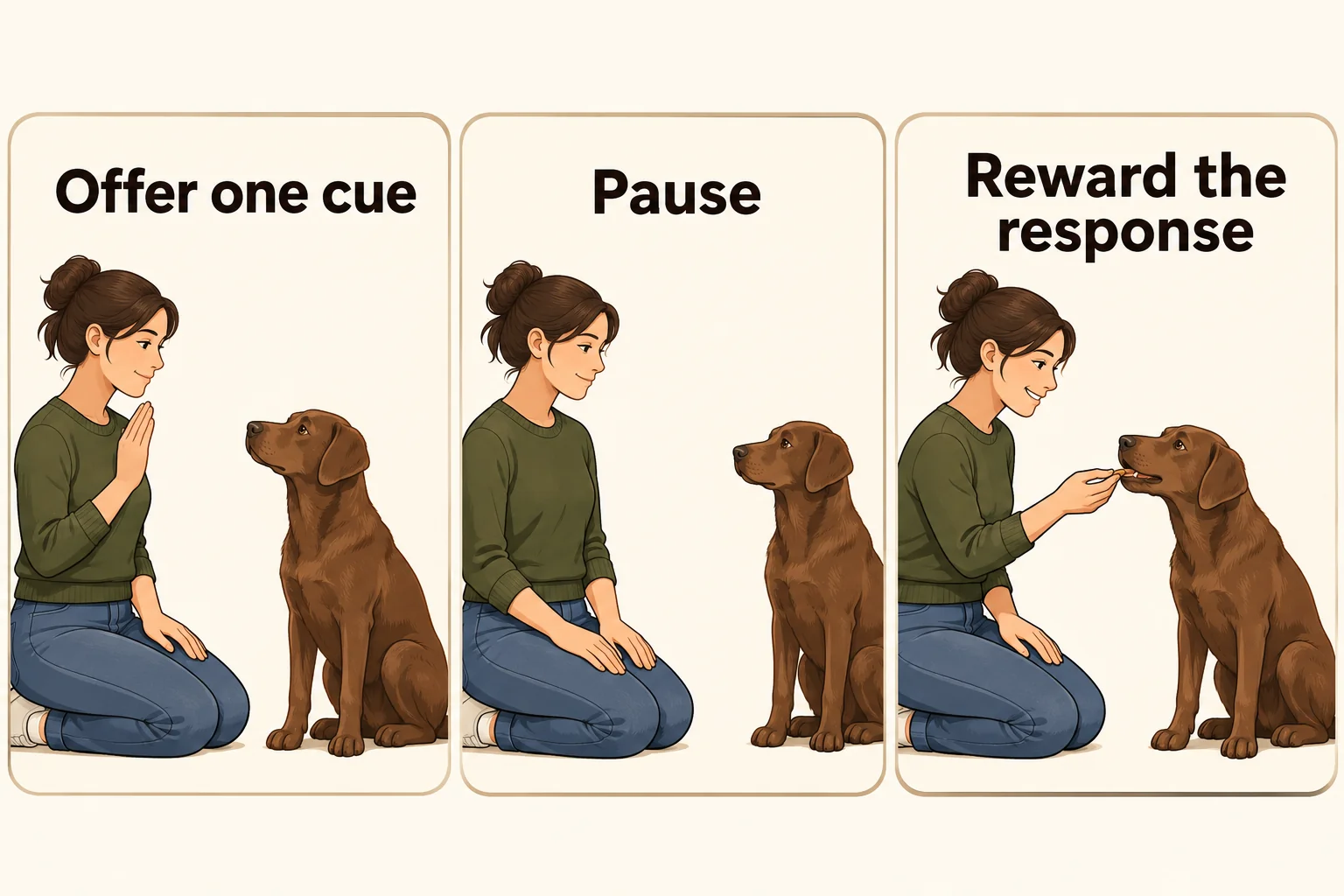
If you need your dog to move away from a busy sidewalk, use a safe route and the leash setup you already have. Save practice for when you have room and time. For everyday teaching, keep the reward predictable and make the request easier when your dog is struggling. The American Veterinary Society of Animal Behavior recommends reward-based methods for training and behavior change.
Give your dog a say in greetings and touch
When your dog comes over for attention, turn a little sideways and leave space for them to walk past. If they’ve been comfortable with petting before and they approach with easy movement, offer a few gentle strokes in a familiar spot. Then rest your hands. A dog who comes closer or nudges you may be inviting more contact. If they turn away, step back, or simply stay still, keep your hands to yourself and give them time.
Try this when a guest sits down in your home. Ask the guest to let the dog choose the distance. The dog might sniff a shoe and walk off. That's a complete greeting. If your dog is uneasy around visitors, set up a quiet place they can retreat to before anyone arrives, and have guests leave that space alone.
For a dog you’ve just met, ask the handler before you approach. An unfamiliar dog who comes within reach may just want to sniff. Keep the greeting short, give them a way out, and wait for them to seek contact. This matters especially when a leash or a narrow doorway limits how far they can move.
If your dog suddenly starts missing familiar spoken cues in quiet rooms or seems newly sensitive to ordinary sounds or touch, check in with your vet. For a dog who growls or snaps when approached, give them space and get qualified help before trying to practice close contact.
Takeaway
Give your dog one clear cue, time to respond, and a reward they can connect to the action. When they need more space or an easier setting, change what you do and try again when they’re comfortable. Start with one familiar cue in a quiet room and watch what your dog offers.
PetMira for iPhone
Explore PetMira on iPhone
Get to know your cat or dog with tools for sound, photos, and everyday observations.
 Explore AI interpretations of recorded pet sounds
- Get breed suggestions from a photo
- Keep a photo log of visible changes
Available on the App Store.
Download iOS App