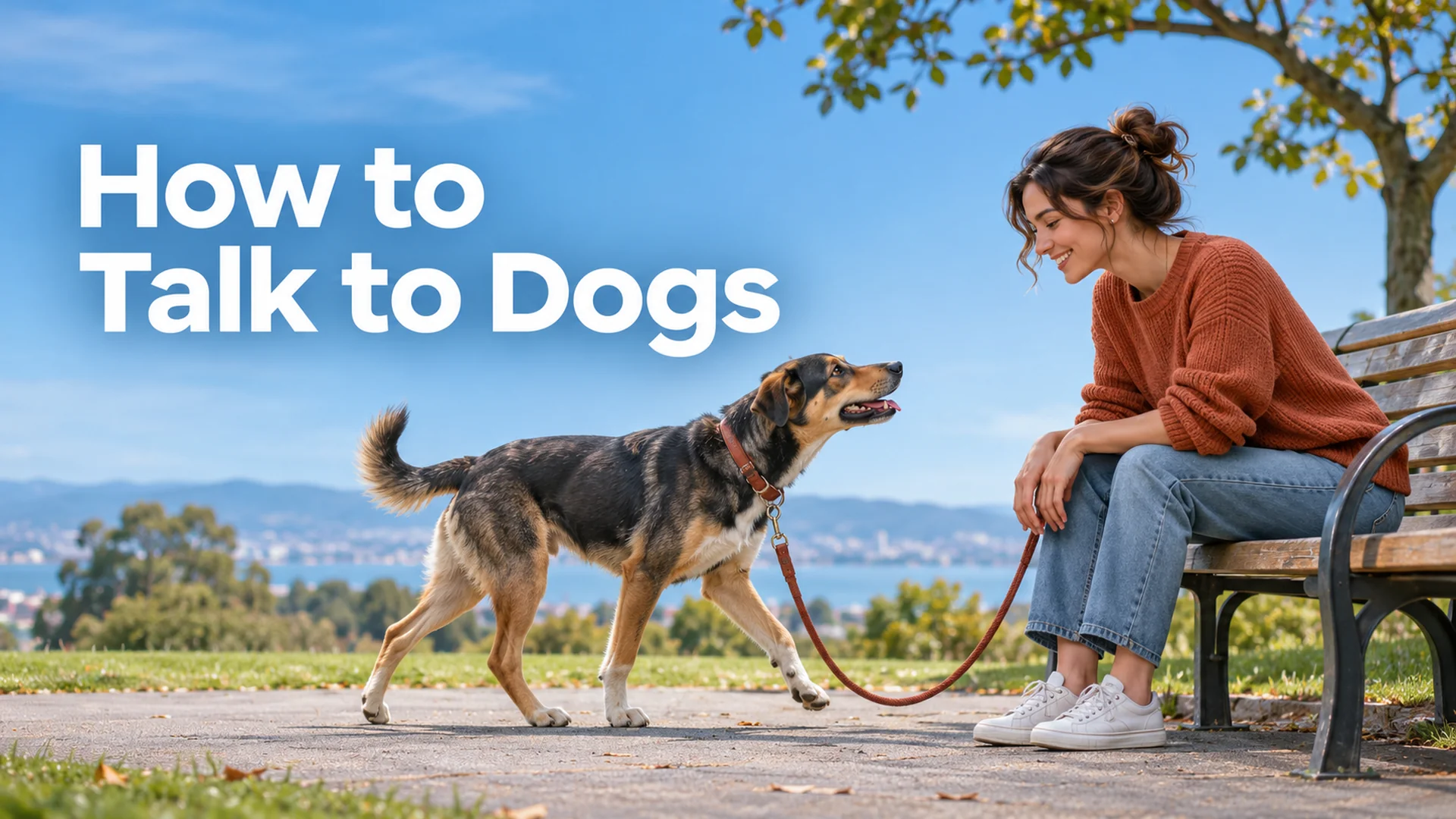
To read dog language, look at the whole dog and what happened just before the signal. A wag with a loose body and curved approach suggests something different from a wag above stiff legs and a fixed stare. Start with where the dog is putting their weight, then check their face, tail, and any sound. If they turn away, freeze, or growl as you move closer, pause and give them room.
You can practice this with your own dog while they go about a normal day. Watch from a comfortable distance and let them move freely. With a dog you don't know, use what you see to decide how much space to leave.
Read the whole dog
Notice the first change you can see. Did the mouth close, did the front feet stop, or did the dog shift their weight backward? Then look for changes that agree with it. A dog whose whole body goes still as you reach toward them is giving you more information than one who simply pauses between sniffs.
A dog's familiar posture gives you a useful reference. Take a look when your dog is resting or exploring somewhere familiar. Notice where their tail naturally falls, what their ears look like at rest, and how they move when their muscles are loose. A naturally curled tail and ears that hang down still move, but the change can be easier to spot at the base of the tail or ear. VCA’s guide to canine communication explains why posture, facial expression, and sound all belong in the same reading.
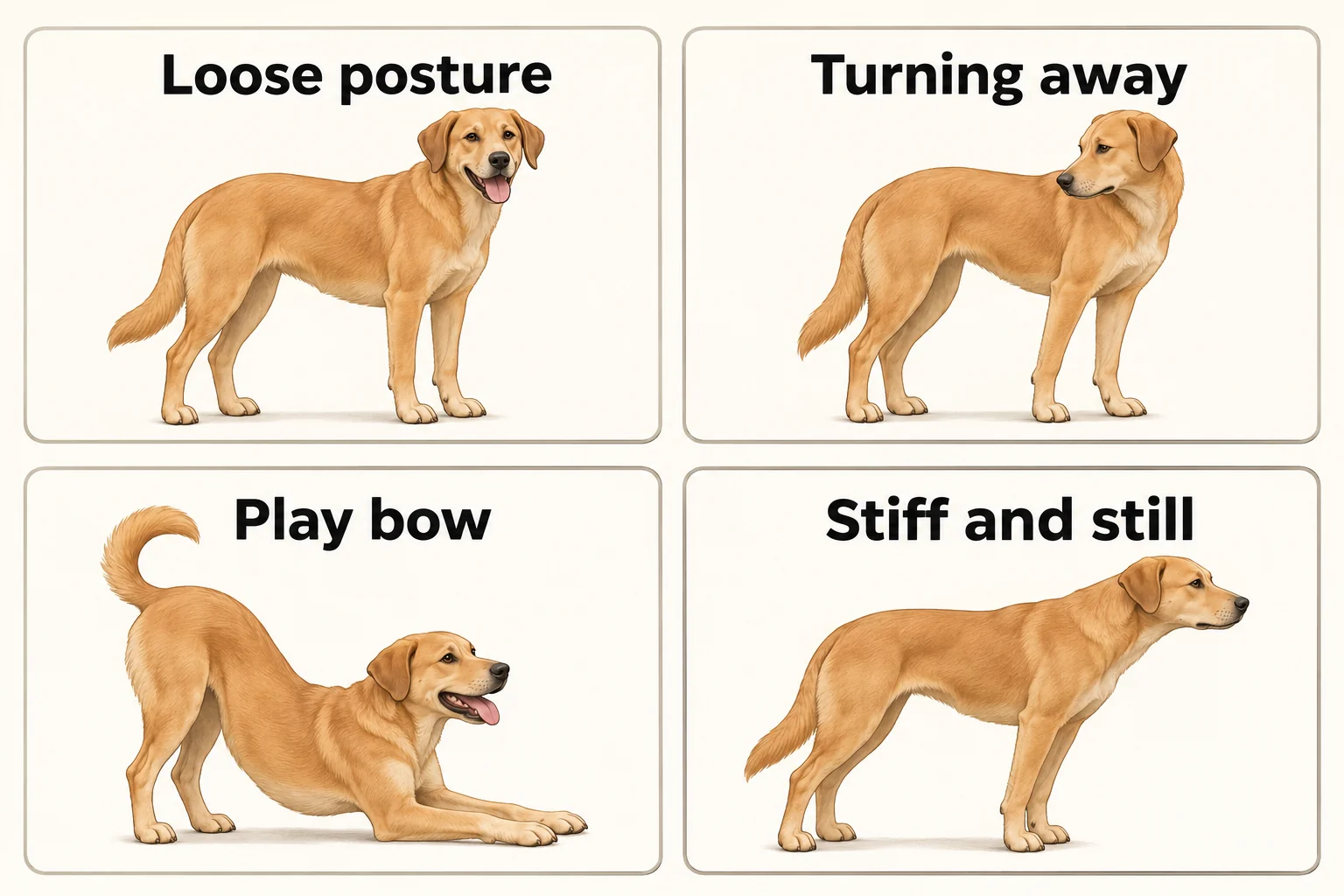
The combinations below give you a starting point. Look for several clues and check what changes when you pause or add distance.
What you can see | What to check next | What you can do |
|---|---|---|
Loose legs, soft face, easy movement | Does the dog choose to come closer? | Stay still and leave room for an approach. |
Head turns, weight shifts back | Did it happen when someone moved in? | Pause and make space. |
Front end drops, hindquarters stay up | Is movement loose, with breaks? | Let play continue while both dogs choose to reengage. |
Body stiffens, gaze fixes | Is the dog guarding space or watching a trigger? | Stop approaching and move away calmly. |
Low posture, tail tucked, ears back | Is the dog trying to get farther away? | Clear a path and reduce pressure. |
At the front door, for example, your dog might take two steps toward a guest and then lean back. That sequence shows both interest and hesitation. Have the guest pause and give the dog a clear route away. Look again once the person stops advancing. The dog's next move can clarify what they need in that moment.
Raised hair along the shoulders or back can tell you a dog is highly aroused. Look at what accompanies it. A dog who can curve away and resume sniffing is responding differently from a dog whose gaze stays fixed and whose weight keeps shifting forward. If you're walking past, leave more room and watch whether your dog can turn away on their own.
Check the tail against the feet When a wag catches your eye, check whether the dog is moving fluidly or standing rigidly. If the feet stop and the body stiffens, stop closing the distance even if the tail keeps moving.
Listen for the situation around the sound
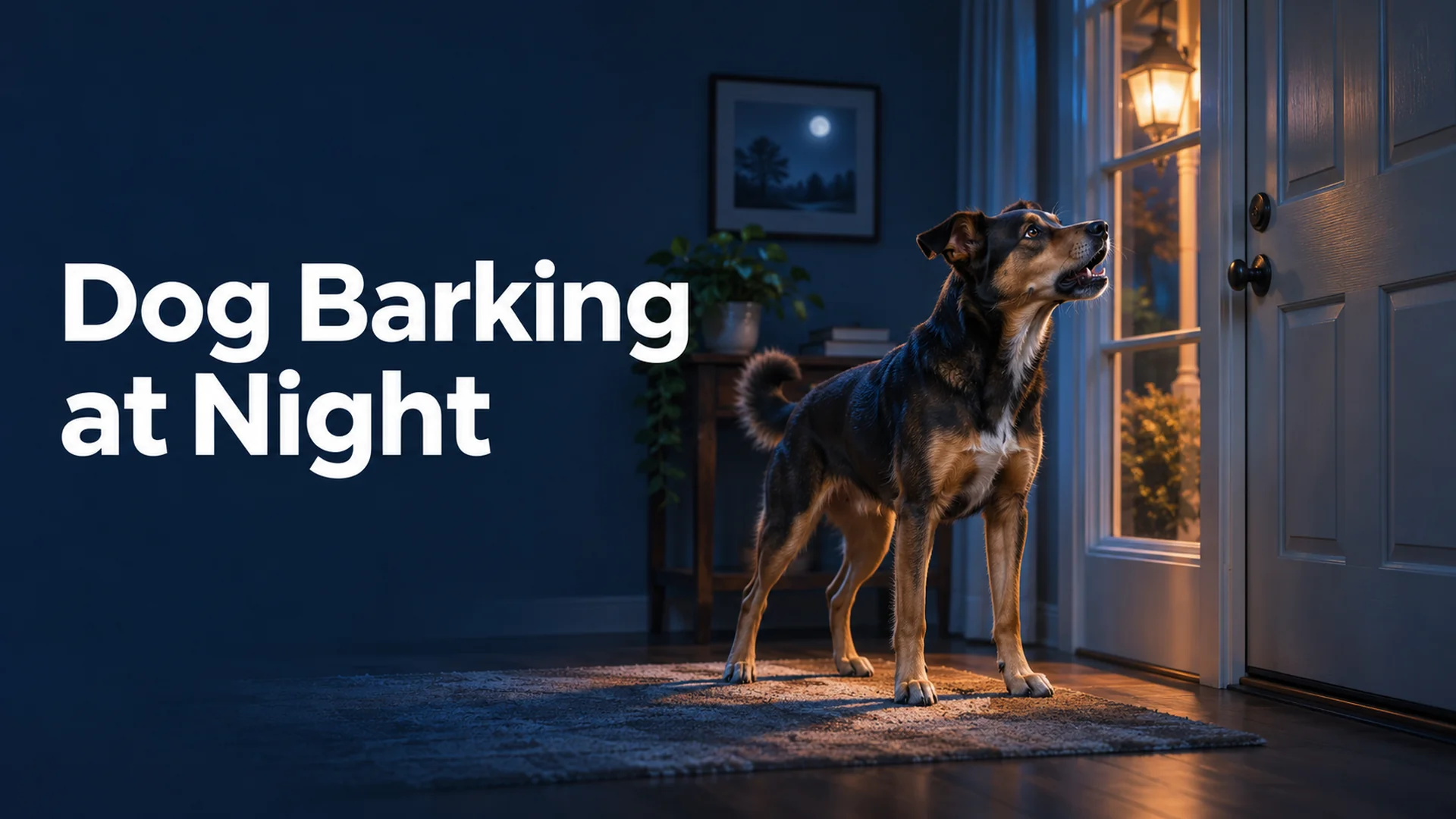
A bark can start when the doorbell rings, when a toy rolls out of reach, or when a familiar person picks up the leash. The next few seconds help distinguish these situations. A dog looking from you to the toy has a different focus from one watching the doorway. Compare the dog's direction of attention, posture, and what they do after the first bark. Even a familiar bark can occur in more than one setting.
If you’re recording what you heard for someone else, these ways to describe a bark in words can help you capture the timing and direction.
Whining can happen when a dog is waiting for something, separated from someone, or uncomfortable. Start by checking what changed. A brief whine followed by relaxed movement as you pick up the leash is different from repeated whining that begins when your dog tries to lie down. If the sound starts with movement or handling and keeps happening, mention the pattern to your vet.
A growl during a loose, bouncy game can sound similar to a growl from a dog who stops moving over a chew. In the second situation, give the dog space and keep other people and pets back. Leave the chew where it is while you make room. In play, watch what happens when the dogs break apart. Two dogs who freely return with loose movement give you more information than the sound alone.
A whine can also happen when another dog is nearby. One dog may whine and then sweep around in a loose curve to invite play. Another may whine with their legs braced and their head pulling back from the leash. Leave more room in the second case and watch for a return to easy movement.
Watch how the signals change
Try putting the sequence into one sentence. For example, “When the stroller rolled past, he closed his mouth, leaned away, and started sniffing again after it passed.” That description captures what happened and when the dog recovered. It gives you a better comparison the next time a stroller goes by than a note that says “scared of strollers.”
If the same change keeps happening, compare two ordinary occasions. Did the stroller pass at the same distance? Was it rattling both times? That comparison may help you spot which part of the situation matters. Keep the observations you happen to see on normal walks and let the dog choose their distance.
The same method helps with subtler signals. A lick of the lips just after food is ordinary. The same motion during a tight hug, combined with a turned head and weight shifting away, is a good reason to end the hug and see whether the dog chooses to stay. A yawn as your dog settles for a nap has a different context from several yawns during a noisy visit. Let the surrounding events guide what you check next.
Try comparing a dog who rolls over in play with a dog who goes still on their back when someone leans in. During play, you might see a soft mouth and easy movement as the dog gets up again. A stiff body, tucked legs, or a turned head during close contact are good reasons to straighten up and step back. Wait for the dog to choose where to go.
Know when an observation needs a follow-up
If your dog suddenly starts pulling away from familiar touch, vocalizing during everyday movement, or showing a change in appetite or activity alongside new signals, call your vet. Tell them when the change began, what brings it on, and whether your dog settles afterward. Those details are useful even if the behavior happens too quickly to film.
When a dog repeatedly freezes, growls, or snaps in a specific setting, give them space and prevent repeat encounters while you seek help. For example, a dog who stiffens when people pass their bed can rest in a quieter area where people don't have to walk close by. A veterinarian or qualified reward-based behavior professional can help you work out a safer plan.
Takeaway
Read dog language as a sequence. Notice the whole dog's posture, check what happened just before the signal, and see how the dog responds when you pause. Start with one familiar moment today and describe what you see before deciding what it might mean.
PetMira for iPhone
Explore PetMira on iPhone
Get to know your cat or dog with tools for sound, photos, and everyday observations.
 Explore AI interpretations of recorded pet sounds
- Get breed suggestions from a photo
- Keep a photo log of visible changes
Available on the App Store.
Download iOS App