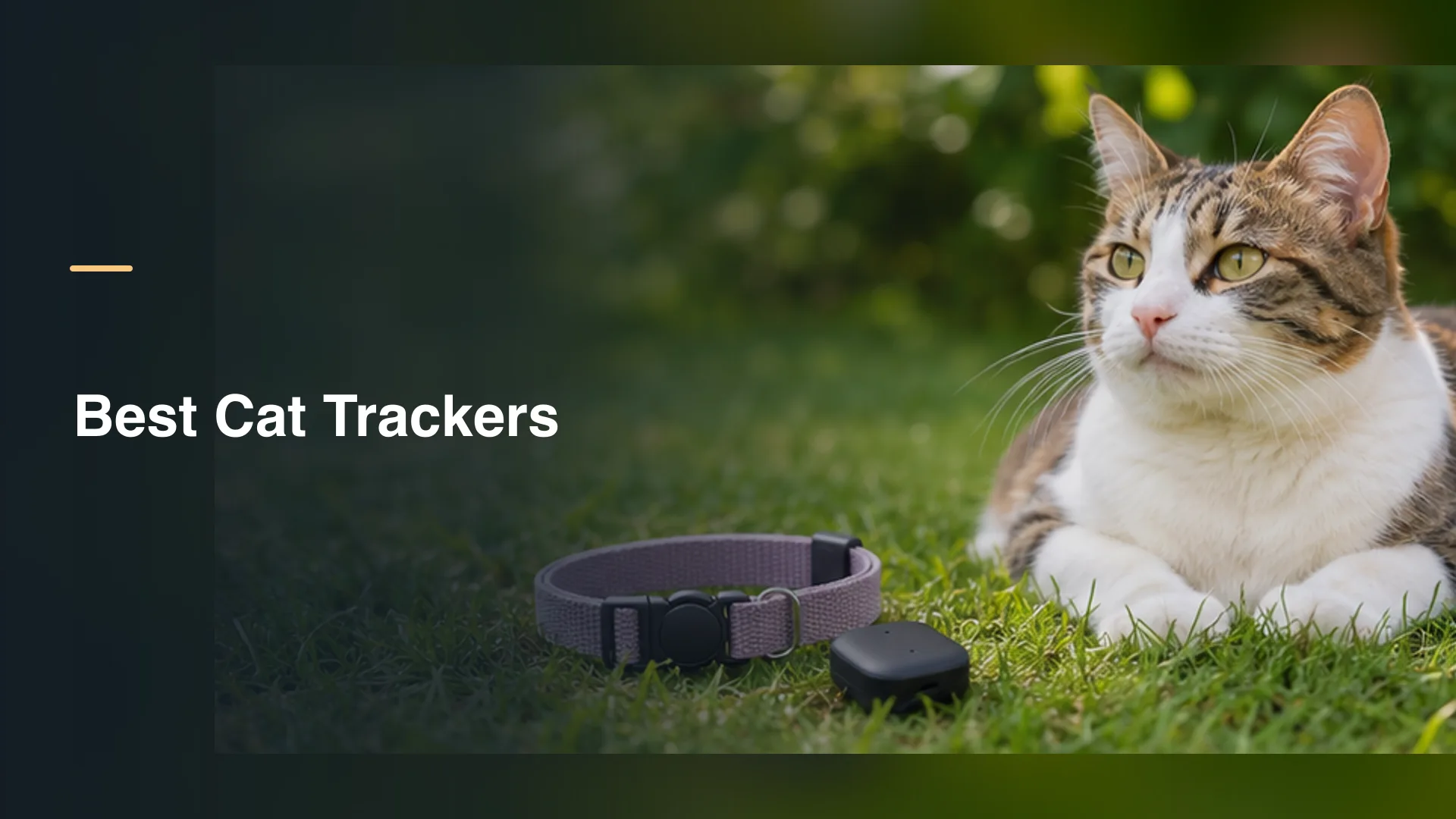
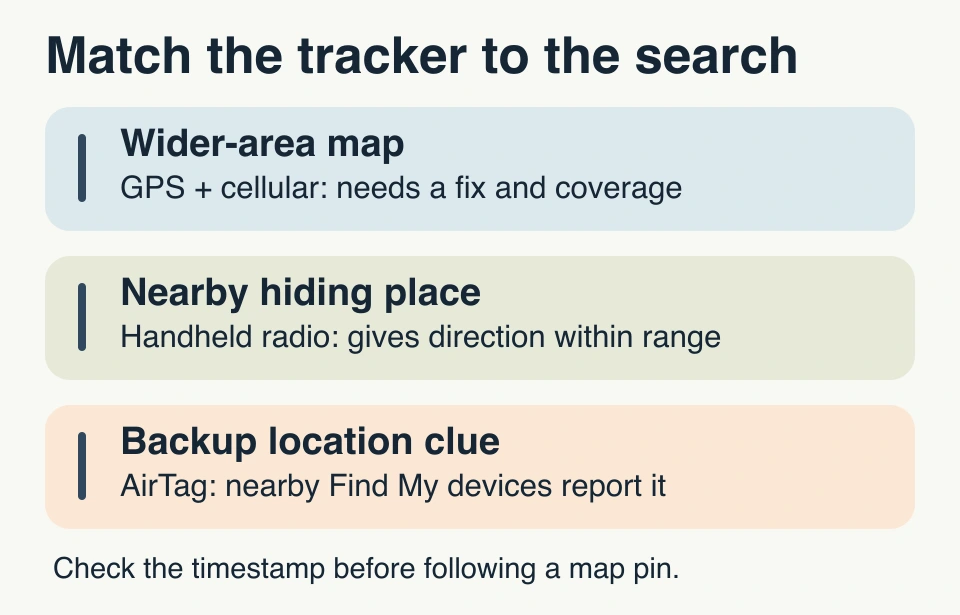
Choose the best cat tracker by where you would need to search. Tractive CAT 6 Mini is a good fit when you need a wider-area map search, your cat can safely wear the tracker, and local mobile coverage supports location updates. Tabcat is a better match for finding a hiding cat within reach of a handheld receiver. An Apple AirTag can help find belongings through the Find My network. Treat a tag that depends on nearby devices as a secondary clue if you attach one to a cat’s collar.
Imagine that it is dark and your cat has missed the usual evening return. If your first question is which street to search, a location reported on a map is useful. If you are already walking along the right fence but cannot see behind a shed, a receiver that indicates which way to move may be more helpful. If the cat regularly vanishes into a cupboard, you may need to change the routine and secure hiding places before buying anything.
Device | Useful for | Limit |
|---|---|---|
Tractive CAT 6 Mini | Map search across a wider area | Needs a safe fit and mobile coverage |
Tabcat | Finding a nearby hiding place | Handset needs to be within radio range |
Apple AirTag | Backup location clue for an item | Updates depend on nearby Find My devices |
Choose a device for the first place you would look
Test the tracker off the cat first Hide it on a bag nearby, note the reporting delay, and check what your search looks like under a weak signal.
Tractive’s cat model uses satellite positioning and mobile connectivity. A location fix and a connection to deliver that location are separate requirements. A building can obstruct the signal, and a patch of weak service can delay reporting even if the tracker knows roughly where it is. Before using it for a roaming cat, check the stated fit requirements, coverage and subscription terms for your country. A connection available near your kitchen does not prove it will work near a creek or across a large parking area.
Tabcat uses a radio tag and a handheld unit. The handset guides you toward the tag when you are close enough to receive it. It is attractive if the cat generally stays nearby and you routinely check hard-to-see spots. Walk a slow pattern and pay attention to how the signal changes after you move past walls or across levels. Think of it as help once you are near the right place. Its usefulness falls when your first question is which neighborhood to enter.
AirTag is designed for finding items. It sends a Bluetooth signal and can use nearby devices in Apple’s Find My network to report a location. That can provide a piece of information near homes or sidewalks with regular foot traffic. It does not create a continuous map track when no participating device passes close enough. Look at the last update time before you cross town. A stale dot may show where a loose collar was detected earlier.
This comparison uses manufacturer documentation and the way each device reports its location. It reflects three different search jobs rather than a side-by-side field test. Before deciding, look for a return window that gives you time to test both the attachment and the way the device reports from a real hiding place near your home.
Inspect what your cat would actually wear
The device’s headline weight may describe the unit without a case or collar. Put together the collar, attachment and charged tracker before deciding whether it sits comfortably. Watch whether it swings into the water bowl or bumps the floor as your cat crouches. With a breakaway collar, make sure the mounting hardware does not obstruct the release. Follow the collar maker’s instructions and check the fit on your cat. If the collar changes how the cat moves or the cat repeatedly tries to remove it, reconsider the setup.
Breakaway collars can detach by design when snagged. That means the tag might lead to a fence instead of to the cat. Check the immediate surroundings calmly, then broaden the search and follow a missing-cat plan if the collar is all you find. Keep your cat’s microchip registration and contact details current. A collar tracker provides location clues while it is attached. A registered chip can help someone return the cat after a shelter or clinic scans it.
If your pet is still settling into a home, prioritize setting up a safe routine at home.
Don't rely on a new tracker before you have walked around with it yourself. Put the equipment on a bag, ask someone to carry it to a safe nearby location, and practice finding it from your usual starting point. Look at the update timestamp and estimate how far a moving cat could have gone since then. Try the side of your building with poorer service and test whatever low-battery message or notification you intend to use.
Compare the effort you will put in every week
For a GPS and mobile tracker, ask how often you can realistically recharge it and who in the household will notice a warning. Some settings increase reporting frequency and can reduce runtime. A home test with the same notification and map settings you intend to use gives you a better sense of the routine than a product headline. When comparing costs, count the collar or mounting hardware and the subscription over a period you can budget. Check what features are available when a plan lapses.
A short-range radio tracker has a different upkeep problem. You need to find the charged or battery-powered handset when the cat vanishes and remember where the spare batteries are. Store it beside something you grab for a search, like a flashlight. With a crowd-sourced tag, check the mobile ecosystem required to see it; a family member who looks after the cat should understand how to access useful location information with your permission.
Trackers can also produce activity summaries. Treat a change as a reason to observe your cat and check the device, which might have slipped or been left on a table. If your cat comes home with dirt or a visible change in its coat and is otherwise comfortable, take a quick photo so you can compare it with the cat’s usual appearance. PetMira’s photo-based care log can store fur or skin observations. It does not locate your cat. If you see signs of injury or illness, prioritize veterinary advice over documenting a change.
The takeaway
Use a GPS and mobile tracker for a map search if the cat can safely wear it and the area has coverage. Use short-range radio for nearby hiding places and treat a Find My tag as a backup clue. Before counting on any collar device, practice an at-home search and decide what you will do if the last reported location is old.
PetMira for iPhone
Log a visible change after your cat returns
PetMira can help you compare photo observations of your cat’s skin and fur over time.
 Keep a photo history
- Compare daily appearance
If your cat appears injured or unwell, seek veterinary advice first.
Download iOS App