Start your kitten in one quiet, secure room with familiar kitten food, fresh water, a litter box they can step into, and somewhere safe to hide. Let them come out of the carrier on their own, keep the first few days predictable, and arrange a first vet visit soon after they arrive. Once they're eating, using the litter box, and exploring their starter room comfortably, you can introduce more of the home a little at a time.
This guide is for a newly adopted kitten who already eats solid food independently. If you found a very young kitten who still needs milk or you aren't sure they can eat on their own, contact a vet or kitten rescue promptly for a feeding and warmth plan.
Set up one quiet room before pickup
Choose a room you can close off from other pets, visitors, and busy doorways. A spare room works, but a quiet bedroom can work just as well. Get down to kitten height and look around the perimeter. Secure windows, block gaps behind furniture or appliances, cover loose cords, and put away medicines, cleaners, string, and small objects. Remove lilies from the home. Leave a safe hiding place within reach, such as an open cardboard box on its side, so a kitten seeking shelter has a better option than squeezing somewhere you can't reach.
Give each essential a place. Put the bed and hideaway in a sheltered corner with an open route to the rest of the room. Set fresh water in its own spot and food somewhere quiet. Put the litter box away from both bowls, with a low entry that a small kitten can use without climbing. A scratching surface and a couple of suitable toys are enough to get started. If your kitten already uses a particular food and litter, ask what they are and have some ready before you collect them.
Area | Set it up | Check from kitten height |
|---|---|---|
Rest and hide | A bed and a reachable hiding place | The kitten can come out without passing a person or pet |
Food | Familiar kitten food in a quiet spot | The bowl is easy to reach without crossing the litter area |
Water | A separate bowl with fresh water | There is a clear path from the resting area |
Litter | A low-entry box away from food and water | The kitten can step in and out without jumping |
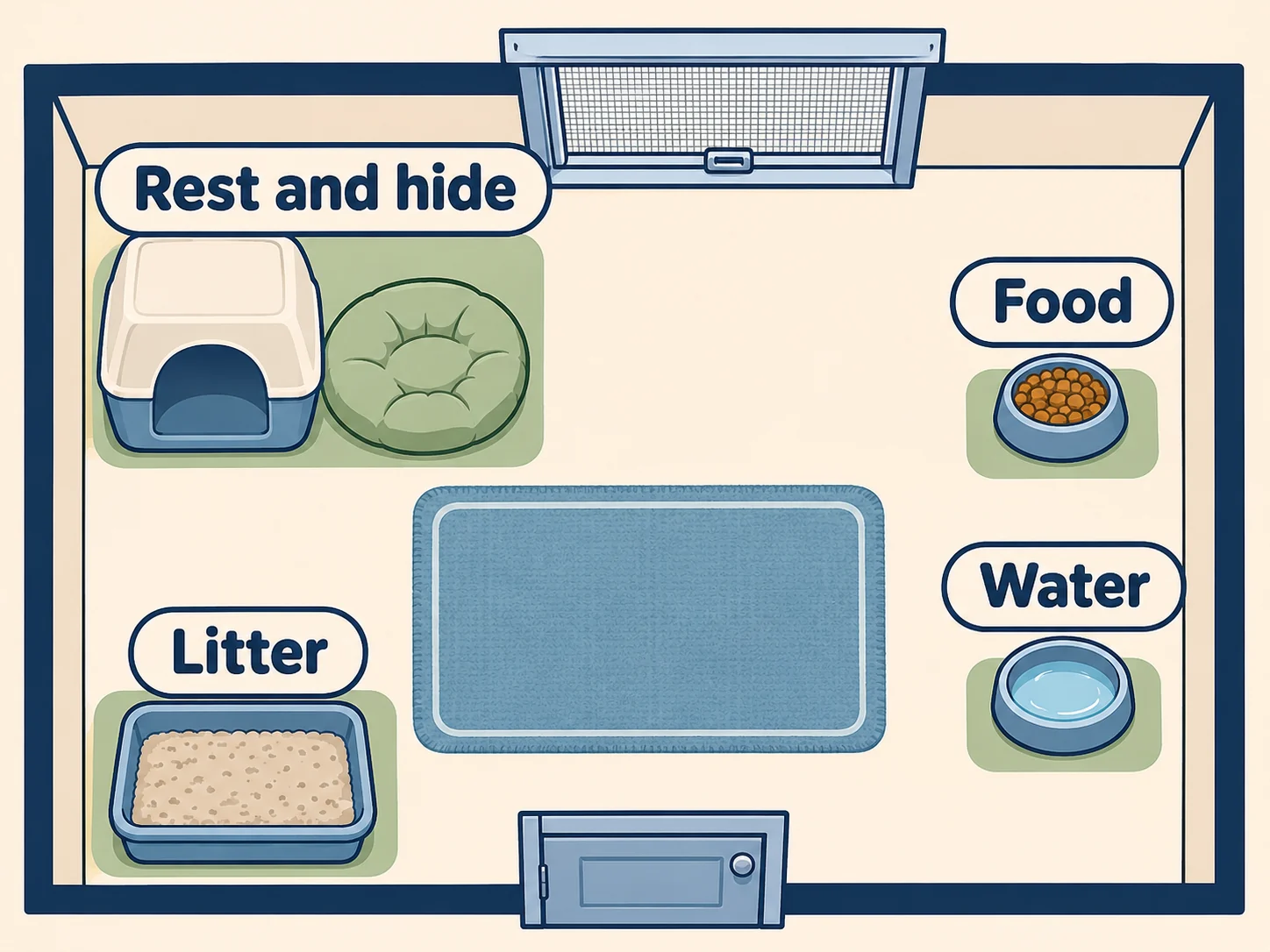
Make the hiding place easy to reach Put the box or bed where you can check on your kitten without moving furniture. If they retreat there, give them time to come out on their own.
Let your kitten set the pace on arrival
Bring the carrier straight into the room and close the door before opening it. Set the carrier on the floor with its entrance clear. Sit quietly to one side or give your kitten the room for a while. If they come out, let them sniff and circle back to cover. If they stay inside, leave the door open so they can choose when to move. Keep introductions to one calm person at a time. Ask children to sit on the floor and let the kitten approach, with an adult nearby.
On the first night, leave the same bed, water, and litter box in the same places. A kitten who hides while you're there may come out to eat and use the litter box after the room gets quiet. Check the bowl and litter box for signs of those ordinary activities while the kitten is resting. For a kitten who calls after you leave, check what the meowing is paired with and keep the room calm. You can sit nearby for a short time without pulling them out of hiding.
Keep food, litter, and rest predictable
Offer the same complete kitten food they ate before pickup, following the schedule you were given until you can review it with your vet. If a food change is needed, ask how to make it gradually. Keep fresh water available and watch whether your kitten actually eats. A full bowl that nobody checked tells you less than a meal you served and saw them finish. When two people share care, leave a short note after feeding so the next person knows what was offered and what remained.
Show your kitten where the litter box is and make the route easy to find. Scoop it regularly. If you find an accident, check the entry height, location, and whether the kitten has to pass a busy spot. Keep the setup familiar while they settle. If an accident repeats or the kitten seems uncomfortable using the box, ask your vet what to check next. Bring a concrete description, such as whether they avoided the box or entered and came back out without using it. If your kitten vocalizes around the litter box, note whether the call starts before, during, or after the visit.
Give your kitten quiet time to sleep between short stretches of company and play. Use a toy they can chase away from your hands, and put strings and wand toys away after you're done. Offer the scratching surface near an area they already visit. You can make it easier to use by placing it next to a path between the bed and the play area. If the kitten walks away or heads back to cover, pause and let them rest.
Introduce one new space at a time
Look for a combination of small signs before opening another room. Your kitten has been eating and using the litter box, comes out to explore when things are quiet, and can walk back to the hideaway without being cornered. Start with a nearby room you've already checked for gaps and hazards. Keep the original room accessible. If your kitten steps out, has a look, and returns, that short visit is enough for one session. Offer the same option later instead of carrying them farther into the house.
If there are other animals at home, keep them separate at first. Let them get used to each other's scent before close contact and supervise early meetings. Leave the kitten an escape route and keep the first meeting brief enough to end while everyone is still comfortable. If one animal stares, blocks the exit, or pursues the other, separate them and slow the introduction. Household members can help by keeping the starter room closed between visits and agreeing to let the kitten choose whether to interact.
Book the first vet visit and bring useful details
Call a veterinary clinic soon after bringing your kitten home, even if the shelter or breeder already gave them care. Ask for the available records, including their estimated age, food, and dates of any vaccinations or parasite treatment. Bring those details and describe what you've actually observed at home. Your vet can use the records and their examination to plan the next steps, including vaccination, parasite prevention, and microchip questions. The AAHA new kitten checklist can help you gather records and questions before you go.
A few specifics are enough for the first visit. Note the food you've offered, whether your kitten is eating, and any clear change in the litter box or activity. If a stool change is the concern and you already use PetMira on iPhone, its daily care log can keep a stool photo with your kitten's profile so you can find it when you talk to your vet. A paper note works for the same purpose. Call promptly if your kitten stops eating, seems weak, or repeatedly vomits. Get emergency veterinary care if they're struggling to breathe.
What to remember in the first week
Start with one safe room and let eating, litter use, and comfortable exploring tell you when your kitten is ready for more space. Keep the routine simple enough that everyone in the household can follow it, and bring the records you have and a few specific observations to the first vet visit.
PetMira for iPhone
Keep useful observations with your kitten’s profile
Use the daily care log to save a stool photo you want to refer to when talking with your veterinarian.
 Keep photo observations in one pet profile
- Find the photo again when you need it
Share health concerns with your veterinarian.
Download iOS App