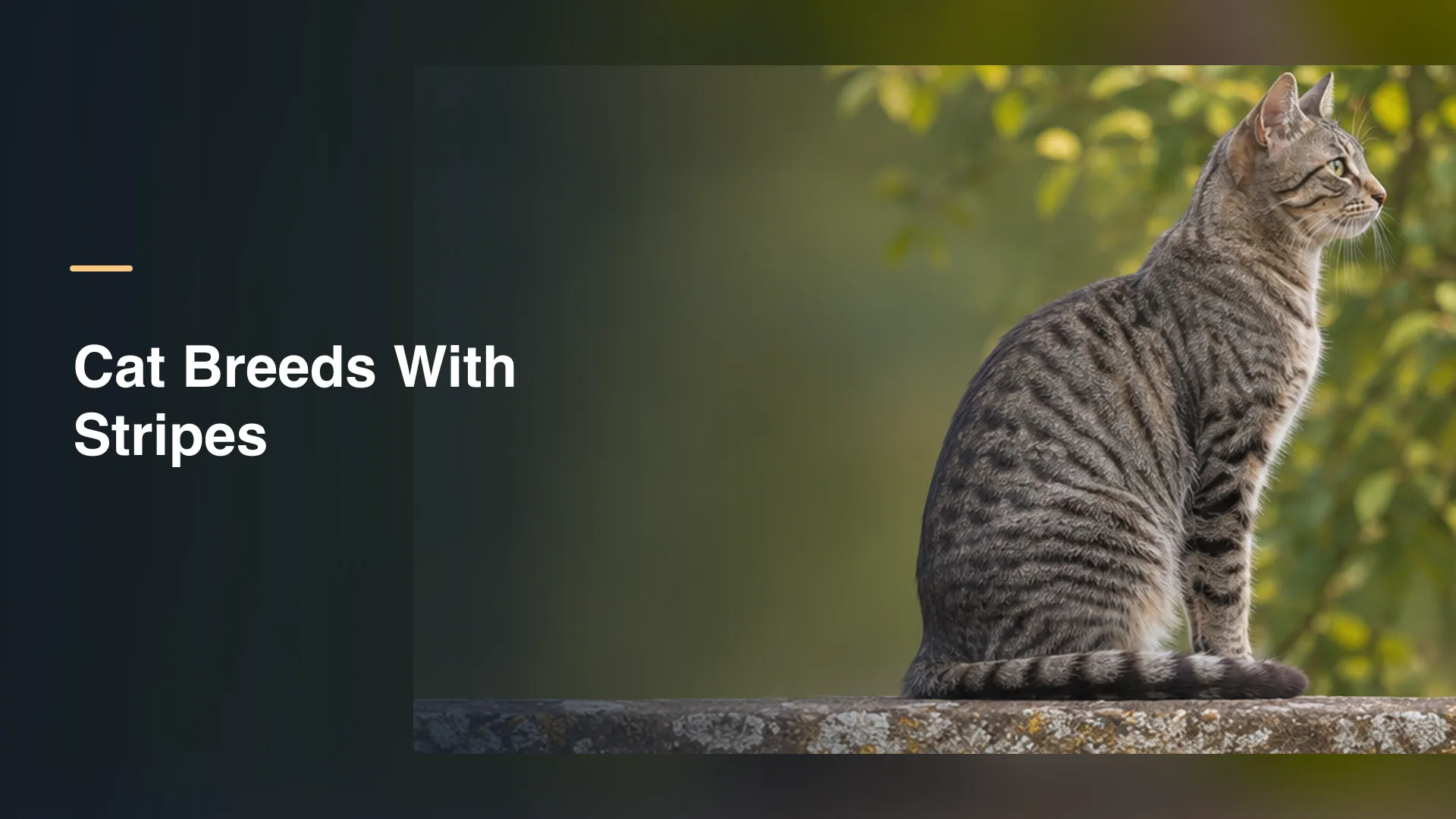
Cat breeds with stripes include Toygers, American Shorthairs, Maine Coons, and British Shorthairs, but a striped cat does not have to belong to any of those breeds. The familiar narrow-striped coat is usually described as mackerel tabby. Tabby is a pattern, and it also appears in domestic cats without a documented pedigree.
To make a useful comparison, first decide whether you are looking at narrow lines, broad swirls, or separate spots. Then compare the whole cat with a relevant breed description. A tiger-like coat can make a photograph striking, but it cannot supply the animal’s family history or tell you how the cat will behave at home.
Which kind of stripe are you seeing?
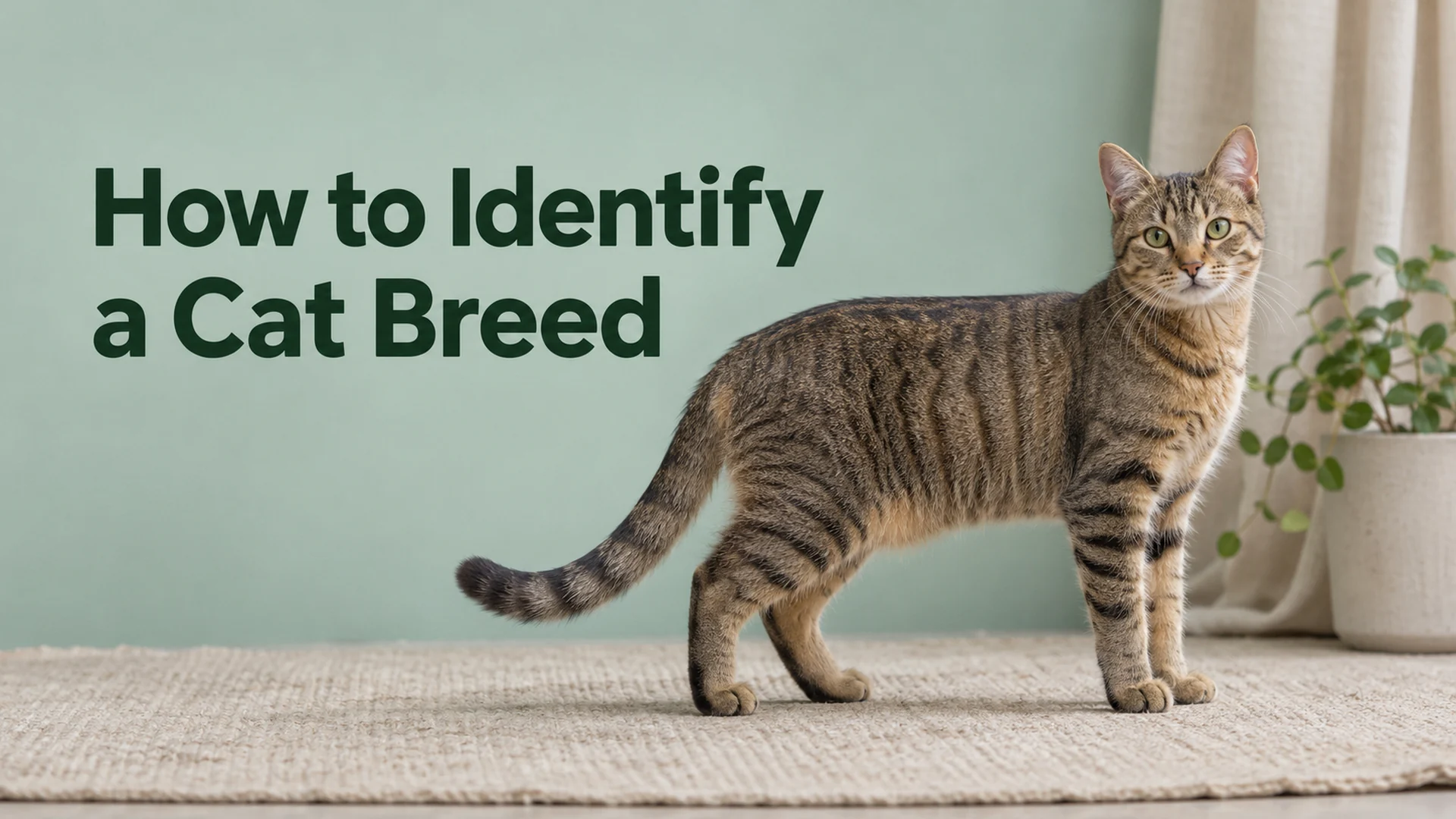
Mackerel tabbies have relatively narrow markings running down the sides. Classic tabbies have broader, curved arrangements that can form large swirls. Both may be casually called striped cats, although their body patterns look different. The distinction is easier to see in a side view of a standing cat than in a close-up portrait.
Spotted tabbies have separate marks rather than continuous side lines, while ticked coats show banding along individual hairs. Leg bars or facial stripes can occur even when the body does not have narrow mackerel lines. That is why a ringed tail or an M-shaped forehead mark cannot settle the complete pattern on its own.
Pattern to compare | Most useful area to examine | Question to ask |
|---|---|---|
Mackerel tabby | Broad side of the body | Do relatively narrow lines run down the sides? |
Classic tabby | Broad side and shoulder | Are the markings broad, curved, or swirling? |
Spotted tabby | Several areas of the flank | Are the marks visibly separated? |
Ticked tabby | Body coat at close range | Is the variation mostly within the hairs? |
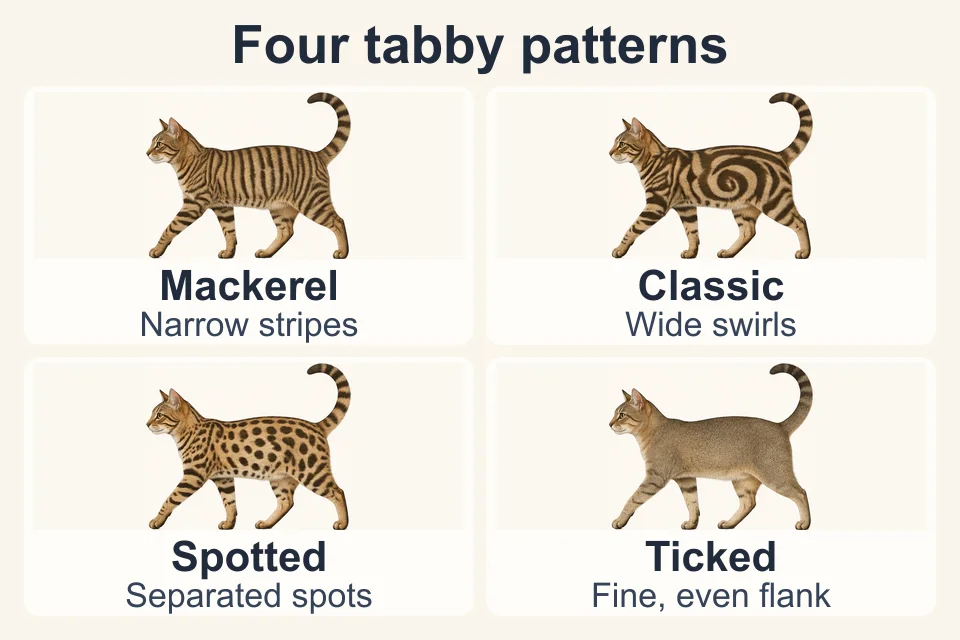
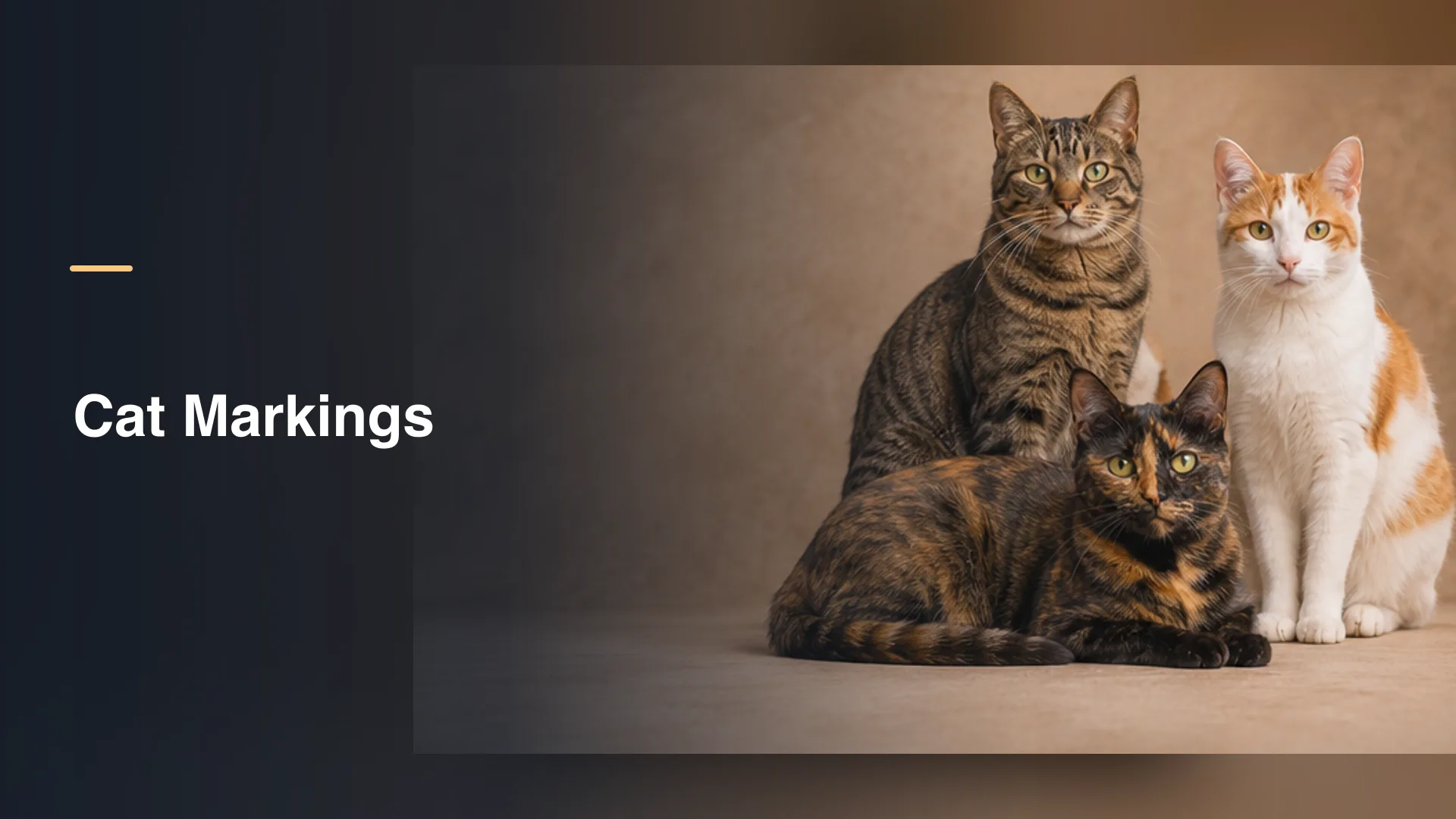
The TICA coat-color guide distinguishes these tabby arrangements. Use the names to describe what you see rather than to rank one pattern as more special. A pattern can be clear enough to name while the breed remains completely uncertain. For names that describe white patches and other markings alongside those stripes, use our cat markings guide.
If the cat is curled up, avoid judging the whole coat from the visible shoulder. Curves in the body can compress lines, and long fur can hide where one marking ends. Wait for a comfortable standing or walking view. You do not need to stretch the cat out or hold it in an awkward position to get a better comparison.
The four breed examples below differ in more than their stripes. Use coat length and texture, the head’s outline, and the form of the markings to decide which comparison is useful. The table summarizes those differences; the sections that follow explain what to examine.
Breed example | Coat or pattern to compare | Another useful visible feature |
|---|---|---|
Toyger | Short coat; bold broken or branching vertical marks | Long, muscular body with a low-slung outline |
American Shorthair | Short coat; classic or mackerel tabby examples | Full cheeks; head slightly longer than wide; squared muzzle |
Maine Coon | Longer shaggy coat; classic or mackerel tabby examples | Long rectangular body; visibly square muzzle |
British Shorthair | Very dense short coat; tabby varieties | Round head; broad chest; compact, substantial outline |
Toyger: a breed selected for a tiger-like appearance
The Toyger is the most direct named-breed comparison when someone means bold, tiger-like striping. TICA describes broken or branching vertical markings, sometimes resembling elongated rosettes. That is more specific than simply having the narrow lines seen on an ordinary mackerel tabby.
The TICA Toyger profile traces the breed’s development through domestic cats, including a striped domestic shorthair and a Bengal. Its tiger-like appearance does not mean it has tiger ancestry. The name describes a breeding goal and a registered breed, not a wild-animal identity that can be assigned to any strongly striped kitten.
When comparing an unknown cat, notice whether the reference image is showing branching marks or straightforward parallel lines. A resemblance may make the breed interesting to research, but it does not turn an everyday brown tabby into a Toyger. Ask what information supports the breed name if a seller or adoption listing presents it as certain.
American Shorthair: stripes within a broader breed
American Shorthairs can have tabby coats, including mackerel and classic arrangements. CFA lists several tabby colors rather than treating one striped coat as the whole breed. Silver tabby photographs are familiar examples, but a brown striped coat can also fit a recognized color description.
For the American Shorthair comparison, look beyond a silver-striped coat. CFA describes a full-cheeked head that is slightly longer than wide and a squared muzzle. A front view helps you compare the cheeks and muzzle, while a side view shows the coat and body proportions. These features make the comparison more specific, but the name still refers to a particular breed; domestic shorthair remains the broader description for a shorthaired cat without documented pedigree.
Use the CFA American Shorthair standard to compare a documented breed claim, not as a visual shortcut that overrides missing background. If a cat’s adoption paperwork says only domestic shorthair, a similar photograph online is a reason to ask a question, not a reason to replace that label with certainty.
Maine Coon: stripes visible through a longer coat
Maine Coons can have classic or mackerel tabby coats. Their longer, shaggy fur can soften the edges of the markings, so the pattern may be less crisp than on a close-coated cat. A large brown tabby with a full tail often prompts a Maine Coon guess, but that combination is not exclusive to the breed.
The TICA Maine Coon profile emphasizes head and body shape and coat texture as well as color. That is useful when comparing an actual breed description: several features belong together. A longhaired domestic cat may share the color and still have a different overall appearance or an unknown background.
For a closer structural comparison, the CFA Maine Coon standard describes a long rectangular body and a visibly square muzzle. Check those features separately from the length of the fur.
On a longhaired cat, follow one marking across the flank instead of judging only its outer edge. Longer hairs can soften the outline, but you may still be able to see whether several narrow lines run downward or a broad curve forms a swirl. Record “mackerel” or “classic” only when that arrangement is clear. Otherwise, “longhaired brown tabby” gives you a useful description without making the pattern more precise than the view allows.
British Shorthair: more than the familiar blue coat
British Shorthairs are often pictured with solid blue coats, but the breed also has tabby varieties. A striped coat therefore does not exclude a documented British Shorthair. Equally, a round-faced striped cat is not automatically one. Color photographs should not reduce a breed to its most familiar publicity image. The CFA British Shorthair standard describes the head, body, and coat together.
For the British Shorthair comparison, look for a compact outline, a broad chest, and a round head together with a very dense short coat. Compare that rounded head with the slightly longer-than-wide outline described for the American Shorthair. Use front and side views rather than judging from rounded cheeks alone. A crouched pose can hide the chest and legs, so wait for a relaxed standing view before deciding which description resembles the cat more closely.
What if the stripes break into spots?
Some side markings may be interrupted, making a single photograph difficult to classify. Examine several areas rather than choosing the one patch that resembles a breed photo. If the animal mainly shows separate spots, a spotted-pattern comparison may be more useful than a list of striped breeds.
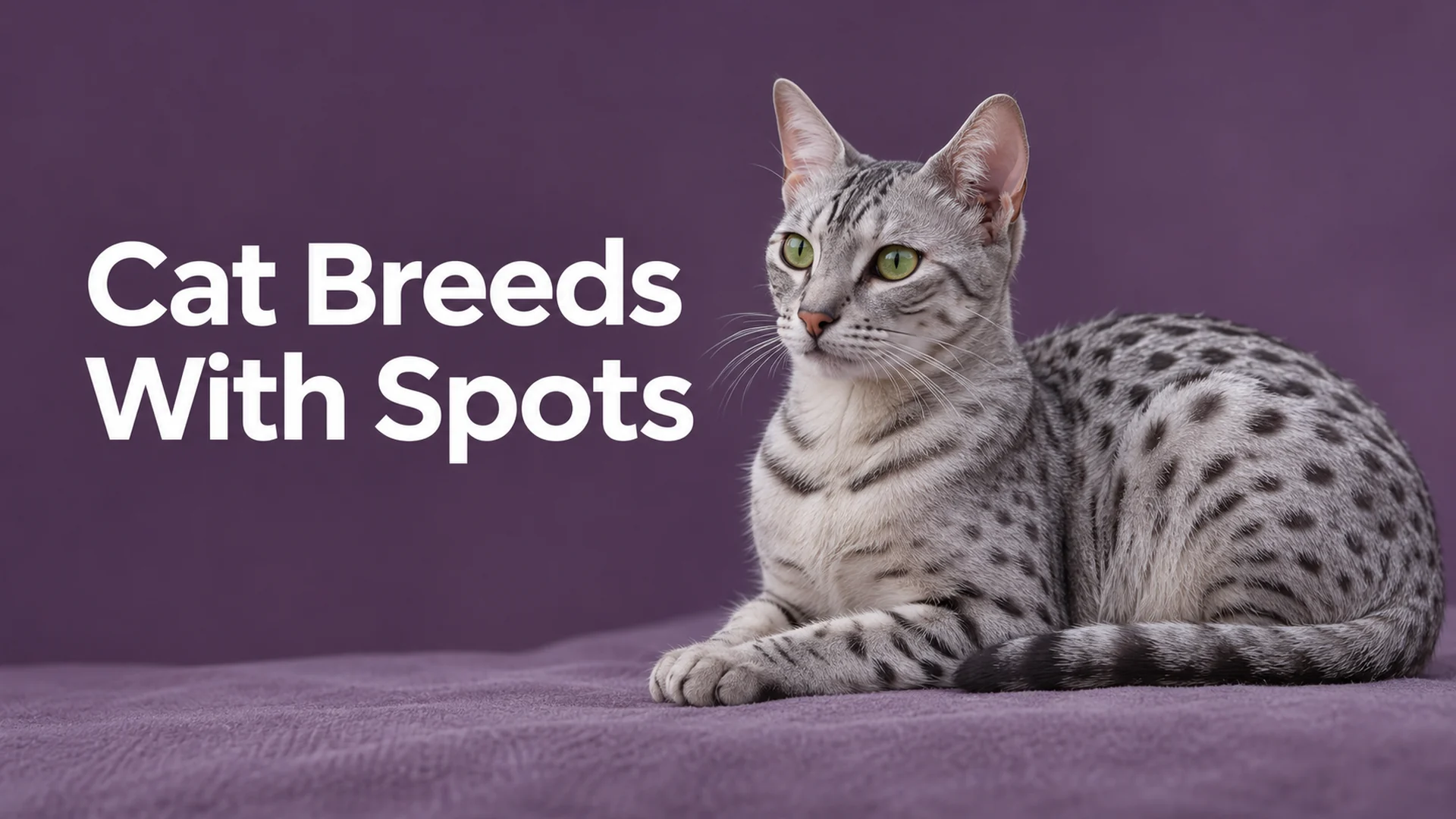
Our guide to cat breeds with spots handles that separate task. You do not need to identify every small mark perfectly before describing the cat. “Brown tabby with broken side markings” is preferable to an unsupported Bengal, Toyger, or other breed claim based on one ambiguous feature.
Make two separate notes Write one line for the pattern you can see, such as “narrow side stripes with a ringed tail.” Write a second line for any breed comparison and why it remains tentative. This prevents a useful coat observation from quietly becoming an unsupported ancestry claim.
Compare the cat, not just the photograph
For a practical next step, choose one possible breed comparison rather than collecting an endless list. Note which visible features fit and which do not. A short, dense coat is different from long shaggy fur; narrow parallel stripes are different from broad branching marks. Keeping those distinctions explicit makes the comparison more informative.
If your goal is choosing a future pet, go beyond markings before making a decision. Ask about the individual cat’s needs and behavior and the evidence behind any breed claim. An appealing coat does not answer questions about daily care, compatibility with your home, or the quality of a breeder’s records.
A striped coat has a useful name
Describe the pattern first, then use named breeds as specific comparisons rather than automatic identities. Mackerel tabby can be a complete and accurate answer to the coat question even when the cat’s breed remains unknown.
Explore with PetMira
Look beyond your cat’s stripes
Take or upload a photo in PetMira to explore possible cat breeds. Compare each suggestion with coat length, head shape, and the pattern you can actually see.
 Start with a clear cat photo
- Compare more than coat color
Available on iPhone. Photo suggestions are not proof of pedigree or ancestry.
Download iOS App