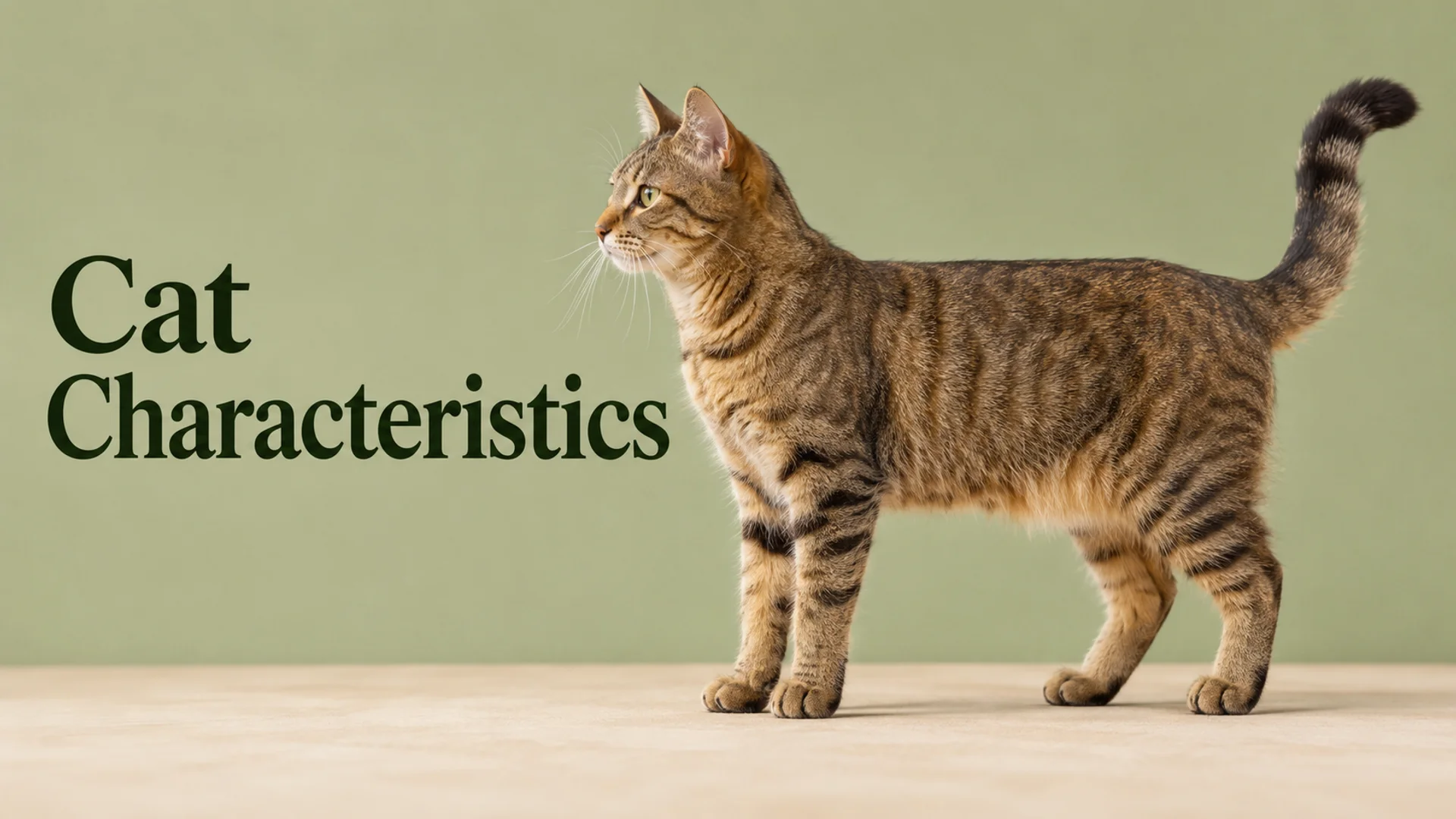
To identify a cat breed, start with what you can see and check where the cat came from. A clear photo can help you describe the coat, body shape, ears, and tail. Adoption records may explain where a suggested breed label came from, and verifiable pedigree records can establish a registered breed. With no reliable family history, you may be able to describe your cat more accurately than you can name their ancestry.
Imagine a shelter lists your longhaired cat as a Maine Coon mix. You can check whether the shelter knew the parents or used that label because the cat is large and fluffy. Those are two different kinds of information. Start by getting photos you could show to someone who has never seen your cat.
Take Photos That Show the Whole Cat
Wait until your cat is up and relaxed, then take a front photo at eye level and a standing side photo that includes the tail and feet. A face close-up taken from above can make the head look rounder and hide how long the body is. A cat curled on the sofa can hide their tail and make a medium coat look fuller. A view of the whole cat is usually more informative than a dramatic close-up.
Use daylight or an evenly lit room, especially if you are trying to describe subtle markings. A warm lamp can make a gray coat look brown. Save a close photo only when it shows something the full view misses, such as a white chin, a patch around one eye, or stripes at the end of the tail. If your cat leaves before you get the side view, keep the front photo and try again another day.
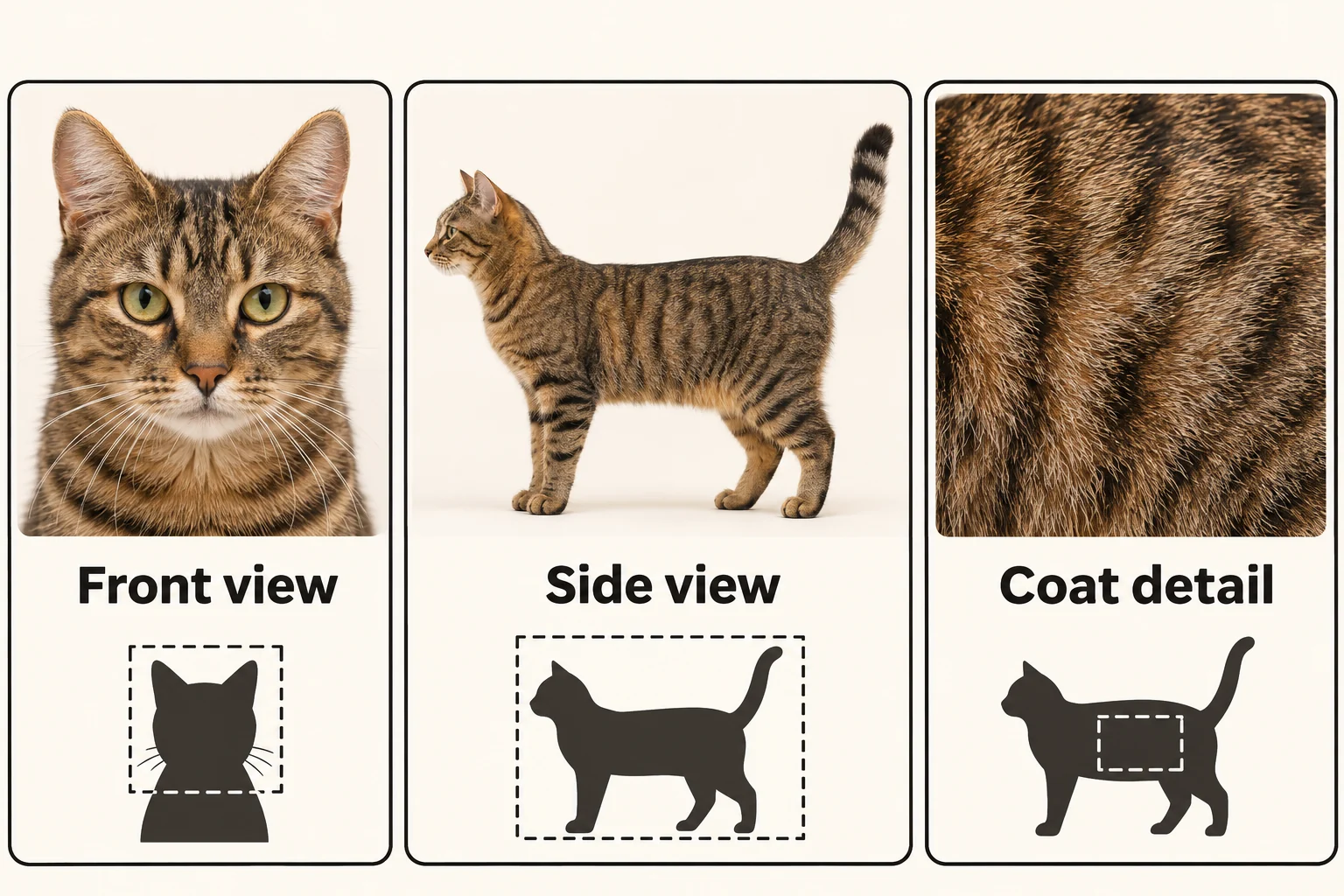
Mark the feature you could not see If the tail disappears behind the sofa or the ears are flattened in the only photo, leave that feature unknown in your notes. Retake the view when your cat is comfortable instead of assigning a shape from the first picture.
Describe the Features You Can Verify
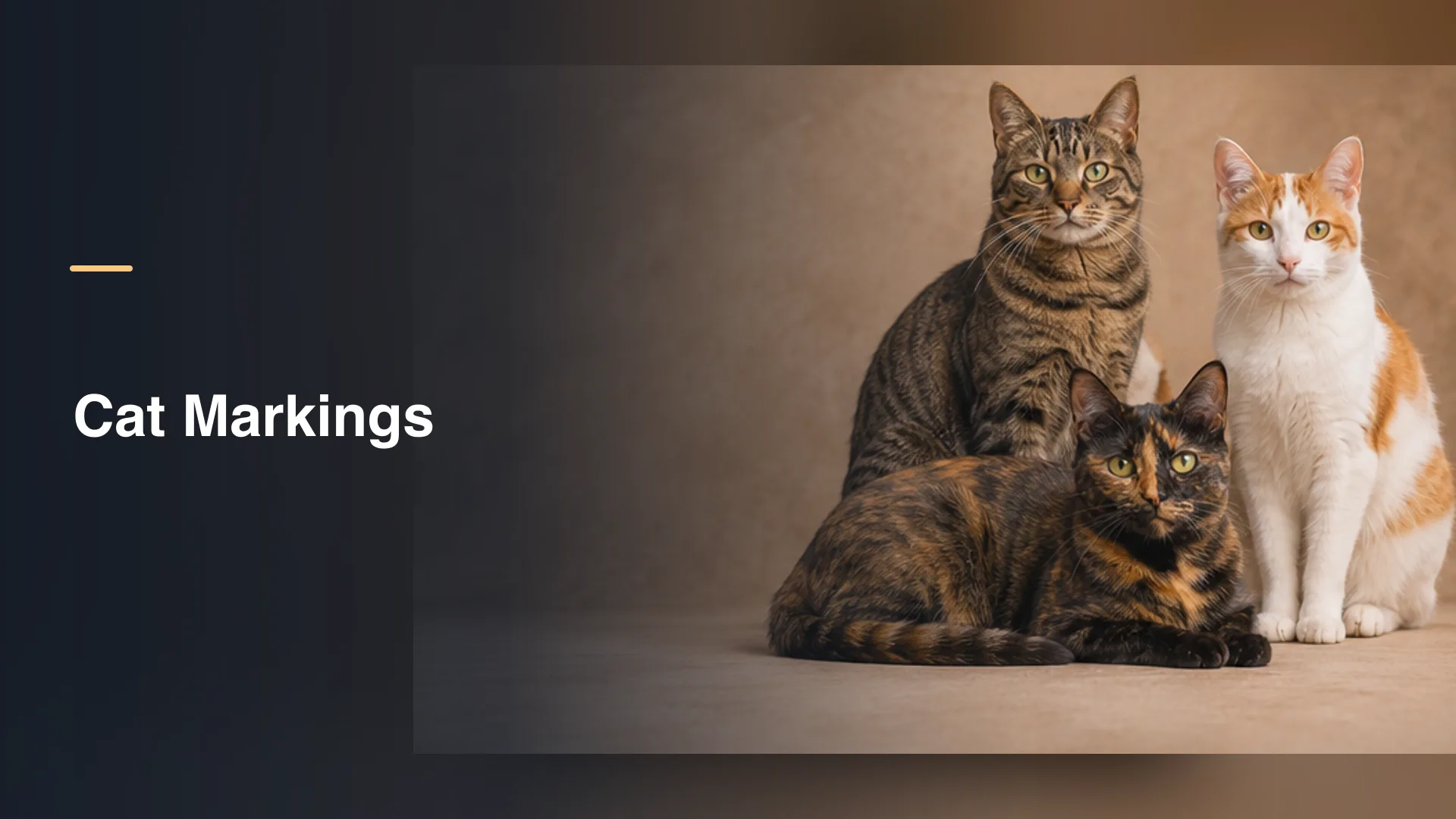
Separate the coat’s length from its color and pattern. The Alley Cat Allies identification guide shows how those details work together when two cats look similar. You might write short coat, brown stripes, white chin, and white left front toes. Compare that with brown tabby: both can describe the same cat, but the first tells someone which details to look for. Start with broad traits, then add one distinctive feature you can point to in the photos. Use the cat markings guide for coat vocabulary and cat body types for a separate comparison of the cat’s build.
Clue | What to write | Common mistake |
|---|---|---|
Coat length | Short over the body, with longer fur on the tail | Assuming a full tail means a longhaired breed |
Color and pattern | Gray stripes, white chest, white front toes | Using tabby as the breed name |
Body and tail | Long body, upright ears, tail visible to tip | Guessing the tail length from a cropped photo |
One distinguishing mark | White spot under the nose, visible from the front | Omitting the side or exact location |
Keep broad descriptions broad. Domestic shorthair is a useful description for a short-coated domestic cat whose pedigree you do not know. American Shorthair is a named breed with a registry standard. A cat can have a short coat and a broad head without having a documented American Shorthair family. The same principle applies to a long coat, tufted ears, or a colorpoint pattern.
Now look again at the longhaired shelter cat. You can record a fluffy tail and longer fur around the neck, then leave the pedigree uncertain. If you compare the cat with a named breed, look for what differs as well as what looks familiar. A short muzzle, for example, might be clear in the side view even though an image match focused on the fluffy coat. You can keep an accurate description even when the candidate list gets shorter or changes.
Read Adoption and Breed Records
Ask the shelter what the breed field means in their records. Was it entered by a previous owner, inferred when the cat arrived, or copied from paperwork that can be checked? If they cannot tell, keep the label with its source. “Shelter listed Maine Coon mix, parents unknown” gives the next person more context than copying the label by itself.
If you were given registration or pedigree papers, check which individual they refer to and which organization issued them. Ask the breeder or registry how to verify the record if you are unsure. A littermate’s papers or a photo of an adult said to be a parent can start that conversation, but they do not establish a record for your cat. The Cat Fanciers’ Association also has a household-pet program for non-pedigreed cats, so a registration number needs context before you treat it as pedigree evidence.
If the paperwork is a screenshot, ask for the full record before drawing a conclusion from it. A cropped image might show a breed name without the registration number or the cat it belongs to. Save the original alongside the details you verified so someone else can follow the same trail.
It helps to keep the information in separate lines. Write the coat and visible features on the first line, the source of the breed label on the next, and what is still unknown on the last. If a breeder later gives you records for the right cat, you can update the ancestry note without changing the description you already verified.
Use a Photo Tool Without Overreading the Result
If you want a shortlist to research, PetMira’s iPhone app can take or upload a cat photo and suggest possible breeds from visible features. Start with the best-lit whole-cat view. Read the suggestions alongside what you already noted, then check a named breed’s description if you want to learn why the match might have come up.
A photo tool sees what is in the frame. If one result seems to follow the coat color and another seems to follow the face, write down what the images actually show. You do not need to settle the disagreement by running more photos until the same name appears. A match is useful when it gives you something specific to compare. If the question is what to put on a form and you have no family records, the observed description is already useful.
When a Cat DNA Test Is Worth Considering
Consider what you want to learn before buying a test. Some cat DNA reports describe genetic similarity to populations in their reference data. Read how that provider defines a breed result and what it reports when the match is unclear. A similarity result and a pedigree document answer different questions. The report can give you information about genetic resemblance without identifying registered parents or proving a breed label. If your report says Broadly Western, interpret that label with the date and definitions in your own report rather than treating it as a pedigree.
If you need to identify the individual cat for a missing-pet report, prioritize clear photos and the distinctive mark you noted. For a question about documented ancestry, go back to the issuer of the records. A test may be an option if you are curious about genetic similarity and comfortable with the limits of the report. It does not have to be the last step for every cat.
The Takeaway
Start with a front photo, a full side view, and a short description you can check against both. Keep breed suggestions separate from family records, and use an honest description such as “domestic shorthair, brown tabby with white toes” when ancestry is unknown. If you have papers for your cat, check those before relying on a visual match.
Explore a photo match
Compare your cat’s visible features with PetMira
Take or upload a clear photo in the iPhone app to see possible cat breeds. Use the suggestions as a shortlist to investigate.
 Start with a well-lit photo
- Compare the suggested breeds
- Keep the result with your other observations
Photo suggestions are based on appearance. Use records to check documented ancestry.
Download iOS App