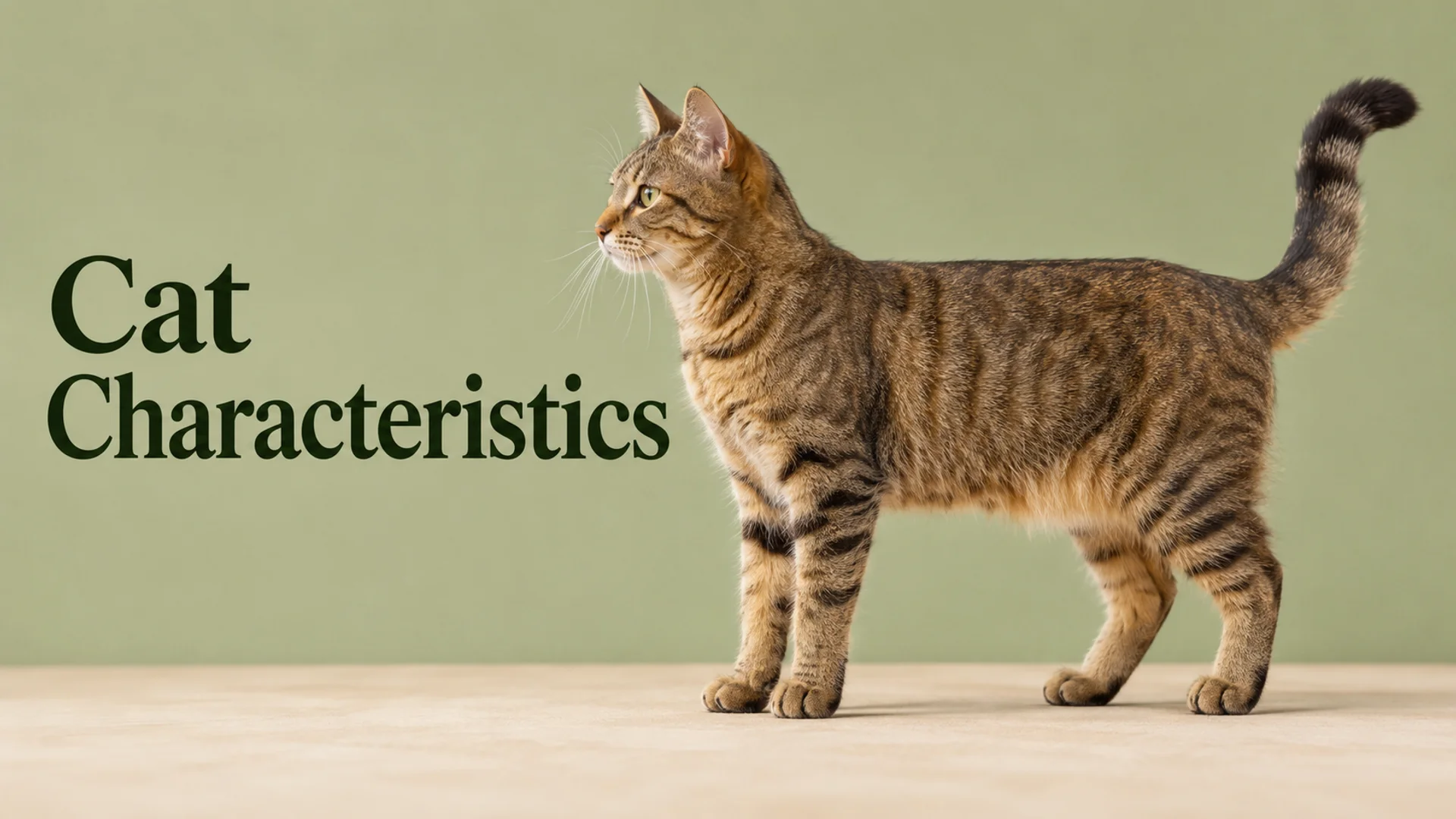
Cats typically have a flexible body, padded paws, retractable claws, mobile ears, whiskers and a tongue covered with tiny projections. Their coat, size, face and tail can vary substantially. These cat characteristics help explain how a cat explores and moves, and give you concrete details to describe an individual. A photograph can show many of them, while ancestry, health and personality need other evidence.
Start with a cat you can watch comfortably. Look at its outline as it stands or walks, then notice the coat and visible facial features. Leave the cat free to move away. You can describe what you see without handling its paws, opening its mouth or trying to make it perform. A short description of the same cat in ordinary positions is easier to check than a label based on one dramatic photo.
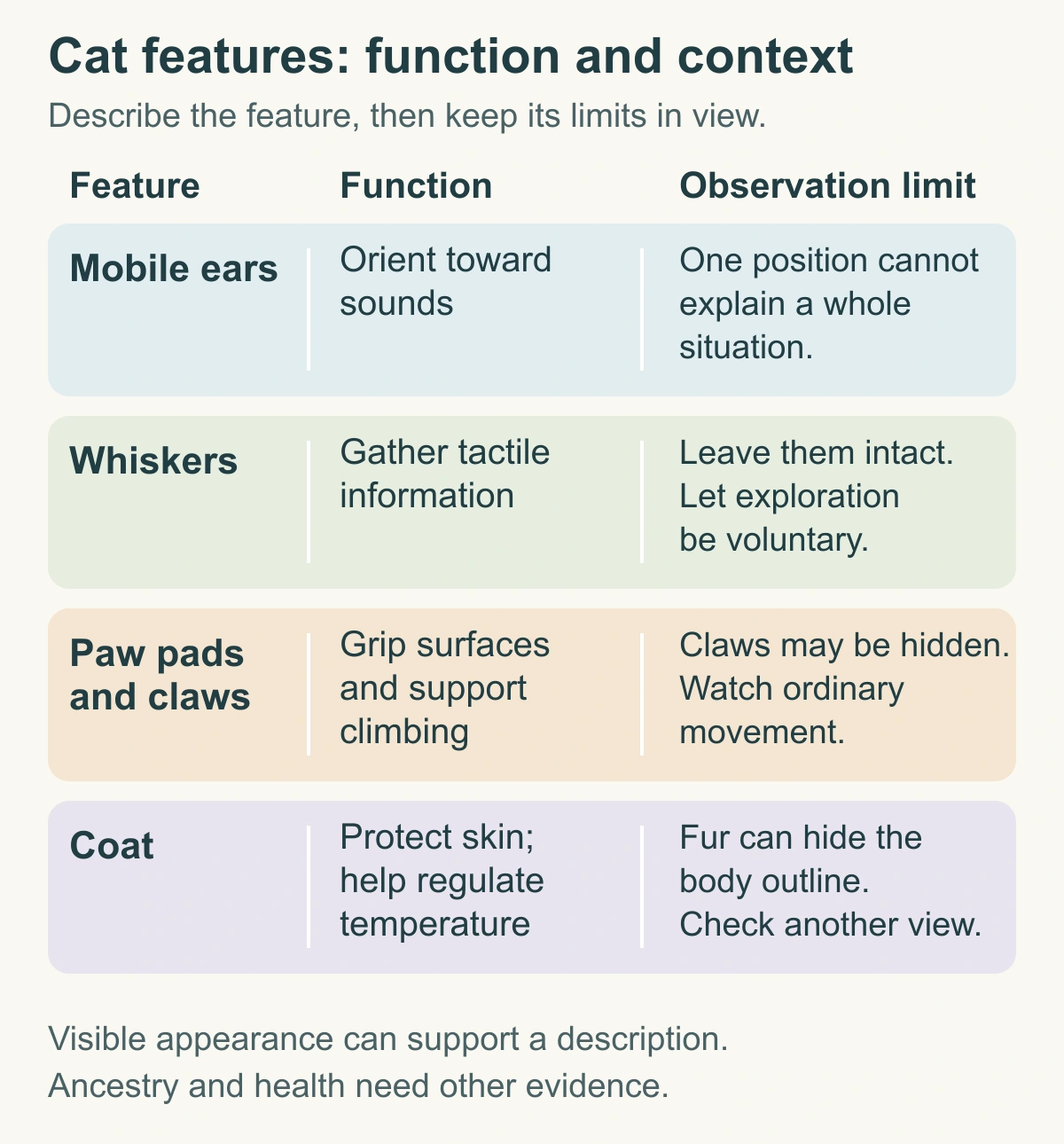
Visible feature | What it helps the cat do | Useful observation limit |
|---|---|---|
Paw pads and claws | Grip surfaces and use climbing or scratching surfaces | Hidden claws are still present; watch normal movement |
Mobile ears | Orient toward sounds | A momentary position does not describe the whole situation |
Whiskers | Gather tactile information | Leave them intact and let the cat investigate voluntarily |
Coat and eyes | Coat protects the skin; eyes support vision | Coat can hide shape; light can change pupil size |
Start with the shape you can see
The trunk, legs, head and tail give a cat its recognizable outline. A close photo can exaggerate the head while hiding the rest of the body. A thick coat can make a narrow trunk appear broad, and a cat crouching beside a chair can look much shorter-legged than it does while walking. Before calling a feature unusual, look at another normal position. Write “long coat over the chest” if that is visible, and leave the shape underneath uncertain.
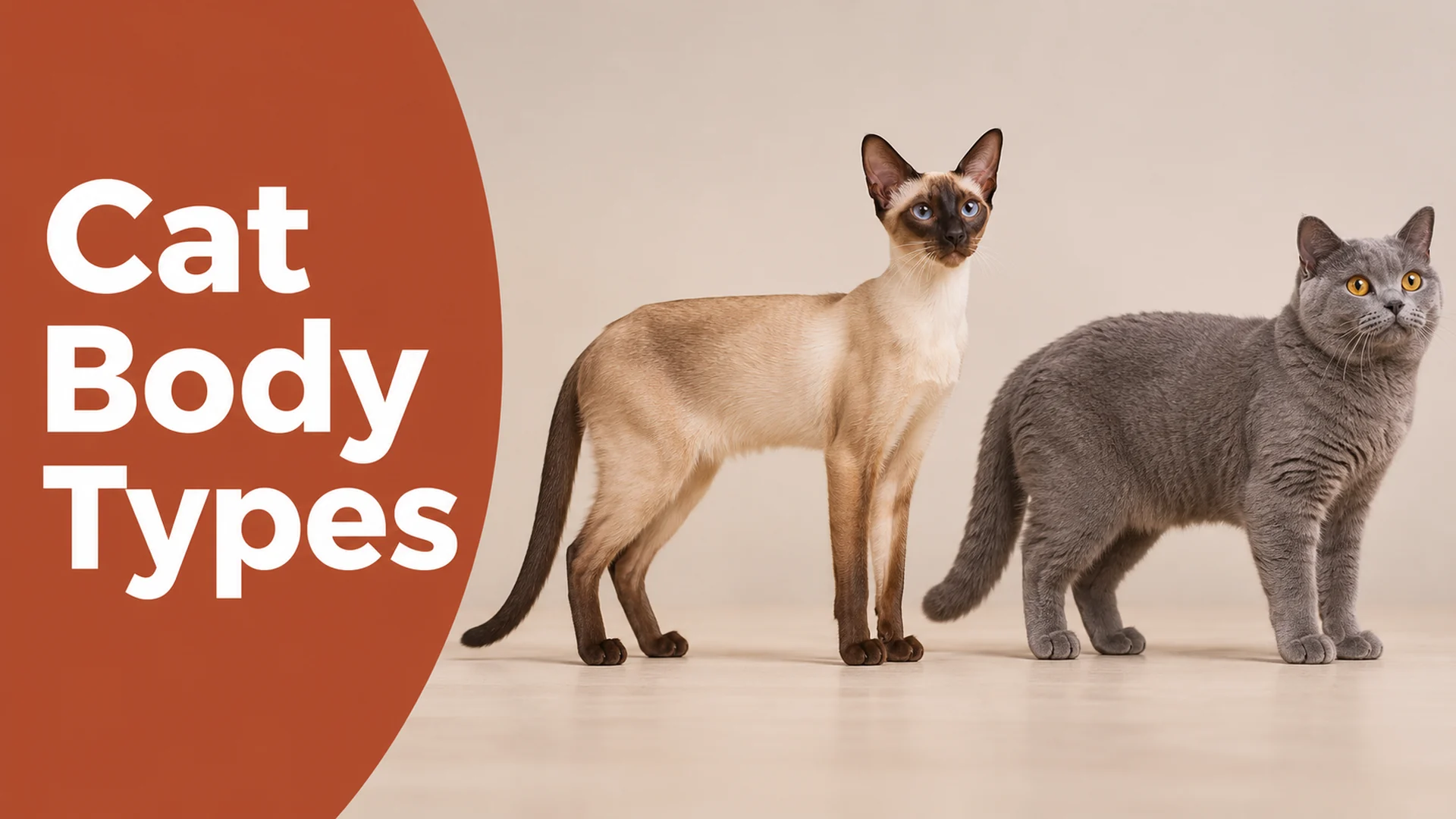
Different cats also have different proportions. Some have a compact outline, while others have long limbs, a narrow face or a substantial chest. The same apparent size can come from a larger frame or from the amount of coat. Our cat body types guide explains how to compare those proportions. This general feature check gives you the vocabulary to say what you actually noticed before choosing a more specialized description.
A tail may be long, short or naturally absent, depending on the individual. Describe its visible shape and length without guessing its history from one view. A tail tucked beside the body is not the same observation as a short tail. In a found-cat description, say which parts you could see and keep the whole-body photo so another person can check your wording.
Paws and claws support ordinary cat movement
Padded paws help a cat contact and grip surfaces. Cats generally walk on their toes, which contributes to their familiar light-looking stance. Their curved claws assist with gripping, climbing and other ordinary activities. The claws are usually withdrawn when they are not needed, so a relaxed paw can hide a feature that is present. The claw tips may briefly become visible as a cat stretches on its scratching surface.
Watch the movement instead of pulling on a toe to get a better view. A cat stepping from a rug to a smooth floor may spread its toes or place its feet differently. That change tells you about the surface and task. It does not identify a breed or give a complete picture of comfort. If you are concerned about a new change in how a cat bears weight, ask a veterinarian rather than trying to reproduce the awkward step for a camera.
Scratching also gives the claws a surface to work against. Offer an appropriate scratching surface in a location the cat can reach and use comfortably. This is a practical connection between a body feature and the home you provide. A cat's need to scratch continues whether its visible claws look long or short in your photo. A close image of the paw alone will not tell you whether the household setup meets that need.
Ears, eyes and whiskers give different kinds of information
Mobile ears can turn toward a sound while the head stays still. Their position at a particular moment depends on what the cat is attending to as well as how it is responding. An ordinary resting position is a helpful comparison. If you are describing physical appearance, record ear size or shape from a relaxed view. Save a sudden backward movement for a separate observation about what happened in the room.
Pupil size can change with light. A photograph taken near a bright window may show a different pupil size or shape from one made in a dim hallway, even a few minutes apart. Use similar lighting when comparing photos, and avoid treating large pupils in a single photograph as a complete account of an animal's emotions. Cats are adapted to seeing in low light, but they still need light. A dark room does not become a safe obstacle course simply because a cat is good at moving around at dusk.
Whiskers are specialized sensory hairs around the muzzle and elsewhere on the body. They help the cat gather information through touch. Leave them in place, and let the cat investigate a new object voluntarily. If a fluffy cheek hides part of the muzzle, a second relaxed angle may show it better. Do not press the face into a small opening or trim a whisker to make an image look neater.
Coat, teeth and tongue need different kinds of description
Coat length, color and pattern are separate features. “Shorthaired brown tabby with a white chest” is more precise than “stripy cat,” and it avoids turning appearance into an ancestry claim. A particular pattern can occur across several breeds and in cats with no documented breed. The guide to cat types distinguishes breed names from coat labels and the descriptions commonly used in shelter records.
A cat's fur protects its skin and plays a part in temperature regulation. The coat can also hide the outline of the body, small markings or visible skin changes. Keep the lighting and angle similar if you want to compare it over time. PetMira's photo-based care log can keep fur or skin images together. Use it for the visible change you photographed, with a separate note for anything the picture cannot show. A logged image is a reference to discuss, while a veterinarian can examine a concerning change.
The rough feel of a cat's tongue comes from small projections called papillae. These support grooming and moving material in the mouth. Sharp teeth reflect a meat-eating animal's feeding anatomy. You do not need to see those structures to identify an animal as a domestic cat, and a general appearance check does not require a mouth examination. If the mouth seems painful or difficult to open, stop and ask a veterinary professional for help.
Put the features into a description someone can use
Keep the description checkable Use one relaxed front view and one side view. Record coat length, colors, visible markings and tail shape; keep ancestry or emotion as separate interpretations.
Imagine you need to identify one of two black-and-white cats to a caregiver. A useful description might say “short coat, white chest and front paws, mostly black face, long tail.” Add the cat's name or known identification details separately. A relaxed front view and a side view can support that description. Keep the original images even if you later learn a more specific name for a marking.
If you want to investigate a possible breed, follow our photo and records identification guide. A resemblance can give you a profile to explore, while registration or other reliable history addresses a different question. Keep those jobs distinct in your notes. That way, learning more about ancestry will not erase an accurate description of the cat you can see.
What to remember about cat characteristics
Describe the frame, coat and visible features in ordinary conditions, then check another angle before making a stronger claim. Use the physical details to prepare a suitable home and keep a description others can recognize. When you keep photos in PetMira, match the new image to a comparable older view so the record remains easy to understand.
PetMira for iPhone
Keep comparable photos of visible features
Use PetMira’s photo-based care log to retain fur or skin images you want to compare. Choose similar lighting and angles so the visible change is easier to discuss.
 Keep fur or skin photos with your pet’s profile
- Compare a new image with a similar earlier view
AI information is for reference. Ask a veterinarian about a health concern.
Download iOS App