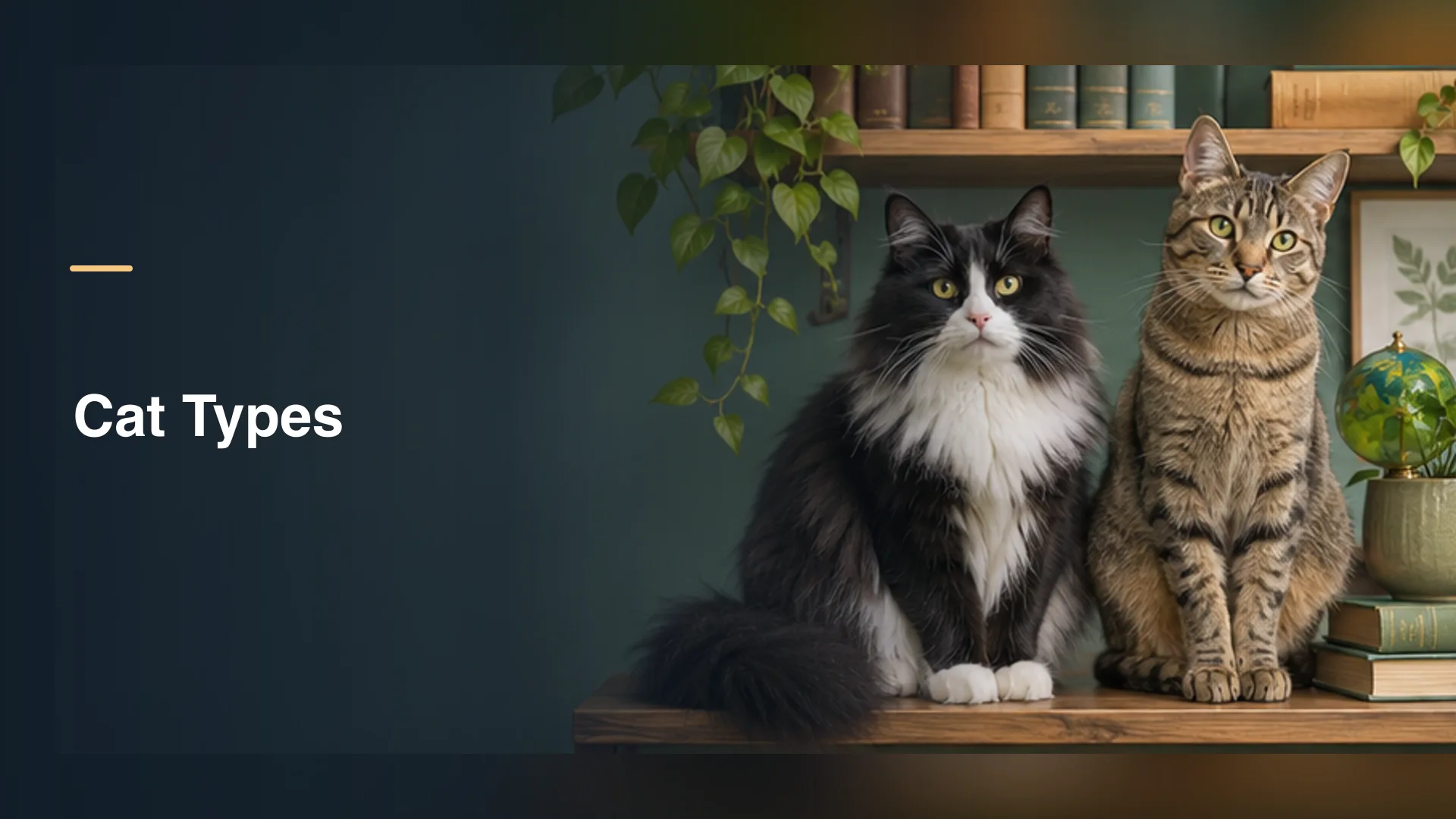
Cat types can mean named breeds, coat patterns, or broad descriptions used in shelter records. A Siamese is a breed, tabby describes a pattern, and domestic shorthair describes a shorthaired house cat, often with no documented breed. A cat can be described accurately using more than one of these labels at the same time. Knowing what each label answers makes breed directories easier to read and adoption listings easier to compare.
Start with the reason you need the name. A foster profile benefits from a clear coat and behavior description. A breed research project needs examples from a recognized registry. An owner trying to confirm ancestry needs records. The same photo can help with all three tasks, but the information the photo provides is different in each case. For scientific names and wild relatives, see how the cat family tree is organized.
Pick the label that answers your question
Label type | Example | What it tells you |
|---|---|---|
Named breed | Siamese | A name defined by a registry standard |
Coat pattern | Tabby or tuxedo | How the colors are arranged |
Coat length | Domestic shorthair | A domestic cat described by visible hair length |
Body description | Long legs and a slender trunk | How an individual cat is built |
Species | Domestic cat | The animal's biological classification |
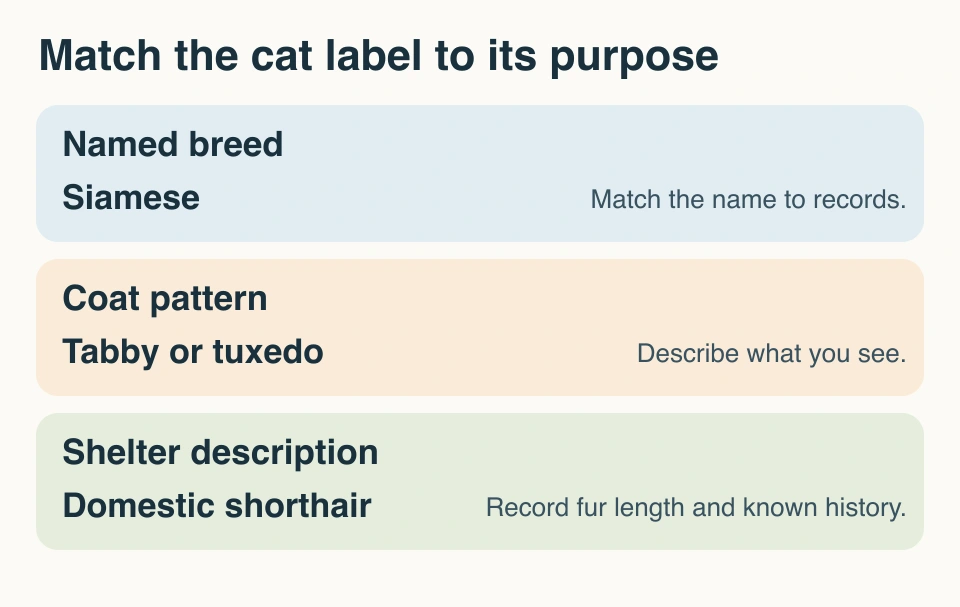
Imagine two shorthaired cats at the same adoption event. One is listed as a brown tabby domestic shorthair with a white chest. The other is described as a Siamese whose previous owner supplied registration records. The first label gives you details you can verify by looking at the cat. The second has an independent source for the breed claim. Both descriptions can be useful. Their purpose is to communicate a different kind of information to the reader.
A term can carry different meanings across documents. A veterinary form may ask for breed because the field is useful for patient identification, while a cat club needs a breed name for registration classes. When you move information from one form into another, keep the origin of the label. “Listed by rescue as Siamese mix” is more informative than deleting the uncertainty and entering “Siamese.”
Examples of named cat breeds
A breed directory is a good way to get oriented. The Cat Fanciers’ Association and The International Cat Association maintain standards and profiles, and recognition can vary by organization. Start with a handful of examples so the coat, build, and care details have something to attach to.
Siamese: The classic pointed look places darker color around the face, ears, paws, and tail. Point coloration also appears outside this breed. If you like this look in an adoption photo, ask the shelter what it knows about the cat and how the individual responds to household activity.
Maine Coon: A long coat, a substantial frame, and a full tail are familiar visual clues. A longhaired house cat may share several of those features. If a cat has dense furnishings around the legs and collar, check how comfortable it is with brushing and whether tangles are already forming.
British Shorthair: The breed is often illustrated with a round head and dense plush coat. The blue or gray example is common in pictures, but a color photograph is only one illustration of the standard. Inspect the registry’s full range before treating the familiar example as the only possible appearance.
Ragdoll: A semi-long coat and pointed color are typical profile features. Check the practical demands of grooming and handling for the individual cat. A breed name or a relaxed pose is insufficient to predict how an animal will respond when picked up.
Sphynx: Very sparse hair is the standout feature, although some cats have a fine covering. A lack of a long coat changes the maintenance questions. Discuss skin care and warmth with a veterinarian or an experienced foster before committing to a routine.
Abyssinian: Ticked fur gives the coat an even, finely patterned appearance from farther away. Looking at a profile alongside a registry close-up helps you understand ticking without treating every coat with similar banding as a breed match.
Where coat names and shelter labels fit
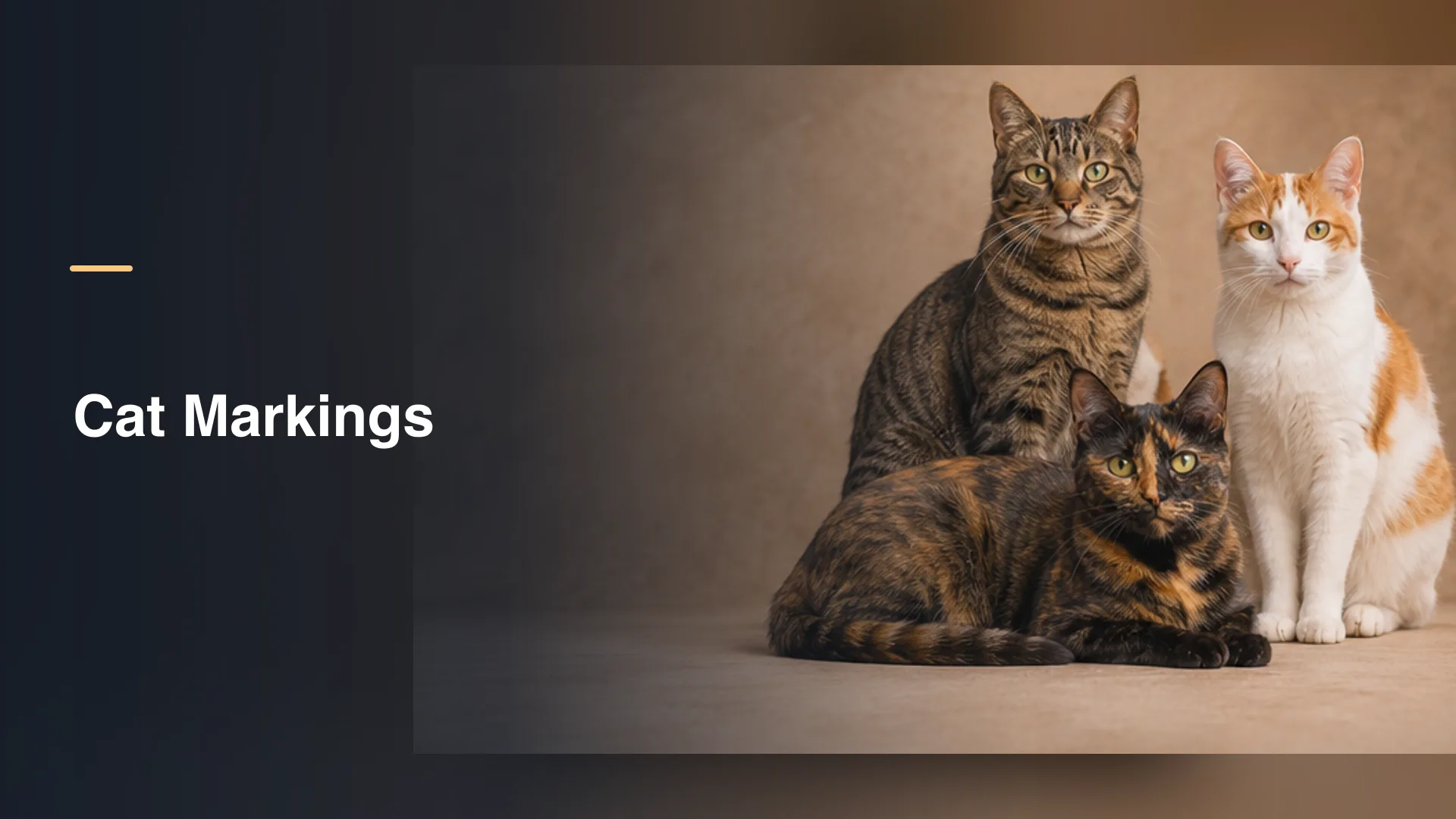
Tabby is shorthand for a family of markings. Tuxedo usually describes a two-color arrangement with white on areas such as the chest and feet. Colorpoint describes a distribution of color, while calico refers to patches that include orange, dark pigment, and white. These terms describe a cat’s appearance and can sit beside a breed or domestic coat-length label. Use the cat markings guide when you need to get more precise about stripes, patches, or where a small feature appears.
Shelters use labels such as domestic shorthair and domestic longhair when a cat’s pedigree is unknown or irrelevant to the listing. These are useful categories for browsing. They tell you something about hair length without claiming the ancestry of every cat put in that category. The American Shorthair, by comparison, is a named breed with a registry standard. The names look similar on a form, so spell each out when the distinction matters.
Keep appearance and history separate On a profile, write one line for what you can see and a second line for where any breed claim came from. That keeps a helpful pattern label from becoming an accidental pedigree claim.
How to compare cat types for a practical decision
If you are browsing before adopting, use breed profiles to generate questions. Think about grooming tolerance, how the cat settles after activity, and whether its past home is known. Write down any household hard limits, such as the ability to maintain a dense coat or whether you can offer a quiet room for a slow introduction. Compare those constraints with the foster’s current observations. A profile can highlight what to ask, while time with an individual cat gives you evidence more closely tied to life at home.
If your aim is to put a label on one cat, start with a plain description. Choose natural light and photograph the same cat from the side and front while it is relaxed. If you would like candidates for comparison, use PetMira’s photo-based breed suggestions on iPhone. A result gives you a breed profile to investigate. Compare the suggestion with the visible coat and build, then retain the wording you can support from records. The photo and records identification guide explains what to do when the visual clues and paperwork tell different stories.
A description can be reliable without naming a pedigree. For example, “adult shorthaired brown tabby with a small white bib, friendly with familiar people in foster” communicates coat, life stage, and a specific observation. Someone reviewing that record can compare it with new information without undoing an unsupported ancestry guess. The practical advantage is that a description stays useful even if the favorite breed comparison changes. If a cat was found outdoors, start with the details a shelter or caretaker can use.
Which cat label should you use?
Use breed names for supported breed claims, coat names for visible patterns, and domestic shorthair or longhair when that is the available description. When you are choosing a cat to live with, pair the broad label with a real grooming and behavior history. When you are identifying a particular cat, keep the record source alongside the label.
Explore a cat’s appearance
Compare your cat’s visible breed clues
Use the iPhone app to explore possible breeds from a domestic cat photo. Compare the suggestions with the features you can see and the history you can verify.
 Start with a clear cat photo
- Find breed profiles to compare
Photo suggestions describe possible resemblance. Keep documented breed history separate.
Download iOS App