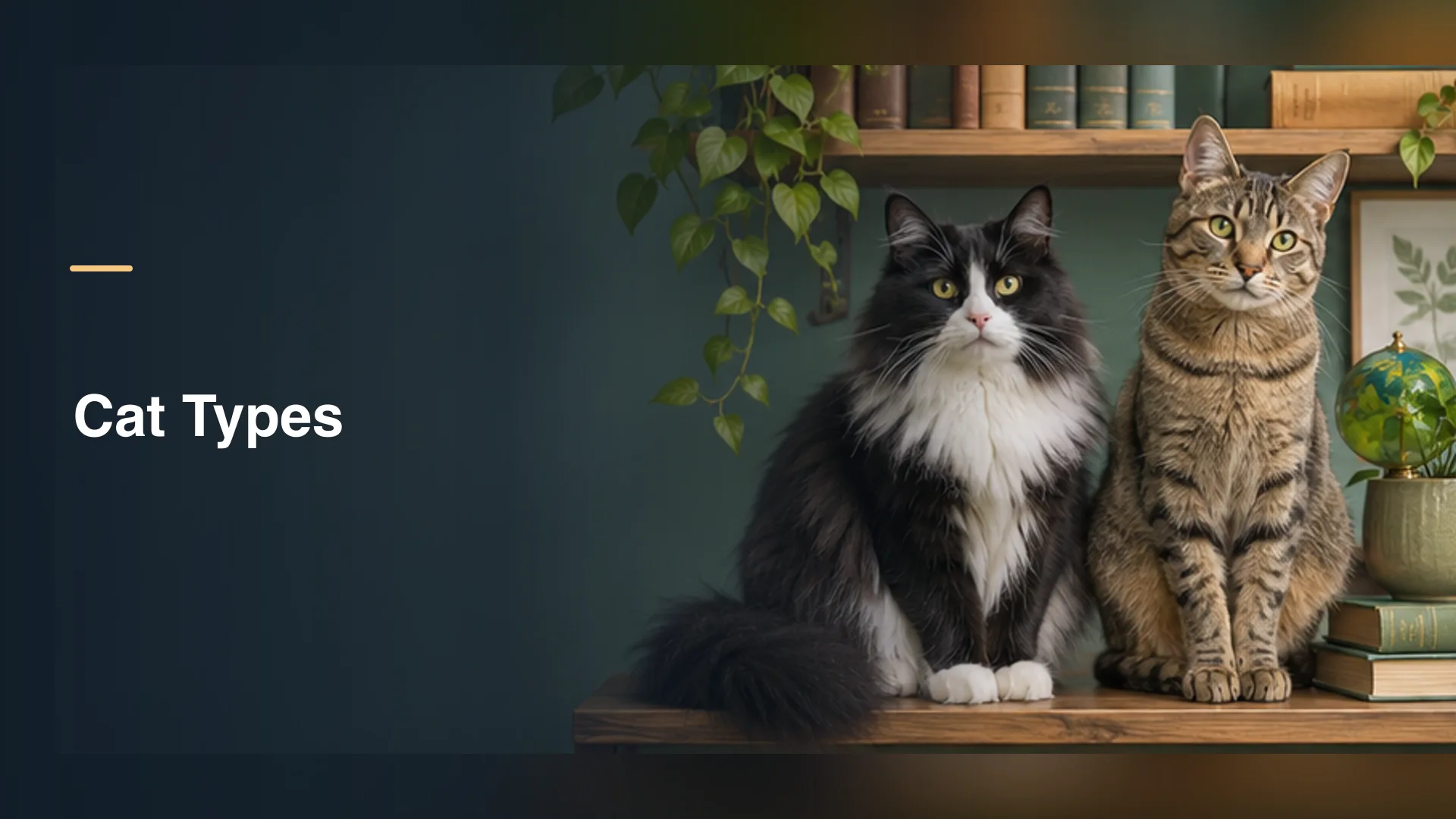
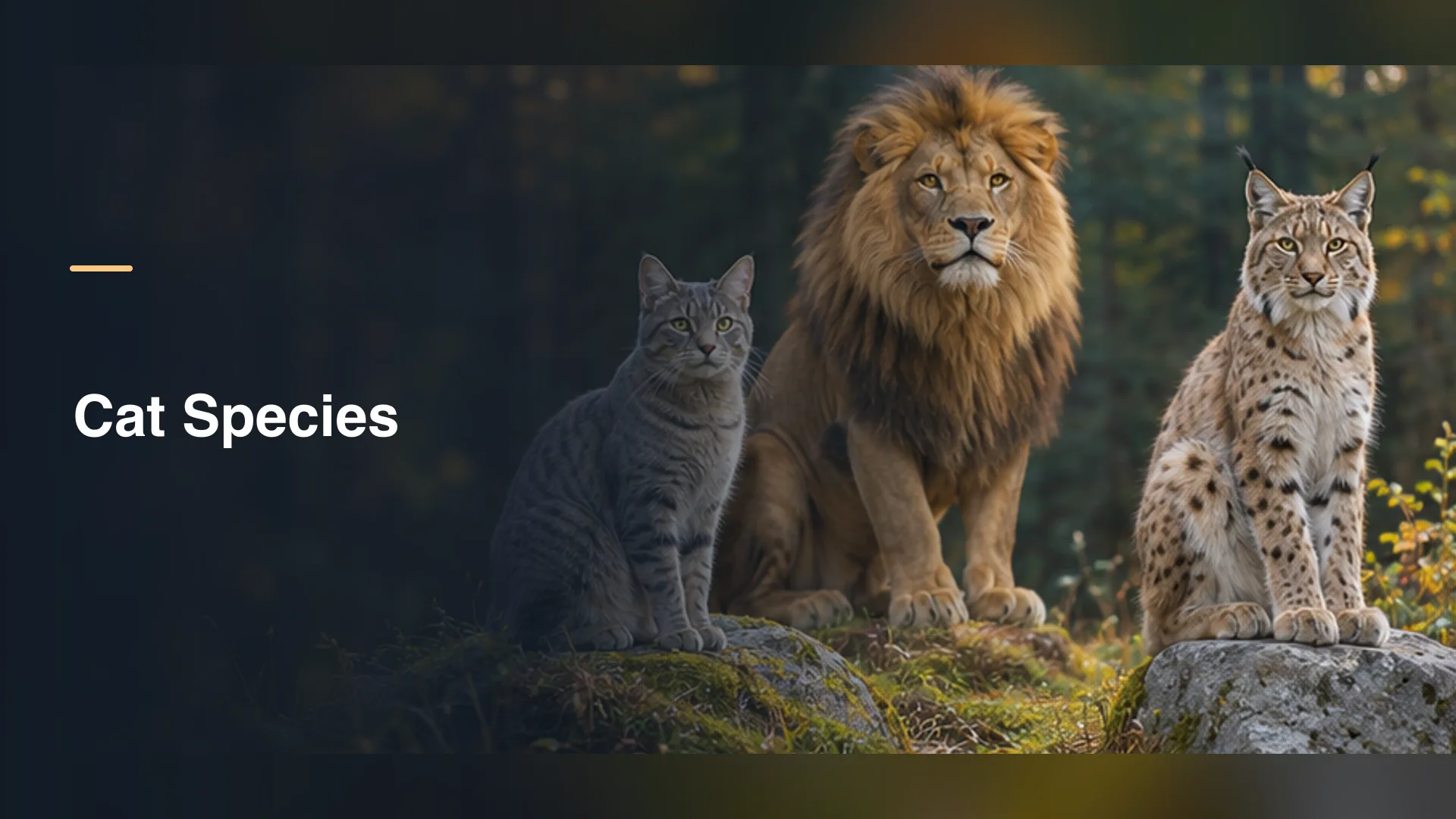
Domestic cats belong to the cat family, Felidae. The house cat is commonly called Felis catus. Tigers, lions, lynxes, servals, and cheetahs belong to the same family and are different species. A Maine Coon and a Siamese, by comparison, are breeds within the domestic cat. If you are wondering why a breed directory and a wild cat list give such different answers, they are counting at different levels.
The cat family has two living subfamilies, Pantherinae and Felinae. The first includes lions, tigers, and clouded leopards. The second includes the domestic cat and many wild cats, including large animals such as cheetahs and pumas. The split helps explain why a description such as big cat can be useful in conversation while remaining too broad to tell you where the animal belongs on the family tree.
Read the cat family tree in three steps
A family brings several related branches together. Felidae contains the living domestic and wild cats. A genus is a smaller branch within that family, such as Panthera or Felis. A species is more specific. In Panthera leo, Panthera identifies the genus and the two words together identify the lion. Reading both words saves you from confusing a group with one member of it.
Level | Example | What the name covers |
|---|---|---|
Family | Felidae | Domestic and wild cats |
Subfamily | Pantherinae; Felinae | Two living branches of Felidae |
Genus | Panthera; Felis | Panthera sits under Pantherinae; Felis under Felinae |
Species | Felis catus | The domestic cat |
Breed label | Siamese | One named group within domestic cats |
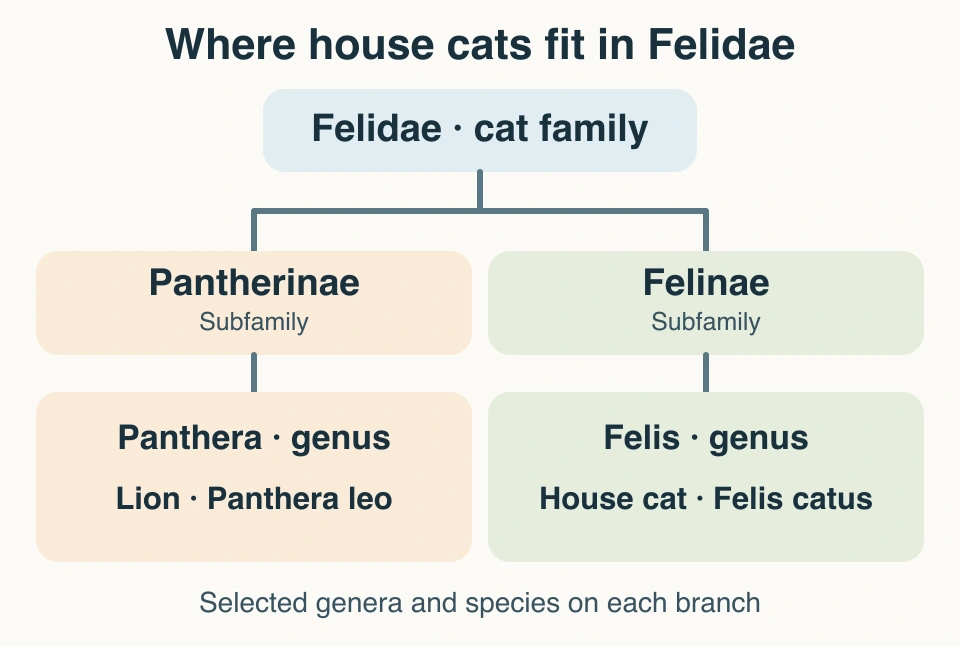
The levels also help when a source uses the English word leopard in more than one name. A leopard is Panthera pardus. A clouded leopard belongs to Neofelis. A snow leopard belongs to Panthera again, as Panthera uncia. The English names are easy to recognize, but the genus names tell you more about how the animals are classified. If you are making a list for a school project or a field notebook, write each scientific name once beside the common name.
See examples from both sides of the family
Pantherinae includes the tiger and lion as well as the jaguar, leopard, and snow leopard. The clouded leopard and Sunda clouded leopard sit in a separate genus within the same subfamily. The cloudlike blotches in their English names describe an appearance. Those blotches do not make them variants of the leopard. The names make more sense when you read the familiar part of the label and check the genus before drawing a conclusion.
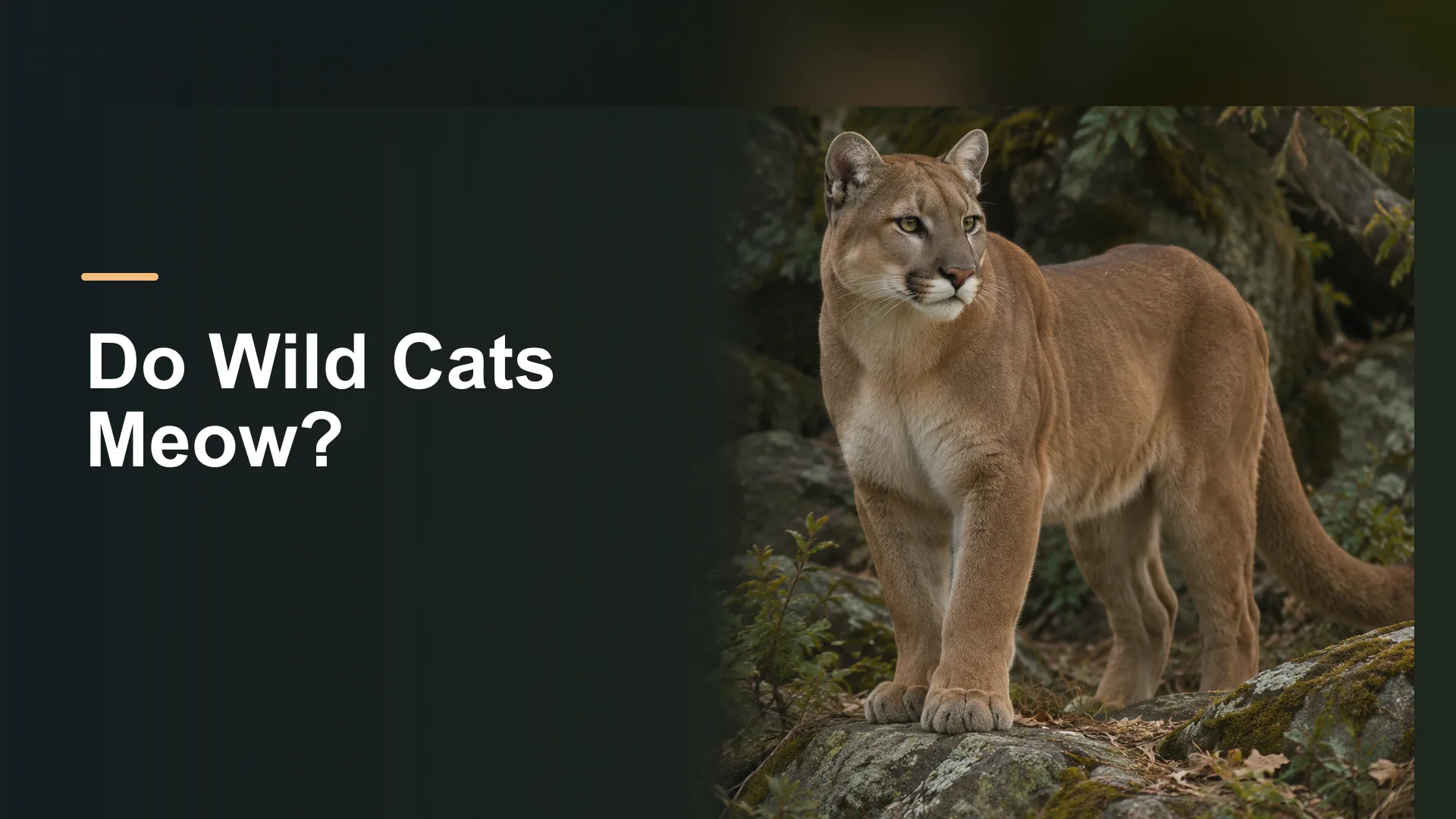
Felinae covers several branches with markedly different builds and habitats. The lynx branch includes the bobcat and Canada lynx. A bobcat’s short tail and a Canada lynx’s longer ear tufts may help in an illustrated comparison, but location and additional features matter in a real observation. In a different branch, the cheetah and puma show that an animal can be large without belonging to Panthera. A caracal and a serval give another useful pair: both have prominent ears, yet their outlines and coat markings are different.
The genus Felis includes the African wildcat, European wildcat, sand cat, and other small cats, as well as the domestic cat. You may see striking resemblances in a comparison of an African wildcat and a shorthaired tabby at home. A narrow face, stripes, or a similar tail shape are clues for describing what the photo shows. They cannot establish that an unfamiliar animal is a wildcat. For a possible wild encounter, give the animal room and contact a local wildlife authority if identification matters.
Compare the rank before comparing totals Check whether a list includes the domestic cat, whether it counts living species only, and what date its taxonomy comes from. Two otherwise useful lists can have different totals because they answer different questions.
Why authorities can give different species totals
The IUCN Cat Specialist Group’s living species page presents 40 wild cat species, with short profiles organized by lineage. That number describes how that source sets up its wild cat directory. If you need a total that includes the house cat, read the scope and add it only when the source leaves it out. A breed registry total measures recognized domestic groups and serves a different question.
Research can change a checklist. Two closely related populations might be treated as subspecies in one assessment and as separate species in another, depending on the evidence and the classification adopted. Older books can also retain older combinations of genus and species names. Keeping the source name with the date is more useful than copying a number without context. If an article gives a figure but no list, follow its authority and see which animals were counted.
There is a similar naming issue for the house cat. Felis catus is common in modern references. You may also come across treatments that place the domestic cat within a wildcat grouping. The naming decision reflects the taxonomy used by the source. It does not turn modern breeds into separate species or change what those sources are talking about when they describe an ordinary household cat.
What a species list can tell you about a pet
Wild relatives can give you context for features shared by felids, such as a stalking posture or the habit of examining an object before pouncing. They cannot tell you the pedigree of a pet. A Savannah or Bengal may appear on a domestic breed list alongside notes about ancestry, but a breed name is not a substitute for the wild species entry. Terms such as “mini leopard” on a pet profile are descriptions or nicknames. Use our guide to spots, rosettes, and stripes when the question is how to describe the pattern on a cat that already lives with you.
A classification can also help with naming unfamiliar animals. If someone calls a coat black panther, ask which animal the photo shows. In ordinary wildlife use, the phrase often refers to a dark leopard or jaguar. The description points to the color of an animal in an existing species. There is no need to add a separate line to a species list every time a common name describes a color.
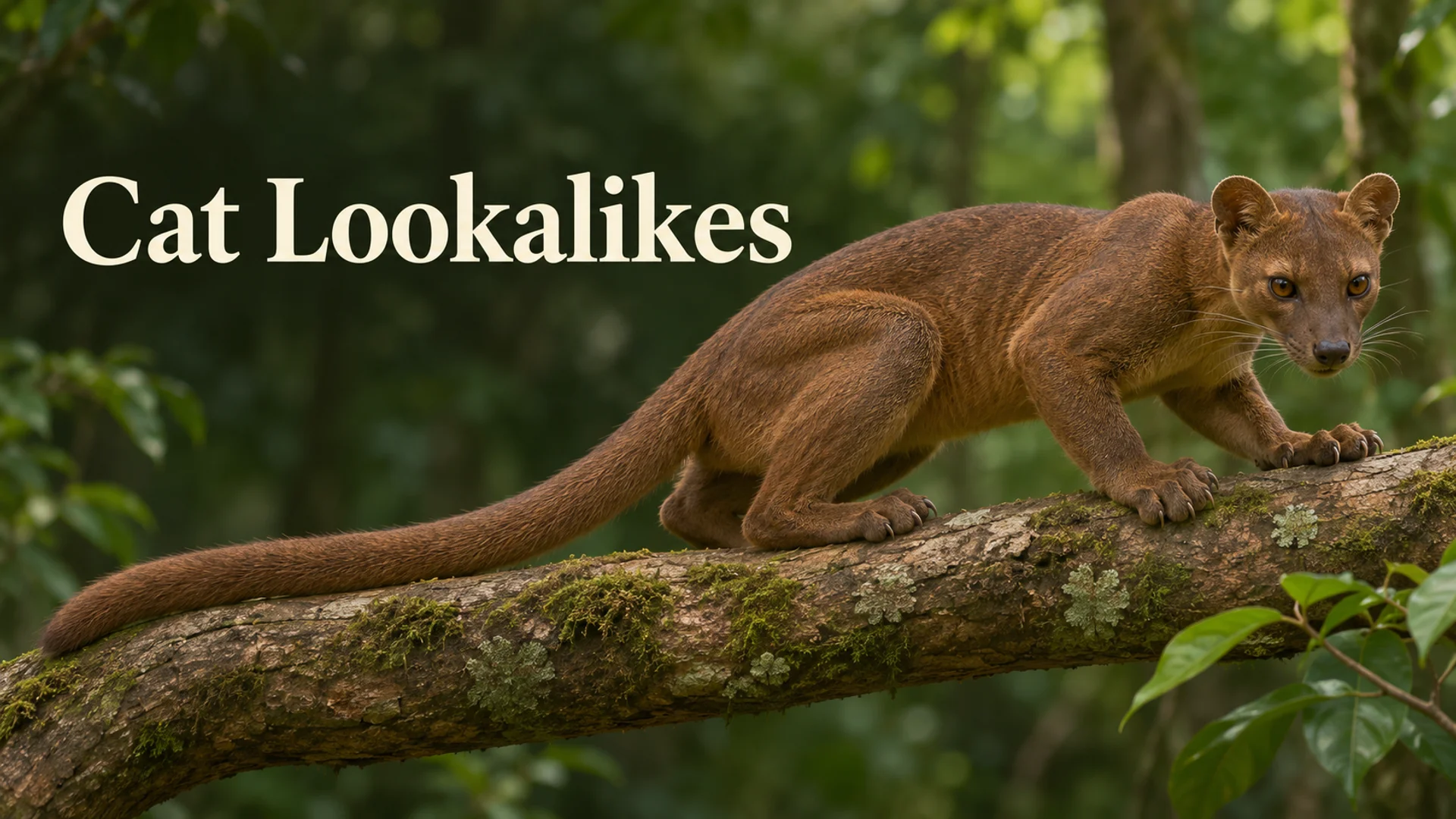
If a family member wants to investigate your household cat’s appearance, use tools that address the domestic question. PetMira’s iPhone app can offer domestic breed suggestions from a pet photo. Save any species questions about wildlife for field guides and local experts. A wildlife identification needs evidence that a house cat breed suggestion cannot provide. For mammals that resemble cats but sit outside Felidae, compare the examples in our cat lookalikes guide.
The distinction to keep
Domestic cats and wild cat species share the family Felidae, and every house cat breed belongs with the domestic cat on that family tree. Read the full scientific name when you need a species, and check a registry or records when you need a breed. Keep the authority and the scope with any total you copy.
Explore domestic cat breeds
Compare your house cat with PetMira
Start with a domestic cat photo in the iPhone app and use any breed suggestions to explore the features you can see.
 Compare a domestic cat photo
- Explore possible domestic breed matches
Use zoological references to identify wild cat species.
Download iOS App