Common genets, ringtails, fossas, and binturongs can remind people of cats, but none belongs to the cat family, Felidae. A pointed face, whiskers, climbing ability, or a cat-like nickname is only part of the picture. To compare an unfamiliar animal, look at its whole shape, tail, face, coat, and location together. Those clues can guide your next reference check without turning a quick glimpse into a confident identification.
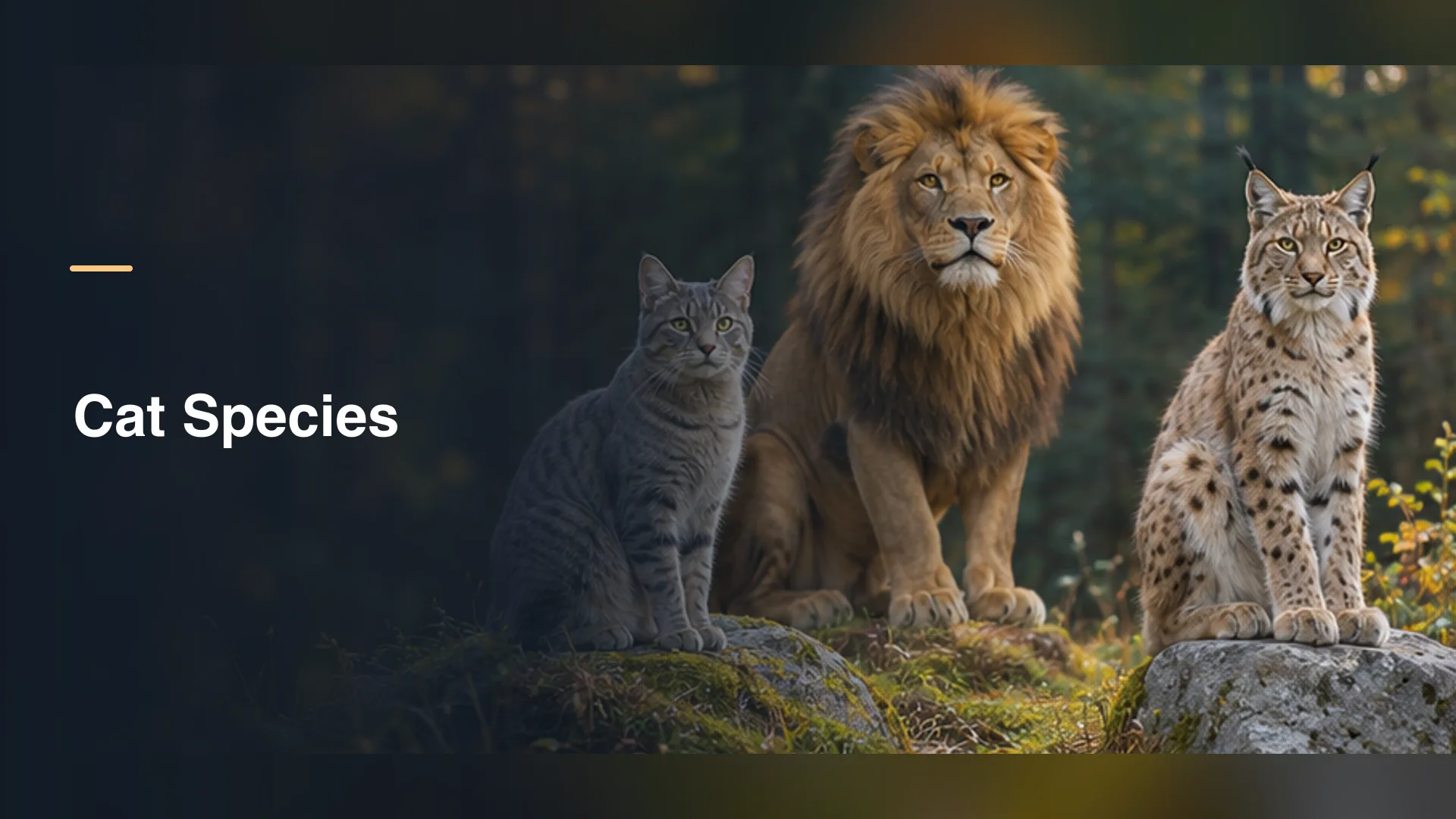
This guide focuses on animals outside Felidae. Bobcats, servals, and other small wild cats belong to the actual cat family; our guide to cat species explains that separate group. The animals below are useful examples of why resemblance and biological classification do not always line up.
Compare the whole animal, not one feature
An animal crossing a path at night may leave you with one striking impression: a spotted coat, a very long tail, or eyes reflecting the light. Record that impression, but keep the missing details visible in your notes. “Long tail; face not visible” is more useful than deciding it was a strange cat and then describing everything around that assumption.
Start with this comparison as a reading aid. It is not an exhaustive field key, and the illustrations are not evidence for the identity of an animal you saw. The family names show why these familiar-looking mammals are outside the cat family. The visible clues suggest which reliable species account to open next.
Animal | Scientific name | Family | Useful comparison clues |
|---|---|---|---|
Common genet | Genetta genetta | Viverridae | Slender body, spotted coat, long tail, elongated face |
Ringtail | Bassariscus astutus | Procyonidae | Long banded tail, pale eye rings, large ears |
Fossa | Cryptoprocta ferox | Eupleridae | Brown coat, rounded ears, long tail, extended body |
Binturong | Arctictis binturong | Viverridae | Shaggy dark coat, prominent whiskers, thick grasping tail |
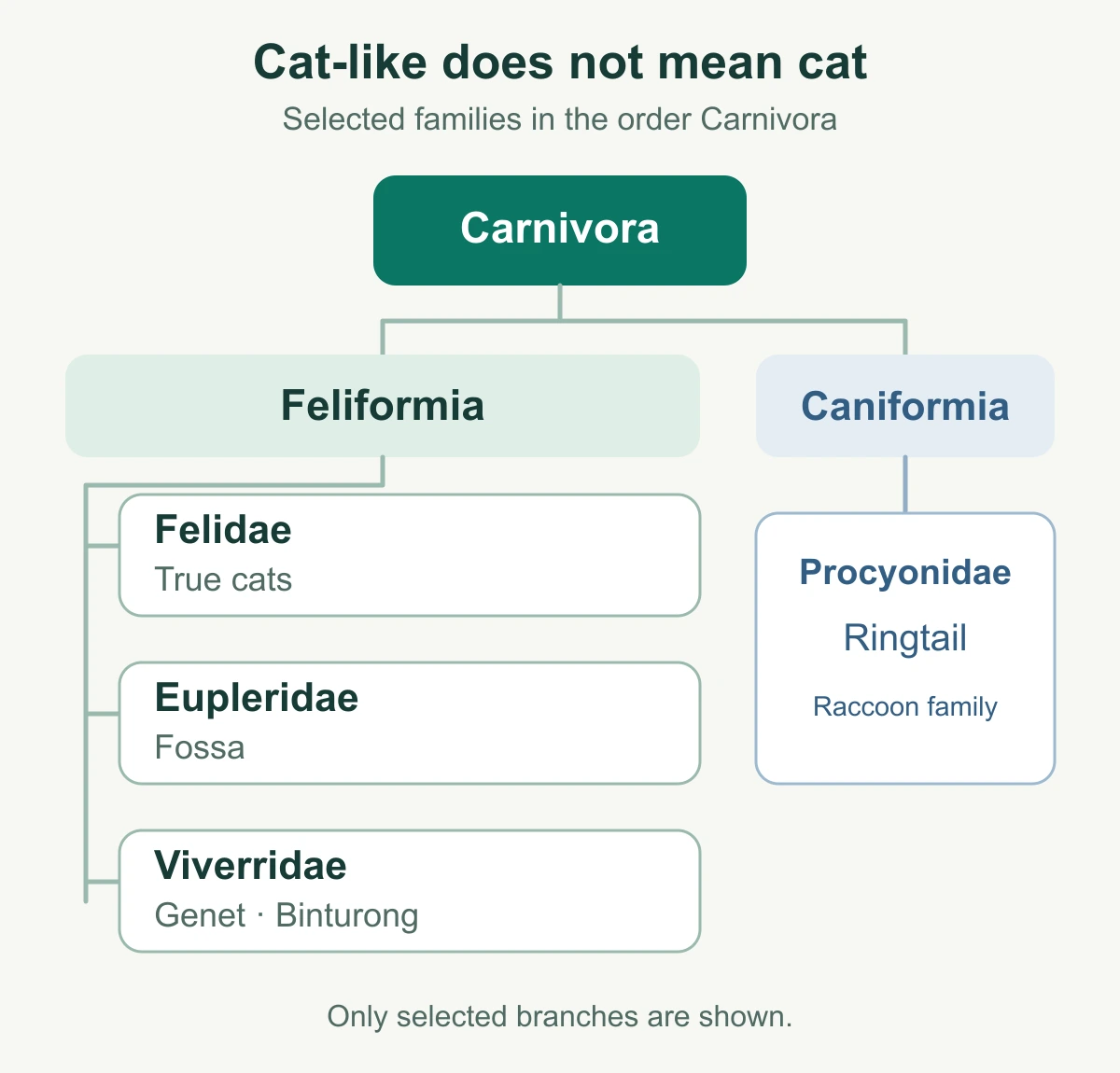
All four examples belong to the order Carnivora. Felidae, Eupleridae, and Viverridae sit within its Feliformia branch; the ringtail’s family, Procyonidae, sits within Caniformia. The diagram shows selected families rather than every branch. Membership in the broader cat-like branch does not make a genet or fossa a member of Felidae.
Tip Before searching by an animal’s nickname, note where the photograph was taken. “Ringtail cat” and “bearcat” are common names, not proof that either animal belongs to Felidae.
Common genet: a spotted body and a longer face
A common genet can look like a narrow, stretched-out spotted cat. Its body is slender, its tail is long, and its face projects farther forward than the short feline face many people expect. The University of Michigan’s species account places Genetta genetta in Viverridae. Genets are therefore useful examples of cat-like appearance outside the cat family.
For a photograph, compare the body and face together. A coat covered in dark spots may catch your attention first, but a cropped image of the flank removes some of the more useful differences. Look for a view that includes the head and the tail. If those parts are hidden, describe the visible pattern and leave the identification unresolved.
Geography helps narrow the comparison. Common genets occur in Africa and parts of Europe; a picture from a zoo may have been taken far from a species’ wild range. Check the photograph’s original caption rather than assuming the uploader’s home location is where the animal was photographed. That small distinction can save a long search through the wrong regional wildlife guide.
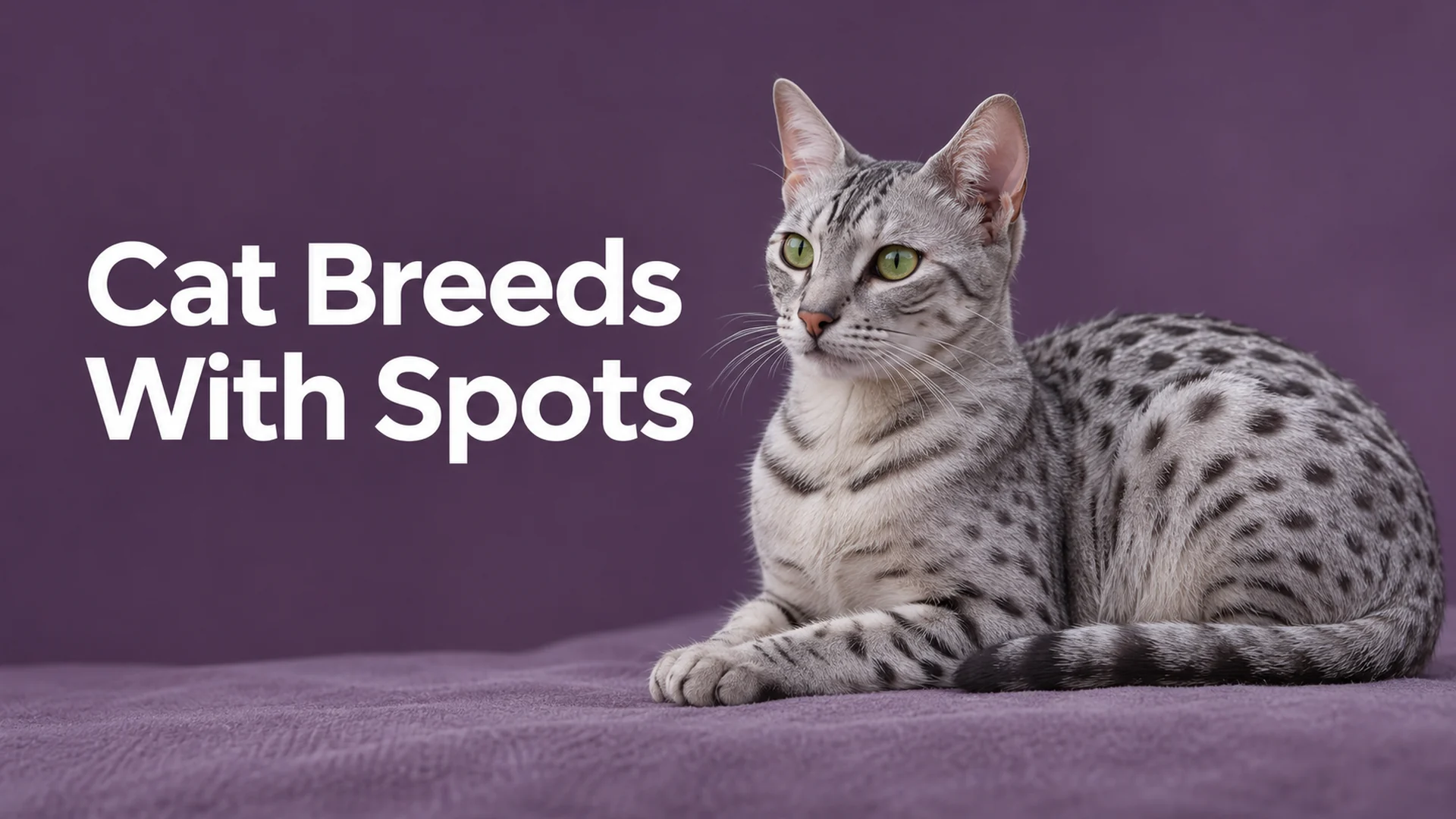
A spotted domestic cat is a separate possibility in many ordinary settings. Our spotted cat breed guide discusses domestic examples, but spots alone cannot decide between a domestic cat, a wild cat, or a noncat carnivore. Use it only after you have established which kind of comparison you are making.
Ringtail: a cat nickname in the raccoon family
The ringtail is often called a “ringtail cat,” but it belongs to the raccoon family, Procyonidae. Its scientific name is Bassariscus astutus. The Nevada Department of Wildlife’s ringtail account describes this small nocturnal mammal and its range in the southwestern United States and Mexico. The long, strongly banded tail makes the nickname memorable.
When examining a clear picture, look beyond those bands. Pale areas around the eyes, large ears, and a slender body add information that a tail-only photograph lacks. A ringed tail occurs in other mammals too, so one feature should prompt a comparison rather than end it. Keep an uncropped copy if a photograph includes more than the detail that first attracted you.
An animal seen briefly on a wall presents a different task from a labeled zoo portrait. You may not know its size, and nearby objects can distort your impression of scale. Write “crossed the low wall beside the shed” rather than estimating an exact body length from memory. The setting and your original image can help a local wildlife specialist assess the sighting.
Fossa: a long-tailed hunter from Madagascar
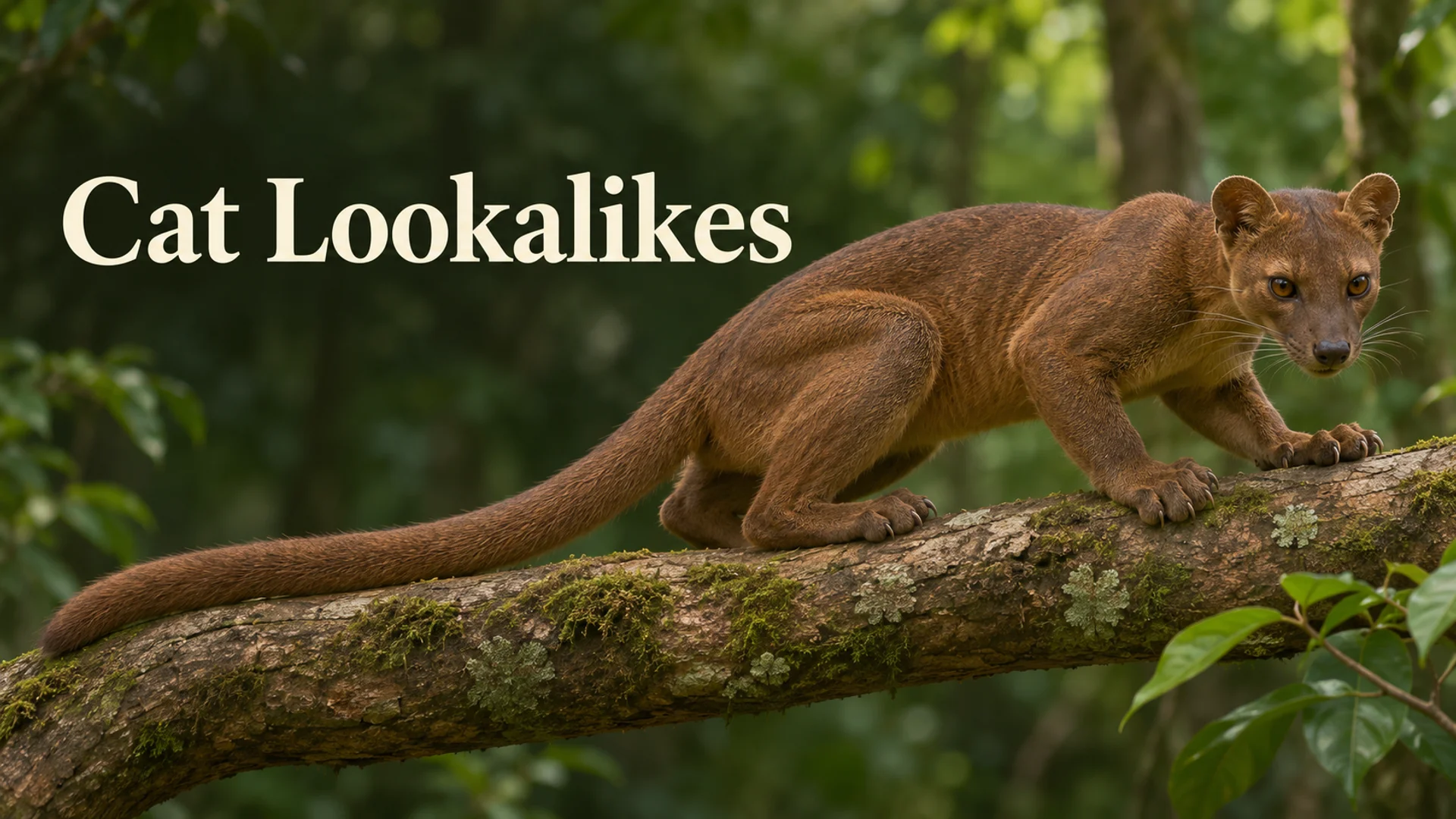
A fossa can resemble a small, long-bodied cat, especially in a close photograph of its rounded ears and face. It has a brown coat and a conspicuously long tail. The San Diego Zoo’s fossa profile identifies Cryptoprocta ferox as a member of Eupleridae and describes its native home in Madagascar. It is not a cat breed or a small cougar.
The tail deserves a second look because a tight portrait hides much of the animal’s outline. A full-body image shows how much longer the animal appears when the tail is included. That is useful for comparing published photographs, although the pose still matters: a curled tail or an angled body can make proportions harder to judge.
Do not turn “related to” into “is a type of.” A source may discuss a fossa’s relationship with mongoose-like carnivores while listing Eupleridae as its family. Preserve the actual family name rather than relabeling it a mongoose or a cat. The scientific name lets you check whether two articles are discussing the same animal even when their informal descriptions differ.
Binturong: the shaggy bearcat
A binturong has a shaggy coat, conspicuous whiskers, and a face that can seem feline. Its nickname, “bearcat,” combines two familiar animals without making it a member of either family. Arctictis binturong belongs to Viverridae. It is native to South and Southeast Asia. Compared with the lean outline of a genet, its heavier, shaggy appearance is an especially useful distinction in clear side views.
Its tail is another feature worth checking. Binturongs have a thick tail whose grasping portion helps them hold branches. In an appropriate photograph, a tail wrapped around a branch adds context beyond the general impression of a furry animal in a tree. You do not need to see that behavior to know a reference photograph is a binturong, and its absence does not rule one out.
The practical lesson is to distinguish a feature an animal has from a feature your picture actually shows. Write “tail obscured by branch” when it is hidden. Do not complete the silhouette from a caption and then count that imagined detail as confirmation. The same discipline helps with a shaggy face whose ears are difficult to see.
Use place and proportion to check a sighting
First, establish whether you are looking at a wild encounter, a zoo animal, an old photograph, or an image with no reliable origin. Search results often detach a picture from its original caption. Open the source page and look for the location and the animal’s full name. A general collection titled “cat-like animals” may combine photographs from several continents.
Next, compare at least three visible details with a regional wildlife agency, museum, or zoo account. Start with the face, the tail, and the body outline, then use coat pattern as another clue. This is a way to organize observations, not a scoring system that produces a guaranteed answer. A blurred face remains blurred even if the coat seems familiar.
Suppose a night photograph shows pale eye rings and a long banded tail, but the feet and most of the body are behind a railing. A useful note would preserve those two visible clues, the place, and the time. It would also say that body proportions were partly hidden. That gives a specialist something concrete to evaluate without forcing a species name into the first sentence.
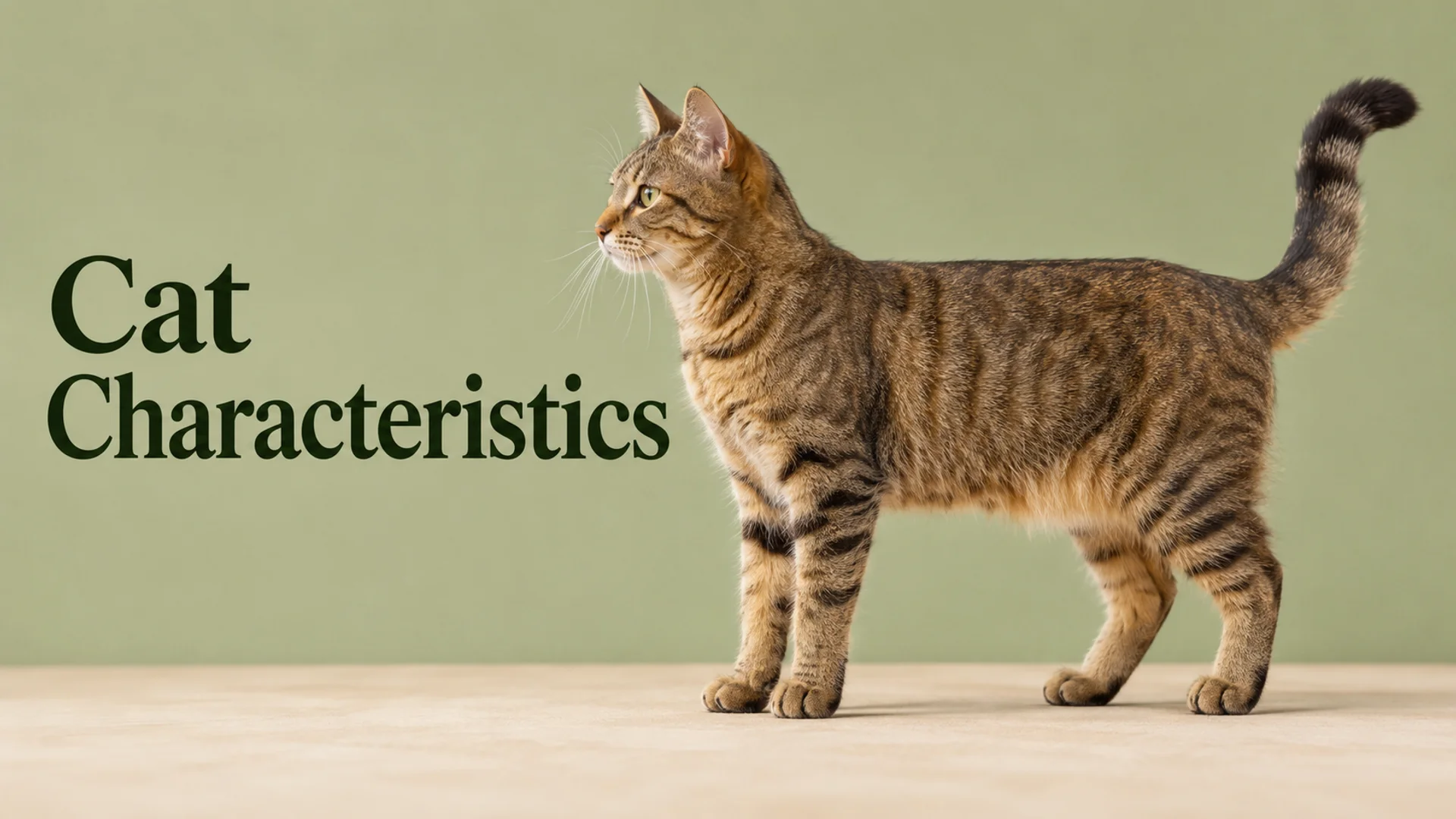
If you were looking for an ordinary house cat’s label instead, our guide to cat types explains the difference between breed names, coat descriptions, and everyday terms. A domestic cat’s unfamiliar markings do not automatically make it an exotic animal. Equally, a familiar-looking face does not establish that a wild animal is a pet.
Keep the observation useful and safe
You do not need a closer encounter to make a better record. Keep your distance, give the animal a route away, and keep pets from following it. Do not feed it or try to make it turn toward the camera. When an animal appears injured, trapped, or in immediate danger, contact the relevant local wildlife service and follow its instructions.
Save the original photograph alongside any crop you make for easier viewing. Note the date, approximate location, setting, and whether you saw more than one animal. If the identification remains uncertain, say so. A useful observation can remain unnamed until someone with regional knowledge has enough information to assess it.
What to remember
Cat-like appearance is a starting observation. Compare the whole animal, check the location and scientific name, and preserve the details you could not see. Genets, ringtails, fossas, and binturongs show why a familiar face or nickname cannot establish membership in the cat family.
PetMira for iPhone
Get to know the cat at home
For your domestic cat, take or upload a photo in PetMira to explore possible breed suggestions and learn about visible traits.
 Explore possible domestic cat breeds
- Read information about suggested breeds
PetMira is not a wildlife identification tool.
Download iOS App