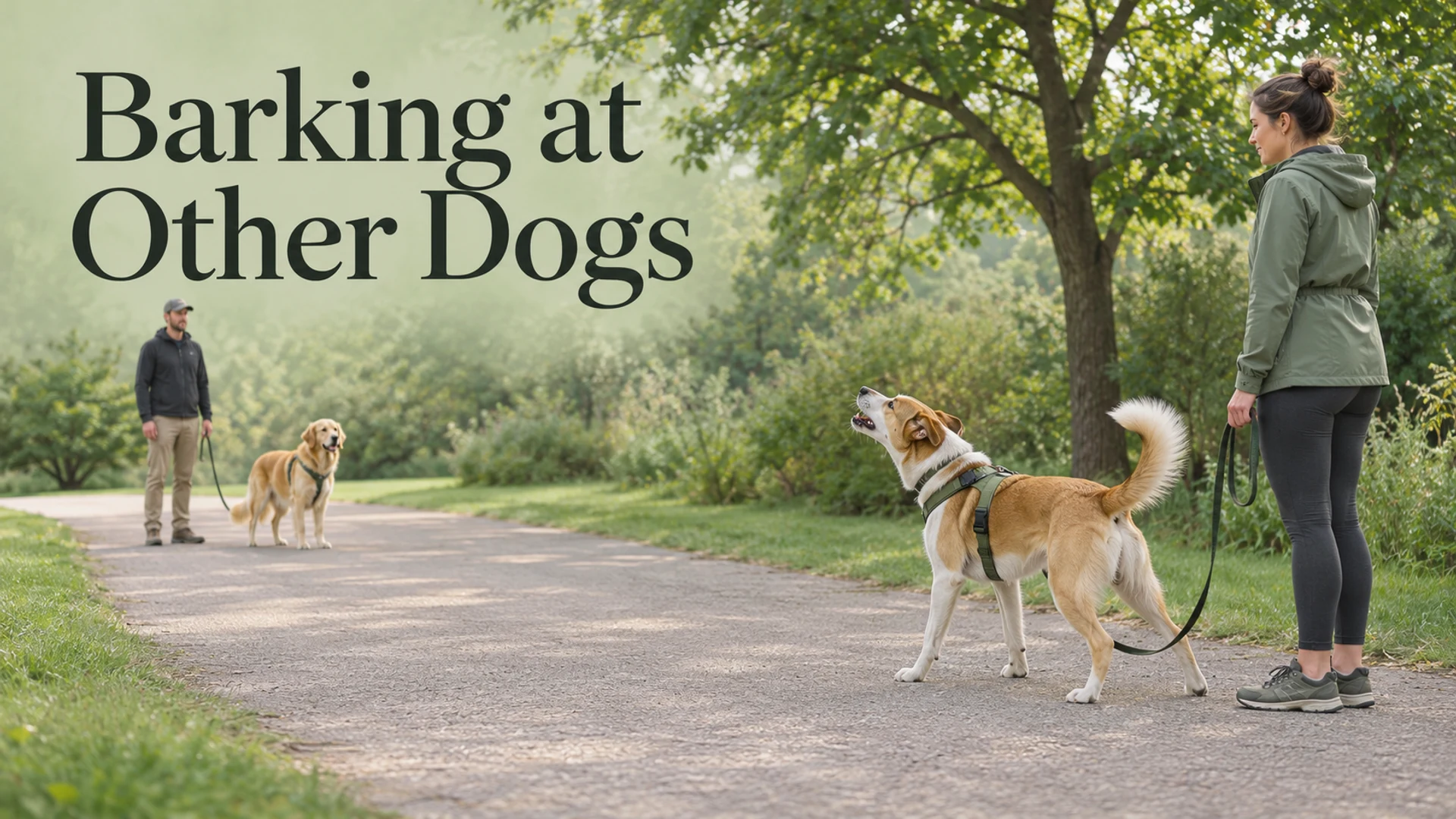
A dog may bark at another dog because the encounter feels worrying, frustrating, exciting, or difficult to manage. Barking alone cannot tell you whether they want a greeting or need more space. Start by creating enough room to move away safely. Then practise in easier situations where your dog can notice the other dog, disengage, and continue comfortably.
If someone could be bitten, the dog redirects toward the handler, or you cannot maintain safe control, leave the situation and seek qualified help. New reactions, especially with changes in movement or comfort, also deserve veterinary advice. This guide offers management and a cautious practice framework, not a treatment plan for every dog who barks or lunges.
Create space before trying to train
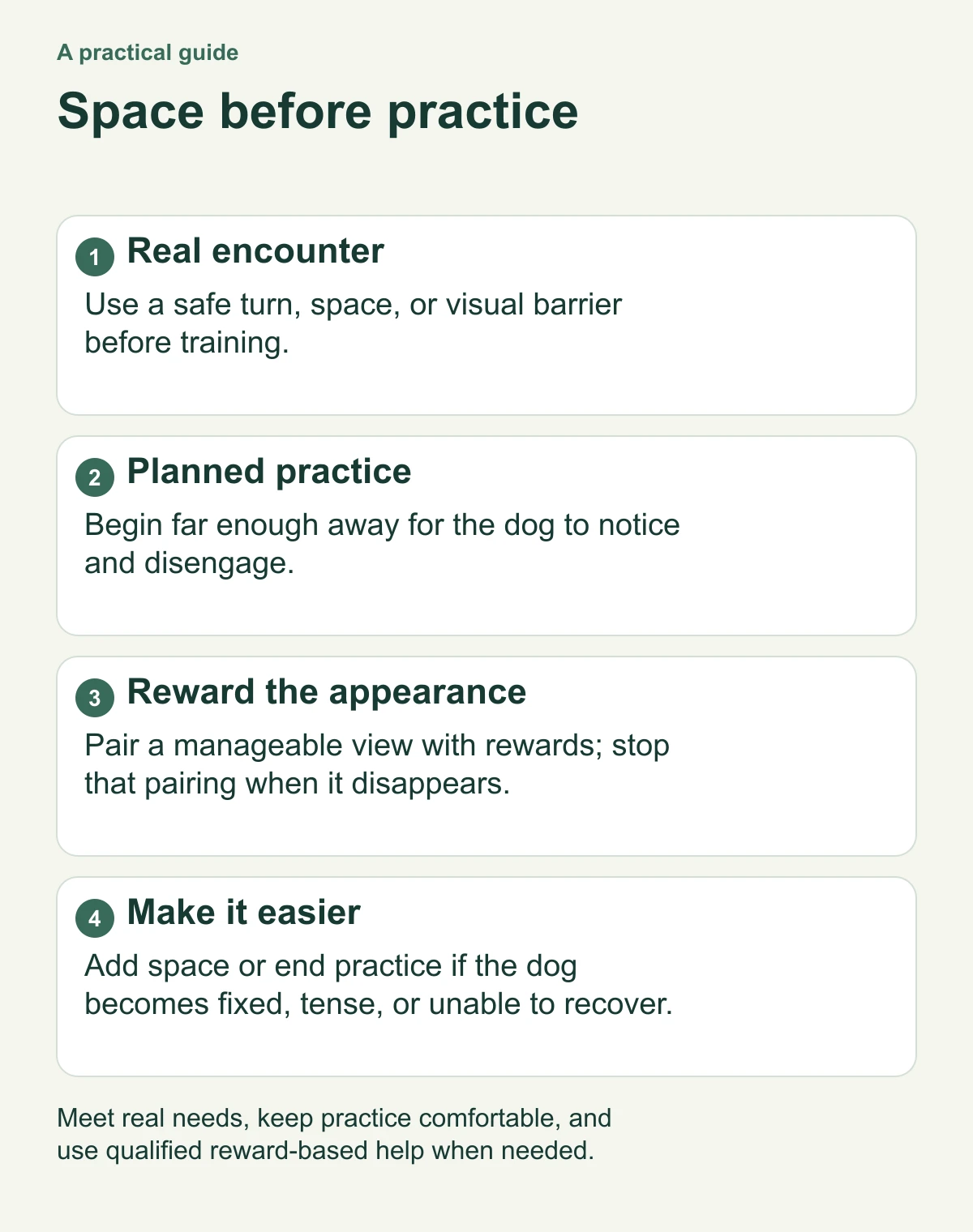
During an unexpected encounter, choose a safe route away rather than waiting for the dog to obey a cue beside the trigger. Cross the road only where traffic allows, turn along a clear route, or use a parked car or other suitable visual barrier. Look for what is coming around the barrier so that you do not create a second close encounter.
Keep your dog on secure equipment that fits and that you can handle. Avoid leash jerks, dragging the dog toward the other animal, or a forced nose-to-nose greeting. Ask the other handler for space when needed. If the path is too narrow to pass comfortably, waiting somewhere with room or changing direction can be the most useful decision on that walk.
Do not reach into a conflict between dogs or bring your face near an aroused dog. Arrange professional support when there is a bite history or a risk that exceeds what you can manage safely. The immediate goal is a safer encounter, not finishing the planned route at any cost.
Why dogs can bark at other dogs
A leash or fence can limit movement and access. Some dogs become frustrated when they cannot approach; others want the other dog farther away. Previous experiences, the other dog's movement, and the available space can all affect the encounter. You do not have to select one definitive emotional label before giving your dog more room.
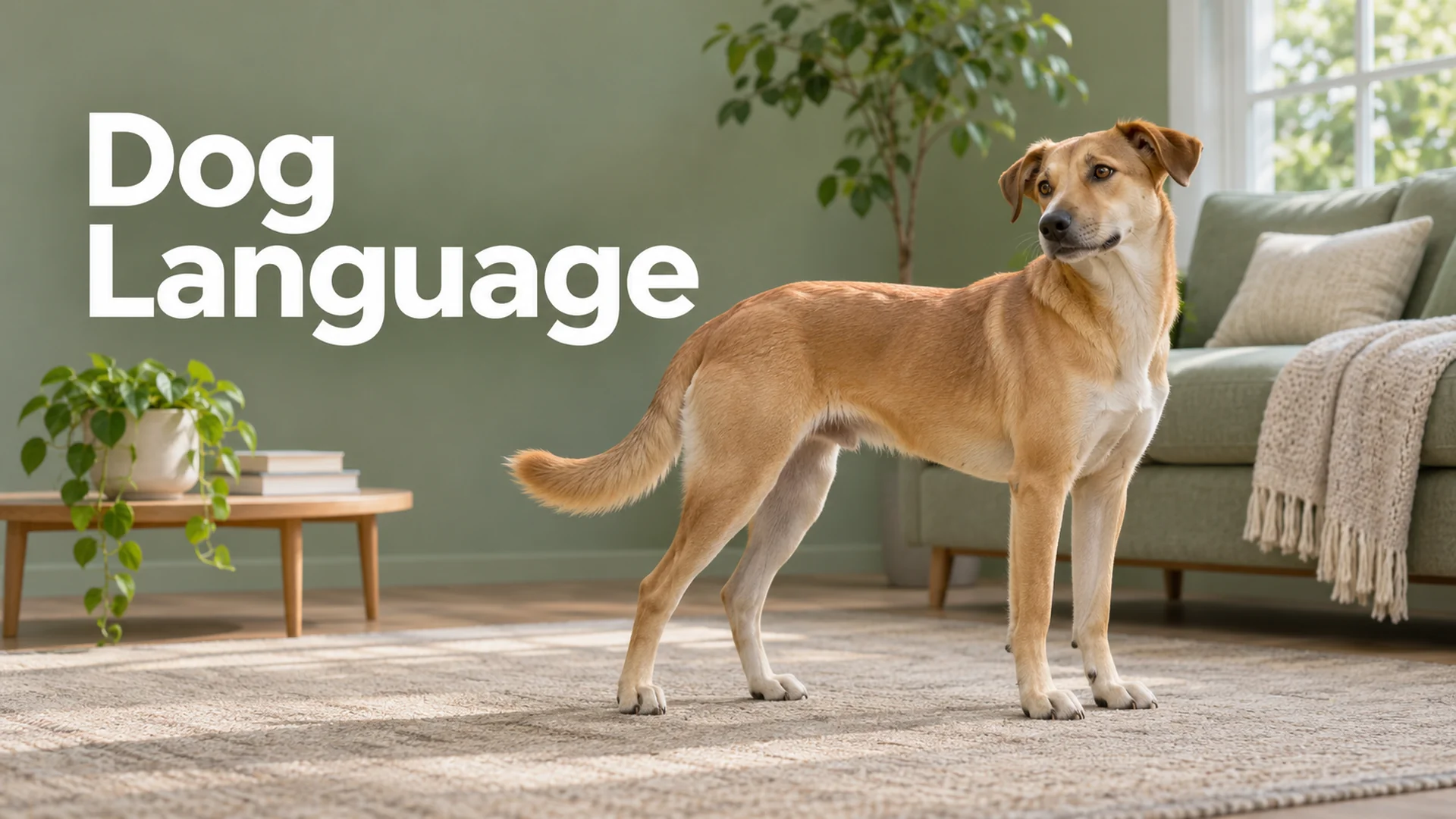
Notice the whole sequence. A dog might first stop sniffing, close their mouth, and stare before barking begins. Another may bounce toward a familiar playmate. Our dog language guide explains these broader observations, but no combination gives permission to assume that an unfamiliar greeting will be safe. A wagging tail or taking a treat is not enough on its own.
Avoid interpreting every reaction as protection, dominance, or a dislike of all dogs. If your dog reacts to one fast approach but not a distant dog resting beside a handler, those are different situations. Record the difference. It can help you choose an easier setup without making claims about what the dog was thinking.
Make a passing plan for real walks
Choose routes and times that offer some room to change direction. Before leaving, have appropriate rewards accessible and decide where you can step aside on the usual route. Practise a simple turn with your dog in a quiet place, rewarding them for following your change of direction. Teach the movement away from other dogs before you need it in a tight encounter.
On the walk, notice approaching dogs early. Create space before barking begins when possible, then allow your dog to look and move on without a greeting. A short, familiar cue may help if the dog can respond comfortably. The guide to clear cues and rewards covers that foundation. Repeating the cue while the dog is staring and straining does not make the encounter easier.
If your dog barks, increase distance and recover rather than holding position until they become quiet. A pause behind a barrier or a different route can let the walk continue safely. You can make a smaller practice plan later; an unplanned close pass is not a fair test of whether previous training worked.
Practice at a distance your dog can handle
Use a location with enough room to leave and a setup you can control. A qualified, reward-based trainer can help arrange this safely, especially when another dog and handler are involved. You do not need to recruit a stranger's dog for a close training encounter. Both dogs should have space and the ability to remain comfortable.
Begin far enough away that your dog can notice the other dog without becoming fixed, stiff, or overwhelmed. When the other dog appears, offer rewards your dog can safely enjoy. When that dog disappears, the rewards associated with its appearance stop. Keep the experience easy, with breaks and room to move, rather than luring your dog closer with food.
Observe more than eating. Look for loose movement, the ability to look away, and a comfortable return to sniffing or walking afterward. A dog can take food while still tense. If your dog cannot disengage, starts barking, or repeatedly tries to get away, make more space or end the session. Do not withhold an escape route until they perform a sit.
During practice | What it suggests for the setup | Next adjustment |
|---|---|---|
Notices the dog, then looks away easily | Current version may be manageable | Keep the same easy setup |
Stares, stiffens, or stops moving freely | The situation may be too difficult | Add space or leave |
Takes food but remains tense | Food alone is not a comfort check | Reduce pressure and reassess |
Recovers slowly after the dog leaves | The whole exposure may be too demanding | Shorten or simplify future practice |
What to change when a session gets harder
Keep the version that worked before making it more difficult. A smaller distance, a moving dog, a narrower path, and a longer exposure are separate changes. Alter one at a time and be ready to return to the easier version. There is no universal distance or schedule that suits every dog.
An example is practising with a distant dog standing quietly across an open space. Moving directly to a narrow sidewalk with two passing dogs changes several conditions. An easier next step might keep the open space and similar distance while the other dog walks a little. If that creates sustained staring or barking, return to less movement or stop. Progress is based on the dog's response, not the ambition of the plan.
Keep leaving available. A practice setup should include a safe exit before the other dog appears. Walking away is an adjustment, not a punishment or a failure to complete the session.
Track comfort rather than counting silent passes
A useful note includes the setting, approximate distance, what the other dog was doing, and how your dog recovered. “Watched a dog across the field, then resumed sniffing” says more than “good today.” Note when you used a barrier or changed direction so the next person walking the dog can repeat a helpful choice.
If you use PetMira for an ordinary, naturally occurring pet sound, keep a separate note about the encounter before considering its AI interpretation. The app cannot determine whether approaching another dog is safe. Handling and distance come first; never move closer, delay leaving, or divide your attention during a difficult encounter to obtain a better recording.
For persistent difficulties, work with a qualified professional using reward-based methods. Our AI dog training guide explains the limits of automated instructions and why the actual setting matters. If the behavior changed suddenly or your dog may be painful, involve your veterinarian as well.
A successful walk can include walking away
Make space first, practise only where your dog can cope, and judge progress by comfortable disengagement and recovery. A safe route change can be a better outcome than a silent but tense close pass. Your dog does not need to greet every dog to have a more manageable walk.
PetMira for everyday care
Review the moment after safety comes first
Use PetMira only for an ordinary pet sound that can be recorded without changing the encounter. Keep a separate note of distance, movement, and recovery.
 Record naturally occurring pet vocalizations
- Keep AI interpretations provisional
- Consult everyday care information
Do not move closer or divide your attention during a difficult encounter to make a recording.
Download iOS App