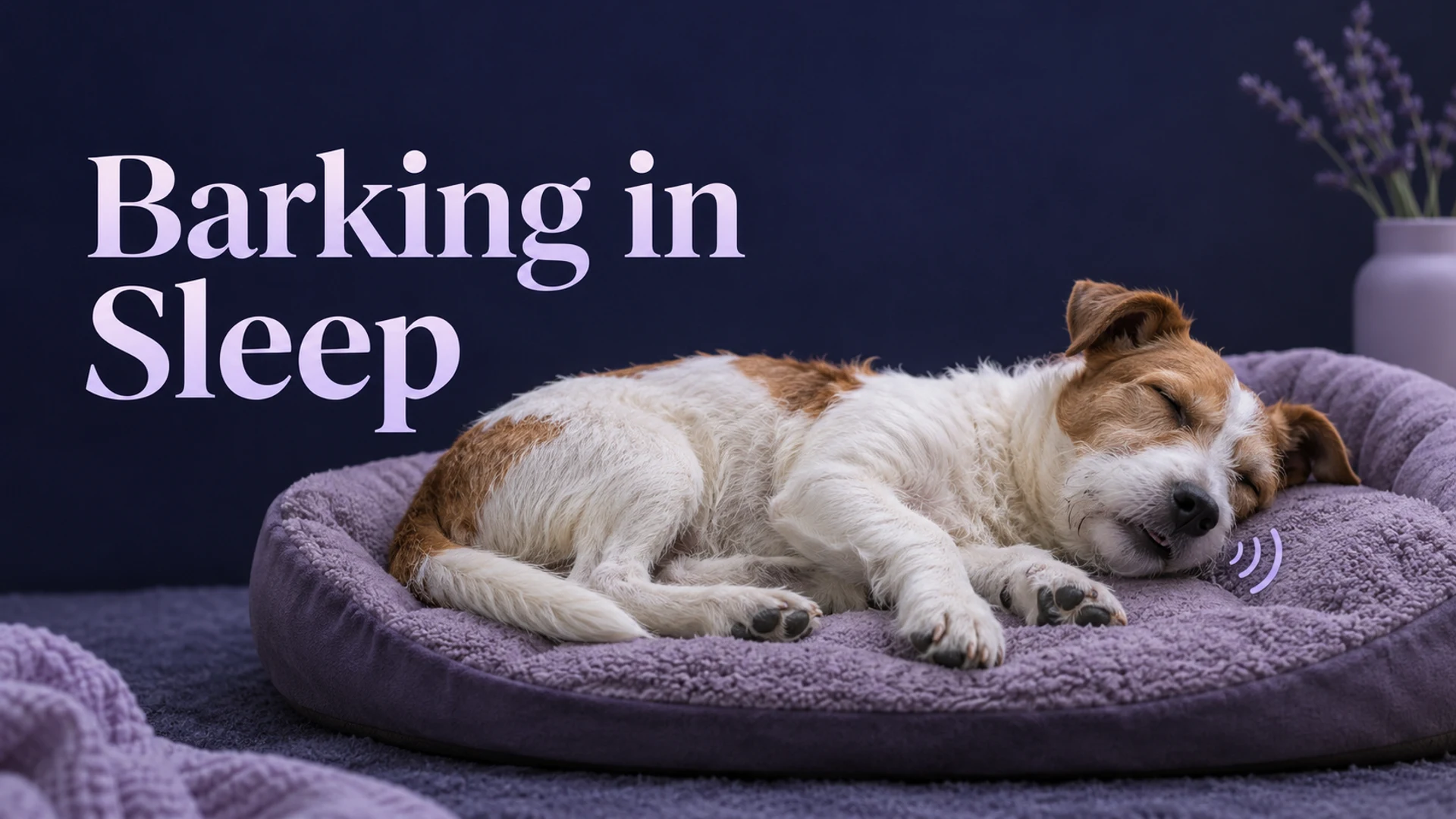
Brief barks, whimpers, and small movements can occur while a dog is asleep, often alongside normal sleep activity. You cannot tell what the dog is dreaming about from those sounds. The practical questions are whether this is a familiar, brief pattern, whether breathing looks comfortable, and how the dog behaves when they naturally wake. New, increasing, or unusual episodes should be discussed with your veterinarian.
Seek urgent veterinary help if your dog has difficulty breathing, collapses, or is not responding normally during or after an unexpected episode. Do not assume an alarming event is dreaming because it began on a bed. Calling for advice takes priority over filming, timing a perfect clip, or comparing sounds online.
Why sleeping dogs may bark or twitch
Dogs pass through different sleep stages, including rapid eye movement, or REM, sleep. Sounds and movements can occur during sleep, and veterinary explanations commonly connect these episodes with dreaming. That is a general explanation for an ordinary pattern, not a way to identify a sleep stage or diagnose an individual event from the sofa.
A small bark with a paw twitch may look like running or playing to a human observer. The image can be amusing, but the story remains a guess. You cannot establish that the dog is chasing a particular animal, reliving a frightening experience, or asking you to intervene. Avoid turning the imagined dream into a reason to wake or handle them.
Compare with what is usual for this dog. An occasional familiar sleep sound and an abrupt change in frequency, movement, or recovery are different observations. A dog who seems normal when awake still deserves veterinary advice if the episodes are newly different. Normal behavior between events does not let an owner confidently identify everything that happens during sleep.
Separate asleep, waking, and fully awake episodes
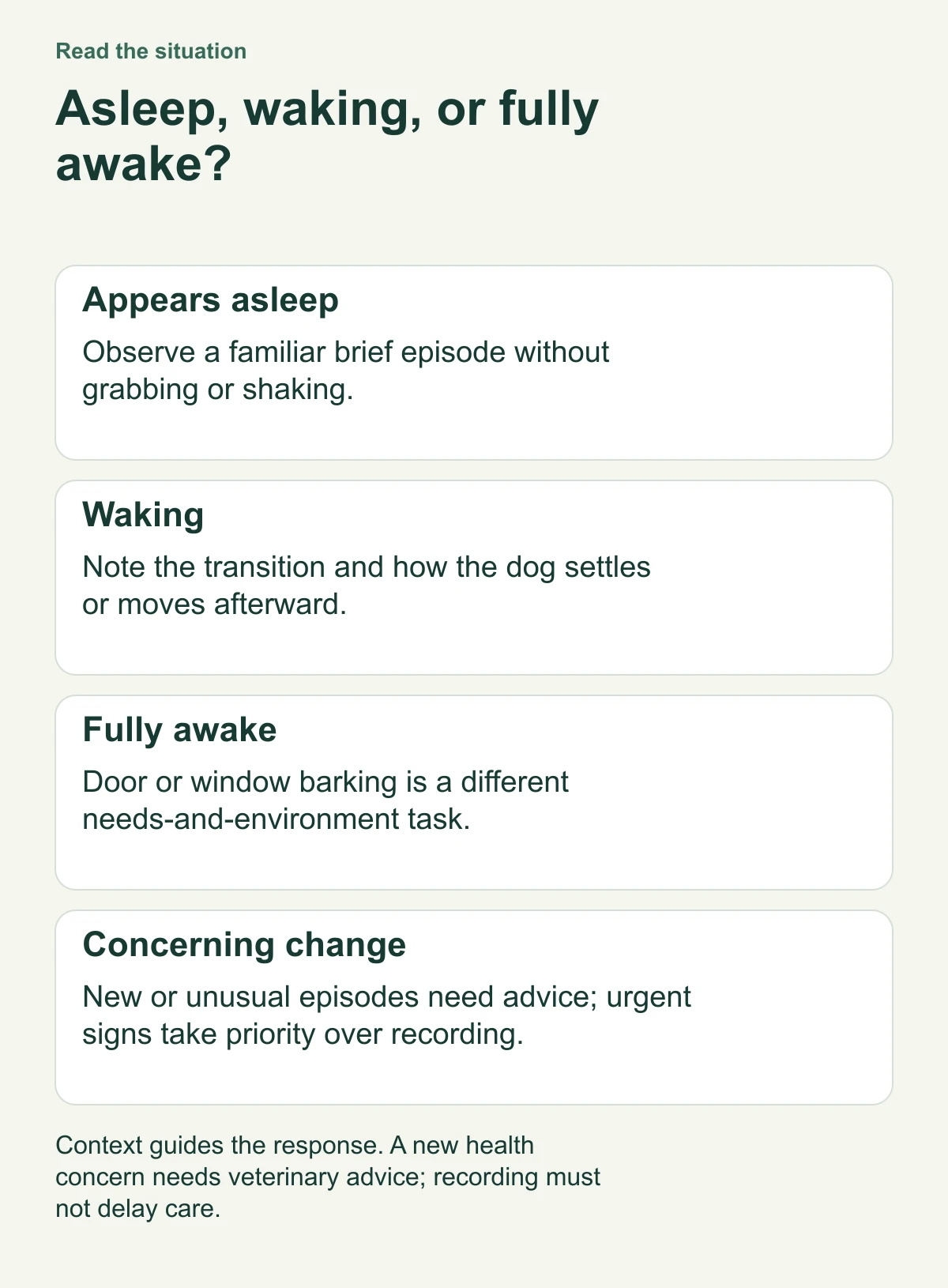
The word “night” can hide several different tasks. A dog may vocalize while appearing asleep, briefly wake and resettle, or be fully awake barking at a hallway sound. Focus on the sequence you actually see rather than deciding that every sound after bedtime belongs in the same category.
What you observe | The question to record | Which task comes next |
|---|---|---|
Appears asleep during a short sound | Is the pattern familiar, and how do they wake later? | Observe without unnecessary disturbance |
Wakes and changes position | Do they settle or remain uncomfortable? | Note the transition and any change |
Fully awake, facing a door or window | What triggered the waking bark? | Check needs and the environment |
A dog who gives a few muffled barks while lying still, then continues resting, presents a different situation from a dog standing at the bedroom door and asking to go out. The separate nighttime barking guide covers that awake response. Being quiet again after a toilet trip does not explain an earlier event that happened while asleep.
Likewise, a puppy who wakes regularly may need a suitable routine and access to toilet breaks. Our puppy sleep schedule covers those planning decisions. This page focuses on the episode itself, not nap targets, crate training, or a promise that a dog should sleep through the night.
What to do during an otherwise ordinary episode
When a familiar, brief episode occurs and the dog appears comfortable, allow them to keep resting. Avoid grabbing, shaking, stroking near the face, or putting your own face close to theirs. A dog startled from sleep may react before understanding who is beside them. Give children a simple rule to let a sleeping dog rest and ask an adult when worried.
Watch from a safe distance rather than moving the dog to improve your view. Notice the overall sequence, including pauses and whether the dog stays in a comfortable position. You do not have to determine the exact sleep stage or wake them routinely to prove that they can respond. If something looks abnormal or you are uncertain, contact the clinic for guidance instead of experimenting.
If an episode involves forceful or unusual movement, prevent other people and pets from crowding the area and get professional advice. Do not restrain the dog or put anything in their mouth. A household description cannot reliably classify every sleep-related event, and the absence of one sign on a checklist does not establish that the event is harmless.
Keep a description your veterinarian can use
Record when you first noticed the change and what your dog was doing immediately beforehand. Describe the sounds and movements in ordinary terms: “two short barks, front paw moved, remained lying down” is clearer than “had a nightmare.” If you did not see the beginning, say so. An incomplete but accurate account is more useful than a confident explanation built afterward.
When it is safe and will not delay a call, a phone video can preserve the whole dog and the surrounding event. Keep the original clip, including recovery if you already captured it. Do not repeat a stimulus to recreate the episode. Ask the veterinary team how they would like to receive material rather than assuming a particular app can send it directly.
For a familiar, non-distressing sound that happens naturally, PetMira can record the pet vocalization and offer an AI interpretation. It cannot measure sleep stages, monitor breathing, or decide whether the event needs medical treatment. Keep any interpretation separate from your factual notes. A sound recording is optional; the dog should not be disturbed or left waiting for care to make one.
Useful follow-up information includes whether the dog moved normally after waking, whether appetite and activity were typical, and whether medications or routines recently changed. Do not adjust medication yourself. The dog health monitoring guide explains how to organize that broader history without turning observations into a diagnosis.
Include whether you saw the same pattern during a daytime nap or only heard it from another room at night. A report of barking through a closed door cannot establish that the dog was asleep. If another caregiver saw the event, ask them to describe it directly and note which details are secondhand. Preserve the difference between “seemed asleep before the sound” and “found standing afterward.” Those small distinctions help the veterinary team ask the next question without treating your original impression as a confirmed sleep diagnosis.
Adjust the sleeping setup without treating the sound
If ordinary sleep noises disturb the household, review the room while the dog is awake. Provide a familiar, comfortable rest area where people do not need to step over the bed. A quieter location may reduce disruption, but do not suddenly isolate a dog who becomes distressed in the new space. Preserve access to appropriate care and toilet opportunities.
Change one practical feature at a time so you can notice its effect on rest. For example, keep the familiar bed and routine while choosing a position farther from a frequently used doorway. Watch how the dog uses the space when awake before expecting them to settle there overnight. Moving a sleeping dog repeatedly can add disturbance rather than solve it.
Do not give human sleep medicines, sedatives, or supplements to stop the sound unless your veterinarian has specifically directed treatment for this dog. Ordinary dreaming is not a training failure. Bark-control devices, startling sounds, and physical corrections do not belong in a plan for a sleeping episode.
A calm plan for the next sleep episode
Let a comfortable dog with a familiar brief pattern rest, and describe changes rather than interpreting a dream. Seek veterinary advice for new or concerning episodes and urgent help for breathing difficulty or abnormal responsiveness. Keep any optional recording secondary to safety, comfort, and the next appropriate call.
PetMira for everyday care
Keep an optional sound record secondary to care
For a familiar, non-distressing pet sound, PetMira can provide an optional recording and AI interpretation. Keep the sleep context in your own factual note.
 Record ordinary pet sounds
- Keep context with your own observations
- Use general care information
PetMira does not monitor sleep stages or breathing. Skip recording when care is needed.
Download iOS App