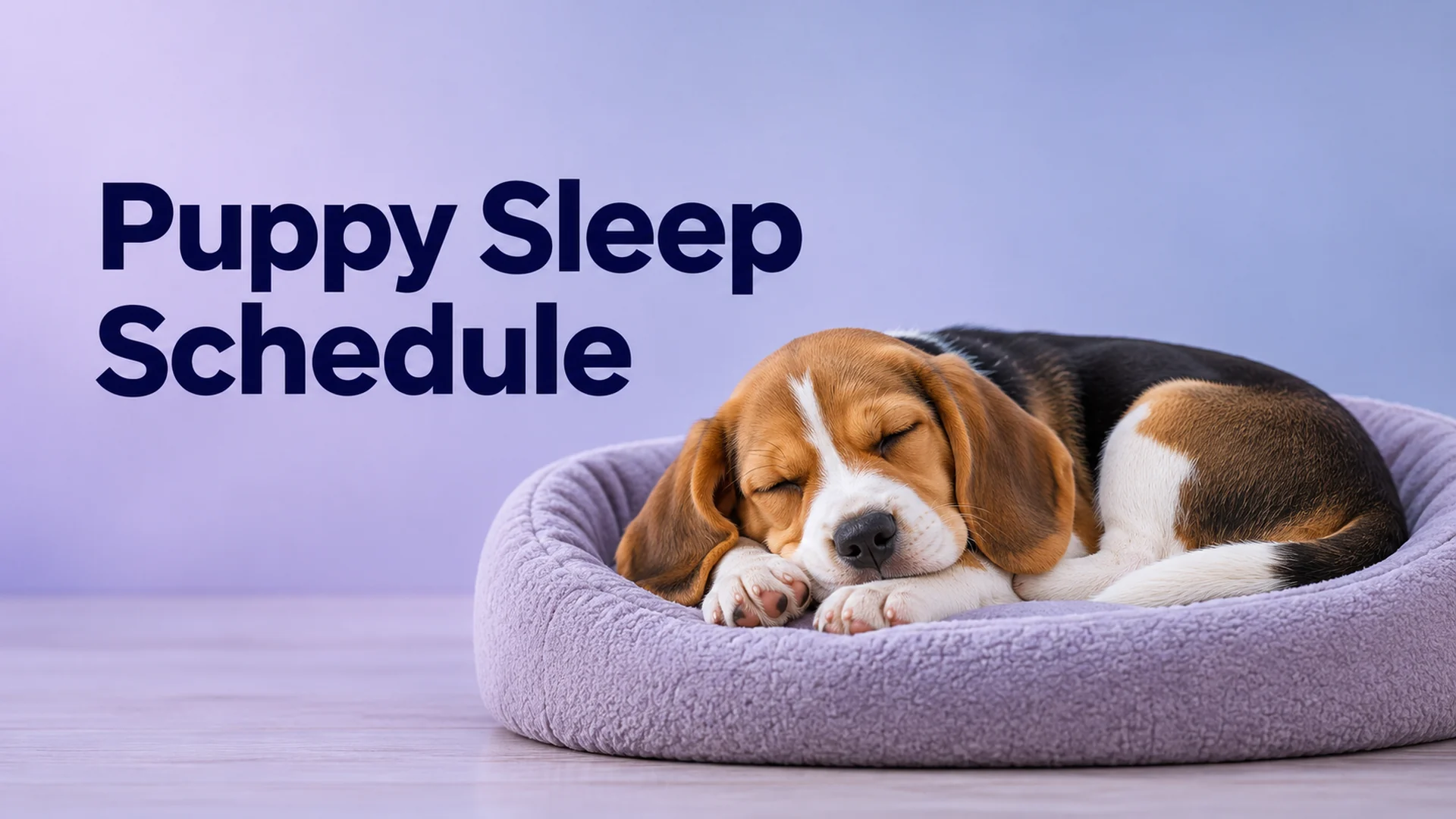
Give your puppy regular chances to nap, keep bedtime quiet and predictable, and expect some nighttime wake-ups at first. A simple daytime pattern is wake, potty, short activity, then a chance to rest. At night, take them out quietly if they need to go and help them settle again. You can start tonight without timing every nap.
Plan for when your puppy can rest and where you’ll be if they wake. The first few nights are also a chance to learn how this particular puppy asks to go out or seeks company. Keep the sequence steady while you adjust the times to what you actually observe.
How Much Sleep Does a Puppy Need?
Puppies often nap several times during the day in addition to sleeping at night. Hour estimates vary with age and with what people can observe. In the Generation Pup sleep study, owners reported more daytime sleep at sixteen weeks than at twelve months. Those reports describe two ages and reflect what owners could see. They don’t set a target for your puppy or tell you when a particular nap must end.
Pay attention to how your puppy behaves when they wake. A puppy who wakes on their own, eats and interacts as usual, and later chooses to lie down again gives you a baseline. If they seem busier as the house gets busier, look at the environment before deciding they need a longer play session. A chance to settle in a quiet spot can show you more than another hour on a chart.
A Sample Puppy Sleep Schedule
Here is one day for a family that starts around seven. Move each nap opportunity around your puppy’s needs. Whether a midmorning nap ends early or late, offer a toilet trip when your puppy wakes. Then resume their day.
Example time | What to offer | How to adjust |
|---|---|---|
Around 7 a.m. | Potty, breakfast, and brief activity. | Give a rest opportunity when the puppy slows down. |
Midmorning | A quiet nap spot near the household. | Take them out after they wake, whenever that happens. |
Midday and afternoon | Short activity and more chances to nap. | Move the rest spot away from visitors or noise. |
Evening | Lower the activity level and offer a final potty trip. | Keep the bedtime sequence even if the hour shifts. |
Overnight | A brief potty trip if needed, then help them resettle. | Keep lights and conversation low. |
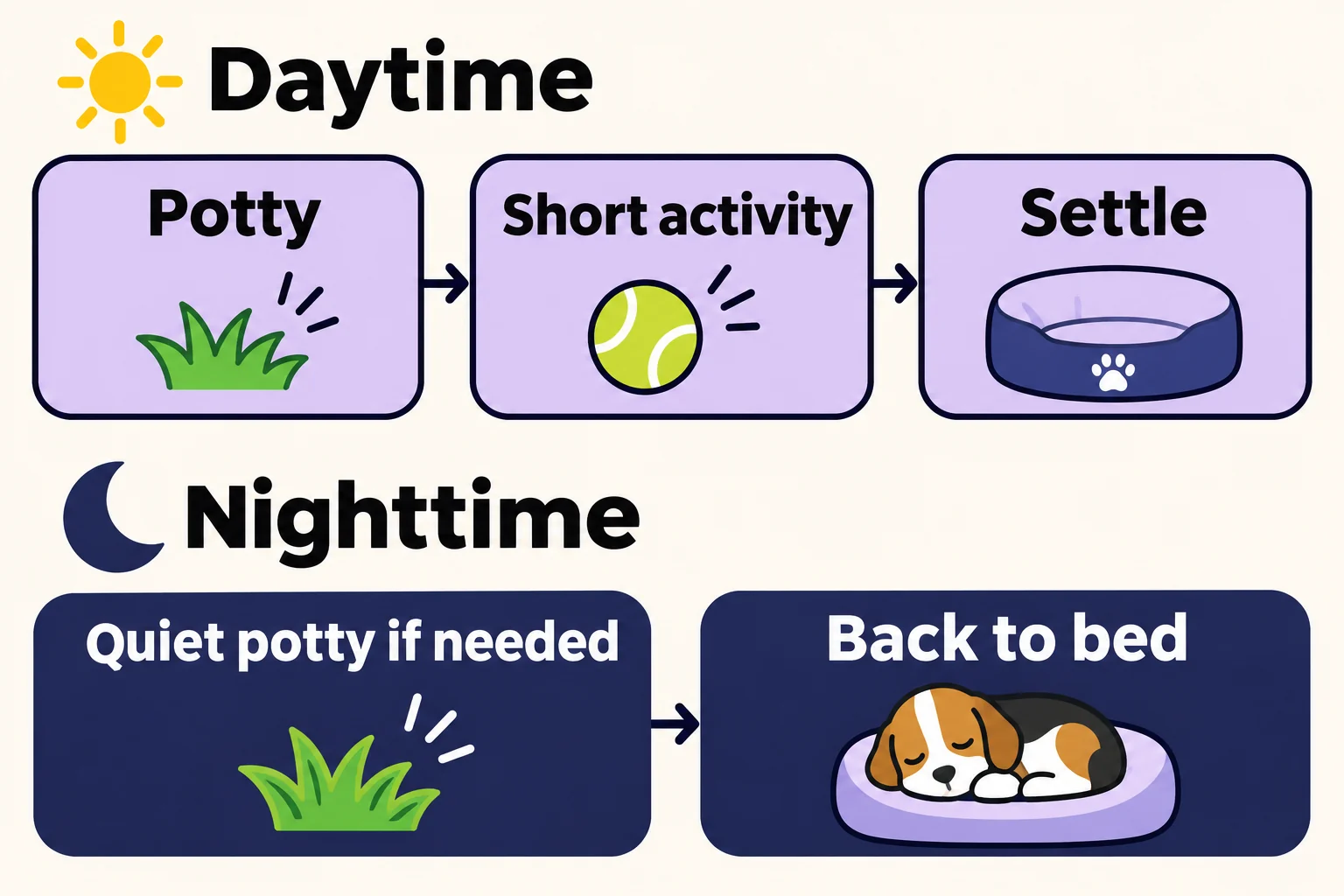
Use the table for the order of events and adjust the timing to your puppy. If a visitor arrives just as your puppy curls up, let the puppy rest and arrange the greeting after they wake. If they finish a nap early and are alert, take the usual potty break and offer a short activity before the next rest opportunity. Your household can keep the same pattern without moving every other part of the day.
Set Up a Place for Daytime Naps
Pick a puppy-safe rest area where people won’t have to step over the bed. Reduce sudden sounds and keep the space away from the busiest doorway. Show the puppy the spot when the room is quiet. A bed in a safe pen or a crate your puppy already likes can work. If you use a crate, build comfort in short, positive sessions and give the puppy chances to toilet, move, and spend time with you.
Some puppies keep getting up to follow people even when they look tired. Try finishing play, offering a toilet break and then sitting nearby while the room grows quiet. See whether they lie down once the activity stops. If they spring up whenever someone passes, test a less busy corner before you decide the routine itself is the problem.
Measure the nap opportunity separately from the nap Write down when you offered quiet time and when you actually saw your puppy asleep. If you only know they were quiet while you were working, mark it as quiet time. This makes it easier to compare days.
If your puppy already fell asleep in a safe spot, consider what moving them would solve. A bed in a busy hallway may work poorly, but a puppy resting out of the way doesn’t need to wake up because the plan said to start a nap elsewhere. Set up the better nap spot before the next awake period. That lets your puppy learn where to settle without interrupting the sleep they’ve already found.
What to Do When Your Puppy Wakes at Night
Before bed, take your puppy out and use the same quiet route back to the bed. Dogs Trust’s first-night guidance suggests starting close to your puppy and increasing the distance gradually as they settle. Keep the sleeping arrangement easy to reach if they need a toilet break. Set the leash and anything you need at the door before you turn in.
If your puppy wakes and stays restless, check whether they need to go out. Give them a brief, low-key trip and return to the bed afterward. If they go and settle, you have a useful clue for tomorrow night. If they don’t go and remain upset, check whether the room is uncomfortable, noisy or unfamiliar and see whether quiet company helps. Avoid turning the wake-up into a play session.
If the puppy settles beside you but starts crying as soon as you move away, try a smaller change in distance the next time. One useful way to tell whether the change helped is to note how long they took to relax once you returned. If the distress persists or is hard to manage, contact your vet or ask about a qualified, reward-based behavior professional.
For a household sharing nights, leave a short note about the previous wake-up. “Out at two, peed, asleep again after a few minutes” helps the next person know what was useful. If your puppy woke briefly when the heater clicked on and lay down again, record that separately. A change in location or noise can matter more than changing the bedtime by fifteen minutes.
Adjust the Routine as Your Puppy Gets Older
You may find your puppy gradually stays up longer during the day or stops asking for a particular overnight trip. Change one part of the routine at a time. For instance, move your chair farther from the bed after several easier bedtimes while keeping the final outing and the sleep spot familiar. If the puppy struggles, go back to the last arrangement that worked and make the next change smaller.
Compare a few ordinary days before judging a new pattern. For example, a puppy who naps poorly on the afternoon a delivery crew comes through the house may need a quieter spot for that event. A puppy who stops settling across different quiet settings gives you a different question to explore. Keep a short record of the setting, when they woke, and how they acted afterward.
A new daytime schedule can shift when the puppy starts getting sleepy. If you need to leave earlier for work, keep the first toilet trip and a short calm period in the morning. Use the next available helper or check-in to protect the rest opportunity that normally follows. Watch the puppy across the rest of the day to see what still works.
When to Ask for Help
Call your vet if there is a sudden change in sleep or activity, especially if your puppy is also eating less or acting unusually tired while awake. A puppy who is unresponsive, collapses, or has difficulty breathing needs emergency veterinary care. Bring your observations if you can do so without delaying care.
Conclusion
Build a repeatable rhythm around waking, short activity, naps, and a quiet bedtime. Tonight, set up one calm rest spot and decide how you’ll handle a wake-up. Then change the schedule in small steps as you learn what helps your puppy settle.
PetMira for iPhone
Explore PetMira on iPhone
Get to know your cat or dog with tools for sound, photos, and everyday observations.
 Explore AI interpretations of recorded pet sounds
- Get breed suggestions from a photo
- Keep a photo log of visible changes
Available on the App Store.
Download iOS App