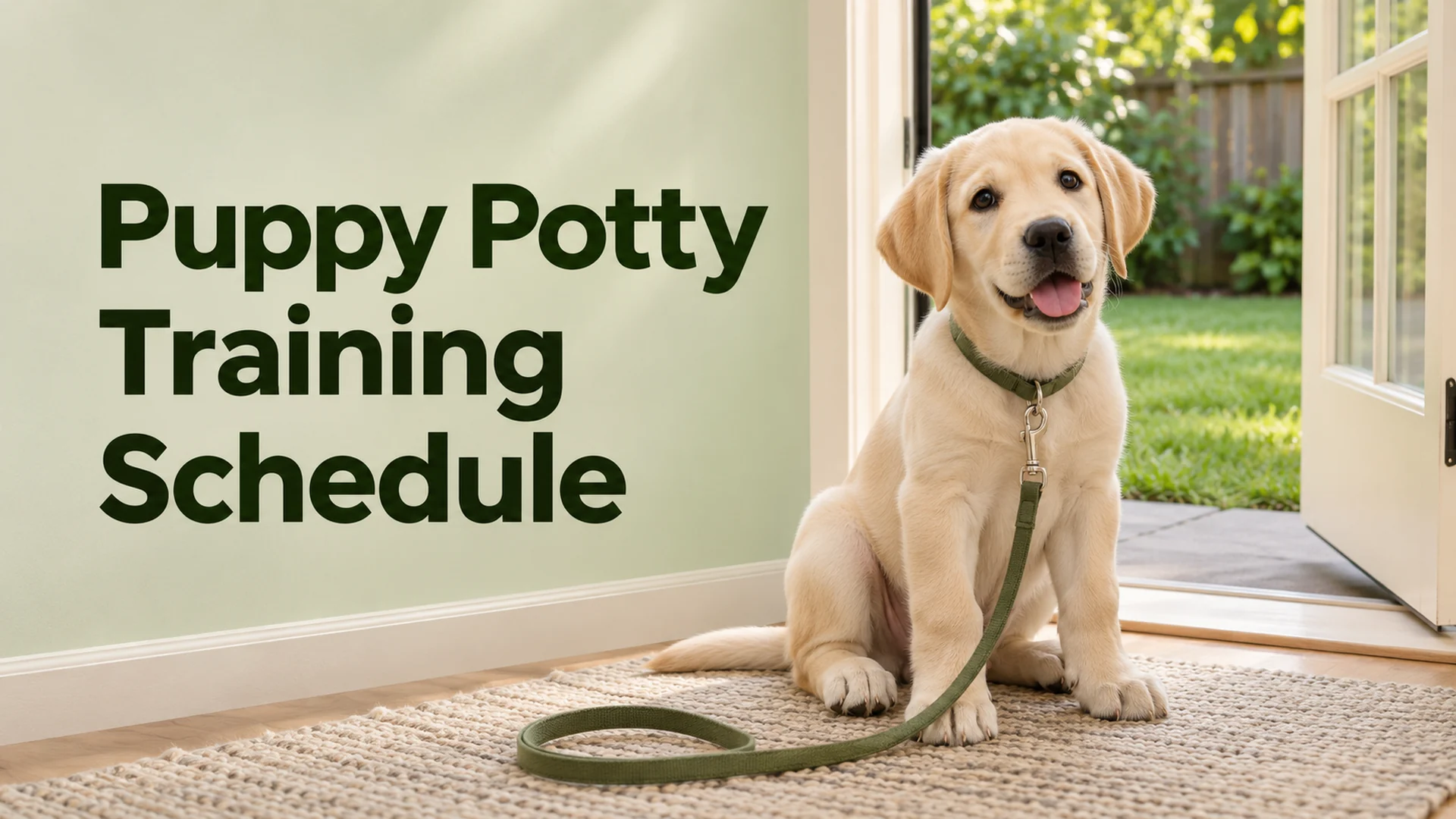
Take your puppy out right after they wake up, after meals and play, and just before bed. Offer extra breaks while they’re awake, especially during busy stretches. At each trip, go with them to the same spot and reward them as soon as they finish. If they come back in without going, keep them close and offer another trip when you see signs they need it.
This puppy potty training schedule is for a weaned puppy settling into a new home. Start with the times your puppy actually wakes, eats, and plays. A break that happens after a nap still counts if the nap ends twenty minutes earlier than you expected.
Build the Schedule Around Predictable Moments
Waking up is your first useful cue. Get the leash ready before opening the pen or greeting the puppy for the day. Take them out before you start breakfast, and again after they eat. VCA’s veterinary behavior guide also recommends breaks after a big drink, during active play, and every one to two hours while awake. Young puppies may need a much shorter gap during a busy stretch. Keep water available and plan the trips around what they drink and do.
An alarm can remind you to check in during a long awake stretch. It can’t see your puppy stop playing, sniff a corner, or start circling. If you notice those signs, go out even when the next alarm is still twenty minutes away. When you’re learning their cues, write down what happened just before each successful trip.
A Sample Puppy Potty Training Schedule
Here’s a morning-to-bedtime example for a family with a young puppy and someone available for breaks. Shift the times to fit your household, and fill in outings after each nap, meal, or bout of play. The gaps in the table aren’t targets for how long a puppy should wait.
Example time | Potty trigger | What to do |
|---|---|---|
6:45 a.m. | First wake-up | Go straight to the potty spot. |
7:15 a.m. | Breakfast finishes | Offer another trip and mark whether they go. |
8:00 a.m. | Play ends | Take a break before settling for a nap. |
Midmorning | Puppy wakes from nap | Go as soon as they get up. |
Midday and afternoon | Meals, naps, play, and awake stretches | Repeat the routine and arrange handoffs. |
10:00 p.m. | Just before bed | Offer a quiet final trip. Be available if they wake and need another. |
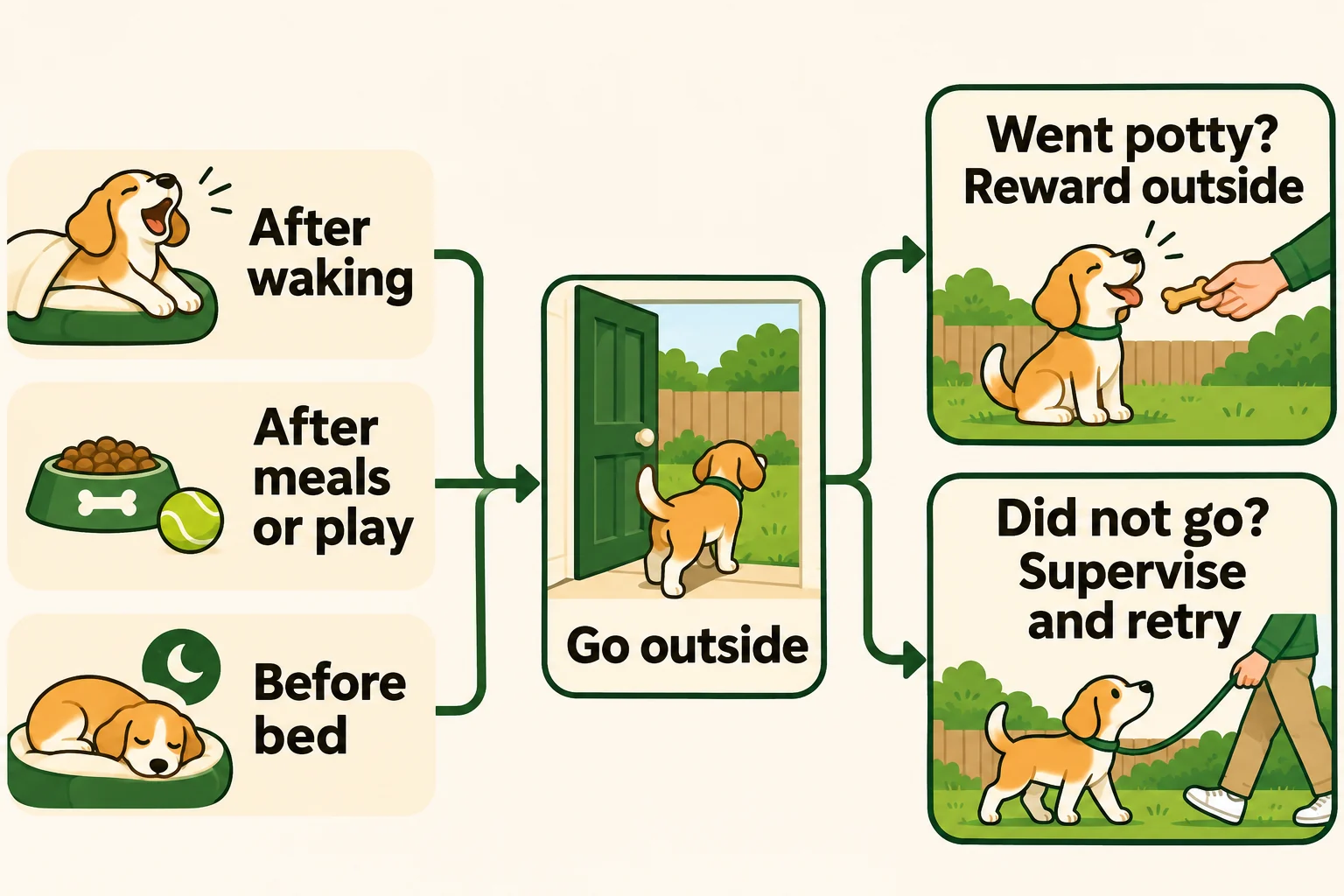
Suppose breakfast is late because you took an early work call. Keep the wake-up trip and move the after-breakfast outing with the meal. If your puppy falls asleep at a different time, let the wake-up cue tell you when to offer their next break. Only one person needs to own each outing, but everyone needs to know whether the puppy actually went.
Write the result as well as the time “8:10 a.m., out after play, no pee” tells the next person to supervise and try again. “8:10 a.m., pee outside, rewarded there” tells them this outing was successful.
Take the Same Short Potty Trip Each Time
Use the same door and take your puppy on a leash to the chosen spot. Stand where you can see what happens and give them a few minutes to sniff. You can keep the route and cue consistent without repeating the cue every few seconds. When they finish, praise or reward them at the spot while you’re still outside. The reward is easier to connect with the behavior there than after walking back to the kitchen.
If they don’t go, come in and supervise closely instead of giving them the run of the room. Watch for a pause, circling, or a sudden change in where they’re sniffing, and go back out when you see it. If they’ve just woken or eaten, build room for another short try soon. Once they go, a little yard time or a sniff can follow where it’s safe.
Adjust the Schedule After Indoor Accidents
If you catch the start of an accident, calmly guide your puppy to the right spot and reward them if they finish there. If you find it later, clean it with an enzymatic cleaner and look at what happened before it. Scolding after the fact adds nothing your puppy can use on the next outing.
A useful note names one thing you can change. If the puddle appears just after a chase game, add a break during the game next time. If it keeps happening within minutes of coming in from an unsuccessful outing, use closer supervision and retry sooner. If another person thought the first trip was successful, fix the handoff first. Change the part that failed and see whether accidents in that particular situation become less common.
As your puppy grows and has a reliable run of successes, you can give them more freedom a little at a time. Start with an easy daytime stretch while you’re nearby. If the new gap brings accidents back, return to the interval that was working. A dry night or a long nap tells you what happened in that situation. Your puppy can still need quicker trips when active.
For a puppy who has just come home, your goal is to learn the pattern and build successful repetitions. An older puppy may manage a longer stretch, but a change of house or routine can mean you still need more supervision at first. Use their recent successes to set the gap. An age chart can tell you what to watch for as they grow, but it cannot tell you that a puppy who just drank water will make it to the next alarm.
Plan for an Apartment or a Workday
In an apartment, the trip begins before you step out the door. Put the leash, bags, and a reward by the exit and leave enough time for the elevator. If the only nearby spot is used by many dogs, ask your vet which toileting locations are appropriate for your puppy’s vaccine history and local disease risk. Cornell’s canine parvovirus guidance identifies high-traffic dog areas as a concern for susceptible puppies. Ask whether a private location or a designated indoor toilet surface is a better temporary plan.
If you’ll be away when your puppy usually needs a break, set up help before the day starts. Give the helper the route, the reward, and a place to write the result. For example, “out after the midday nap” is easier to use if they also know which pen the puppy naps in and what to do if they don’t go. Keep the same location and reward timing across people so the puppy gets a consistent routine.
If the handoff is early in the day, leave the helper a simple starting point. “She peed outside at seven after waking and is asleep now” tells them that the next outing is due as soon as the puppy wakes. “Last let out at seven” leaves out what prompted the trip and whether it was successful.
When a Change Is Worth Calling Your Vet
Accidents after a missed break usually give you a schedule to adjust. If your puppy suddenly pees much more often, seems uncomfortable, or was doing well and starts having accidents again, call your vet. Inability to pass urine is an emergency. Repeated straining with no urine should prompt emergency veterinary care. Tell the team what you saw and when it changed.
Conclusion
Start with breaks after waking, meals and play, plus a final trip before bed. Reward outdoors as soon as your puppy finishes. If accidents keep happening at the same point in the day, add a break or change the handoff at that specific moment and see how the next few days go.
PetMira for iPhone
Explore PetMira on iPhone
Get to know your cat or dog with tools for sound, photos, and everyday observations.
 Explore AI interpretations of recorded pet sounds
- Get breed suggestions from a photo
- Keep a photo log of visible changes
Available on the App Store.
Download iOS App