Many young, weaned puppies eat three or four small meals a day. Some can move to fewer meals as they grow, with the timing guided by their size, growth and health. Start by checking what your puppy already eats, how often they eat, and how much food they get over the whole day. Then spread that daily amount across the planned meals.
Ask your vet for a schedule if your puppy is very small, has a medical condition, or came home with specific feeding instructions. Newborn or unweaned puppies need a separate plan. The examples below show how to arrange meals for a weaned puppy once you have a daily food amount.
How Often Should You Feed a Puppy?
Young puppies can need several small meals to meet their energy needs while they’re growing. VCA’s veterinary nutrition guidance gives three or four meals as options for younger puppies. If a shelter or breeder gives you a written plan, bring it to your first vet visit. Confirm the food, the total per day and the number of feedings before you make a change.
As your puppy grows, ask at routine visits whether they’re ready for fewer meals. A puppy who has just settled into three meals does not need to drop one because a chart marks a birthday. The vet can review their growth, body condition and how they’re doing with the current meals. Ask whether both the frequency and the daily amount should change.
When the plan says to feed more frequently, check who can cover the extra meal before you switch. A midday feeding works only if a person can serve it and see what was eaten. If that’s difficult on workdays, ask about practical timing while you’re setting the plan, especially for a very young or small puppy.
A Sample Puppy Feeding Schedule
Use these hours as examples for a household that wakes around seven. Pick the column that matches your puppy’s feeding plan. Anchor meals to moments you can repeat, such as leaving for work, a reliable midday visit and the household’s usual dinner.
Feeding plan | Example meal times | Household check |
|---|---|---|
Three meals | 7 a.m., noon, 5 p.m. | Assign a person to the midday meal. |
Four small meals | 7 a.m., 11 a.m., 3 p.m., 7 p.m. | Plan the afternoon handoff before the day starts. |
Two meals when appropriate | 7 a.m., 6 p.m. | Recalculate each portion from the daily amount. |
If you use different hours at weekends, try to keep the same sequence and number of meals. Decide who feeds the puppy when plans change. With two carers, even a simple note on the fridge helps. Include the time, how much was offered and whether the puppy finished, left some food, or never touched it. Keep fresh water available throughout the day.
Feed in a place where you can see how your puppy eats. In a multi-pet home, give each pet its own space and pick up bowls once you can account for what they ate. An empty puppy bowl means something different if an older dog had access to it. Separate bowls and a clear handoff can help you catch both missed meals and double portions.
How to Divide Your Puppy’s Daily Food Amount
Check the food’s nutritional adequacy statement to see whether it is complete and balanced for growth, and use the feeding guide on the exact food as a starting point. FDA’s pet food label guide explains how growth and adult maintenance appear on U.S. labels. The feeding guide usually describes a daily amount. Confirm the units and whether the chart uses your puppy’s current or expected adult size, since packages can differ.
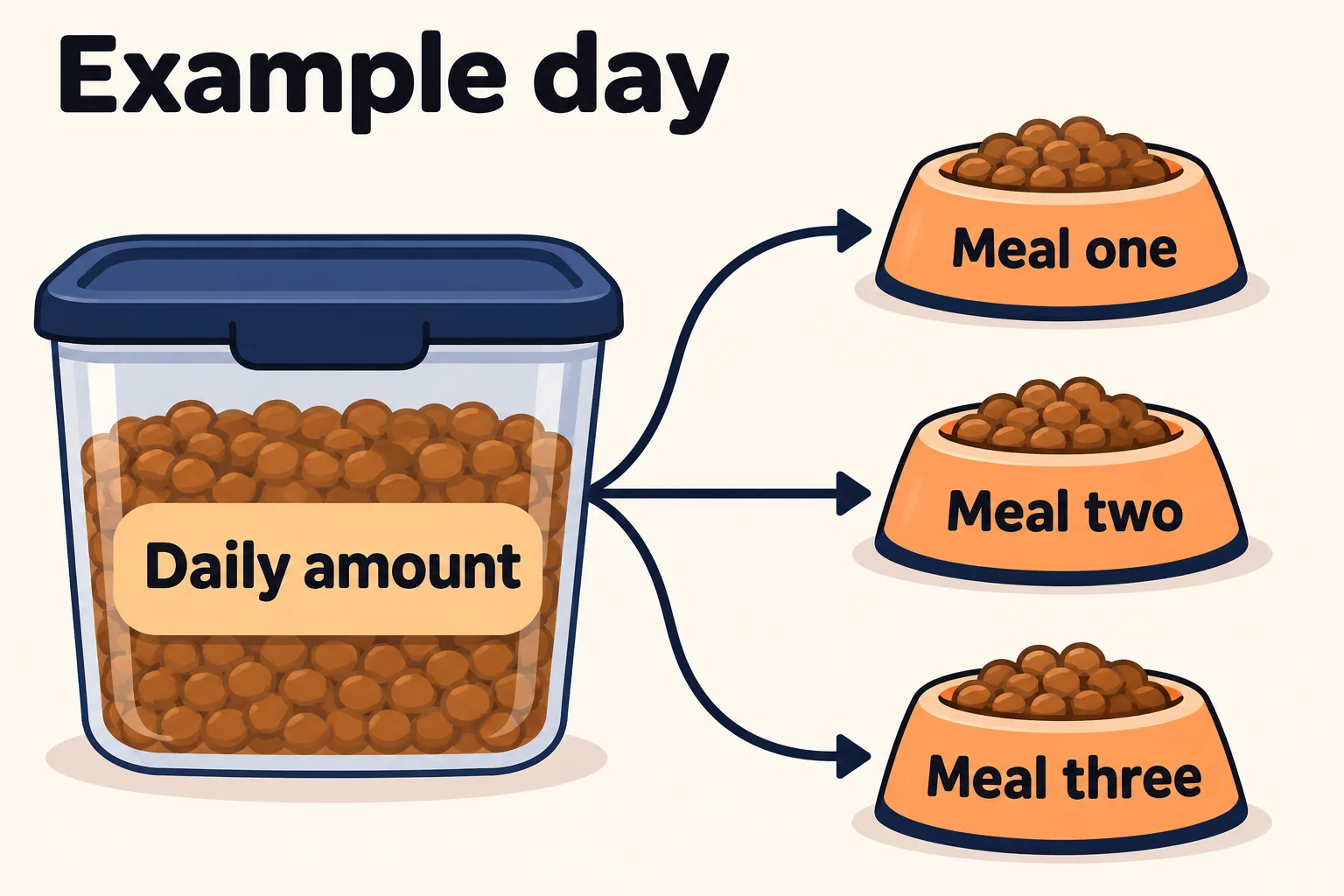
For arithmetic only, imagine your puppy’s individual daily plan is 120 grams of one dry food. Split evenly, that is 40 grams at each of three meals, or 30 grams at each of four meals. Your own amount comes from the food and your vet’s advice. If you switch from three meals to two with the same daily total, simply removing one 40-gram meal would leave 80 grams for the day. Two equal meals in that example would contain 60 grams each.
Use the same measure each time. Weigh dry food if you have a gram amount, and use a proper measuring cup if the instructions are in cups. If you combine wet and dry food, use a plan that accounts for both. Feeding a full daily amount from each package can double up portions even if each bowl looks small. Ask your vet how to use the calorie information for the exact foods you mix.
Set aside training food before serving breakfast If you’ll use pieces of the regular kibble during training, take them from the measured daily portion first. That makes it easier to tell how much the puppy got at meals and through rewards.
Once you’ve measured a day’s food, portion it into labeled containers if several people feed the puppy. Mark which container is breakfast, midday or dinner. If a scheduled helper arrives to find an empty container and no note, they can call or check before serving a second meal. The containers also make it easier to tell the vet how much was available that day.
When portions seem to change every day, check how you’re measuring before changing the plan. A scoop from the bag can look fuller on one day than the next. If a second person uses a different cup, compare it against the same measure. Keep the unit next to the number on your note so “one” can’t mean one scoop to one person and one cup to another.
Adjust the Schedule as Your Puppy Grows
Meal frequency and the switch to adult food are separate decisions. A puppy might be ready to eat fewer meals while they still need food formulated for growth. AAHA’s growth nutrition guidelines note that large and giant breeds can reach skeletal maturity later. Ask the vet what fits your dog’s expected size and when to check again.
Bring the food label and a few days of measured intake to your puppy’s next visit. Include training treats, wet food and access to another pet’s bowl. If your vet changes the frequency, write the revised daily total and the new serving amount together. If they recommend a new food as well, ask how to introduce it gradually and how to tell whether your puppy is tolerating the transition.
A growth check is a chance to discuss patterns as well as weight. Tell the vet if lunch is often left untouched while breakfast and dinner disappear, or if the puppy only eats after another dog leaves the room. Those situations give you different things to adjust. Decide what you’ll change first and keep the other parts of the schedule steady while you see how your puppy responds.
What to Do if Your Puppy Skips a Meal
Check what was served, whether somebody fed them earlier, and how much they ate. Tell your vet if a very young or small puppy refuses food, if the refusal is unusual for your puppy, or if it happens again. Poor appetite along with vomiting, diarrhea, or unusual tiredness warrants prompt veterinary advice. Seek emergency help for collapse or marked weakness. Give the clinic the last time they ate and any other changes you noticed.
Conclusion
Pick a meal frequency that fits your puppy’s growth and your vet’s advice, then divide the daily amount into measured servings. Give each meal a person and a time. Recheck both the number of meals and the total amount whenever your puppy’s feeding plan changes.
PetMira for iPhone
Explore PetMira on iPhone
Get to know your cat or dog with tools for sound, photos, and everyday observations.
 Explore AI interpretations of recorded pet sounds
- Get breed suggestions from a photo
- Keep a photo log of visible changes
Available on the App Store.
Download iOS App