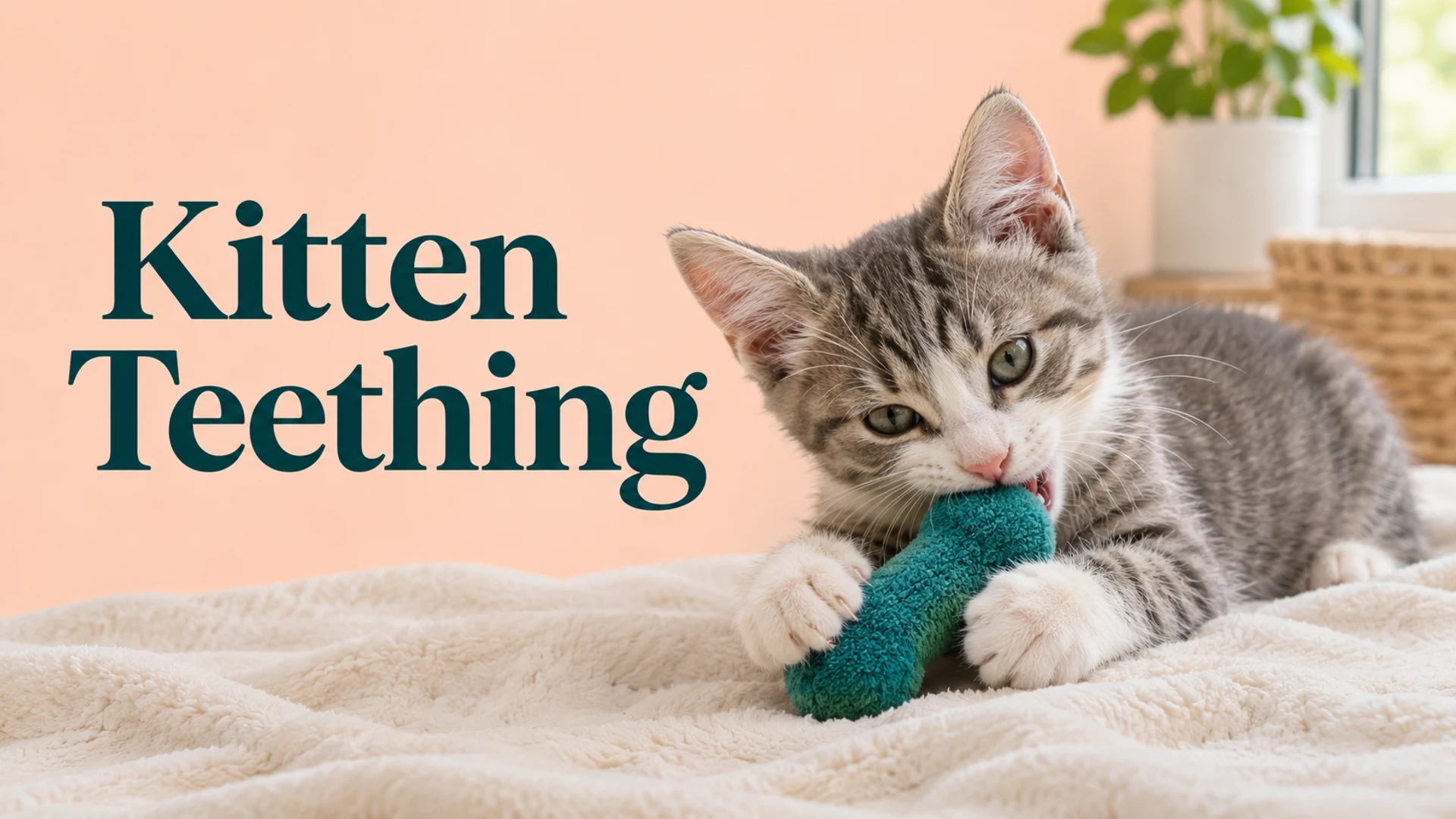
Kittens replace their baby teeth with adult teeth during the first several months of life, commonly starting around three to four months and continuing toward six to seven months. You may notice more chewing, a small shed tooth or a brief change in how they handle a toy. Some kittens show very little obvious change. Age and chewing alone cannot tell you that a sore mouth is simply teething.
Contact your veterinarian promptly if your kitten is not eating, seems painful, drools persistently or has swelling, substantial bleeding or an injured tooth. Trouble breathing, choking or severe distress needs emergency care. Do not wait to complete an age chart, force the mouth open or try a home pain remedy before asking for help.
Understand which teeth are changing
The first set of baby teeth develops early in kittenhood. Later, permanent teeth replace those teeth, while the adult set also includes molars. Veterinary timelines describe an approximate sequence, not a deadline every kitten meets on the same day. Incisors at the front, the longer canine teeth and teeth farther back do not all change together.
You might find a tiny tooth where the kitten played or slept, but not finding one is common too. Kittens can swallow shed baby teeth without you noticing. There is no need to search their mouth or collect a complete set. If you do find a tooth, you can keep it in a small labeled container and mention it at a routine visit if you have questions.
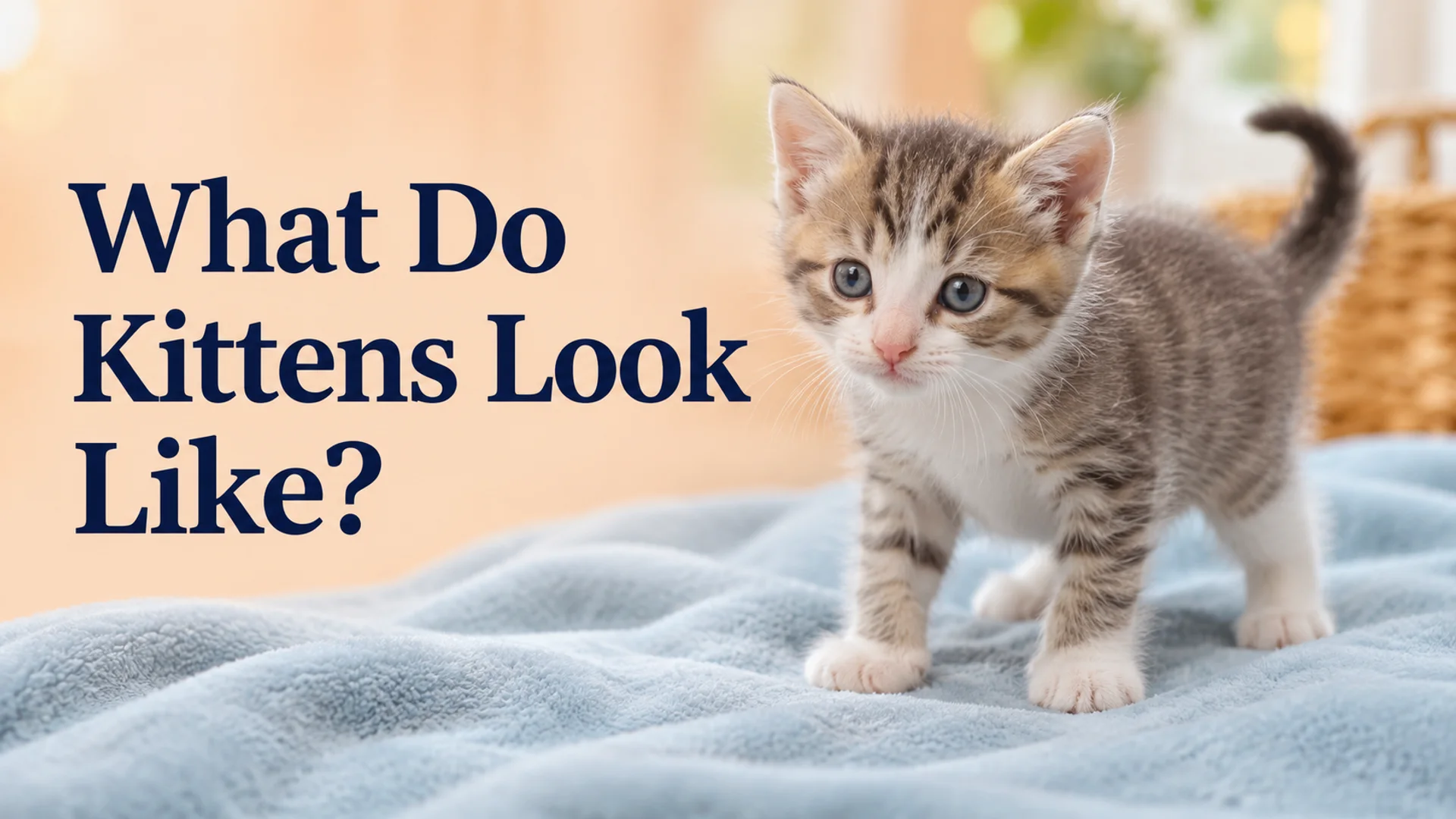
If a baby tooth seems to remain beside an emerging adult tooth, let your veterinarian examine it. Do not pull on it, even if it appears loose. A photograph may show something worth discussing, but it cannot establish how a tooth is attached or what treatment is needed. Our kitten appearance guide covers broad growth clues; dental decisions need an examination rather than a guessed birthday.
Separate ordinary chewing from a change in comfort
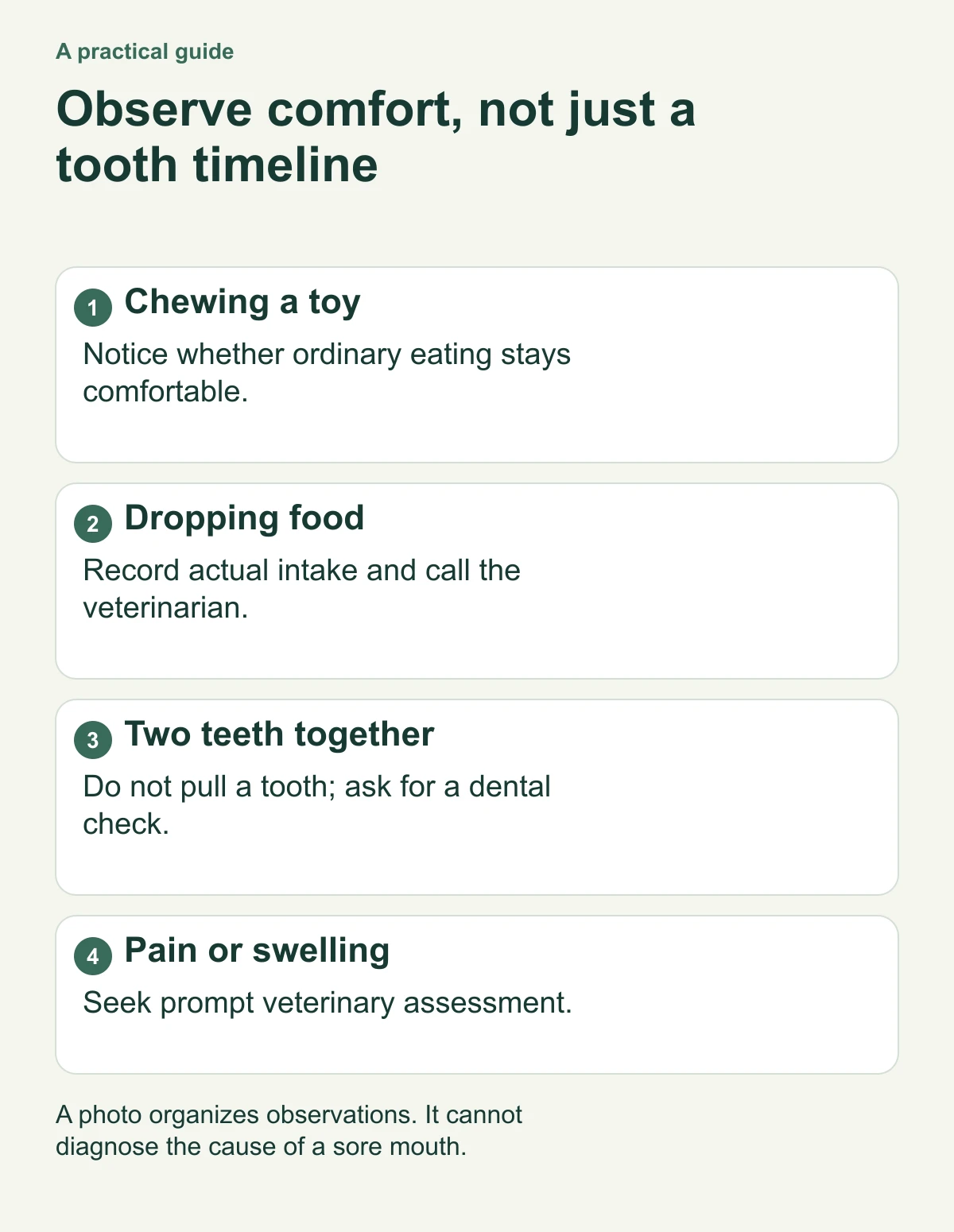
A kitten exploring a toy with their mouth is not necessarily in pain. Look at how they behave across ordinary activities. Are they approaching meals, taking food comfortably and staying interested in play? Do they repeatedly stop when something touches one side of the mouth? A clear change from their usual behavior is more informative than a general label such as fussy or grumpy.
Suppose your kitten carries a soft toy, chews it briefly and then eats their familiar dinner normally. That gives you a different observation from approaching the bowl eagerly, dropping food and walking away. The second pattern should be described to your veterinarian rather than treated as proof that the kitten needs a new food flavor.
Minor tooth changes can be easy to miss, but continued bleeding, a strong new odor, marked redness or reluctance to eat should not be automatically normalized. Several dental and medical problems can affect the mouth. Keep the account specific: where you saw blood, whether it happened once or repeatedly, and what the kitten could actually eat afterward.
Offer chewing choices without creating another hazard
Choose a toy intended for kittens that is soft enough for gentle mouth play and too large to swallow. Inspect it before and after use. Remove anything that sheds pieces, exposes stuffing or develops a torn seam. Supervise a new toy until you know how your kitten uses it; a toy that survives one kitten may be dismantled quickly by another.
Do not offer bones, very hard objects, rubber bands or loose string as teething equipment. Keep charging cables and tempting small household items out of reach. A bitter product or a toy advertised as soothing does not remove the need to check its materials and instructions. Ask your veterinary team to recommend suitable options if you are unsure.
Some kittens enjoy a cool, soft object, but avoid frozen-solid items or improvised flavored remedies. The useful question is whether the kitten can engage gently without breaking off or swallowing material. If chewing repeatedly seems painful, stop offering that object and speak with your veterinarian rather than searching for something harder to work the tooth loose.
Keep meals familiar and watch what is eaten
Continue offering a complete kitten food appropriate for growth. If chewing seems uncomfortable, call your veterinarian about the change and ask whether a different texture of the familiar diet is appropriate. Do not assume that a kitten eating less only needs softer food. Their age, health and actual intake matter more than a standard teething tip.
When several people serve meals, record what was offered and what remained. “Breakfast bowl was available” does not tell you whether the kitten ate it. If there are other animals in the house, feed separately long enough to see this kitten's intake. Otherwise an empty shared bowl can hide the very change you are trying to understand.
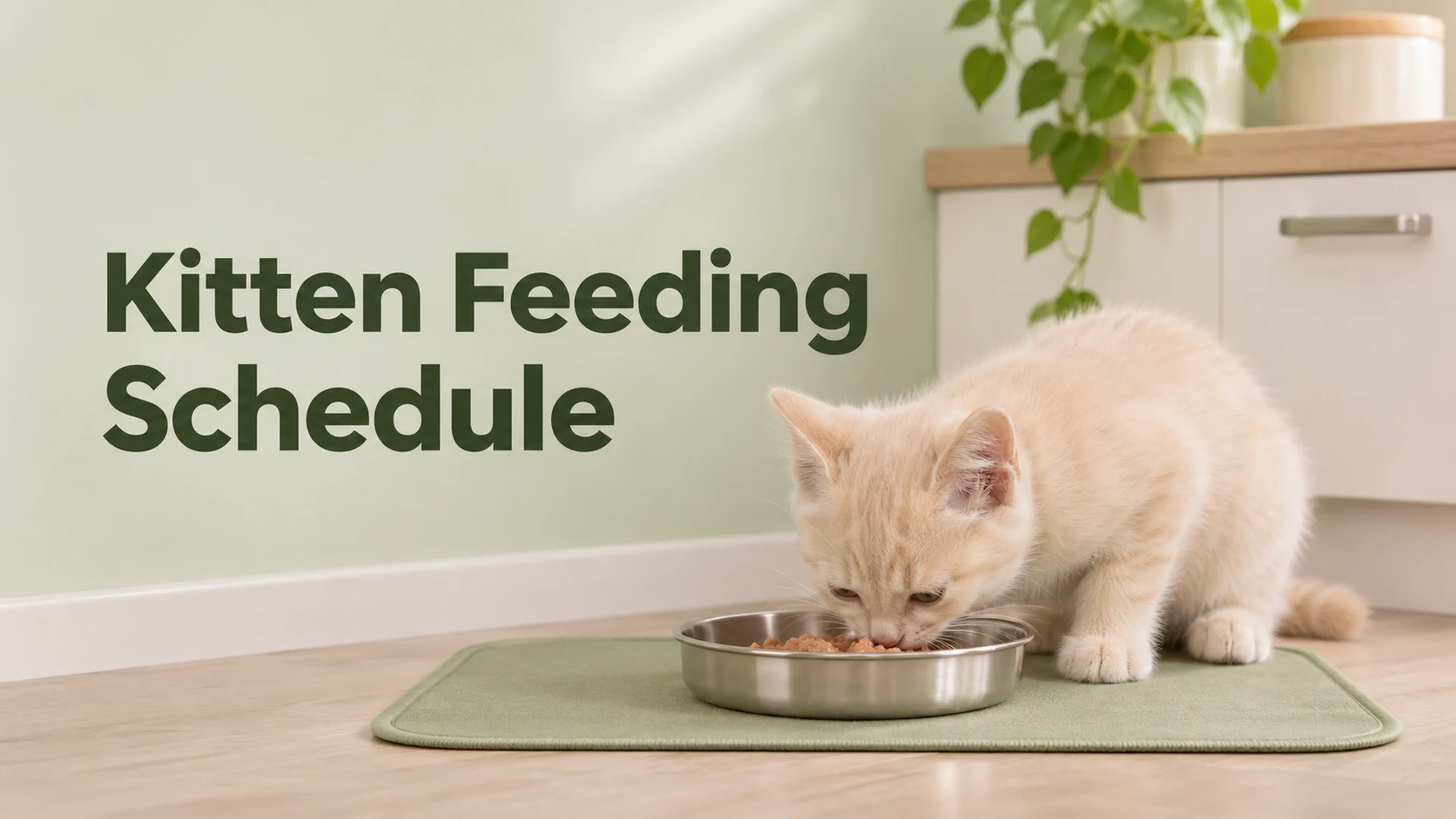
Use the kitten feeding schedule guide for organizing ordinary meals, keeping any changes within the kitten's existing care plan. Do not restrict water or use hunger to persuade them to chew a difficult texture. If they stop eating or appear unwell, contact the clinic instead of waiting for the next planned meal to see whether the schedule works.
Observation | What to record | Useful next step |
|---|---|---|
A shed tooth and otherwise ordinary behavior | Date and any visible change | Mention questions at the next appropriate check |
Food is dropped or a meal is repeatedly abandoned | Food texture, actual intake and associated behavior | Contact the veterinarian about mouth discomfort |
An adult tooth appears beside a baby tooth | Where it seems to be, without manipulating it | Arrange a veterinary dental check |
Ongoing bleeding, swelling or marked pain | What you can safely observe | Seek prompt veterinary assessment |
Take a useful photo only when the kitten allows it
A relaxed kitten may reveal the front teeth during an ordinary yawn or gentle interaction. If a safe photograph is easy, use clear light and keep the original image. Avoid prying the jaws open, repeatedly lifting a sore lip or asking someone to restrain the kitten just to complete a record. Your description is enough to start a conversation with the clinic.
A useful adjustment Skip the photo if you would have to pry the mouth open or restrain a painful kitten. Describe what you observed and contact the clinic instead.
PetMira's daily care tracking includes mouth images, so an owner who already uses the app can keep a comfortable, voluntarily obtained photo in the kitten's profile. Compare images taken in similar light when possible and note what changed in eating or play. The image log organizes observations; it does not identify the cause or replace a dental examination.
If you cannot obtain a picture without upsetting the kitten, skip it. Tell the clinic that mouth handling was uncomfortable or that you have not been able to look safely. This is useful information, not a missing step you must correct before the kitten can receive help. Do not delay a call while trying to produce a sharper image.
Handle biting and dental care as separate tasks
Chewing during tooth changes does not make human hands an appropriate toy. Use a suitable object for play and pause when teeth contact skin. Avoid wrestling with the kitten's face or tugging something from their mouth. Play biting can continue beyond tooth replacement, so a consistent household play plan matters even after the adult teeth arrive.
Ask your veterinarian how to introduce an oral care routine and whether any current tenderness changes what you should do. Do not force brushing across an uncomfortable gum or use human toothpaste, pain medication or numbing gel. A routine should be comfortable and species-appropriate; a painful mouth needs assessment before you try to train through it.
What to remember about teething
Tooth replacement is a normal developmental process, but persistent discomfort or reduced eating is a reason to ask for veterinary advice. Offer safe supervised chewing, keep meals observable and use a comfortable photo or short note to explain a change without forcing an inspection.
Everyday care with PetMira
Keep comfortable mouth photos in one place
PetMira’s daily care tracking includes mouth images in a digital pet profile. Use it to organize a safe, voluntarily obtained picture alongside your own observations.
 Keep mouth images with your pet profile
- Compare visible changes over time
Image logs are for reference and do not replace a veterinary dental examination.
Download iOS App