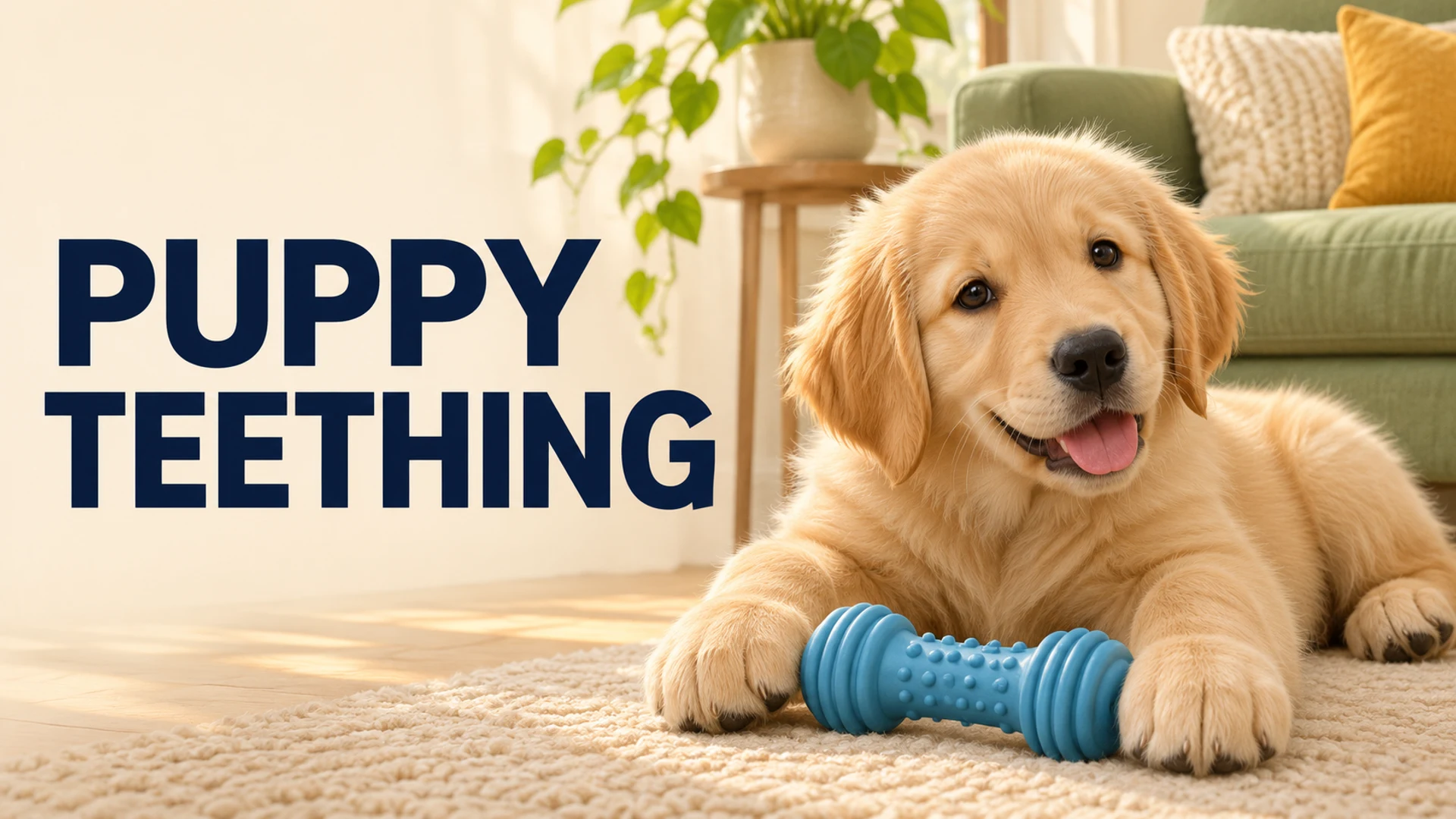
Puppy teething includes the arrival of baby teeth and, later, their replacement by adult teeth. For a weaned puppy at home, the useful job is to offer suitable things to chew, protect access to dangerous objects, and notice changes in eating or mouth comfort. Teething does not explain every episode of biting, drooling or refusing food, and it is not a reason to ignore a painful mouth.
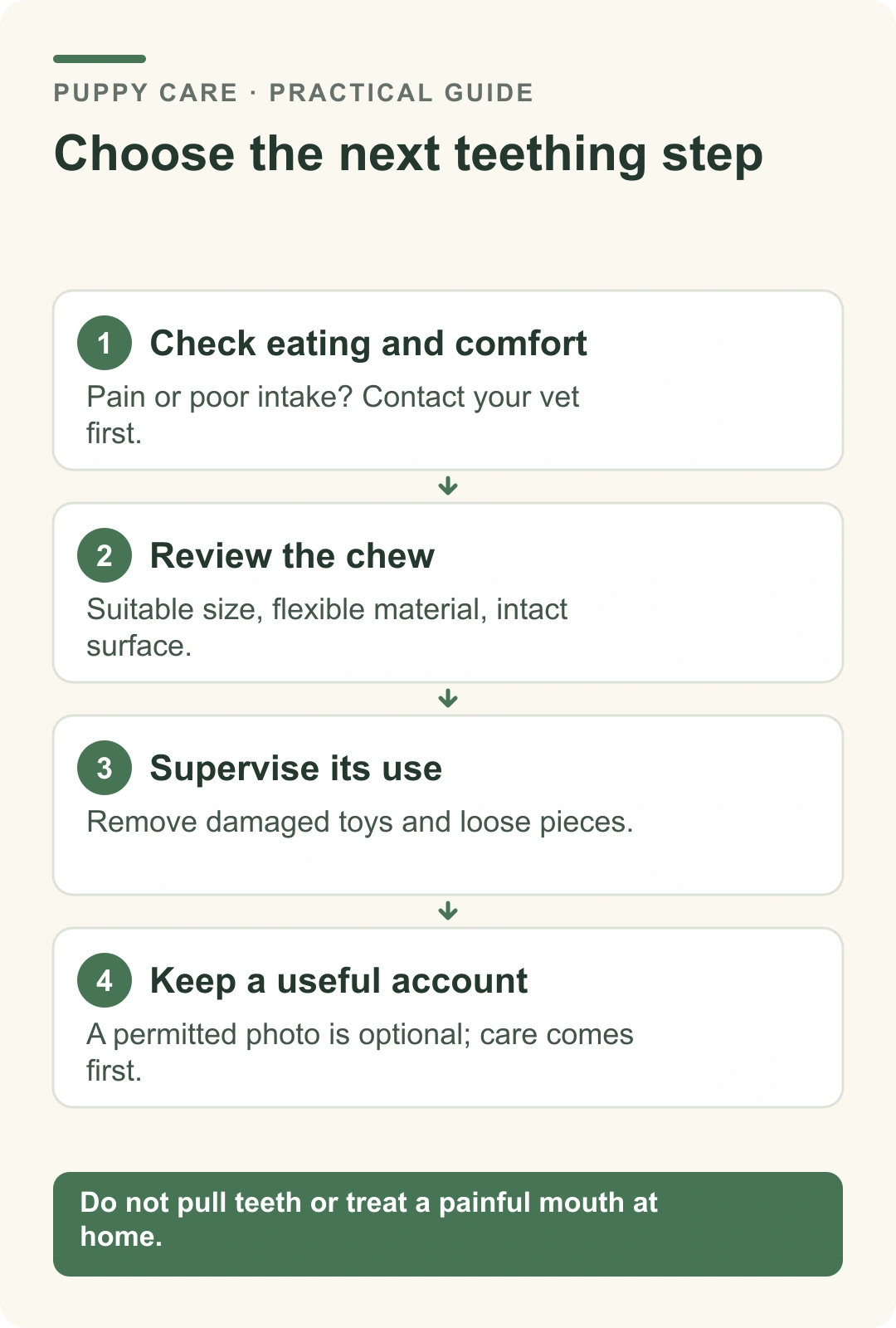
Contact your veterinarian promptly if your puppy will not eat, seems painful when chewing, has a broken tooth, develops a strong persistent mouth odor, or has ongoing bleeding. Facial swelling, trouble breathing or choking needs urgent veterinary help. Do not begin a toy experiment or photograph session while delaying that call, and do not give human pain medicine or teething gels unless your vet specifically directs you.
Know what is changing in the mouth
Young puppies first grow deciduous teeth, usually called baby teeth. The replacement process commonly becomes noticeable at around three to four months, and many puppies have their adult teeth by about six months. Individual development varies, so these ages provide context for a veterinary check rather than a deadline you must enforce. Finding no shed tooth does not prove that nothing has changed: a puppy may swallow one during normal eating.
A little red staining on a chew can occur as a baby tooth loosens, but that is different from repeated bleeding or a puppy avoiding food. Look at the whole day: whether meals are eaten, toys are used comfortably and ordinary activity continues. A calendar alone cannot tell you that a particular mouth change is harmless, especially if the puppy seems unwell.
Your vet can assess tooth eruption and alignment during puppy appointments. Bring a question about the teeth you can actually see, such as two teeth appearing in the same space. You do not need to count every tooth at home or hold the mouth open to prove the stage. A short, comfortable look at the front or side is enough to raise a useful question.
Decide when chewing needs a different response
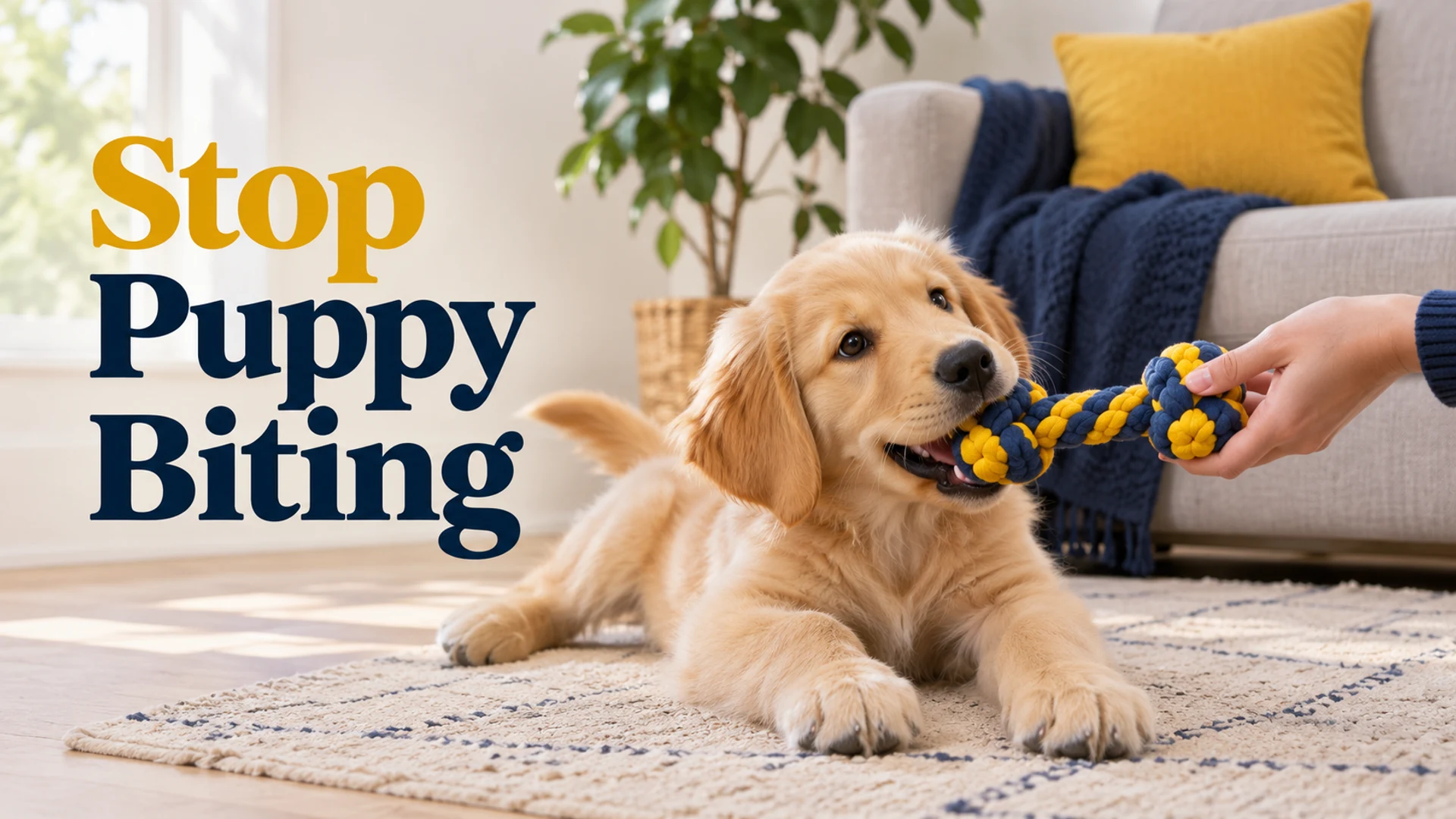
Chewing belongs to puppy exploration as well as teething. A puppy may pick up a shoe because it is available and interesting, while nipping hands during play can continue independently of which teeth are erupting. Keep those jobs separate. Our puppy biting guide covers skin-targeting play and prevention; this page focuses on tooth replacement, chew choices and mouth observations.
A stronger bite after a few months can damage a toy that previously survived every session. Check the object again rather than assuming it remains suitable because the puppy still likes it. By contrast, a puppy who newly refuses a familiar chew, paws at the mouth or struggles with food needs veterinary advice. Replacing the object does not answer a question about new mouth discomfort.
Do not pull at a loose tooth, poke under a gum edge or pry the jaws apart for an inspection. These actions can hurt the puppy and put your hands near teeth. If a safe look is not possible, tell the clinic what you noticed from outside the mouth. An examination can answer questions that a home photograph cannot.
Build a chewing setup you can supervise
Before offering a chew, check three things: whether it suits this puppy, whether it is intact, and whether an adult can supervise. Size matters because an object that fits an older dog may be too large for a small puppy to use, while a small piece may be swallowed. Ask your veterinary team which options fit the puppy’s size and chewing style rather than relying only on a puppy label.
Avoid very hard items such as antlers, bones and similarly rigid objects that can damage teeth. A flexible toy is still not risk-free. Watch the first use, remove loose or damaged pieces, and stop offering an item that the puppy quickly tears apart. Supervision means noticing how the puppy uses it, rather than leaving a new chew with them while everyone leaves the room.
Change the object before changing the household rule Give the puppy a suitable chew before a predictable quiet period. Old shoes and children’s toys make poor substitutes because they resemble objects you will later need the puppy to leave alone.
Rotate a few suitable options instead of filling the floor with every toy at once. Notice which shapes the puppy can hold comfortably and which become damaged. The goal is a manageable choice and a safe setup, not finding a product that guarantees the puppy will never chew furniture. No chew removes the need to keep electrical cables, small objects and rubbish out of reach.
Keep meals and household routines familiar
Keep an appropriate puppy diet and observe what is actually eaten. If you are considering softening food, changing a texture or adding a chew that provides calories, ask the veterinary team how that fits the feeding plan. Avoid rapidly replacing meals with treats because the puppy seems enthusiastic about one snack. Enthusiasm for a favorite food is not a complete assessment of mouth comfort or nutrition.
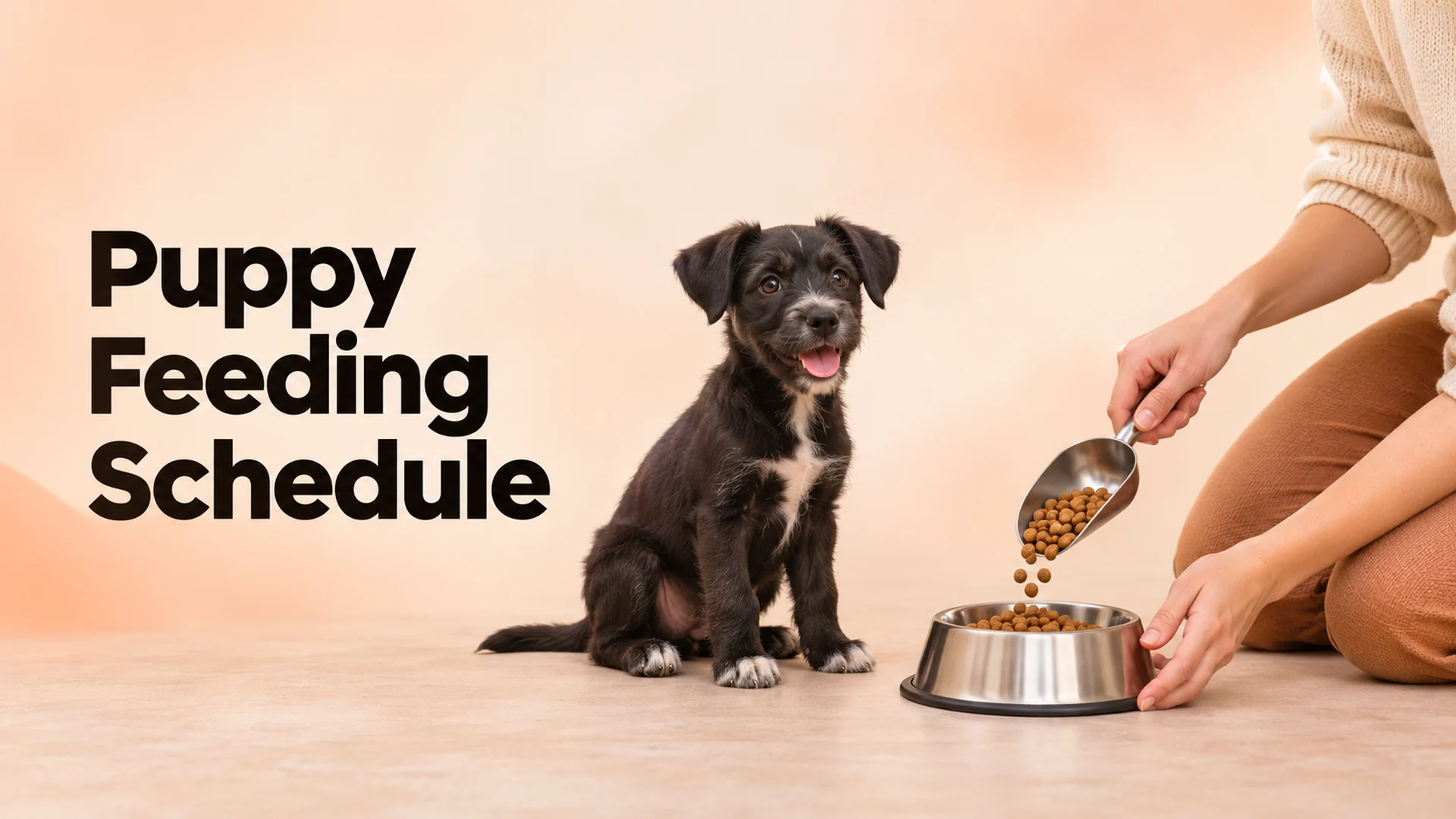
Use the puppy feeding schedule guide to organize who offered a meal and what was left, without turning the schedule into a reason to wait through poor intake. A missed meal with discomfort or an unusual change deserves advice. Tell the clinic whether the puppy approaches food, attempts to chew and then stops, or is uninterested in food altogether.
Protect ordinary rest and low-pressure play. A tired, overexcited puppy may need a calmer setup, but do not use tiredness as an explanation for a new painful response. If a child wants to inspect a loose tooth, have an adult redirect the activity. Mouth checks and chew supervision belong with someone who can notice discomfort and stop, while children can help place suitable toys in a designated basket.
Ask about a baby tooth that stays beside an adult tooth
A baby tooth can remain when its adult replacement appears. This is a veterinary question because crowding and the way teeth meet can matter; do not wait for a home trick to loosen it. Tell your vet which side you noticed and when it first became visible. Leave decisions about examination, timing and any removal to the veterinary team.
Small dogs and short-nosed breeds can be especially prone to baby teeth remaining beside adult teeth. Mention a crowded-looking area at a puppy visit even when the puppy still eats. The adult set also includes molars that do not replace baby molars, so expecting a shed tooth for every new tooth is misleading. Let the vet interpret the tooth sequence and alignment rather than pulling or repeatedly testing a crowded tooth.
Prepare a useful mouth-change account
If the puppy comfortably allows a brief photo, take it in good light without pulling the mouth open. Pair it with a simple account: when you noticed the change, what eating looked like and whether a toy was involved. Stop if the puppy turns away or becomes tense. You can provide the account without getting a photograph, and the call for help comes first when a problem is clear.
PetMira’s mouth photo journal can keep a permitted image alongside your puppy’s ongoing care record, making it easier to review a visible change over time. Use the record to prepare your questions; it cannot confirm whether a tooth is healthy, identify pain or replace a dental examination. Keep observations separate from any AI explanation so a suggestion does not become the presumed cause.
The next useful step
Choose one suitable chew, make the next meal easy to observe and ask your vet about changes that affect comfort or tooth alignment. PetMira can support a simple mouth-photo record when the puppy willingly allows it; a painful mouth or poor intake needs veterinary advice rather than more recording.
Everyday care with PetMira
Keep mouth changes in context
Use PetMira’s mouth photo journal for images your puppy comfortably allows, alongside the visible changes you want to discuss with your veterinary team.
 Explore the care encyclopedia
- Ask a focused everyday care question
- Use guidance alongside real-world observation
Available on iPhone. AI-generated information is for educational reference.
Download iOS App