Reduce puppy biting by giving the puppy an appropriate way to play and chew, interrupting contact with skin calmly, and changing the situations that keep producing nips. Offer a suitable toy before the puppy grabs hands or clothing, reward the behavior you want and use brief, safe breaks when play becomes too difficult. Physical punishment and forcing the mouth shut can add fear instead of teaching a useful alternative.
This guide covers ordinary puppy mouthing and excited play. Biting connected with pain, guarding, fear, repeated injury or an abrupt behavior change needs veterinary or qualified behavior help. Protect children and other vulnerable people with supervision and separation. If a bite breaks human skin, clean the wound and seek prompt medical advice rather than assuming puppy teeth cannot cause a significant injury.
Identify the repeatable situation
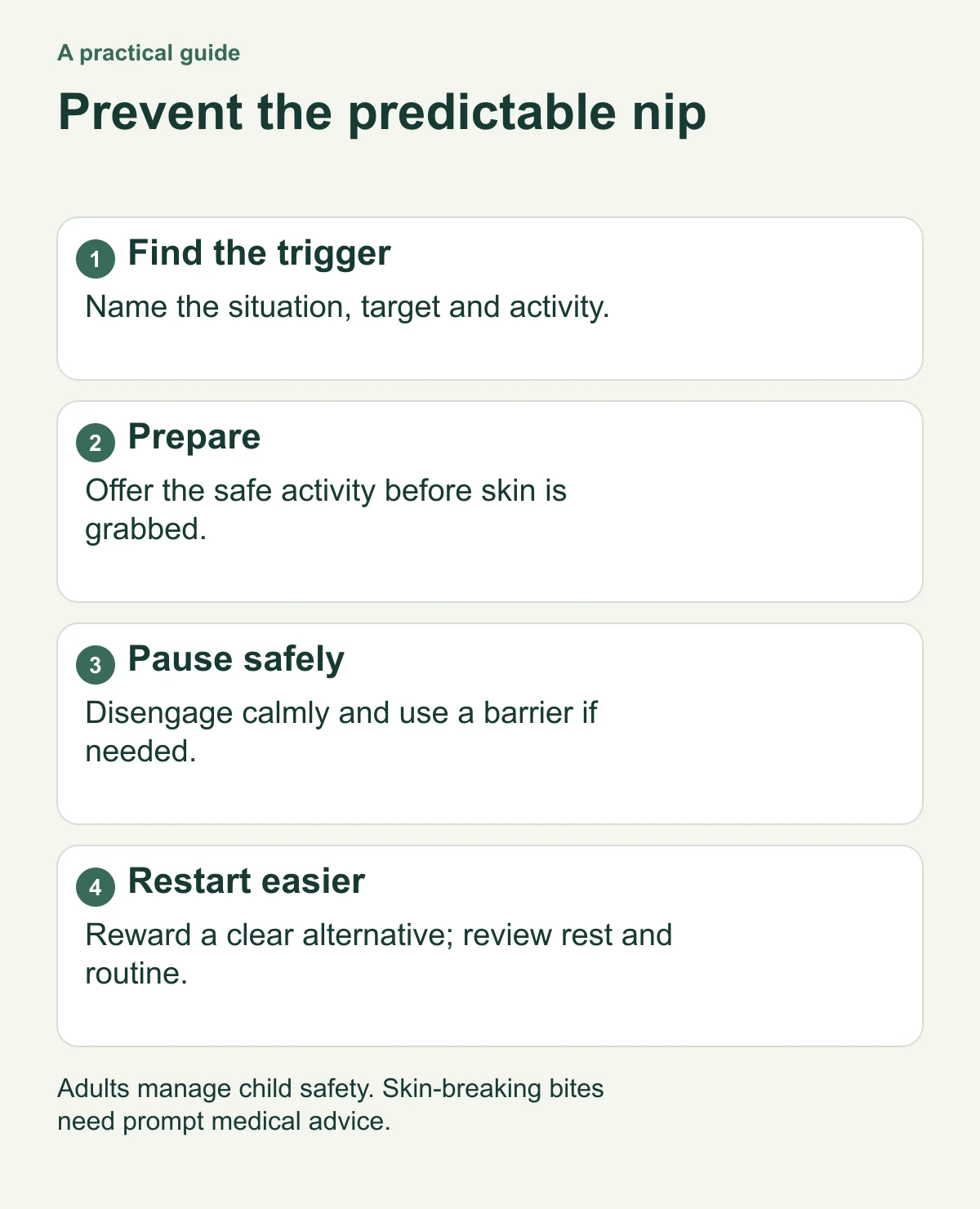
Watch when biting begins. Some puppies grab trouser legs during movement, some catch fingers during tug, and others turn toward the brush when grooming lasts too long. A puppy may also become mouthier late in a busy stretch or when an activity is difficult. Describe what happened before and after the nip instead of deciding that every bite has the same motive.
For the next few ordinary interactions, note the setting, the target and the activity. “Hands during a tug game with a short toy” points toward a different adjustment from “sleeves while a visitor leans over.” You do not need to deliberately trigger another bite to collect the information. Use what you already observed and make the next setup safer.
Compare the puppy's overall behavior with their usual baseline. A sudden reaction when touched in one place, reluctance to eat or an unusual change in movement belongs in a veterinary conversation. Our dog language guide helps you observe posture and attempts to disengage, but it cannot determine the cause of an individual bite.
Put the useful target in reach before skin
Keep suitable toys near the places where mouthy play usually starts. Choose a size and shape that keep your hands away from teeth without being small enough to swallow. Supervise new chews and remove damaged toys. What is suitable depends on the puppy's size and chewing style, so ask the veterinary team if you are uncertain about a hard object or a product's safety.
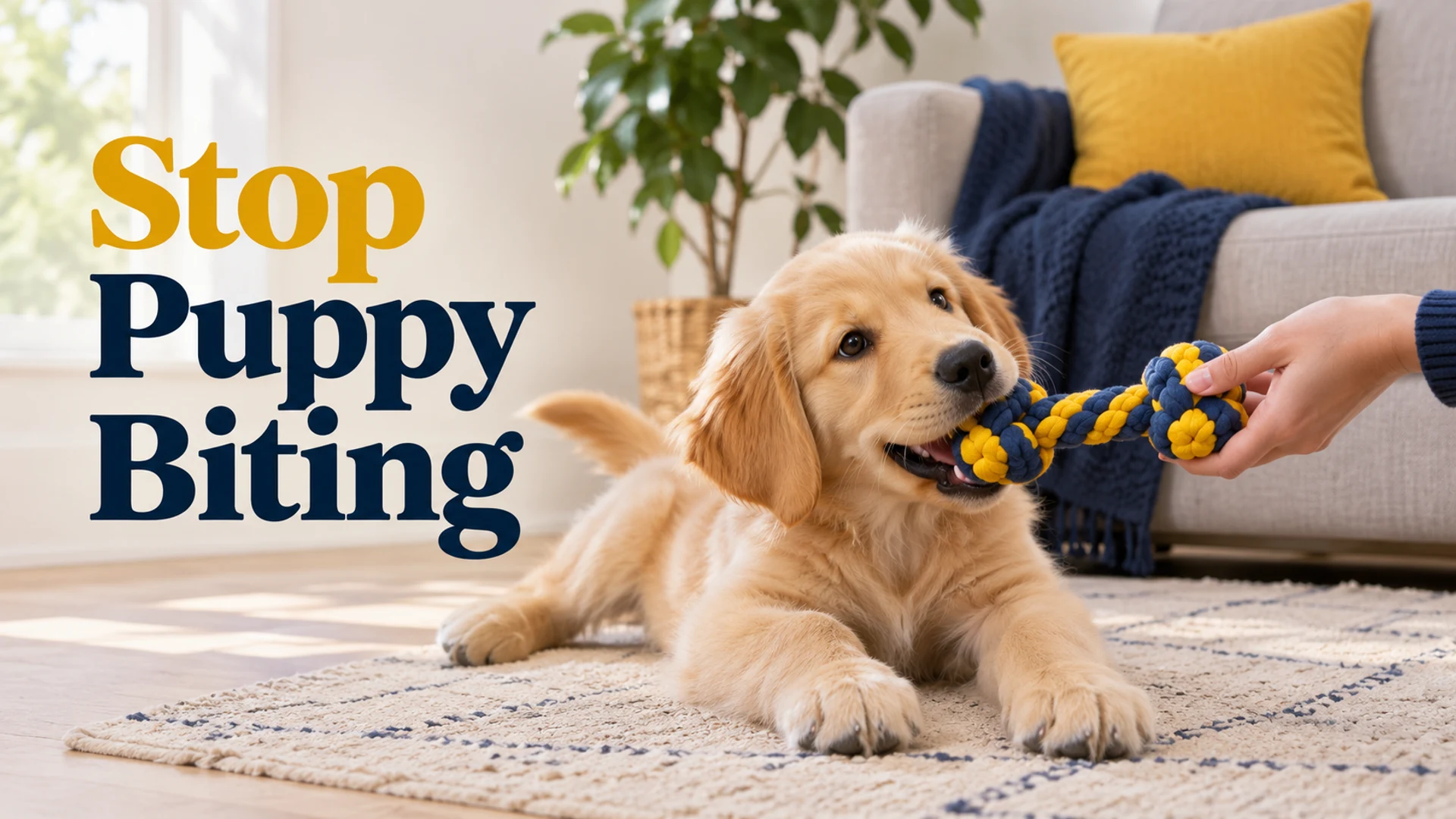
Begin play by inviting the puppy toward the toy rather than teasing with fingers. With tug, use enough toy length to give both of you space and keep the game manageable. Pause before excitement rises beyond the puppy's ability to stay on the object. Let the puppy enjoy catching and carrying something appropriate instead of keeping every game just out of reach.
If the puppy routinely rushes your feet as you walk to the kitchen, offer the toy or another familiar activity before the rush. You can also use a gate to manage that transition while an adult prepares food. Prevention is more reliable than trying to deliver a perfect response after a puppy has already attached to moving trousers.
Make a safe, calm break when biting happens
When you can safely do so, stop the exciting movement and calmly disengage. Do not repeatedly jerk your hand or clothing away as part of a chase. If the puppy keeps following and grabbing, step behind a nearby barrier or use your planned separation arrangement. Keep the puppy in a safe area rather than leaving them with hazards or an upset child.
A useful adjustment If biting repeatedly starts an exciting toy or treat routine, change the timing. Prepare the safe activity before the usual nip and reward a clear replacement behavior after the puppy disengages.
There is no need to frighten the puppy with a loud yelp or escalate to a stronger noise if it increases excitement. Avoid hitting, scruffing, pinning or grabbing the muzzle. The useful lesson is that skin-targeting play does not continue, and that calmer behavior has another opportunity to succeed.
After a pause, restart only if the puppy can engage in an easier activity. Invite a familiar sit, a calm toy interaction or another behavior they already know, then reward that action. Do not create a repeated sequence in which the puppy bites, immediately receives something exciting and returns to bite again. If that pattern is developing, move the toy opportunity earlier and simplify the next attempt.
Build the day around care as well as training
A mouthy evening may need a quieter routine rather than another demanding lesson. Check whether the puppy has had ordinary opportunities to toilet, eat appropriately, explore and rest. The puppy sleep schedule guide can help you protect rest without assuming every excited puppy needs more physical exercise.
Predictable transitions make prevention easier. After a short play session, offer a toilet opportunity and then a calm place to settle. If the puppy struggles at a particular household moment, arrange help or a safe area before it begins. A person cooking dinner cannot simultaneously provide careful play coaching, supervise a child and notice every toilet cue.
Keep meals and training rewards within the puppy's appropriate feeding plan. Use the puppy feeding schedule guide to organize who has fed them, while asking your veterinarian about portions and suitable treats. Hunger, tiredness and excitement are things to consider, not diagnoses you can assign from a bite alone.
Repeated pattern | Change before the next attempt | Useful sign of improvement |
|---|---|---|
Hands caught during play | Use a longer suitable toy and a calmer game | Teeth stay on the toy |
Trouser chasing during household movement | Manage the route and offer an activity earlier | The same transition needs fewer interruptions |
Nipping during handling | Shorten the touch and allow movement away | Puppy stays comfortable through a smaller step |
Increasing bites late in a busy evening | Reduce activity and offer a rest opportunity | Puppy can settle without another exciting game |
Teach handling without asking for endurance
For grooming or touch, choose a calm moment and start with a small action the puppy can accept. A brief brush touch followed by a pause can be more productive than holding them still for a whole-body session. Give an appropriate reward for comfortable participation. If they turn away, tense or mouth the brush, reduce the difficulty rather than gripping harder.
Children should not practice this independently with a puppy who is already biting. An adult can manage the puppy while the child learns a simple safe interaction, or separate them when supervision is unavailable. Avoid putting faces close to the puppy or encouraging rough floor play. The goal is preventing an injury, not finding out whether a child can correct the behavior.
PetMira's care encyclopedia can support everyday behavior and training questions while you prepare a manageable routine. Keep the incident details in a short note so advice can be evaluated against what actually happened. An AI-generated explanation is not a bite-risk assessment, and a professional should guide a plan involving fear, guarding or persistent injury.
Look for smaller changes instead of an instant cure
Choose one situation to improve first, such as a short toy game with no contact on hands. Repeat the easier version and notice whether the puppy finds the toy and disengages more readily. Do not judge the whole plan by whether the puppy ever mouths again. Young dogs need repeated practice, and a difficult day may mean the setup was too demanding.
Ask for help if bites intensify, someone cannot safely disengage, or the behavior persists despite consistent management. Tell the professional the context, any signs of pain and what you tried. A clear account supports an individual plan much better than a promise from a video that every puppy stops within seconds.
Give the puppy a clear alternative
Arrange the safe game before the predictable nip, pause skin-targeting interaction calmly and keep everyday care manageable. Consistent prevention and appropriate rewards teach a usable alternative; injury, fear or a sudden change deserves professional attention rather than harsher handling.
Everyday care with PetMira
Plan a calmer puppy routine
Explore PetMira’s care encyclopedia for everyday behavior and training questions, while keeping your plan grounded in the situation you observe.
 Explore everyday puppy care guidance
- Keep a dedicated digital pet profile
Fear, guarding, repeated injury or a sudden change requires qualified individual help.
Download iOS App