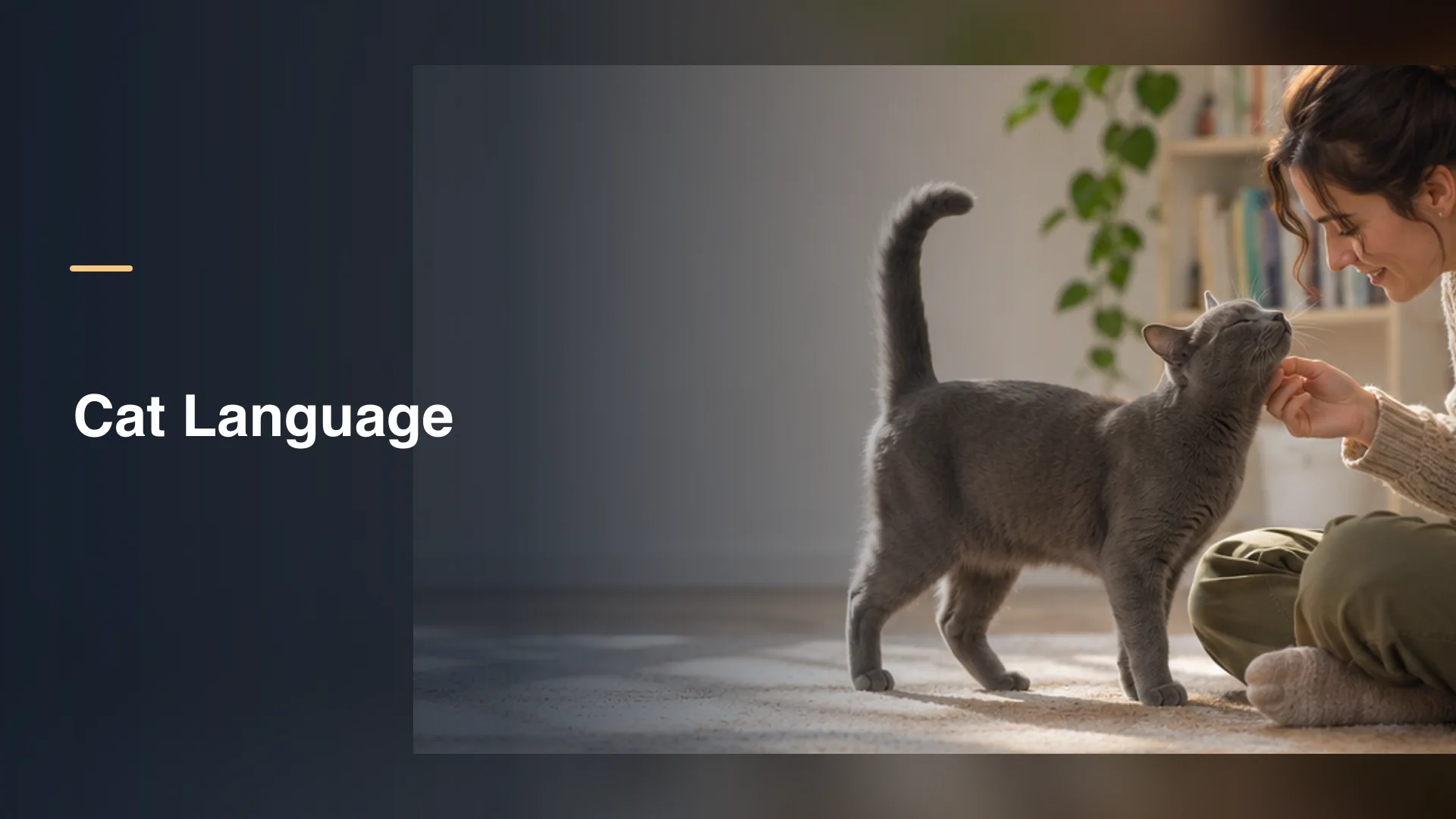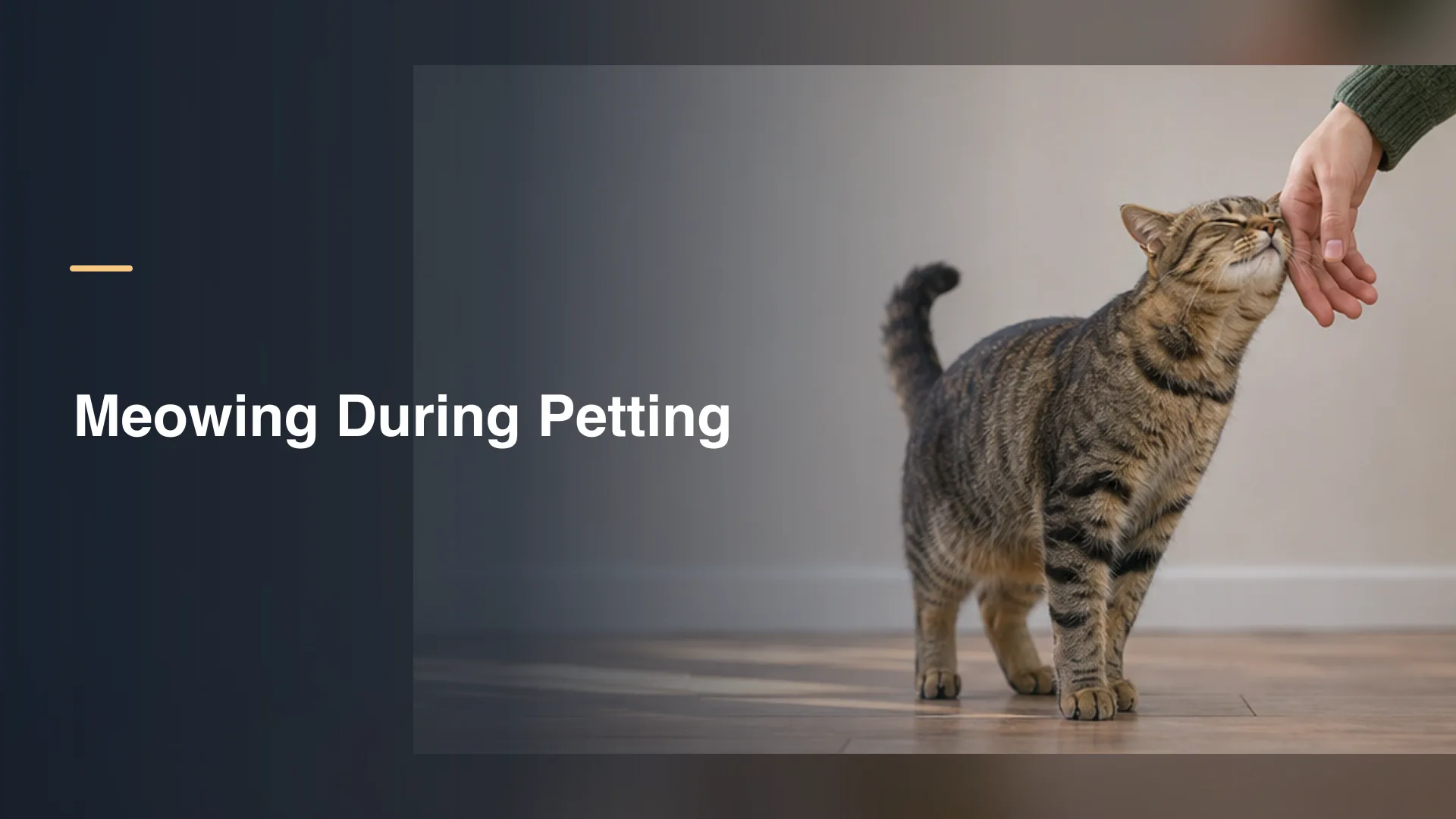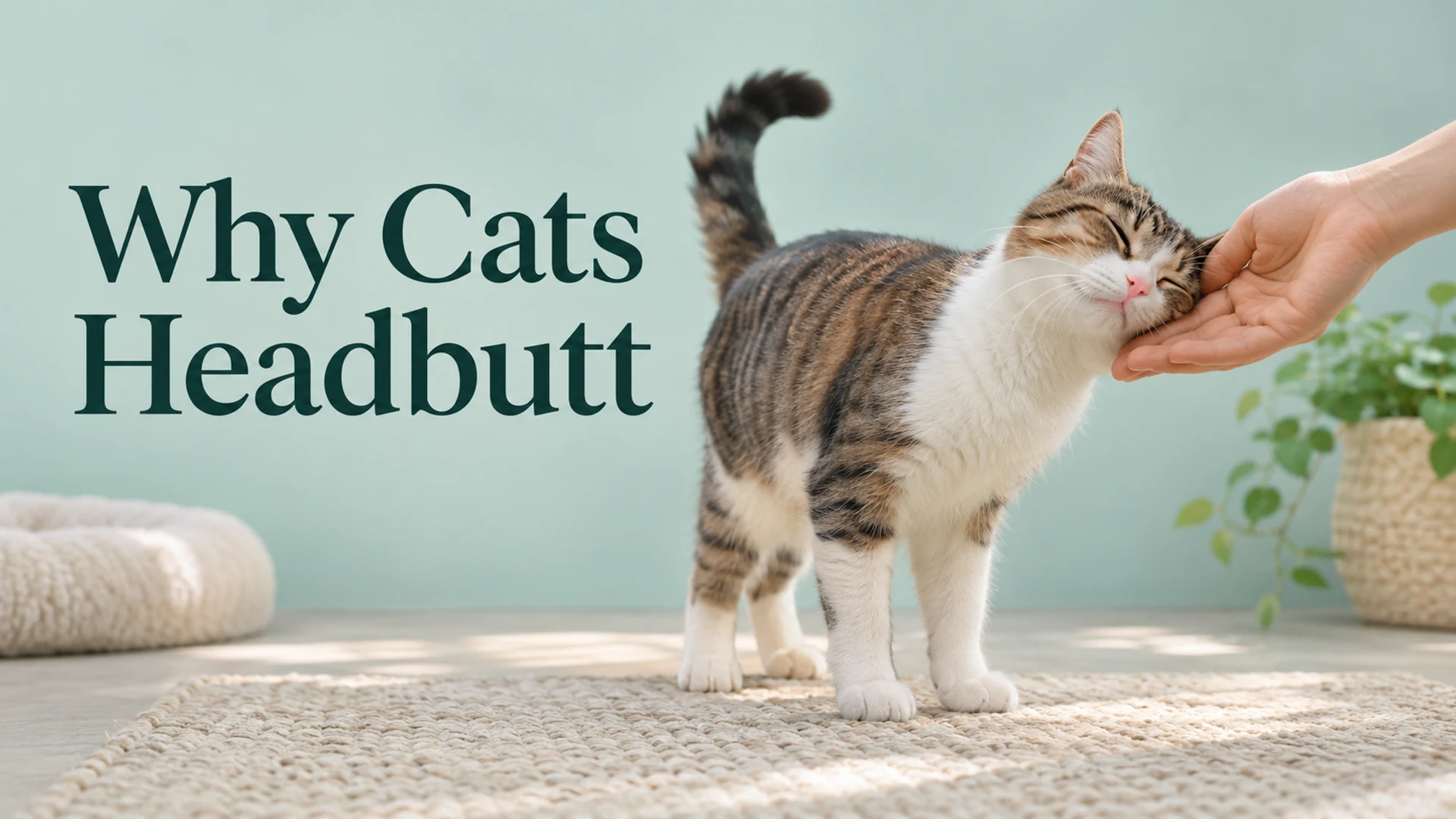
Cats often headbutt, or bunt, by approaching a person or object, making brief contact with the forehead, and rubbing the cheek along it. Facial scent glands are part of this behavior, which commonly appears in familiar social encounters. A headbutt can fit a friendly greeting, but it does not give you permission to hold the cat, kiss their face, or continue petting after they turn away.
Respond by staying steady and letting the cat control the pressure and distance. If the cat usually enjoys a brief cheek rub, you can offer one and then pause. Persistent head pressing against a wall, unusual balance, or disorientation is a different concern from an ordinary greeting. Contact your veterinarian or an emergency clinic immediately to arrange urgent assessment. Do not try to reproduce an abnormal movement to decide what it means.
What a head bunt looks like
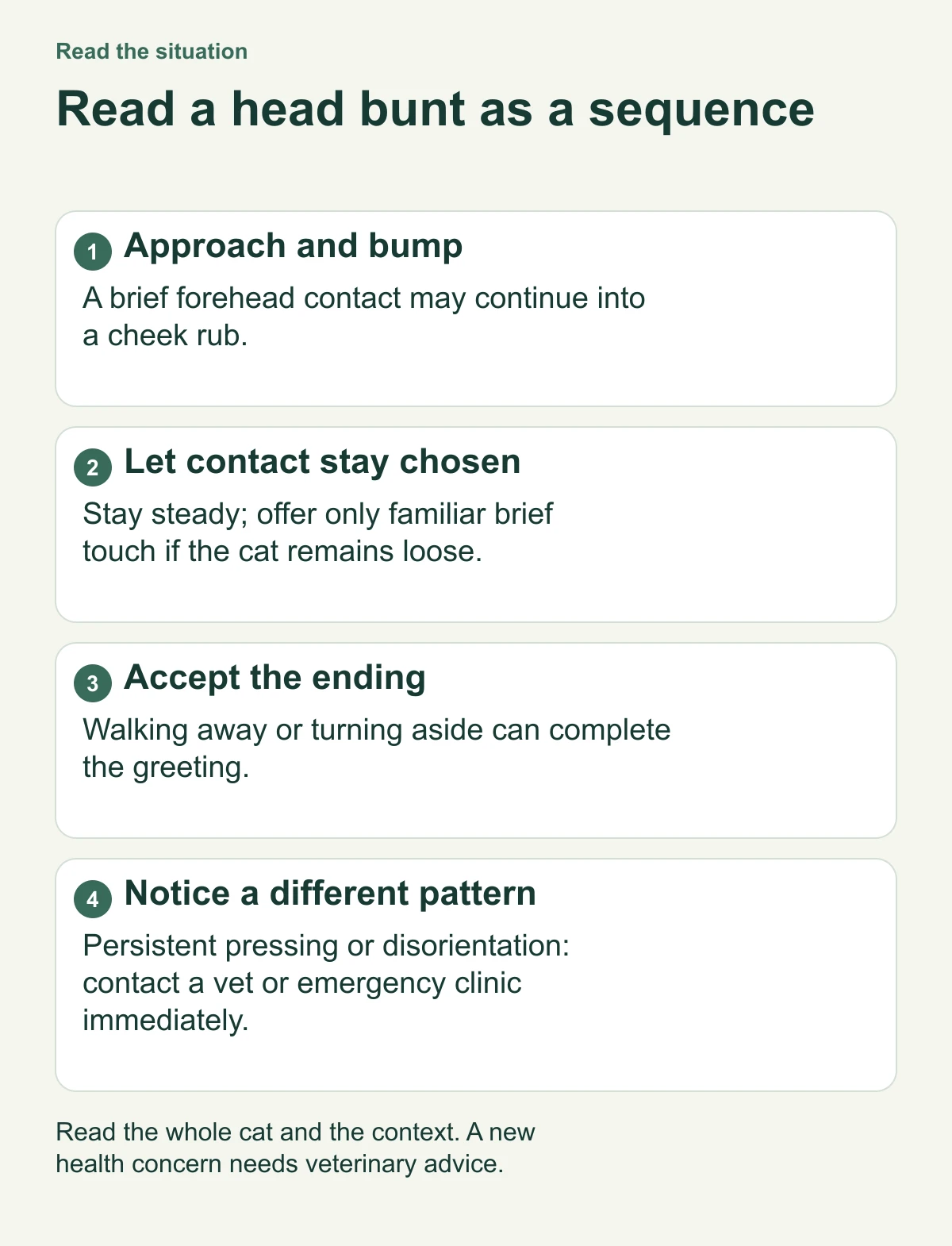
A typical social bunt is part of a moving sequence. The cat approaches, touches with the front or side of the head, and may follow with a cheek rub before moving on. You might feel a nudge against your hand, knee, or a nearby chair. The cat may repeat it, but the contact remains connected to ordinary movement and the ability to leave.
A nose sniff, a cheek rub, and a forehead bump can happen close together without being identical actions. You do not need to assign a separate emotional sentence to each. Describe the order instead: the cat sniffed your hand, moved their cheek against it, and walked beside you. That sequence gives you a better basis for a response than calling every face contact a demand for more affection.
Keep the surface in mind too. A forehead brushing your still sleeve during a passing greeting differs from sustained pressure against a wall. The cat's ability to move normally before and after the contact is part of the observation, not a detail to discard when naming the behavior.
Some cats bunt firmly enough to move a relaxed hand or knock a small object. Keep fragile cups and a hot drink out of the path when your cat joins you at a desk. A steady, low hand gives the cat an option to approach without putting your face near theirs. Avoid pushing your own forehead back at the cat, even if the contact seems playful.
Scent marking is not the same as ownership
Cats have scent glands around the face, including the cheek and forehead region. Rubbing can leave scent on familiar surroundings and social partners. That explains why the same cat may rub a person and then a table leg. The furniture contact does not cancel the social value of a greeting, and the greeting does not establish that the cat is making a possessive claim in human terms.
Veterinary explanations describe facial marking as one way cats make familiar spaces and social relationships recognizable. It is safer to keep that explanation at the level of scent communication than to say the cat has declared exclusive ownership of you. Repeating the phrase “you belong to me” can be a playful metaphor, but it cannot tell you what an individual cat intends.
Two cats rubbing together may be participating in a comfortable social exchange, but one observed bunt does not prove their whole relationship is harmonious. Look at whether both animals can move away and continue using shared space comfortably. Our cat language guide covers the wider interaction. Keep separate resting and feeding options available rather than treating one friendly moment as permission to combine everything.
Choose a response that fits the cat's next move
If your cat bumps your still hand and stays loose, you can allow another brief contact. Let the cat set its direction. A short cheek stroke may be welcome if that is already familiar, but do not turn the greeting into a long stroke down the body automatically. The head is the point the cat selected; changing the location changes what you are asking them to accept.
If the cat rubs and then walks away, the encounter can end. Calling them back or following with a hand removes the easy exit. If they remain nearby but turn their head away, quiet company may be enough. A cat who approaches repeatedly may enjoy brief repeated contact, yet each pause still gives you new information about whether the contact remains comfortable.
At a desk, your cat may bunt when you are holding something or concentrating. Put down anything unsafe before responding. Offer a stable nearby perch or resting place if available, and give attention there when the cat chooses it. This avoids having to push the cat away abruptly while you work. It also separates a social greeting from access to a crowded keyboard or hot appliance.
The sequence you notice | What it supports | A useful response |
|---|---|---|
Approach, brief bump, cheek rub | A familiar social encounter | Stay steady and allow choice |
Rub, then walk away | The contact may be complete | Let the cat leave |
Bunt, then tighten during strokes | Touch may be becoming unwelcome | Stop the strokes |
Sustained pressing with abnormal behavior | This is not a routine greeting | Contact a vet or emergency clinic immediately |
A greeting is not a standing invitation to handle
A cat may rub a seated visitor while still disliking being lifted. Explain that distinction before the visitor reaches down. Ask them to keep their hand low, avoid looming over the cat, and let a brief greeting remain brief. If the cat passes by without contact, nothing needs to be corrected. Familiarity can develop through uneventful time in the same room.
For a child, avoid face-to-face “headbutt games.” Have the child sit still with an adult and let the cat approach a relaxed hand or knee. The adult can end the encounter before excitement turns into reaching or grabbing. A cat choosing to touch a child's hand is different from agreeing to be hugged. Give the child a clear action: keep hands quiet when the cat turns away.
Watch what changes when you start petting. Ears rotating back, a tense body, a moving tail, or a new vocal response can all be reasons to stop. The guide to meowing during petting addresses that specific touch sequence. You do not need to decide whether the original bunt meant affection before respecting the newer signal.
When a head movement deserves a veterinary call
An ordinary bunt is brief and linked to a recognizable greeting or rubbing sequence. Repeatedly holding the head against a hard surface, appearing unaware of surroundings, circling, or losing normal balance is different. Contact your veterinarian or an emergency clinic immediately if you see abnormal pressing or neurological-looking changes, and arrange urgent assessment rather than waiting for a routine appointment. A short description of what you observed is enough to ask for help; do not delay to see whether more social contact resolves it.
Also tell your vet about new sensitivity around one side of the face, a change in eating, or unusual avoidance of familiar contact. Do not repeatedly touch the area to test for pain. If a visible skin or eye change is relevant and can be photographed without handling, PetMira's photo-based care logs can keep a comparable image in the cat's digital profile. A record supports your description; it cannot explain or diagnose an abnormal head movement.
Let the greeting stay voluntary
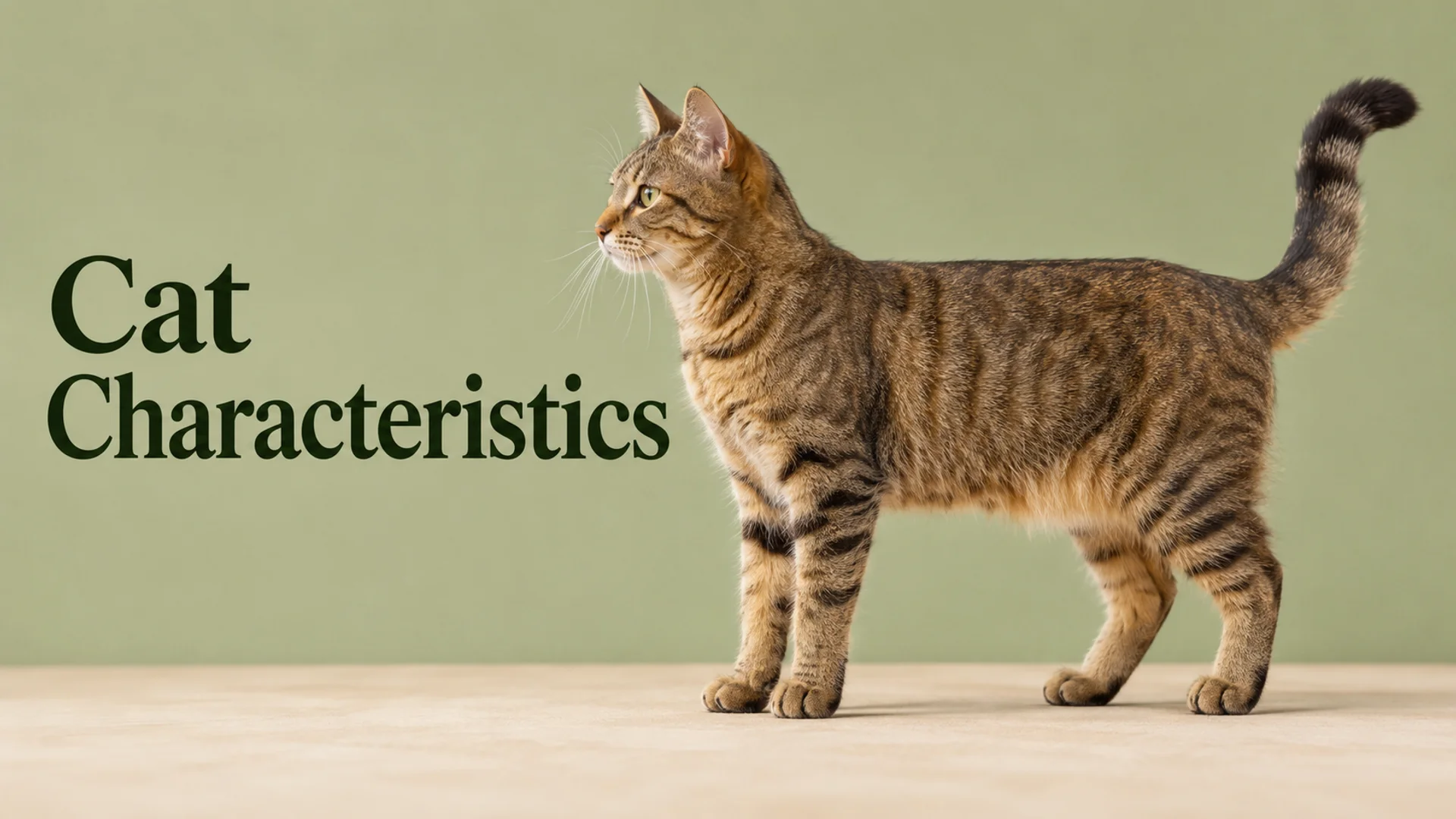
Head bunting commonly combines facial scent communication with a familiar social encounter. Let the cat choose the contact, keep your response brief, and accept walking away as a complete ending. For more on the physical features involved, the cat characteristics guide explains facial and sensory anatomy without assigning a fixed motive to an individual cat.
PetMira for iPhone
Keep a visible change with its context
PetMira's skin and eye image logs can keep comparable photos in your cat's digital profile. Abnormal head pressing or disorientation needs immediate veterinary contact for urgent assessment; do not wait for an app entry.
 A digital profile for your cat
- Photo-based care logs
- AI care questions in one place
Available on the App Store. Guidance supports observation and does not replace veterinary care.
Download iOS App