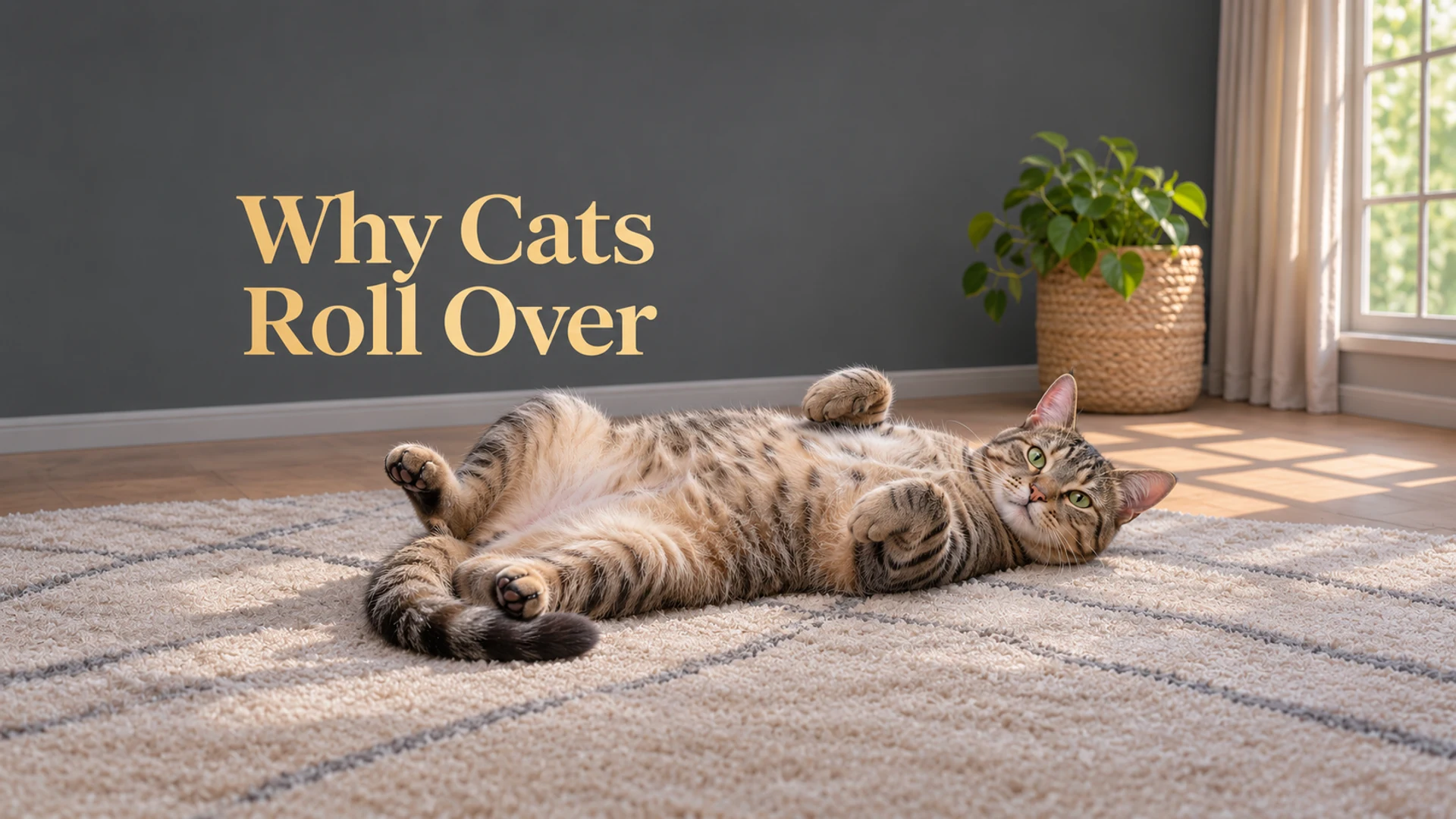
Cats roll on their backs for several reasons, including greeting someone, stretching, playing, resting, or rubbing against a surface. An exposed belly is not automatically an invitation to touch it. Before reaching, watch whether the cat stays loose, follows a toy, reaches toward your hand, or becomes tense. You can acknowledge the encounter without putting a hand on the most vulnerable-looking part of the cat.
A familiar, relaxed roll is usually something to observe rather than correct. Keep the space comfortable and let the cat choose the next move. Repeated rolling with obvious discomfort, persistent scratching, a loss of normal balance, or another sudden change needs a different response and warrants veterinary advice. The posture alone cannot identify a medical or behavioral cause.
Read how the roll starts and finishes
A roll can be a brief flop from standing onto the side, a stretch that exposes the belly, or repeated movement from side to side. Some cats do it when a familiar person enters the room; others do it while enjoying a resting place. Start with those visible details. “He rolled after I came home, then walked beside me” is more useful than assuming every belly display asks for the same thing.
Watch what the cat is facing and what happens afterward. A cat tracking a moving toy may roll while reaching with the front paws. A cat on a sunny rug may stretch and return to sleep. A cat who tightens as a hand approaches gives you a reason to stop the reach. The shape can look similar while the next useful action is different.
Also consider the surface. A familiar carpet, cool floor, or soft bed offers a different setting from a busy doorway where feet keep passing. If the cat rolls in a traffic route, pause people briefly and give the cat time to move. Avoid stepping over the animal or nudging the belly with a foot. A quiet route around the cat is easier than turning the moment into unwanted handling.
A greeting can be complete without a belly rub
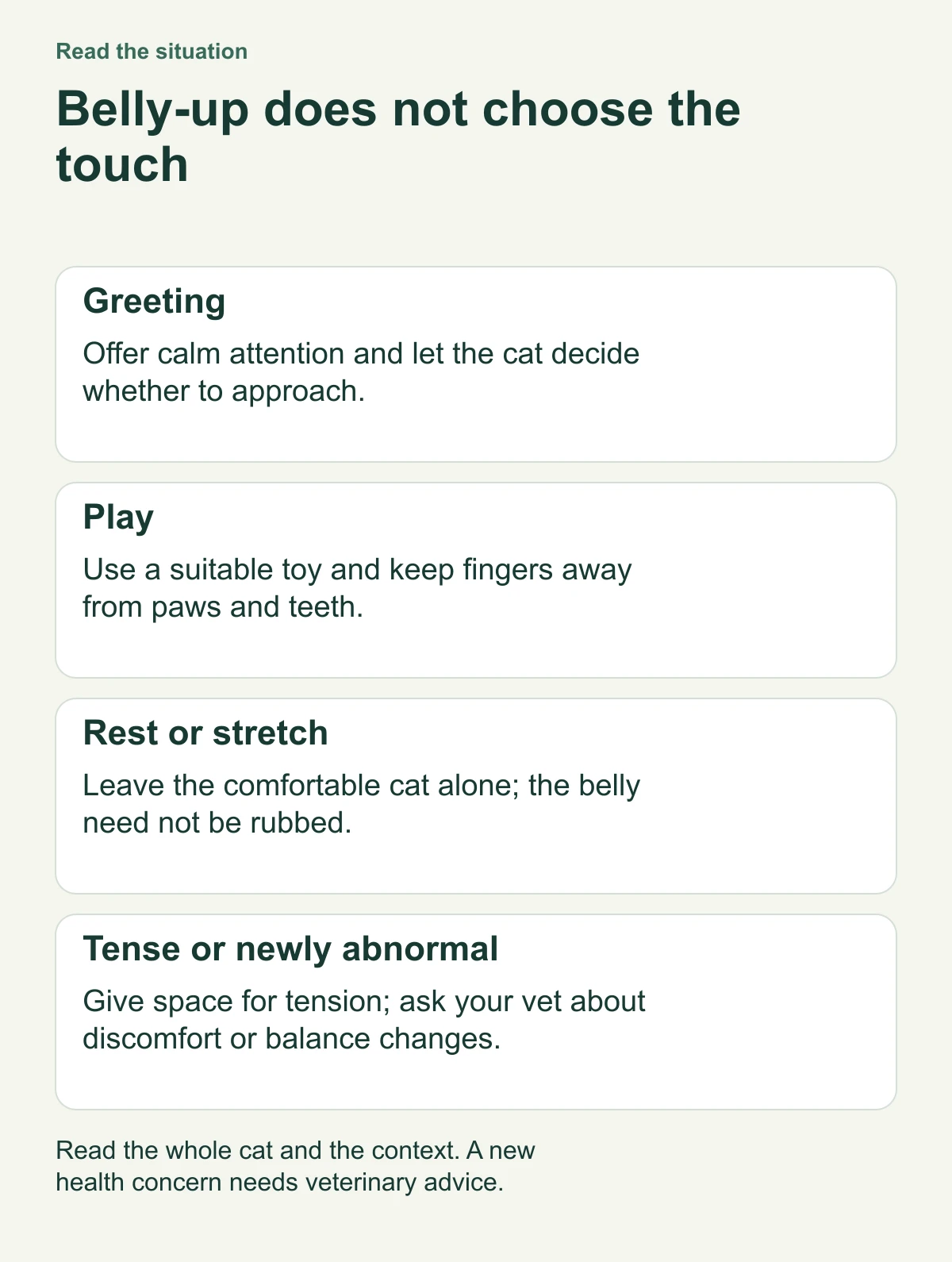
Some cats learn that rolling at a person's arrival brings attention. You may see a loose flop, a look toward you, and another movement when you speak. A calm greeting can be enough. Stand or sit at a comfortable distance and let the cat decide whether to rise, rub nearby, or keep resting. Attention does not have to mean touch.
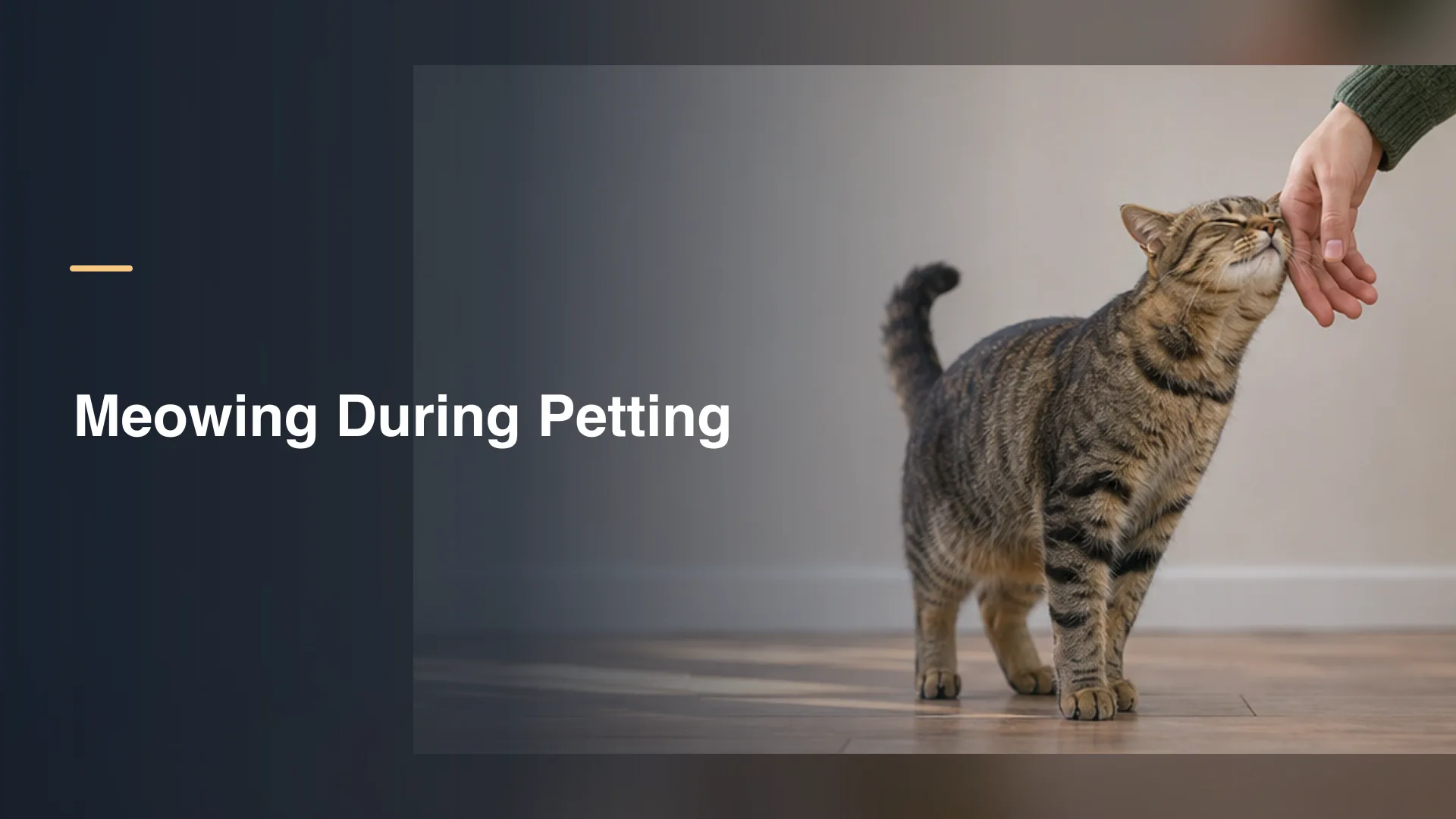
If your cat gets up and approaches for familiar cheek contact, respond to that new choice rather than the earlier belly exposure. Keep the first touch brief, then pause. The guide to meowing during petting explains how to notice when a touch sequence changes. A cat who greeted you warmly can still prefer a very short interaction.
Calling the belly a “trap” can be amusing, but it makes an avoidable misunderstanding sound like a trick. The cat can choose to lie belly-up while also rejecting a hand reaching into that space. You do not need to test the boundary to establish whether the cat trusts you. Let the animal's response to proximity and movement guide the next step.
Separate play, stretching, and a request for space
During play, a cat may roll onto the side or back and reach for a toy with the paws. Use an appropriate toy that keeps your hands away from the target. If paws and teeth begin following a moving hand, end the hand movement and reset the game later with a suitable toy. Do not encourage wrestling with fingers and then expect the cat to know which occasions are different.
A resting cat may stretch the spine and limbs, expose the belly, and settle again. There is no need to interrupt with a stroke or a camera close-up. Watch normal movement when the cat gets up. If the stretch is ordinary and the cat continues their routine, the practical response may simply be leaving that comfortable resting spot available.
A cat lying on the back can also keep all four paws available in a defensive encounter. Look for a tense body, ears held back, a fixed gaze, hissing, or efforts to keep another animal away. Stop advancing and allow distance. Do not assume belly-up means submission or that the cat is safe to pick up. Our cat language guide connects those signals to the wider interaction.
Rolling context | Clues beyond the belly | A useful response |
|---|---|---|
Greeting at your arrival | Loose movement and voluntary approach | Offer calm attention |
Following a toy | Paws tracking the moving target | Keep hands out of play |
Stretching before rest | Easy movement and settling afterward | Leave the resting cat alone |
Tense encounter | Flattened ears, hissing, or guarding distance | Step back and give space |
Why an individual cat may dislike belly contact
The abdomen is a sensitive area, and a cat may be comfortable exposing it without wanting pressure or stroking there. Past preference also matters. A cat who enjoys cheek contact may consistently move away from a belly touch. Respect that pattern instead of trying to train tolerance through surprise touches while the cat is resting or appearing relaxed.
If your cat has previously welcomed a little belly contact, that history is still not a guarantee for every occasion. Watch the present encounter. A body tightening, paws moving toward the hand, a turning head, or tail movement can mark the point to stop. You do not have to wait for a bite or scratch before deciding the contact has ended.
For visitors and children, a simple rule is easier than a detailed posture lesson: look at the belly and leave it untouched. A seated child can watch the cat roll without reaching, under adult supervision. If the cat comes over afterward, the adult can guide any familiar brief contact. This avoids making a relaxed posture an automatic invitation for the most intrusive kind of touch.
Repeated rolling can deserve a closer look
Consider whether the behavior is ordinary for your cat or new and persistent. A cat repeatedly rubbing or scratching the same area may be uncomfortable; a cat rolling while losing balance or appearing disoriented needs prompt veterinary advice. Do not attempt to identify the cause from the roll. Describe when it began, whether the cat can stand and walk normally, and any other visible changes.
Rolling may occur alongside reproductive behaviors in an unspayed cat, but it does not establish pregnancy or a specific stage of a cycle. Tell your veterinarian about the wider pattern and ask about appropriate care. Do not use a body-language explanation as a reason to postpone advice about a change you do not understand, particularly if the cat seems distressed or unwell.
If you notice a visible skin or fur change during an ordinary roll, you can photograph it without turning the cat over by hand. PetMira's skin and fur care logs keep comparable images in the cat's digital profile. Note the location separately and seek veterinary advice for a concerning change. The cat characteristics guide can help you describe what is visible without guessing the cause.
Let the belly stay a choice
Read a roll as part of a greeting, game, stretch, or larger encounter, rather than a fixed request for belly contact. Keep hands out of rough play, let resting cats rest, and give space when the body becomes tense. If the pattern is new or comes with discomfort or abnormal movement, ask your veterinarian what to do next.
PetMira for iPhone
Keep visible observations easy to find
If an ordinary roll reveals a skin or fur change, PetMira's photo-based care logs can keep a comparable image in your cat's digital profile. Do not turn the cat over or delay needed advice for a photo.
 A digital profile for your cat
- Photo-based care logs
- AI care questions in one place
Available on the App Store. Guidance supports observation and does not replace veterinary care.
Download iOS App