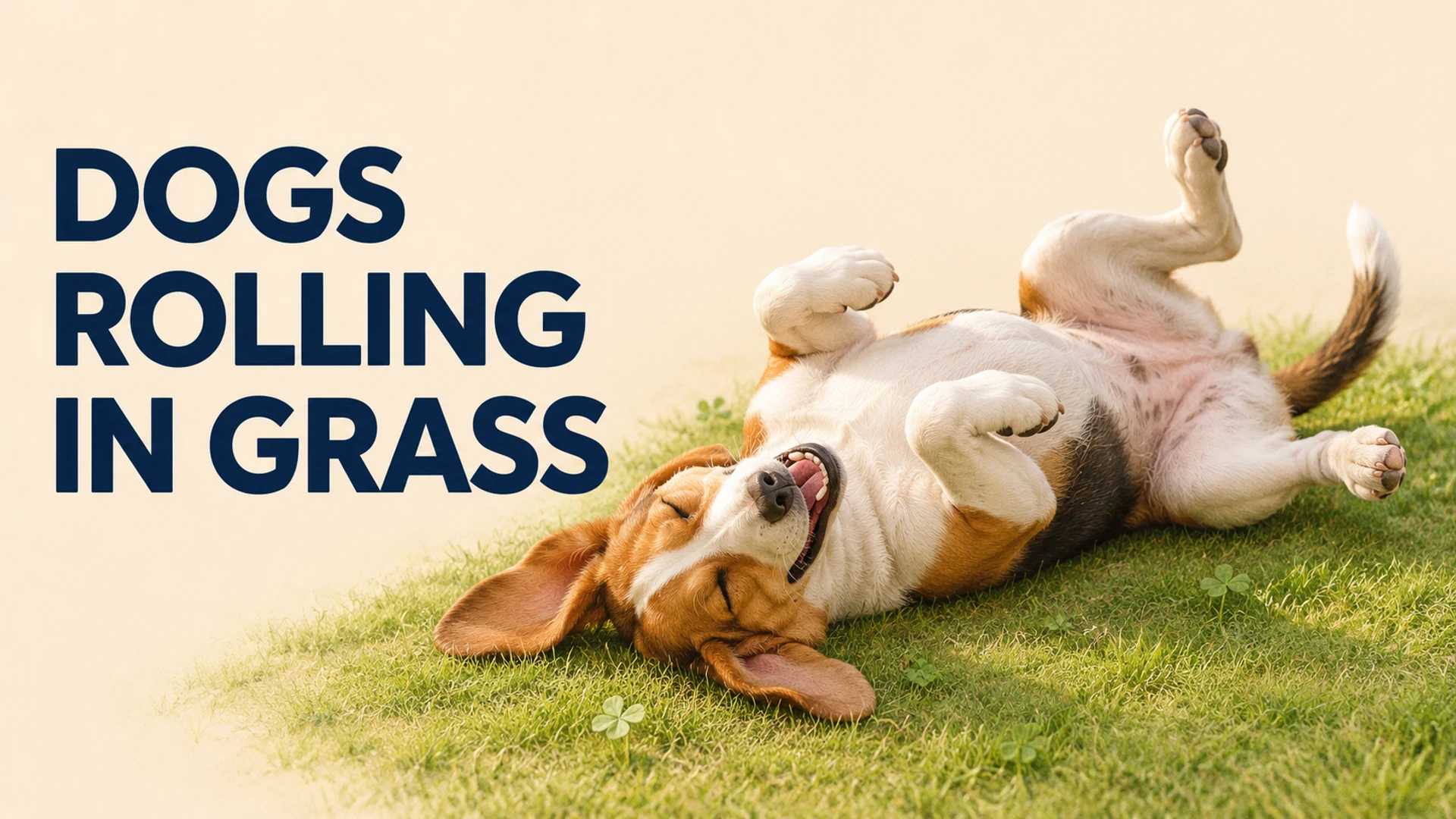
Dogs may roll in grass because of interesting scents, the feel of the surface, or an itch they are trying to rub. Several explanations can fit the same movement, and a single roll does not establish a precise message. Watch how it starts and ends, check whether the ground is safe, and notice whether the same body area is repeatedly being rubbed.
If the dog may have contacted a chemical, sharp material, or another harmful substance, stop access and contact veterinary help for instructions. Repeated rubbing with sore skin, apparent pain, or a new change in movement also deserves advice. Surface safety is a separate question from whether the dog appears to enjoy rolling.
Grass rolling can have several explanations
A dog may sniff a particular patch and then press a shoulder down before wriggling over it. Another may flop onto familiar clean grass during a relaxed outing. The first sequence draws your attention to something on the ground; the second may fit ordinary sensory exploration. Neither sequence alone can tell you the dog's exact motive.
You can allow a harmless activity without settling every theory behind it. The more useful questions are whether the dog moves comfortably, whether the surface is suitable, and whether the behavior ends with the dog carrying on normally. If the same spot attracts repeated intense interest, manage access before another roll rather than relying on an explanation about instinct.
Our guide to dog language covers the wider posture picture. A belly exposed during a grass roll does not automatically invite petting. Let the dog complete or leave the activity without a hand entering the movement.
Watch how a rolling episode begins and ends
Notice the approach. A close sniff of one location before rolling may suggest that the patch itself matters. A broad stretch and loose wriggle after lying down may lead you to a different question about the surface. These are observations to guide your response, not a reliable way to separate enjoyment from every other possibility.
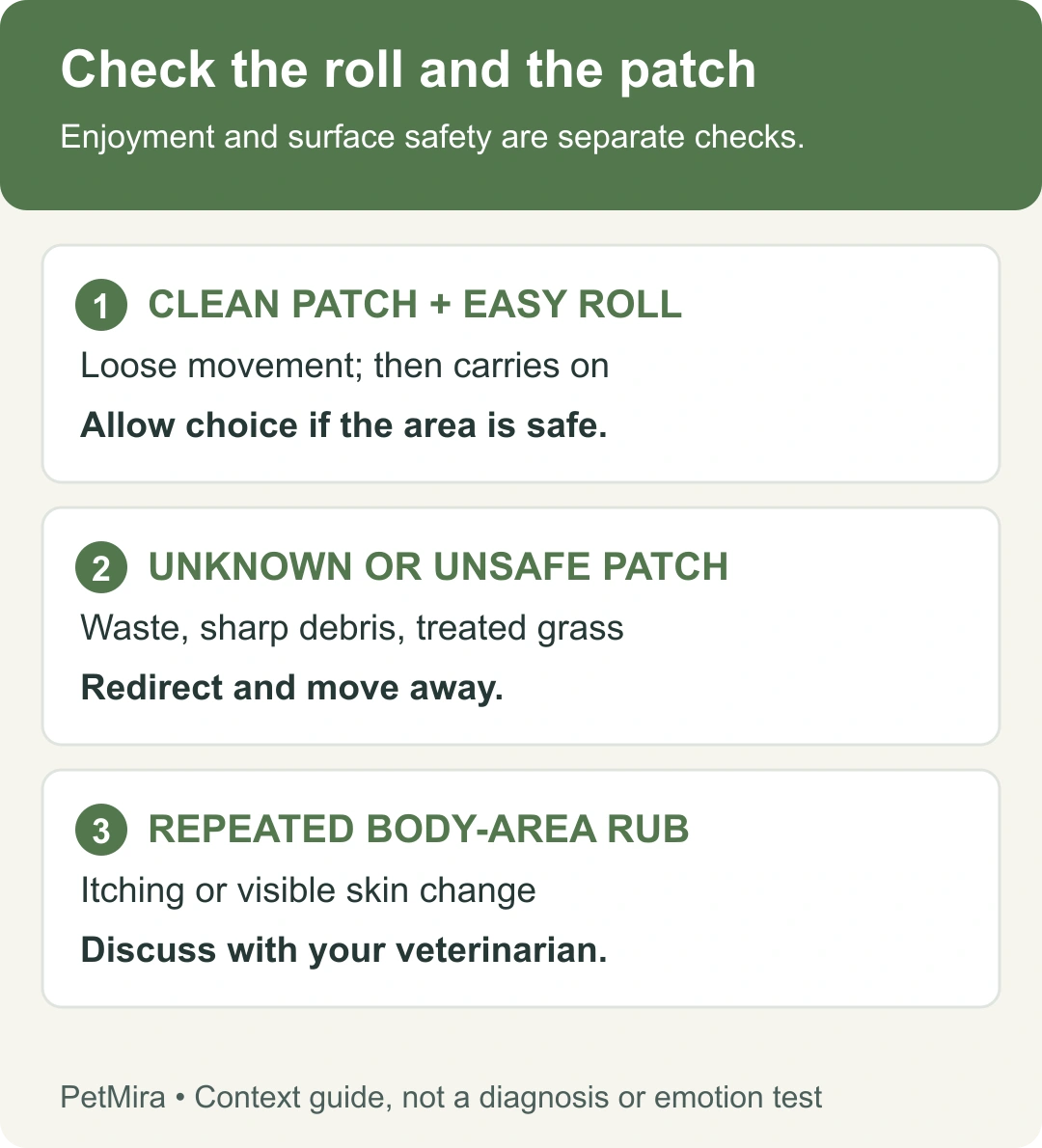
Then look at what follows. Does the dog get up easily and return to sniffing or walking? Do they immediately return to rubbing one shoulder, side, or ear? Is scratching or licking also becoming more frequent? A repeated body-area pattern gives you information to discuss with your veterinarian rather than a reason to try an online remedy.
Keep occasional rolling separate from a changed routine. If your dog has always enjoyed a short roll on one familiar lawn, that history is useful. It does not prove a new lawn is safe or explain away a new skin change. Compare the behavior with your own dog's usual movement while checking the actual conditions of the day.
What you notice | What to check | Response |
|---|---|---|
Sniffs one spot then rolls | Contamination or a strong unknown odor | Move away from unsafe material. |
Loose roll on familiar clean grass | Surface safety and comfortable movement | Allow it if appropriate. |
Repeated rub on one body area | Scratching, redness, skin changes | Contact your veterinarian. |
Possible chemical exposure | Product or substance if known | Call veterinary help for instructions. |
Scent theories are possibilities, not a proven message
Common explanations include taking on an interesting odor, changing the smell of the coat, or behavior related to the scent habits of wild canids. These ideas may help explain why some dogs select strong-smelling patches. They do not let you know that your dog is announcing territory, disguising themselves for hunting, or trying to bring home a message.
The AKC discussion of rolling in strong odors presents several explanations rather than a settled answer. Keep that uncertainty when describing your own dog. “Sniffed the patch and rolled over it” is enough to explain why you redirected the walk; you do not need to add a story about what the dog intended.
Rolling after a bath is another setting where the interpretation can become too certain. The dog may be responding to scent or texture, but the movement does not establish that they dislike being clean or want to defeat your work. Focus on keeping the post-bath area safe and the transition comfortable instead of treating the roll as disobedience.
Check the patch before allowing another roll
Use a familiar area where you can see the ground. Look for waste, sharp debris, stinging or spiky plants, and signs that the surface has been treated. Respect posted access restrictions and the instructions for any lawn product. If you do not know what has been used or whether the area is safe, choose another place rather than assuming dry-looking grass is ready for contact.
On public walks, the ground can change from one visit to the next. A clean patch yesterday may contain food waste or another substance today. Keep enough attention on where your dog is sniffing that you can redirect before they lower a shoulder. Avoid letting a long line trail around other people or wrap the dog's legs while they roll.
Do not approach an unknown carcass or contaminated material just to identify the smell. Move away and contact an appropriate local service if it presents a public hazard. If your dog may have swallowed or contacted something harmful, call your veterinary team and explain what you know. Follow their instructions rather than adding household cleaners or other products to the coat.
Redirect without turning the walk into a struggle
Preventing access is easier than moving a dog midway through a roll. When you notice focused interest in an unsuitable patch, use a familiar cue and move toward a safe alternative. Reward the dog for coming with you using something they already value. Choose a clear route so the alternative does not lead straight past the same patch again.
If the dog is already down, avoid dragging or twisting them by the leash. Give a familiar invitation to move and wait for a comfortable opportunity when it is safe to do so. If there is an immediate exposure risk, seek professional instructions while preventing further contact as safely as possible. Do not put your hands near the mouth of a highly aroused or uncomfortable dog.
Practise useful cues away from the problem patch. Our guide to clear dog communication explains how to teach a response in easier conditions. You are building a route to another enjoyable activity, not demonstrating that grass itself must become unpleasant.
When rubbing or exposure needs veterinary advice
Contact your veterinarian about repeated rubbing, frequent scratching, sore or reddened skin, new hair changes, apparent pain, or rolling that disrupts ordinary activities. Describe the body area involved and whether the pattern began after a particular outing. The same movement can accompany different causes, so avoid choosing a skin diagnosis from the behavior alone.
If there is a visible skin or coat change and taking a photo is comfortable for the dog, PetMira's photo-based care log can help keep images in order. Use comparable views without forcing the dog onto their back. A photo record can support your account of what changed; it cannot identify a chemical exposure or tell you what treatment is needed. Arrange care first when the situation is urgent.
For a general way to capture daily changes alongside the rolling pattern, see dog health monitoring at home. Preserve unknowns, such as what was on the lawn, rather than turning a guess into a fact in the record.
Keep the good part of the outdoor experience
A comfortable roll on safe grass can remain part of your dog's outing. Check the surface, notice how the episode ends, and redirect calmly when the patch is unsuitable. Repeated rubbing or a possible harmful exposure needs a different response from an ordinary sensory activity.
Everyday care with PetMira
Make everyday outings easier to understand
Explore everyday care questions in PetMira, then judge suggestions against your dog’s response and the safety of the place.
 Explore the care encyclopedia
- Ask a focused everyday care question
- Use guidance alongside real-world observation
Available on iPhone. AI-generated information is for educational reference.
Download iOS App