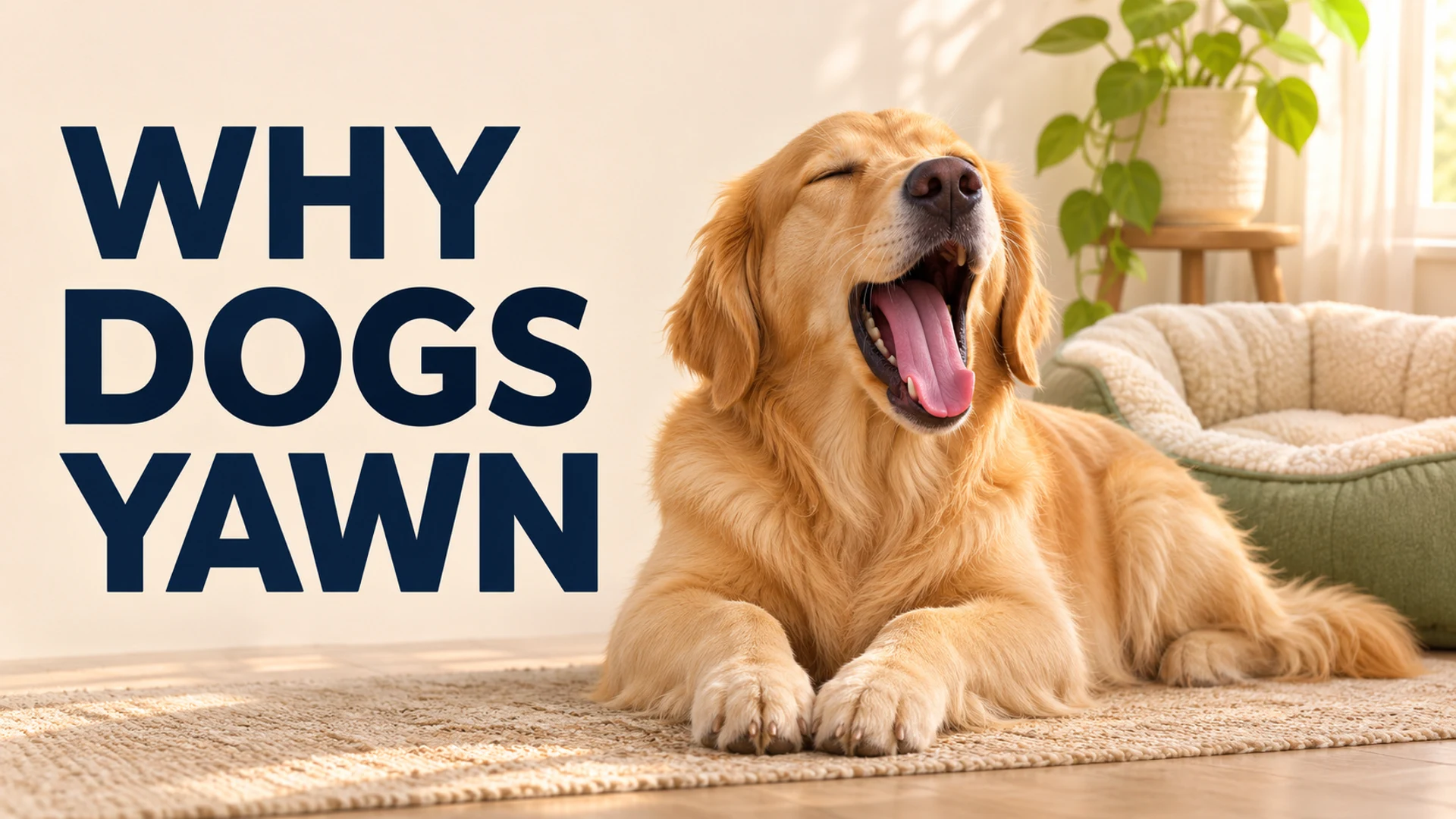
Dogs yawn around sleep, during some social encounters, and in other situations that cannot be explained by tiredness alone. One yawn does not tell you whether a dog is bored, worried, excited, or trying to communicate. Look at what happened just before it, whether the body is loose or tense, and what the dog chooses to do when the interaction pauses.
When yawning appears during close touch and the dog also turns away or leans back, stop touching and allow space. If you are seeing new mouth discomfort, trouble eating, unusual drooling, or repeated difficulty opening or closing the mouth, call your veterinarian rather than treating the movement as a behavior puzzle.
A yawn needs the moment around it
Start by describing the event plainly. “Opened his mouth widely after waking, stretched, and walked to the water bowl” is a different account from “yawned several times while a visitor bent over his bed.” The visible movement may look similar, but the setting gives you different questions to ask.
Do not rely on a rule about the length or loudness of the yawn. You may notice that a particular yawn looks drawn out, but that alone cannot establish a cause. A large mouth opening is also easier to notice than smaller signs that happened before it. Check the feet, head position, direction of attention, and freedom to move away.
Our dog-language guide brings those signals together. This page focuses on yawning in particular: what to compare, what to change in everyday encounters, and which conclusions the movement cannot support.
Sleep transitions differ from yawning during an encounter
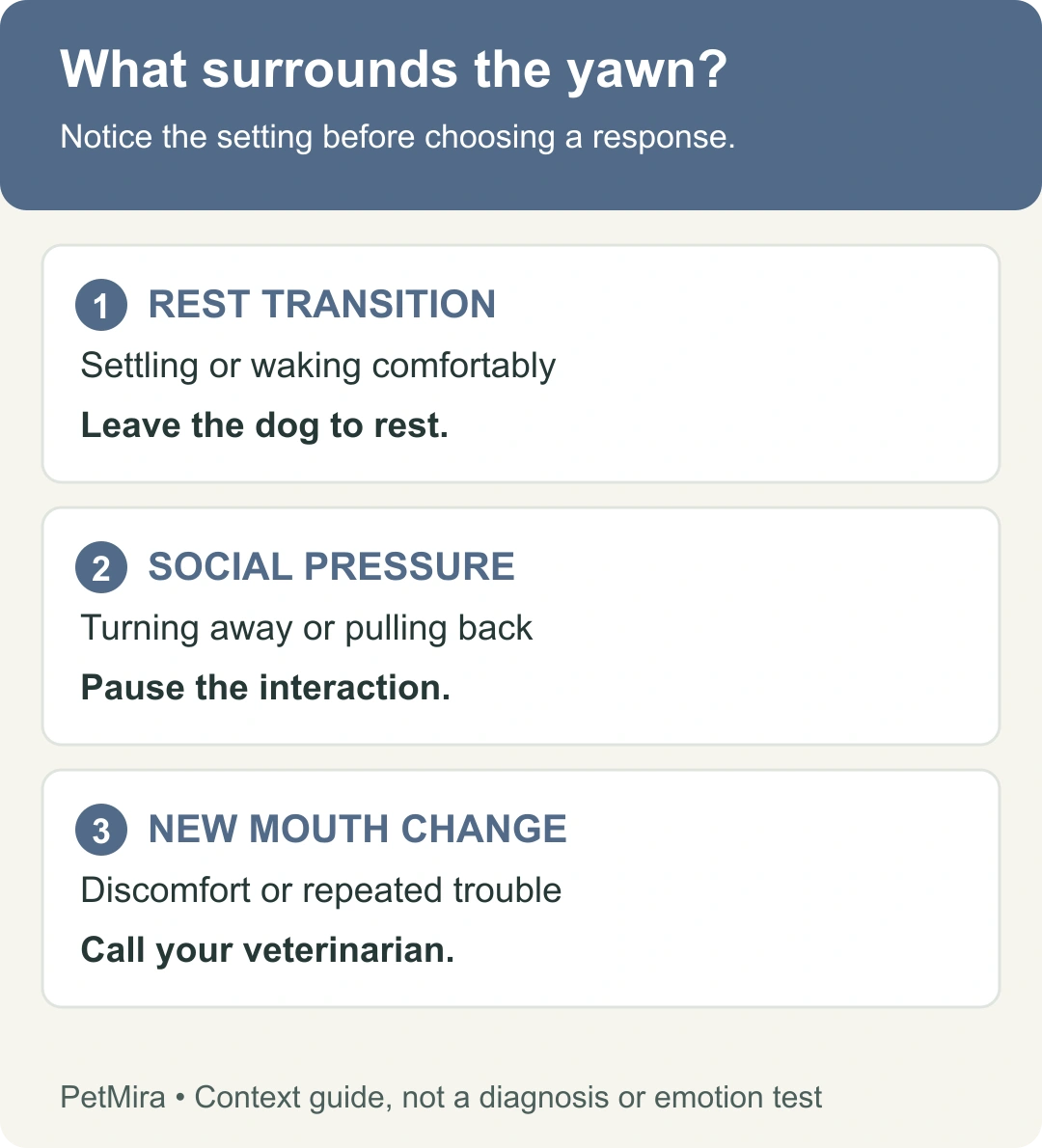
A yawn as a dog wakes or settles can fit an ordinary sleep transition. If the dog stretches comfortably, changes position easily, and returns to rest, you do not need to interrupt the nap to investigate the yawn. Let a resting dog have a quiet place where people do not reach over them or repeatedly call their name.
The timing matters when a yawn occurs away from rest. Perhaps your dog has been walking comfortably until someone stops close beside them and reaches forward. A yawn at that point is useful information to place beside any head turn, closed mouth, backward step, or attempt to move behind you. You can end the approach without first deciding whether the dog is definitely anxious.
A busy day can also create overlapping explanations. A dog who has missed normal rest may be tired during a noisy visit, while the visit itself may be demanding. You do not have to choose one exclusive reason to make the situation easier. Offer a quieter area, keep visitors out of that space, and let the dog decide whether to rejoin.
What other changes make a pause useful
Look for a sequence rather than collecting signals as if each were a diagnosis. Did your dog yawn only after your hand reached toward their collar? Did the body become still at the same time? Does the dog step away when you lower your hand? Those changes are more useful for your next action than counting yawns across unrelated parts of the day.
If you are unsure during touch, a pause costs little and gives the dog a choice. Stop moving your hands, turn your body slightly away, and leave an exit. A dog who moves off should be allowed to do so. Staying nearby without actively seeking more contact does not mean you need to resume petting.
Setting | What else to notice | What to change |
|---|---|---|
Waking or settling | Easy movement and comfortable rest | Avoid interrupting a nap. |
Touch or close contact | Head turns, tension, leaning away | Stop touching and make room. |
A lesson gets difficult | Disengagement or several signals | Make the request easier or stop. |
New recurring mouth change | Drooling, discomfort, trouble eating | Ask your veterinarian. |
The table separates situations without assigning a fixed translation. You may recognize more than one row in a single encounter. Choose the action that reduces pressure or addresses a health concern, rather than testing which label is correct.
Respond to yawning during touch, training, and visits
During a grooming or handling task, notice the point at which the dog starts disengaging. If yawning comes with turning the head away or pulling a foot back, stop before increasing restraint. A necessary care task may need a different setup or help from your veterinary team or a qualified professional. Finishing through repeated signs of discomfort can make the next session harder to arrange comfortably.
During a lesson, a yawn can be a reason to check your teaching rather than repeat the cue louder. Is the request familiar? Has the setting become more distracting? Have you added duration and distance together? Return to an easier version, reward a response your dog can comfortably offer, or end the lesson. You are adjusting the conditions, not diagnosing failure or stubbornness from a facial movement.
With visitors, change what the people do first. Ask them to remain seated, avoid leaning over the dog, and let the dog approach or leave. If the dog retreats, give the retreat space privacy. Guests do not need to offer repeated food or reach into a bed to demonstrate friendliness. A dog can participate in the household while choosing less contact.
For teaching clear requests in a comfortable setting, our guide to talking to dogs covers cue timing and rewards. That is a separate task from trying to make a yawning dog comply in a difficult encounter.
Contagious yawning does not measure your bond
You may notice your dog yawn soon after you do. Researchers have investigated contagious yawning in dogs, but a matching yawn in your living room cannot establish how strongly your dog loves you or understands your feelings. The surrounding conditions still matter, including whether the dog was already resting.
Avoid deliberately staring, restraining, or repeatedly yawning at a dog to provoke a reaction for a video. An uncomfortable response would not make a useful relationship test. You can enjoy an ordinary shared moment without treating it as proof of a specific emotion.
The same restraint helps with human-style captions. Calling a yawn “bored with my meeting” can be a joke, but it should not determine the care decision. If the dog needs rest, let them rest. If the setting is demanding, reduce the demand. You do not need to settle the exact internal explanation before doing either.
When new yawning or mouth changes deserve a call
Contact your veterinarian about a new recurring pattern, especially when eating, comfort, breathing, or ordinary movement also changes. Describe whether you saw a full yawn, repeated mouth opening, or something you could not identify. If breathing looks difficult or your dog is severely unwell, seek urgent veterinary help; do not wait to obtain a clearer clip.
After an ordinary encounter, PetMira's AI care Q&A can help you explore a background question using concrete context: for example, yawning during visitors rather than “What emotion is this?” Treat the answer as information to consider, not a determination of your dog's state. New discomfort still belongs with your veterinarian.
If the sound that caught your attention was a long exhale rather than a wide mouth opening, our guide to dog sighs addresses that different observation. Keeping the descriptions separate makes it easier to explain what actually changed.
Let the next action guide your response
A yawn is most useful when you keep the surrounding moment attached to it. Allow rest around sleep, pause uncomfortable contact, and ask for veterinary advice about a new concerning change. Watch what your dog chooses next rather than asking one yawn to explain the whole relationship.
Everyday care with PetMira
Understand the setting around a yawn
Use PetMira’s everyday care guidance to explore a focused behavior question after the interaction has settled.
 Explore the care encyclopedia
- Ask a focused everyday care question
- Use guidance alongside real-world observation
Available on iPhone. AI-generated information is for educational reference.
Download iOS App