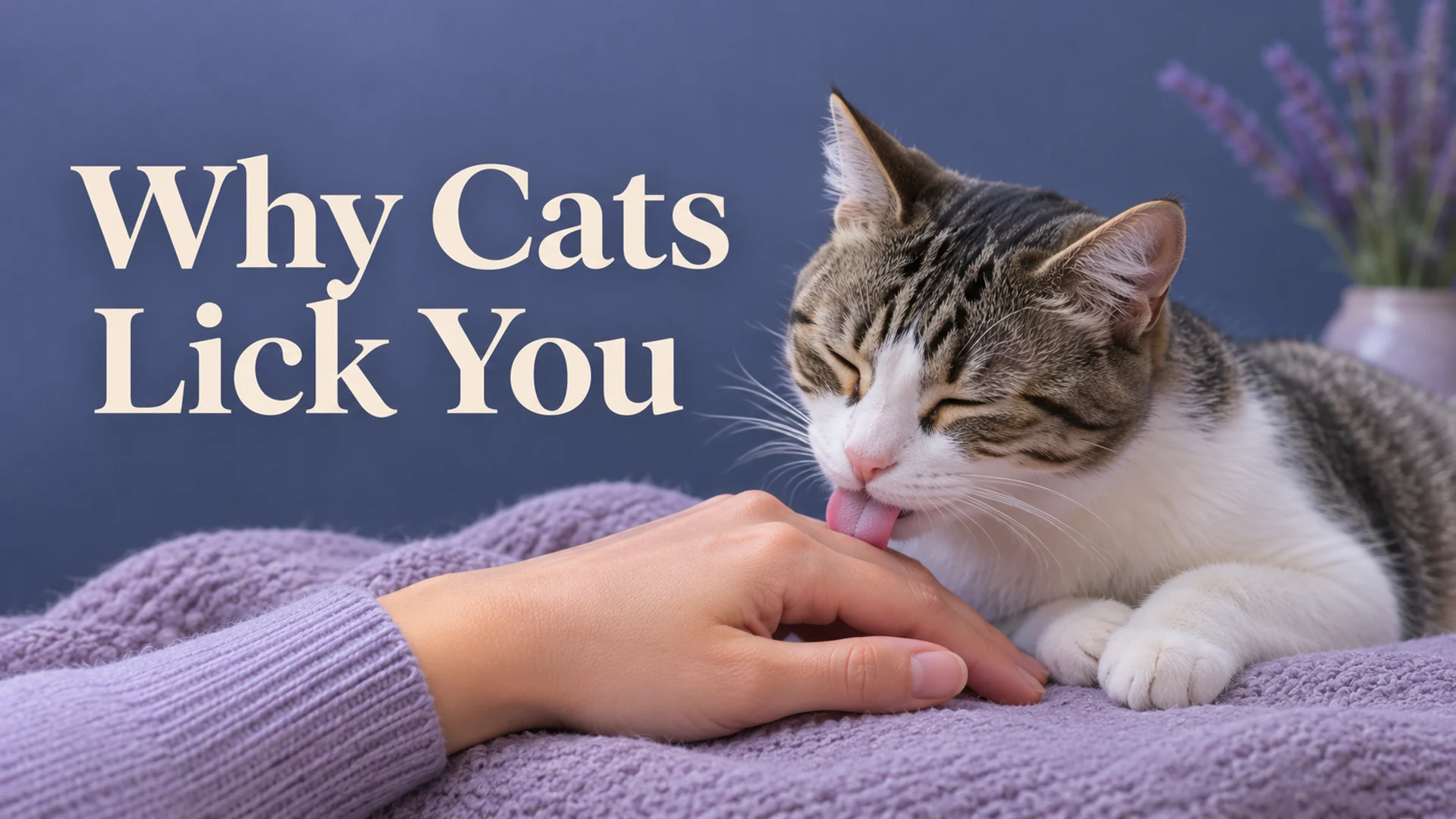
Your cat may lick you during a comfortable social interaction, while investigating a taste or scent, or as part of a learned attention routine. Licking during handling can also occur when a cat wants the contact to stop. Watch how it starts and what the rest of the cat does. A lick is not a reliable instruction to keep petting, and it does not always mean affection.
You can let a brief, comfortable exchange end naturally, or gently remove access if you dislike the rough tongue. Do not let your cat lick skin carrying lotions, ointments, or other topical products, and keep licking away from your face and broken skin. If a medicated cream or an unknown potentially harmful product may have been licked, contact your veterinarian immediately with the product name; do not wait for symptoms. If licking becomes sudden, excessive, or accompanies changes in your cat's skin or ordinary activities, contact your veterinarian.
Social grooming is one explanation, not the only one
Cats who are comfortable together may groom each other, a behavior known as allogrooming. Licking a familiar person can fit a similar social setting: a cat chooses to sit close, gives a few licks, and then rests. It is reasonable to recognize the comfortable encounter without claiming to know the cat's exact intention or assuming all human-directed licking has the same cause.
Scent is also part of feline social life. Grooming and close contact can contribute to familiar smells within a group. That is different from saying a cat has claimed ownership of you. A cat who licks your arm is not giving you a complete account of their social relationships, and a cat who never licks you can still be comfortable and closely bonded with you.
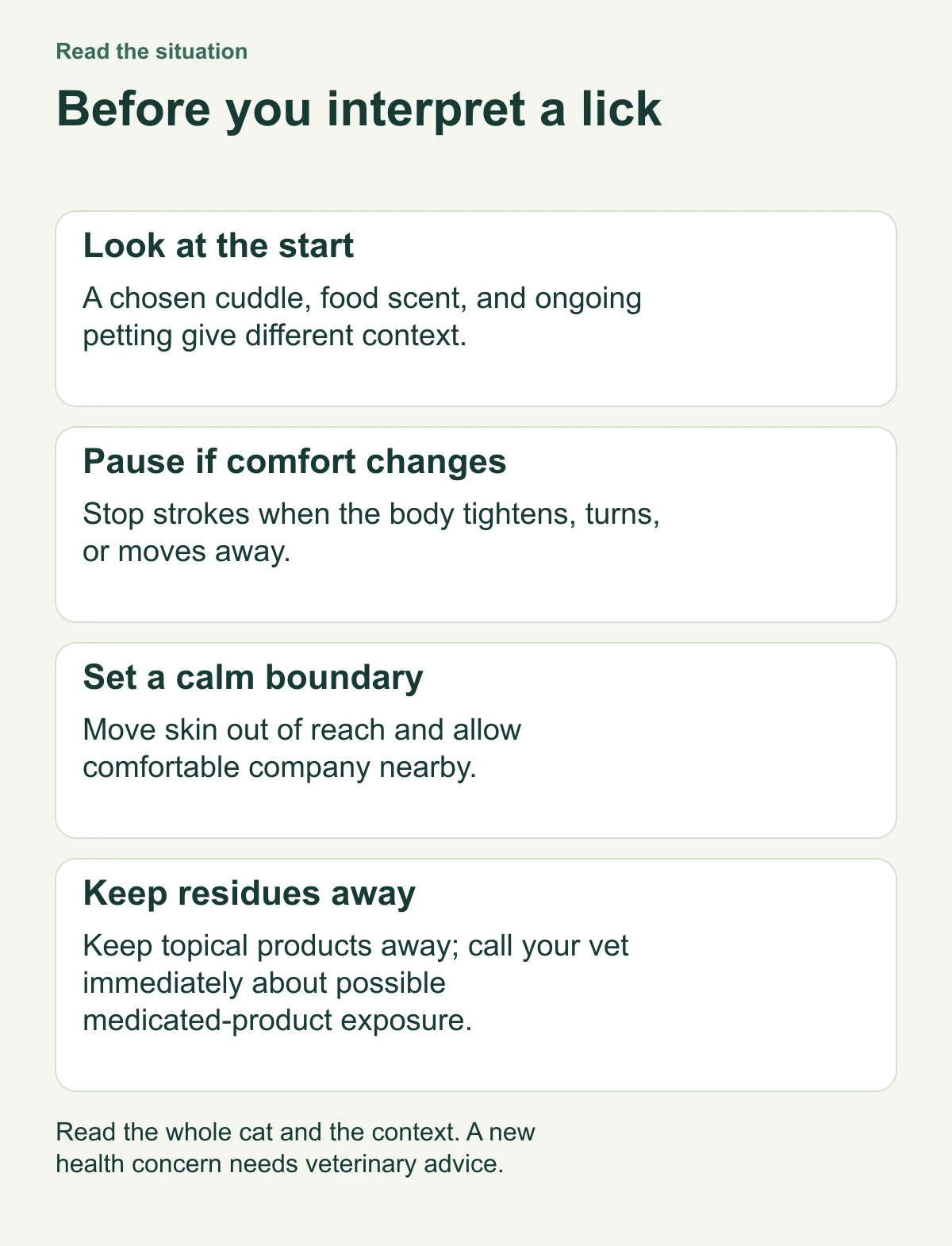
Notice the sequence rather than counting licks as a measure of affection. Did the cat approach voluntarily? Were they already resting against you? Did the licking stop when you moved your hand away? The cat language guide can help you connect that small action with posture, proximity, and the cat's opportunity to leave.
Taste, timing, and learned routines can matter
A cat may investigate sweat, food residue, or an unfamiliar smell on the skin. If licking begins just after you return from exercise or prepare food, the timing is a clue worth recording. Wash your hands and give the cat another way to interact. There is no need to offer skin for tasting or experiment with food or scented products to discover a preference.
Attention can become part of the pattern too. If licking reliably makes you speak, move, or start an activity, your response may help maintain the routine. That does not make the cat calculating or naughty. Decide what response you want to repeat. For example, offer quiet attention before the usual licking starts, or invite the cat to a nearby resting place without making your moving fingers the new target.
Keep household responses consistent when a routine becomes intrusive. If one person laughs and offers a hand while another suddenly pushes the cat away, the encounters are hard for the cat and the humans to predict. Agree on a comfortable alternative, such as company on a blanket beside you. The aim is to make an acceptable option easy, not to make licking frightening.
If licking starts during petting, pause
A cat who begins licking your hand while being held or stroked may be responding to the handling. Check for a tightening body, ears moving back, a turning head, or an attempt to shift away. Stop the strokes and release any unnecessary hold. Allow the cat to choose whether to remain nearby. Do not assume the licking means your hand should continue exactly as before.
If a lick is followed by a bite, the earlier sequence matters more than the popular label “love bite.” The cat may have been interacting playfully, becoming overstimulated, or trying to end contact; the bite alone cannot settle the reason. Avoid testing how many strokes lead to it. Use a shorter encounter and stop at the first change in comfort, before teeth become involved.
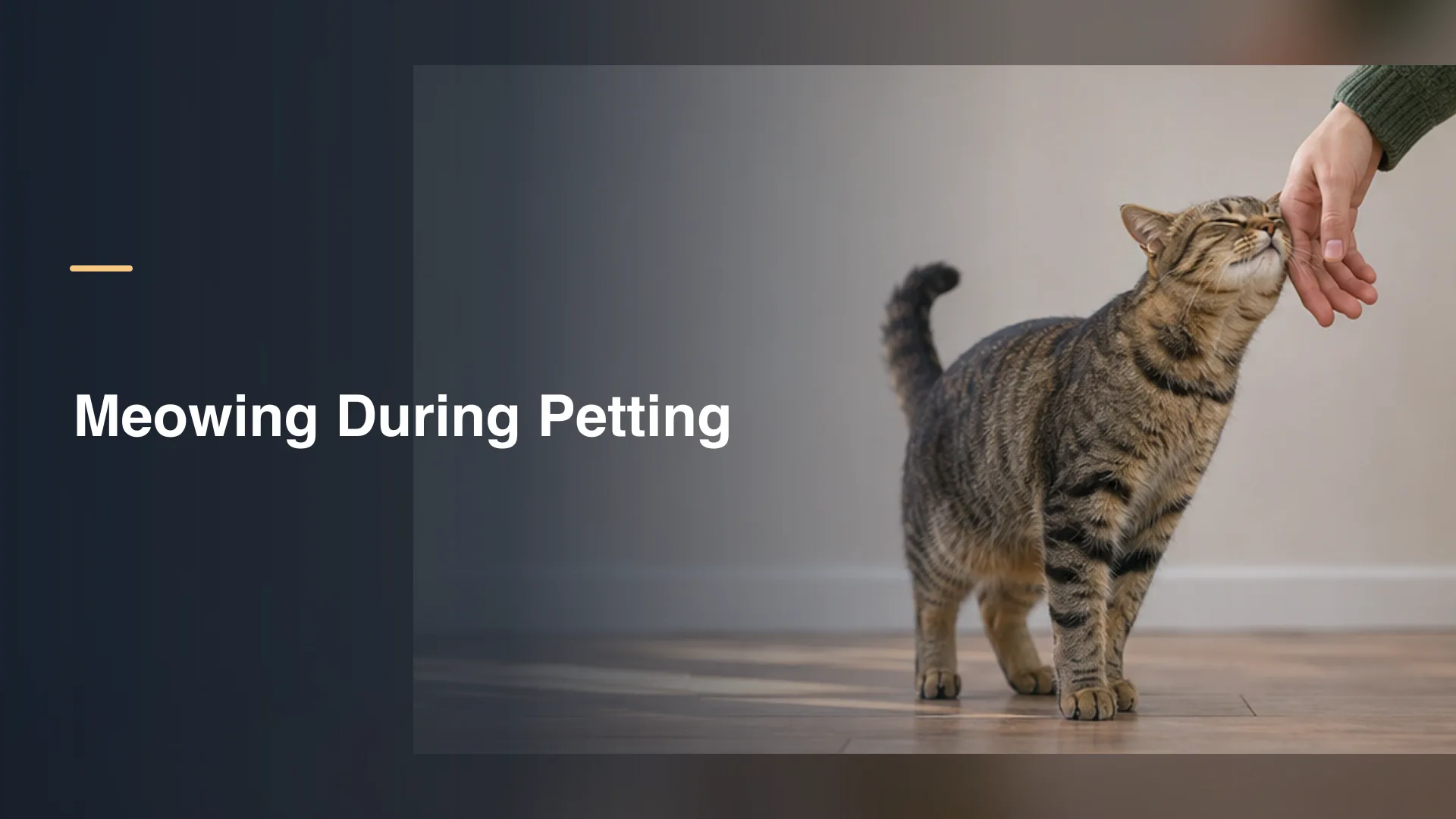
When teeth are already on the hand, stay as calm as you can and avoid turning the encounter into a chase or wrestling game. End access safely and give the cat room. A skin-breaking cat bite warrants prompt human medical advice, even if a puncture looks small. Our guide to meowing during petting covers the related task of noticing when touch changes an interaction.
When licking occurs | What else to check | Useful response |
|---|---|---|
During a loose, chosen cuddle | Cat can leave and stays relaxed | Let it end or calmly move your hand |
After food handling or exercise | Residue or new scent on the skin | Wash and offer another interaction |
As stroking continues | Tension, turning, or tail movement | Stop stroking |
Repeatedly with skin changes | The cat also licking its own body | Arrange veterinary advice |
Set a boundary without punishing your cat
It is fine not to enjoy being licked. Move your hand out of reach smoothly, shift your position, or place a suitable blanket between the cat and your skin. Give the cat a stable way to stay nearby. Do not flick the nose, shout, or spray water. A calm end makes the boundary clear without making your hands threatening in otherwise comfortable encounters.
Avoid replacing your hand with a toy held right beside the cat's mouth in the middle of a tense encounter. Let the cat settle first. For later play, use an appropriate toy that keeps fingers away from the target. If the cat simply wants company, a toy is optional; being left to sit next to you may be the better response.
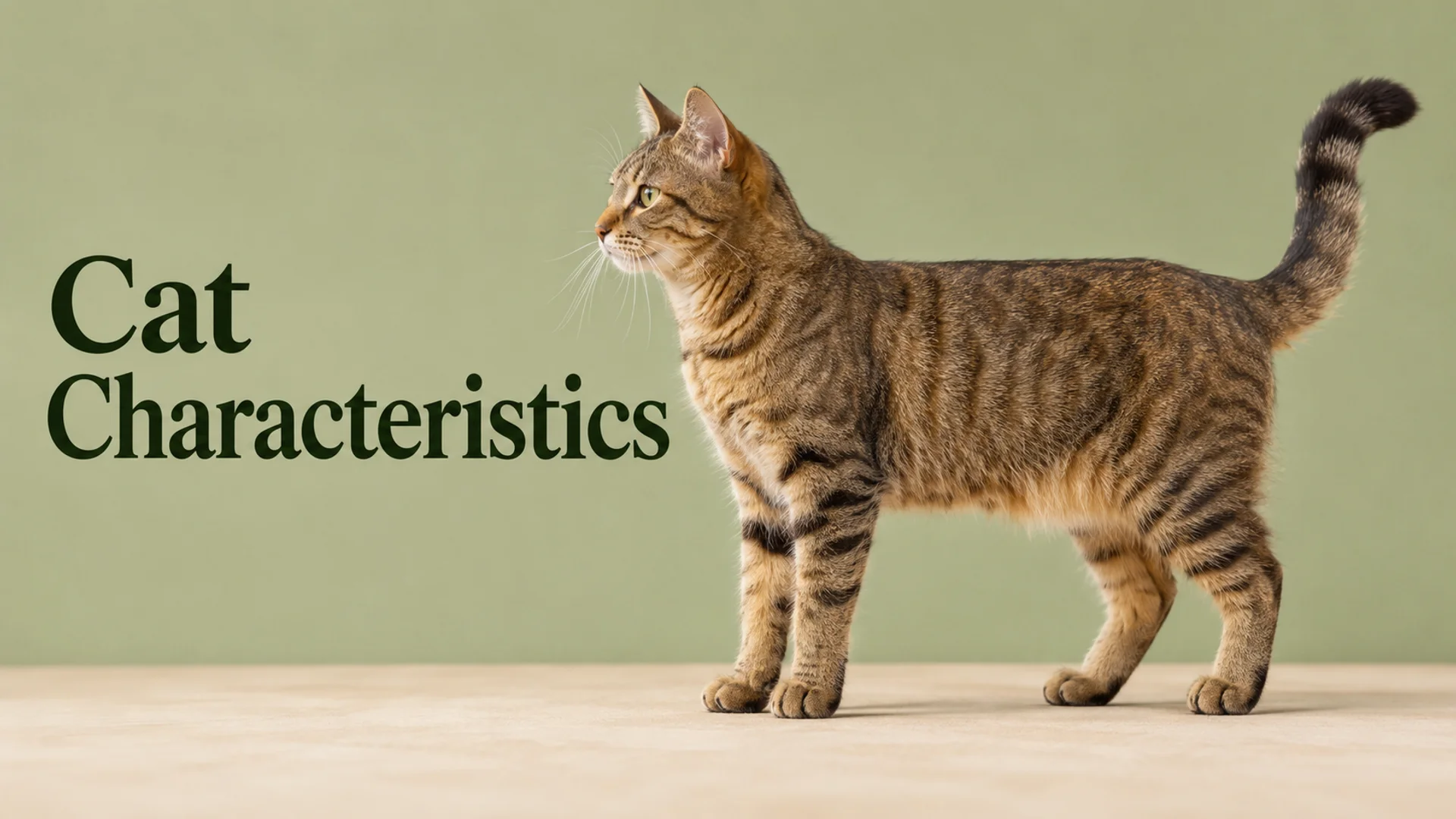
Children should not offer their face or fingers for licking. An adult can help them keep hands still and move away calmly when contact becomes uncomfortable. Explain that the cat's rough tongue is a physical feature, not bad manners. The cat characteristics guide describes the tongue's grooming structures without treating them as a reason to encourage licking human skin.
Keep product residues and health changes separate
Some substances applied to human skin can harm cats if ingested. Keep treated areas covered or inaccessible according to the product's instructions. If your cat may have licked a medicated cream or an unknown potentially harmful topical product, contact your veterinarian immediately and give the product name; do not wait for symptoms. This does not mean every ordinary lotion has the same risk. Do not use a taste deterrent, essential oil, or home mixture on your skin as an improvised solution. Removing access is a safer first step than adding another substance to the encounter.
Watch for a change in the cat's own grooming as well as licking people. Persistent licking, bald areas, redness, sores, or a new repetitive pattern deserves veterinary advice. These signs have different possible causes and cannot be assigned to stress from a behavior article. Note the timing, affected area, and any change in eating or activity without repeatedly provoking the behavior.
PetMira's skin and fur image logs can keep comparable photos of visible changes in your cat's digital profile. Use similar lighting and describe when you first noticed the problem. The log supports a clear history; it does not establish why the cat is licking. If your cat is unwell or may have swallowed a harmful product, contact your vet before spending time on an app entry.
Choose the response, not a single translation
Licking can fit bonding, investigation, an attention routine, or an uncomfortable moment during touch. Read the sequence, protect your skin, and calmly offer a boundary when needed. A new persistent change or a possible product exposure deserves professional advice rather than a confident emotional label.
PetMira for iPhone
Track visible skin and fur changes
Keep comparable photos in PetMira's skin and fur care logs if your cat's own grooming changes. A record supports a clear history and does not establish why licking occurs.
 A digital profile for your cat
- Photo-based care logs
- AI care questions in one place
Available on the App Store. Guidance supports observation and does not replace veterinary care.
Download iOS App