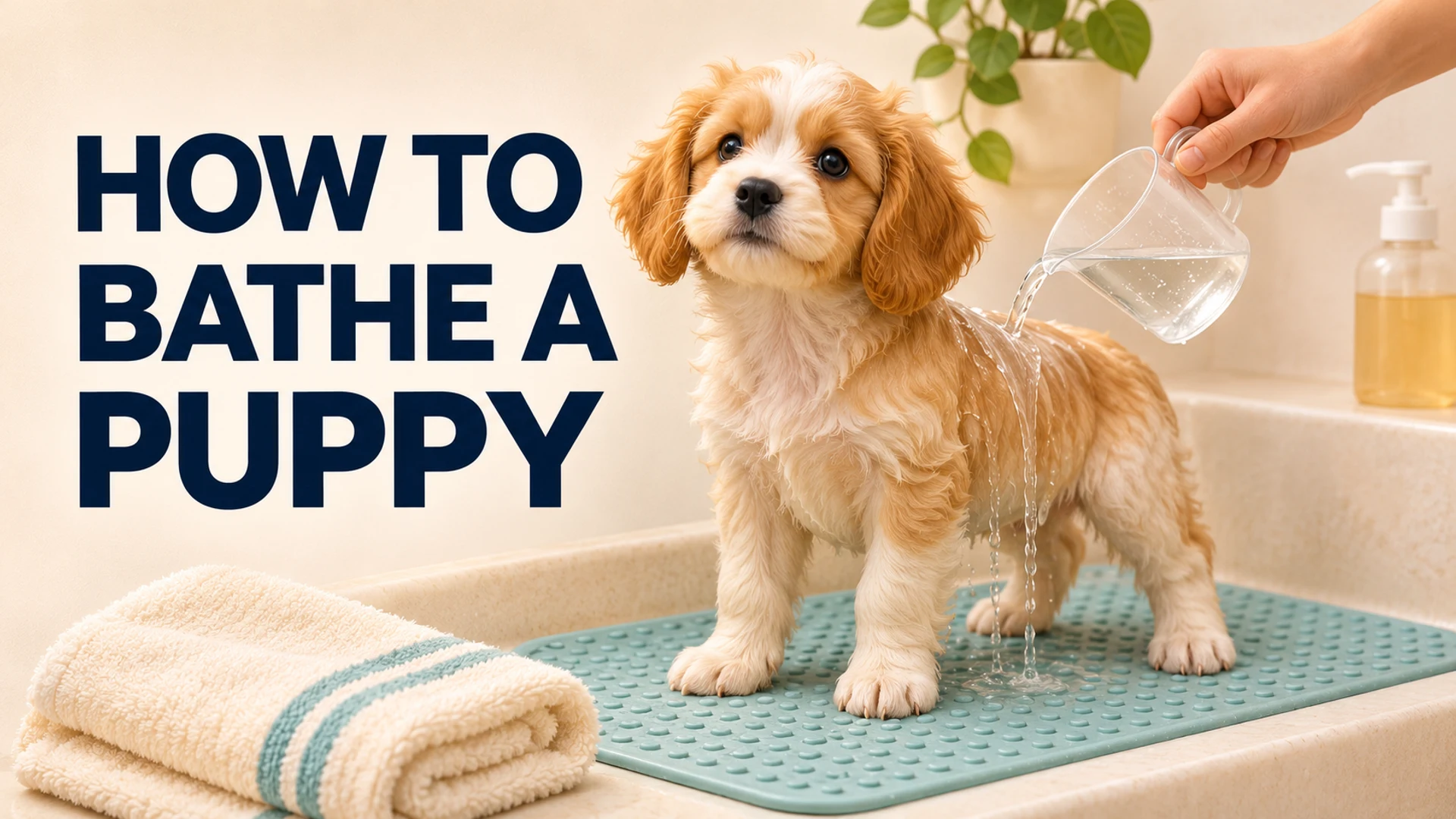
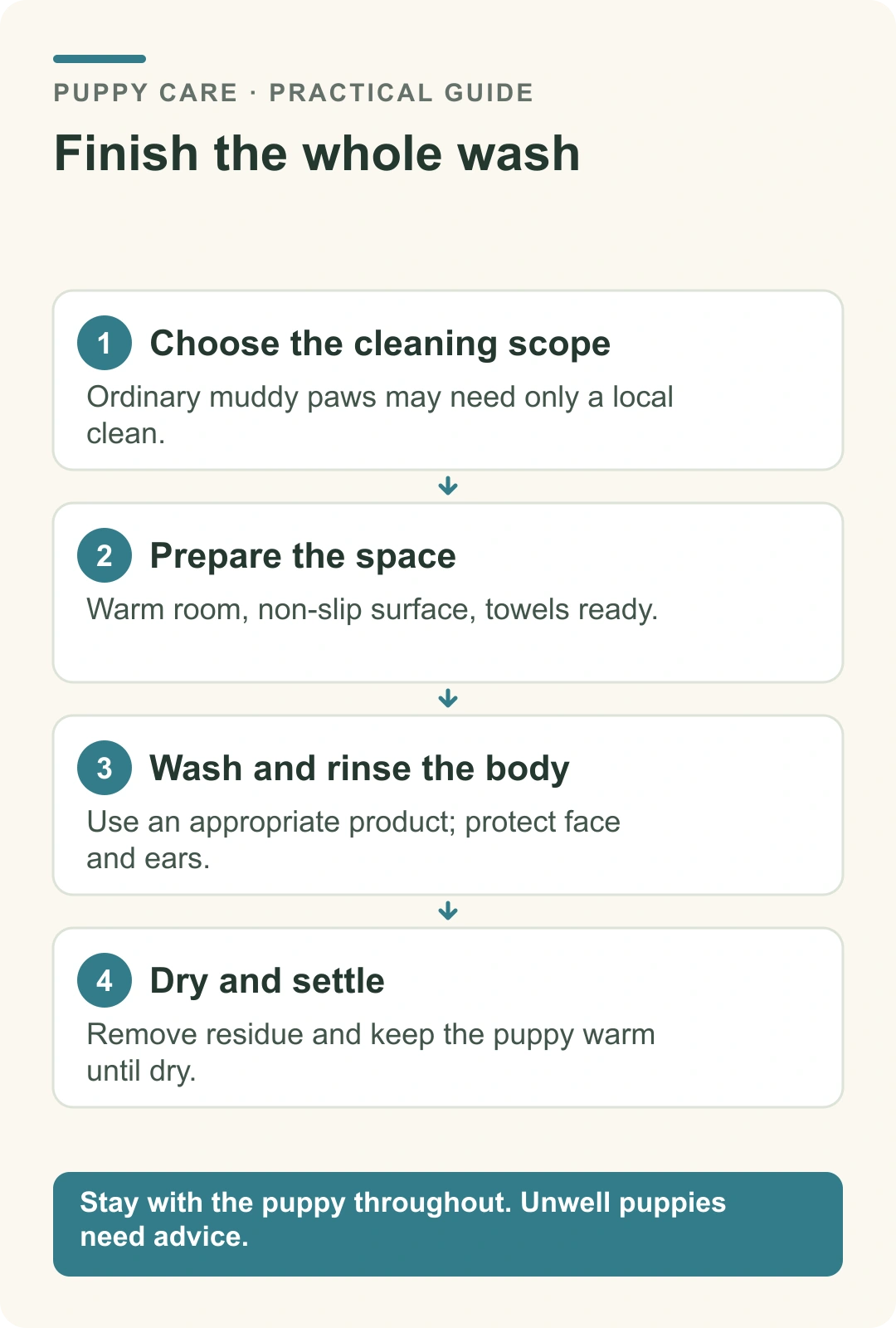
Bathe a healthy, weaned puppy in a warm, prepared space with a non-slip surface, lukewarm water and an appropriate puppy product when needed. Wash the body gently, keep water and shampoo away from the face and ears, rinse thoroughly, and dry the coat before the puppy gets cold. If only the paws are muddy, a local clean may be enough.
A newborn, weak, chilled or unwell puppy needs veterinary guidance rather than a routine home bath. Ask your vet about a skin problem, recent procedure, prescribed product or suspected chemical exposure before choosing how to wash. For a healthy puppy who becomes frightened, pause and simplify; holding harder is not the solution. Keep an adult with the puppy throughout, even if the water is shallow.
Choose a spot clean or a full bath
First identify what actually needs cleaning. Mud on the lower legs may call for a warm damp cloth or a small rinse of the affected area, followed by drying. Dirt spread across the coat may need a bath. An unusual smell with redness, sores or repeated scratching is a reason to ask about the skin rather than cover the smell with a fragranced shampoo.
A partial clean is useful when it removes ordinary dirt without putting the whole puppy through an unnecessary wash. It is not a substitute for advice about an unknown substance. If something potentially harmful is on the coat, prevent licking when you can safely do so and call your veterinarian for instructions specific to the exposure. Do not improvise with household cleaners or solvents.
There is no single first-bath birthday or repeat schedule that fits every puppy. Coat type, the mess involved and individual skin needs affect the plan. Use the product’s directions and your veterinary team’s advice, particularly for a very young puppy. Do not copy a schedule from another breed or assume that more shampoo means better care.
Set up the room before the puppy gets wet
Put the non-slip mat in place, gather clean towels and prepare a cup or gentle sprayer. Keep the chosen dog product within reach and check any dilution or contact instructions before starting. Arrange a warm drying area nearby. If you will need another adult, agree who supports the puppy and who handles water so neither person suddenly lets go to find supplies.
Test the water before it touches the puppy, and check it again if a household tap or appliance changes the flow. Use lukewarm water, never a hot or cold shock. Keep the wash area shallow and manageable, with the puppy’s face well clear of water. A raised sink adds a fall risk; choose a place where you can maintain safe support without struggling.
Inspect the coat for tangles you can address comfortably before wetting it. Do not pull painfully at a mat or start cutting close to the skin to make a bath possible. A groomer or veterinary team can advise on difficult matting. Preparation should reduce the work done while the puppy is wet, rather than turn the session into several unfamiliar procedures at once.
Let the puppy meet the bathing space
When there is no urgent cleaning need, introduce the dry space first. Allow a sniff, reward a calm moment and help the puppy leave safely. A later practice can add the sound of water at a comfortable distance. You do not need to complete every stage on the same day, and there is no value in holding a worried puppy in place until they stop moving.
For a necessary wash, keep the task as small as the mess allows. A puppy who is mildly unsure may manage a careful local rinse better than a full shampoo. If you cannot support and wash them safely, ask a professional for help. Our puppy socialization guide explains the same comfort-led approach to new experiences without making the bath a forced exposure exercise.
Keep rewards suitable and easy to deliver away from the stream of water. A helper can reward relaxed participation while you wash a small area. Food should not be used to distract the puppy from pain, a dangerously slippery position or water that is too hot. If the setup is wrong, change the setup before trying a more tempting treat.
Wash the body while protecting the face
Wet the body gradually with a gentle flow or cup, beginning away from the face. Support the puppy on the stable surface without pinning them down. Pause if they repeatedly scramble, shiver or cannot find their footing. A quiet, predictable movement gives you a chance to notice the puppy’s response before adding more water.
When shampoo is needed, use a product labeled for dogs and appropriate for the puppy’s age and situation. Follow its directions instead of adding a second wash or a conditioner automatically. Avoid human shampoo, strong fragrance and unprescribed medicated products. If a veterinarian prescribed a specific wash, follow that individual plan rather than substituting this routine.
Work gently through the coat and avoid scrubbing sensitive skin. Use a separate damp cloth for ordinary dirt on the face, keeping soap away from eyes, nose and mouth. Do not pour water into the ears or try to clean down an ear canal as part of the bath. Ask your vet separately about ear discharge, pain or a strong odor.
Rinse carefully and dry without overheating
Rinse all areas that received product, including places easy to miss beneath the body and around the legs. Check the coat with your fingers for remaining slippery residue, while continuing to protect the face. If the puppy becomes difficult to support, get help rather than balancing a frightened animal with one hand while reaching for another bottle.
Lift or guide the puppy out safely onto a dry, non-slip surface. Towel the coat gently and replace a soaked towel rather than rubbing harder. Keep them indoors in a warm, draft-free place until dry. Pay attention to the underside and thicker coat areas, which can remain damp after the surface looks finished.
A dryer is optional, not a test the puppy must pass. Noise, airflow and heat are separate sensations. If you use one, choose a suitable low or cool setting, keep it moving at a safe distance and continuously check the coat and skin temperature. Stop if the puppy is distressed or the air feels hot. A groomer can demonstrate safe drying for a coat that is difficult to manage.
Drying belongs to the bath Have the towels and warm resting area ready before adding water. A clean puppy left damp in a draft has not reached the end of the care task.
Adjust the next wash to the puppy and coat
After the bath, notice whether the puppy settles and the coat is free of residue. Contact your veterinary team about persistent redness, discomfort or a new skin change rather than trying another product immediately. The dog health observation guide can help organize what changed, but it cannot identify the cause of irritation.
PetMira’s skin and coat photo journals can help you keep a permitted picture of a visible change alongside everyday care observations. Record which product you used and when the change appeared in your own account for the vet. The image is supporting context, not proof of an allergy or a recommendation to repeat the bath; urgent discomfort needs advice first.
Before the next ordinary wash, change the part that made this one difficult. That might mean a better mat, a quieter sprayer, shorter handling or professional help with the coat. Do not add nail clipping or tooth brushing simply because the puppy is already in the bathroom. Our puppy mouthing guide offers separate handling adjustments when an overstretched grooming session leads to nips.
Make the next wash easier
Clean only what needs cleaning, prepare the whole wash-and-dry route and stop when the puppy cannot participate safely. Use PetMira’s care guidance or photo journals for routine preparation and visible observations, while letting your veterinarian guide skin concerns and your groomer demonstrate difficult coat care.
Everyday care with PetMira
Keep everyday coat care organized
Explore grooming guidance in PetMira and use its skin or fur photo journals for comfortably visible changes you want to compare over time.
 Explore the care encyclopedia
- Ask a focused everyday care question
- Use guidance alongside real-world observation
Available on iPhone. AI-generated information is for educational reference.
Download iOS App