
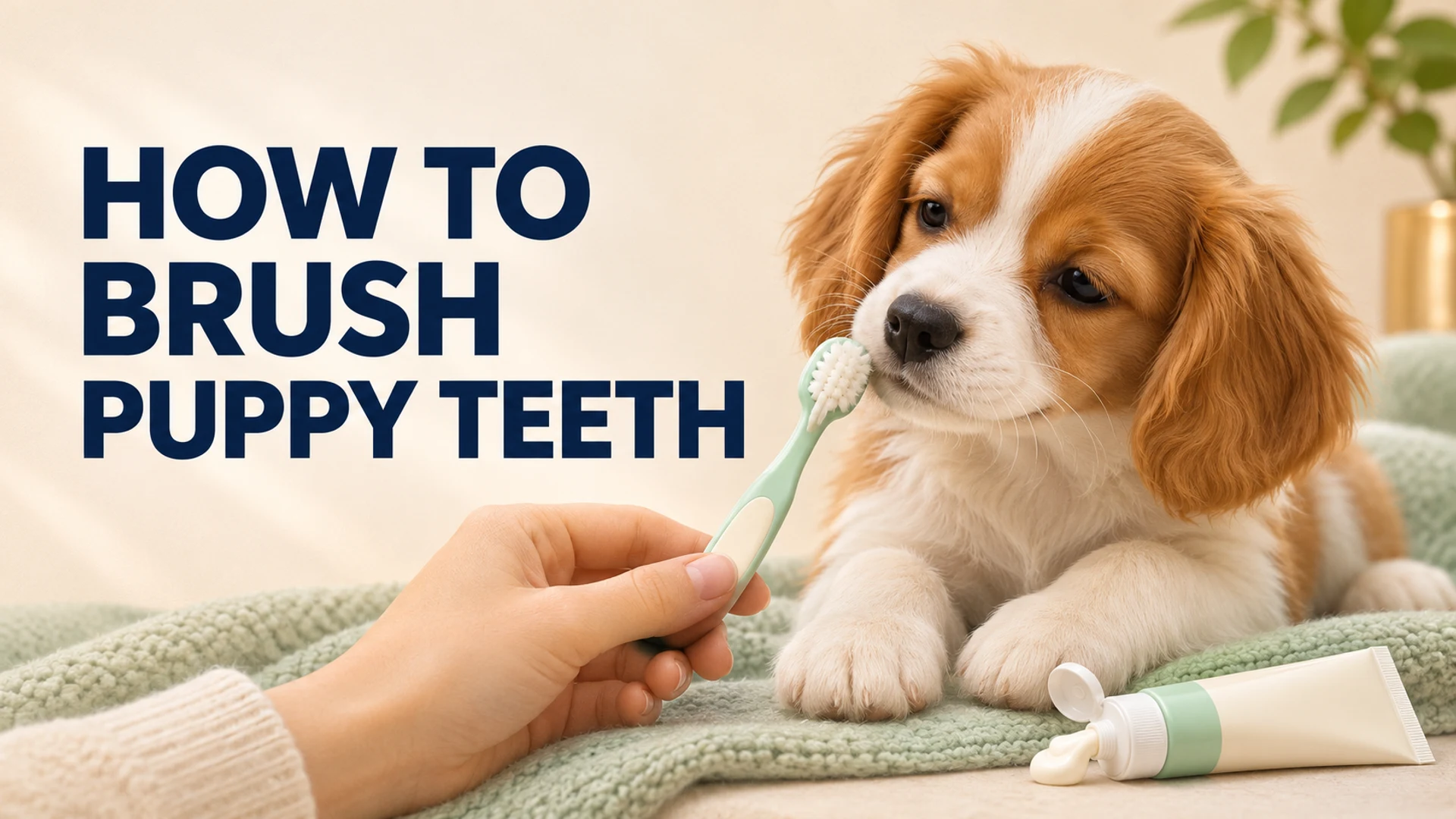
Teach puppy tooth brushing through small, comfortable steps: a brief lip lift, a taste of dog toothpaste, contact with a soft brush and then gentle brushing of accessible outer tooth surfaces. Build toward a regular daily routine without forcing the mouth open. Early practice is useful even when your first successful session includes only a few teeth.
Ask your veterinarian to check the mouth and demonstrate a suitable technique, especially if you are unsure about tooth alignment or the puppy is teething. Do not brush a painful mouth or push through swollen, bleeding gums, a broken tooth or reluctance to eat. Those changes need veterinary advice before another brushing attempt. Trouble breathing, choking or significant injury needs urgent help rather than a grooming session.
Choose products for a puppy rather than a person
Use toothpaste made for dogs and a soft brush that fits the puppy’s mouth. Ask your veterinary team to help choose the size and style; a finger brush is not automatically easier if the puppy tends to mouth your hand. Keep fingers and the brush out of a closing bite, and do not assume that a small puppy cannot cause an injury.
Human toothpaste and baking-soda mixtures are unsuitable substitutes. Human products are not intended to be swallowed, and some contain ingredients dangerous to dogs, including xylitol. Read the dog product’s instructions and discuss any food sensitivities with your vet before choosing a flavor. Avoid adding an essential oil or a homemade cleaning mixture to make the paste more appealing.
Give each pet a separate brush. Put the puppy’s equipment somewhere easy for the responsible adult to reach, away from children and other animals. Rinse the brush after use, let it dry and replace a worn or damaged brush. A puppy chewing bristles is not the same action as an adult gently brushing tooth surfaces.
Build up from a lip lift to a brush touch
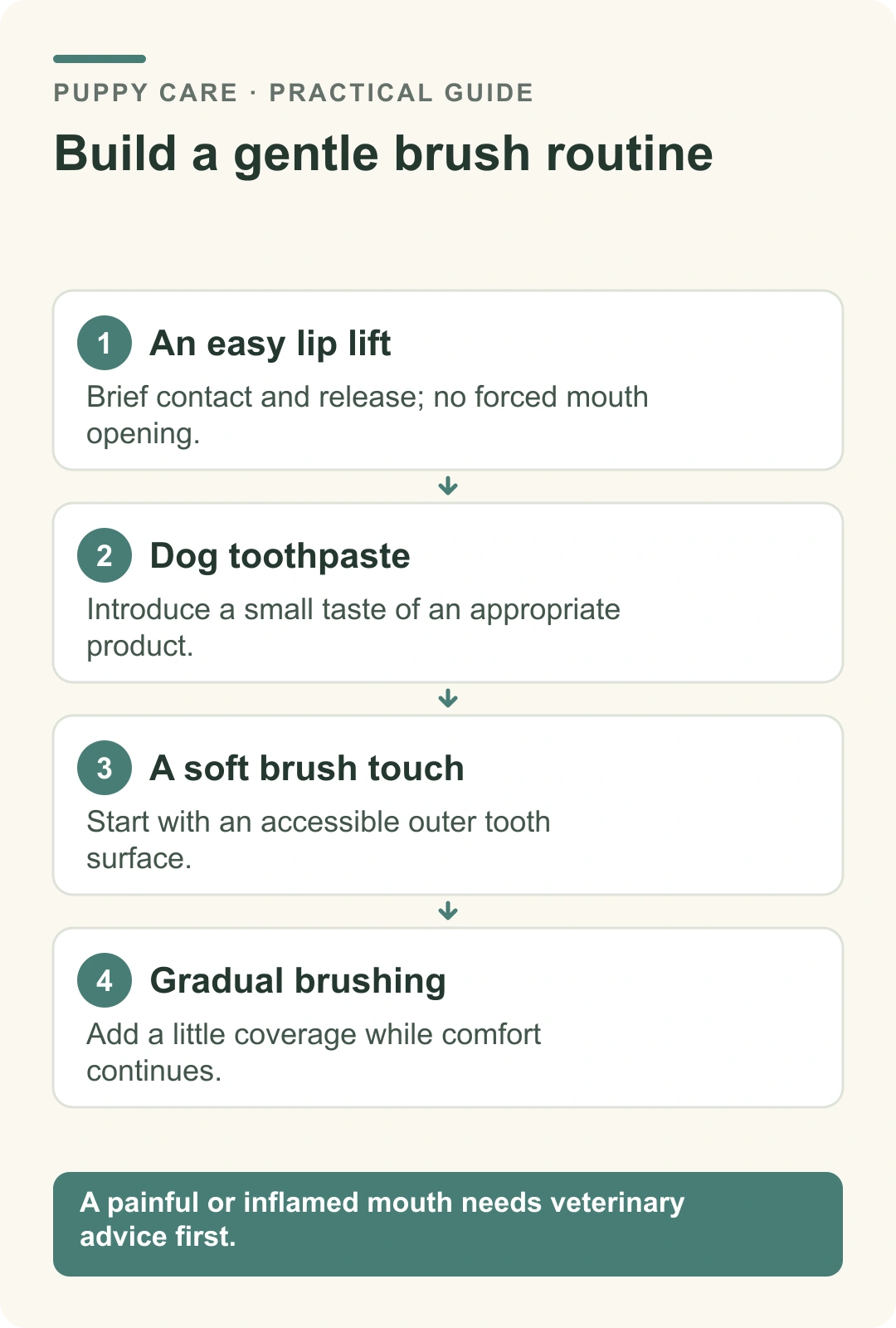
Choose a quiet moment and a stable, non-slip place where the puppy is comfortable. Start with your hand near the cheek, reward calm participation and remove the hand. On another easy repetition, briefly lift a lip enough to glimpse the outer teeth, then release. The puppy should be free to move away; the lesson is not how long you can hold their head still.
Introduce a small taste of dog toothpaste separately, following its directions. Let the puppy investigate the brush without turning it into a wrestling toy. Then touch the outside of one easy-to-reach tooth with the soft brush, reward and finish. If the puppy turns away, closes down on the brush or becomes tense, make the next attempt easier instead of pushing farther into the mouth.
Progress is based on the puppy’s response, not a strict day-by-day ladder. Comfortable cheek contact does not automatically mean the puppy is ready for the back teeth. Add either a little more contact or a little more reach, then assess the response. The dog language guide can help you notice when an apparently quiet puppy is actually trying to disengage.
Brush accessible outer surfaces gently
Once the puppy accepts a small brush touch, add a little dog toothpaste and lift the lip gently. Use light movements along the accessible outer surfaces near the gumline, following the technique your vet demonstrated. Do not scrub sore tissue, force the jaws apart or chase an inner surface the puppy cannot comfortably allow you to reach.
Start with a few teeth and pause while the puppy is still participating. Increase the area over repeated comfortable attempts until you can care for both sides. If one side seems newly sensitive, stop and ask about the change rather than using the other side’s tolerance as proof that everything is fine. Avoid turning a difficult session into an endurance test.
The aim is daily plaque control alongside regular veterinary dental assessment. AAHA’s home dental-care guidance distinguishes plaque removal from hardened deposits and warns against brushing inflamed gums. A toothbrush does not remove the need for professional examination or treatment, and a clean-looking front tooth does not reveal what is happening below the gumline.
Solve the sticking point without holding harder
If the puppy avoids the tube, separate the toothpaste introduction from touching the mouth and check the product with your vet. If they accept the paste but avoid the brush, return to a smaller brush contact at the front. If the lip lift itself is difficult, work on comfortable touch before adding tools. Each problem calls for a different adjustment.
A puppy who bites the brush may find it interesting as a toy or may be uncomfortable with the contact. End safely and look at what happened before the bite; do not force a conclusion from the bite alone. The puppy mouthing guide covers wider play and handling patterns, while this routine keeps its focus on voluntary dental care.
Stop for a sudden change in breath, eating, drooling or mouth sensitivity, even if a previous brushing session went well. Teething is a reason to ask about an appropriate routine, not permission to work across inflamed tissue. Your vet may advise modifying or pausing a step until the mouth has been assessed.
Comfort determines the next step If a lip lift or brush contact becomes difficult, return to the last easy action. Do not add more time and more reach together, and never treat pain as a training obstacle to overcome.
Keep dental products in their proper role
Suitable chews or dental products can support a veterinary care plan, but they do not make brushing practice or examinations unnecessary. Ask about the puppy’s age, size and chewing style before offering a product. A chew that is too hard, too small or damaged can introduce a separate hazard even when the packaging mentions dental care.
Avoid attempting to scrape tartar, pull a loose tooth or examine deeply under the gum at home. Those are not extensions of tooth brushing. If you notice two teeth sharing a space or an apparently damaged tooth, contact the veterinary team. Record what you saw without deciding that a baby tooth can safely be ignored because it will eventually fall out.
When the puppy willingly permits a brief image, PetMira’s mouth photo journal can hold it in the pet’s care record so you can review a visible change. The record can help you remember what to ask, but it cannot confirm dental health or assess pain. If the mouth is sore, make the veterinary call first and skip the photo rather than repeatedly trying for a clearer view.
Make tomorrow’s attempt straightforward
Choose a predictable, calm time and agree which adult is responsible for the routine. Keep treats within the puppy’s feeding plan; the puppy feeding schedule can help coordinate household food without adding an extra meal each time someone brushes. Put the clean brush away so the next person knows the session has finished.
If you miss a day, restart the usual manageable step rather than compensating with a long, forceful clean. If the puppy has become less comfortable, reduce the contact and consider whether a mouth change needs assessment. Consistency means returning to a useful routine; it does not mean continuing the same action regardless of the puppy’s response.
At a veterinary visit, describe which parts of the mouth the puppy accepts and what stops the session. “Allows a lip lift but moves away when the brush reaches the back” gives a clearer starting point than “hates teeth cleaning.” Ask for a demonstration and a realistic home plan. Individual anatomy and comfort matter more than matching another owner’s speed.
Build a routine the puppy can keep accepting
Start with an easy action, add gentle outer-surface brushing and let comfort guide how much you do next. Use PetMira for a permitted mouth-photo record when useful, while keeping pain, inflamed gums and dental treatment with your veterinarian. A regular routine grows from tolerable practice rather than a forced full-mouth clean.
Everyday care with PetMira
Build a gentle mouth-care routine
Explore everyday care guidance in PetMira and keep permitted mouth photos together when they help you describe a visible change.
 Explore the care encyclopedia
- Ask a focused everyday care question
- Use guidance alongside real-world observation
Available on iPhone. AI-generated information is for educational reference.
Download iOS App