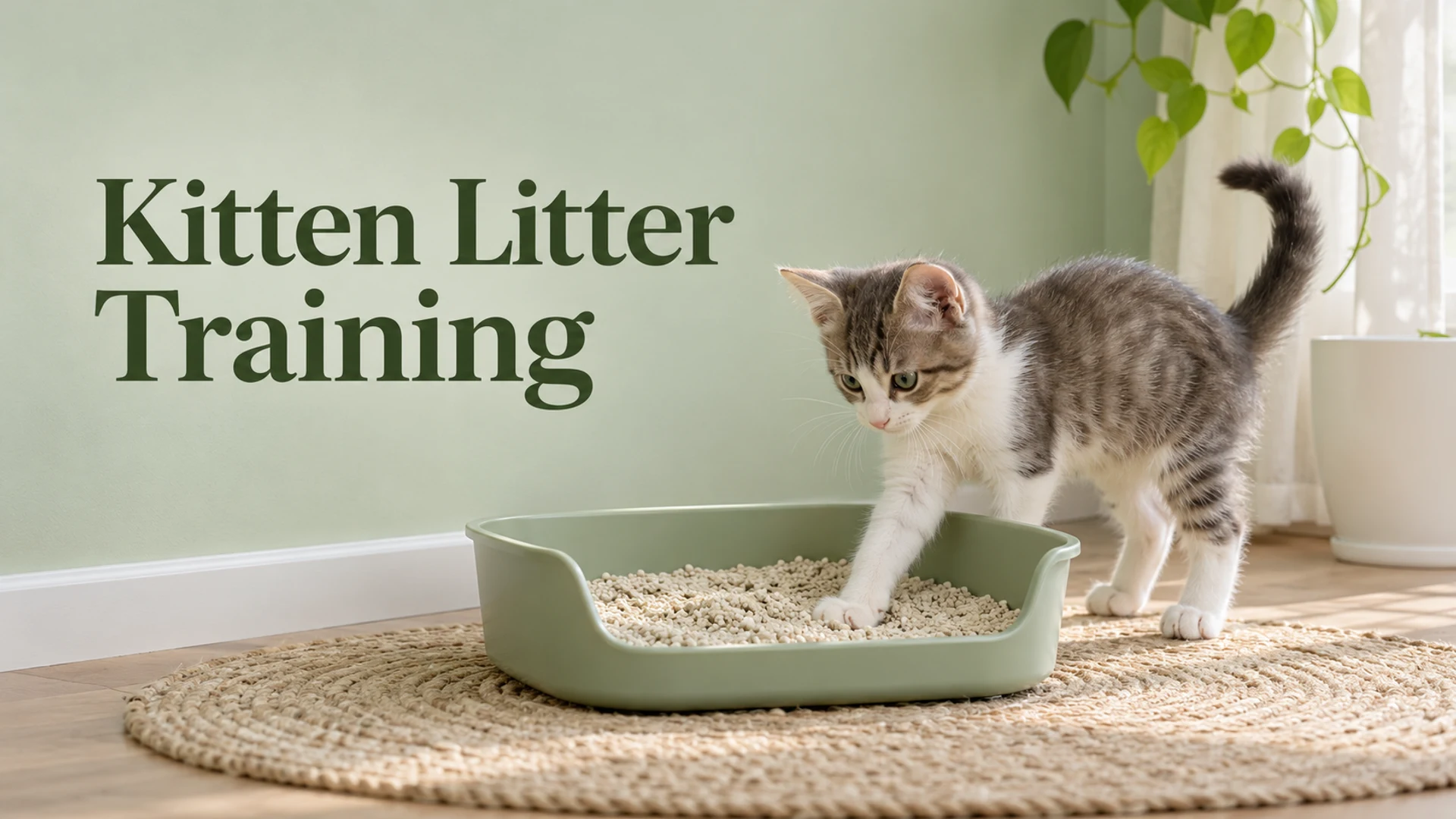
For a kitten who can toilet independently, litter training starts with an easy-to-enter box, familiar litter and a short, unobstructed route. Show the kitten the location, offer quiet opportunities after waking or eating, and let them investigate without restraint. Most of the work is arranging a place they can find and feel comfortable using, then adjusting that setup when an accident reveals a problem.
Very young orphaned kittens may still need a trained caregiver's help to eliminate. This guide does not cover neonatal stimulation. Ask a veterinarian or experienced rescue for an age-appropriate care plan if you are unsure whether the kitten can manage independently. Repeated straining with little or no urine needs emergency veterinary care immediately rather than more training. Contact your veterinarian promptly for painful urination even when urine is passed.
Set up a box your kitten can actually reach
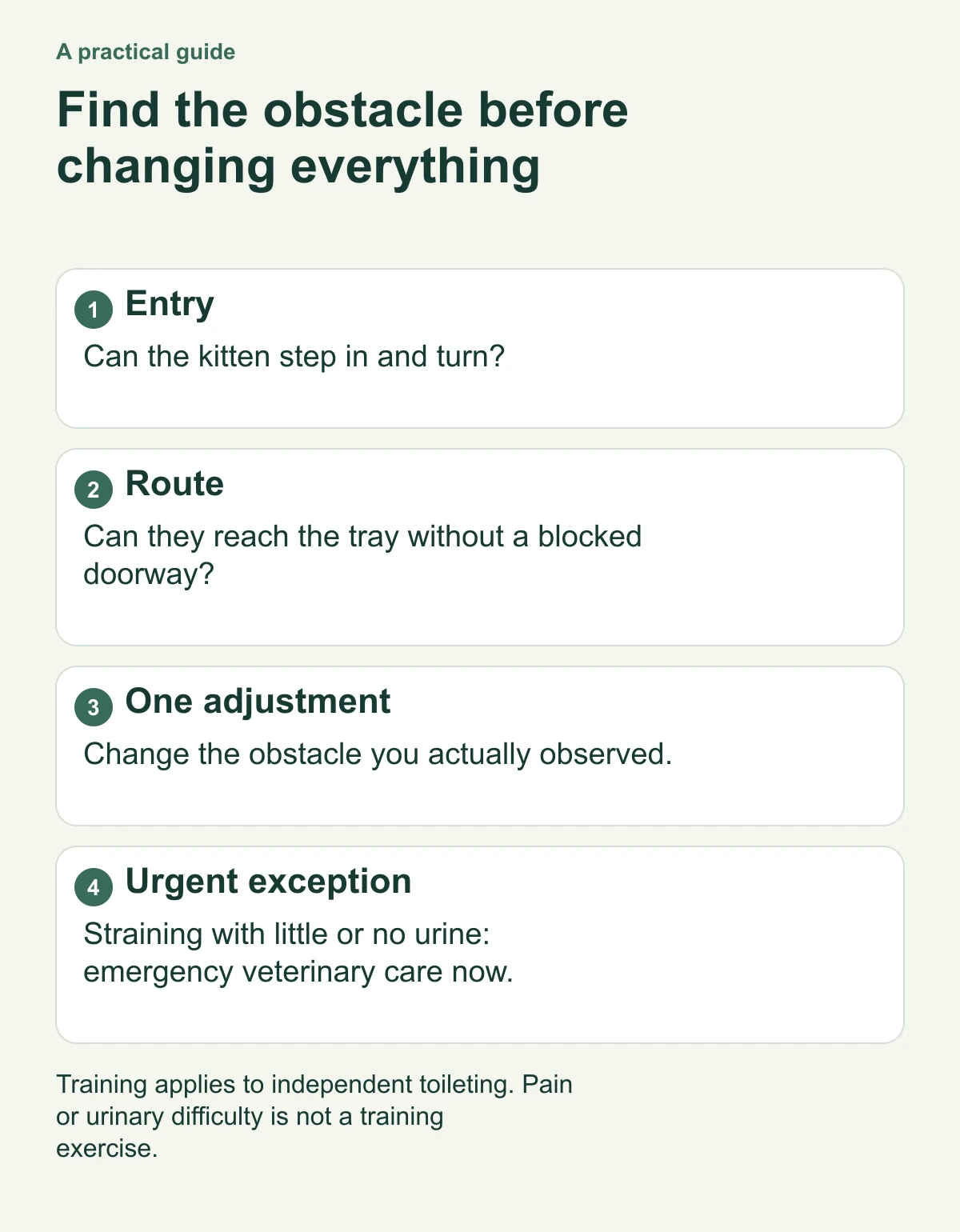
Choose an uncovered box with an entry the kitten can step over comfortably. Check the route from floor level: a high lip, slippery approach or heavy door can make a nearby box surprisingly difficult to use. The kitten should be able to enter, turn and dig without squeezing against the sides. A temporary low-sided tray may suit a small kitten while you arrange a more durable box.
Put it in a quiet, accessible location away from food and water. Quiet does not have to mean isolated behind a closed utility-room door. Avoid places where a washing machine suddenly starts, a person repeatedly steps over the kitten, or another pet can block the exit. Keep cleaning supplies, cords and laundry out of reach. If the kitten has a starter room, the box belongs inside that familiar space.
Start with the litter the kitten already knows when that information is available. If you need to choose something different, ask the shelter or clinic about a suitable kitten-safe, unscented option, particularly if the kitten tries to eat litter. Avoid changing the box, location and substrate together. A consistent starting setup makes an unsuccessful attempt easier to understand.
Introduce the location without moving their paws
Let your kitten explore the room and notice the tray. You can gently set a comfortable, easily handled kitten beside or inside it, then step back and let them leave. A frightened kitten should not be pulled from hiding for a demonstration. Keep the box easy to discover while they settle, and supervise without hovering over them.
A useful adjustment If you demonstrate digging, use your own fingers in clean litter. Let the kitten leave rather than holding their paws or keeping them in the tray.
If you want to demonstrate digging, move your own fingers through clean litter rather than holding the kitten's paws. Do not push their bottom down, rub their nose in an accident or keep returning them to the box while they struggle to get out. Those actions do not explain the task and can make the location unpleasant.
Watch what happens next. A sniff followed by leaving is an introduction, not a failed toilet trip. If the kitten digs, eliminates and steps out comfortably, give quiet praise or an appropriate small reward once they have finished. Keep the moment calm; the goal is for the kitten to feel undisturbed while using the box.
Offer opportunities around the kitten's routine
After waking, eating or an active play period, make sure the kitten has a clear route back to the tray. A brief, calm opportunity is more useful than waiting until they are already squatting across the room. Sniffing a corner, scratching the floor or repeatedly circling may be a reason to guide them toward the box, while remembering that no single movement predicts a toilet visit every time.
Begin in a manageable, kitten-safe area. As your kitten uses the tray reliably and explores confidently, offer another room with an accessible box rather than suddenly opening the entire house. A kitten who has just discovered the sofa may not remember how to find the original tray behind several doorways. Extra locations can solve a navigation problem without asking them to hold on longer.
If several people share care, agree on where the boxes stay and how you respond to an accident. One person repeatedly moving the tray out of sight can undo another person's careful setup. Our first-week kitten care guide covers the wider starter-room arrangement; here, use successful independent trips to decide whether the toilet setup is working.
Use the accident to choose one adjustment
Clean an accident with an appropriate pet-urine enzymatic cleaner, following the product directions and keeping the kitten away until the area is ready to use. Do not mix cleaning products. Then look for a practical explanation: was the box dirty, did a door close, did the kitten avoid stepping over the edge, or was another animal nearby? Punishment after discovering a puddle gives you no answer to those questions.
What you noticed | One useful adjustment | What to watch next |
|---|---|---|
The kitten stops at the box edge | Offer an easier entry | Can they step in and turn comfortably? |
Accidents happen in a newly opened room | Add an accessible tray there | Do they find it without being carried? |
Another pet waits beside the tray | Separate access and add locations | Can the kitten enter and leave freely? |
The kitten enters repeatedly but cannot pass urine | Seek emergency veterinary care now | Do not treat this as a setup experiment |
Try one relevant change and observe the next opportunities. For example, if a kitten uses the tray in their room but has accidents upstairs, a second tray upstairs is a clearer test than simultaneously replacing the litter and buying a covered box. Write down which location they used so that a later improvement can be connected to an actual change.
Keep the box clean and the record useful
Remove waste regularly and check the box more often during the learning period. Wash and refresh it according to the tray and litter instructions, using products suitable for the purpose. Strong perfumes or a newly scented substrate can change a familiar toilet into something the kitten avoids. When a box becomes too small, introduce a larger accessible option without immediately removing the place they trust.
Keep observations simple: time, box location, whether urine or stool appeared, and any visible discomfort. A note saying “entered twice, no urine seen, crying” matters more than a label such as “being naughty.” If the kitten calls around a visit, our guide to meowing after the litter box explains how to describe when the sound happens without guessing its cause.
For a comfortable kitten with an ordinary stool change, PetMira's daily care log on iPhone can keep a stool photo in the kitten's profile for later comparison. Record the time and what you observed separately if needed. A photo cannot diagnose the cause, and taking one must not delay a call when the kitten seems unwell.
Know when training is no longer the main question
A kitten who repeatedly avoids the box may have a preference or access problem, but discomfort and illness also need consideration. Contact your veterinarian if accidents persist despite an accessible clean setup, if toilet habits change suddenly, or if you notice diarrhea, constipation, blood or pain. Describe the observations and the changes you tried rather than deciding in advance that the kitten refuses to learn.
Seek emergency veterinary care now for repeated straining with little or no urine. A kitten who is weak, markedly distressed or otherwise acutely unwell also needs urgent veterinary assessment. Do not wait for another successful training session. For a healthy, independently eating kitten, keep meals predictable using the kitten feeding schedule guide, while leaving any feeding or medical changes to their individual care plan.
What a successful setup looks like
Your kitten can find a clean box, enter and leave comfortably, and use it without being held or interrupted. Keep that successful arrangement steady as their space grows, change one obstacle at a time, and treat pain or difficulty passing urine as a veterinary question rather than a training setback.
Everyday care with PetMira
Keep kitten care observations together
PetMira on iPhone offers a digital pet profile and daily care image logs, including stool photos, so ordinary changes are easier to find and compare.
 Keep stool images with your kitten’s profile
- Explore everyday care guidance
A care log organizes observations; repeated straining with little or no urine needs emergency veterinary care now.
Download iOS App