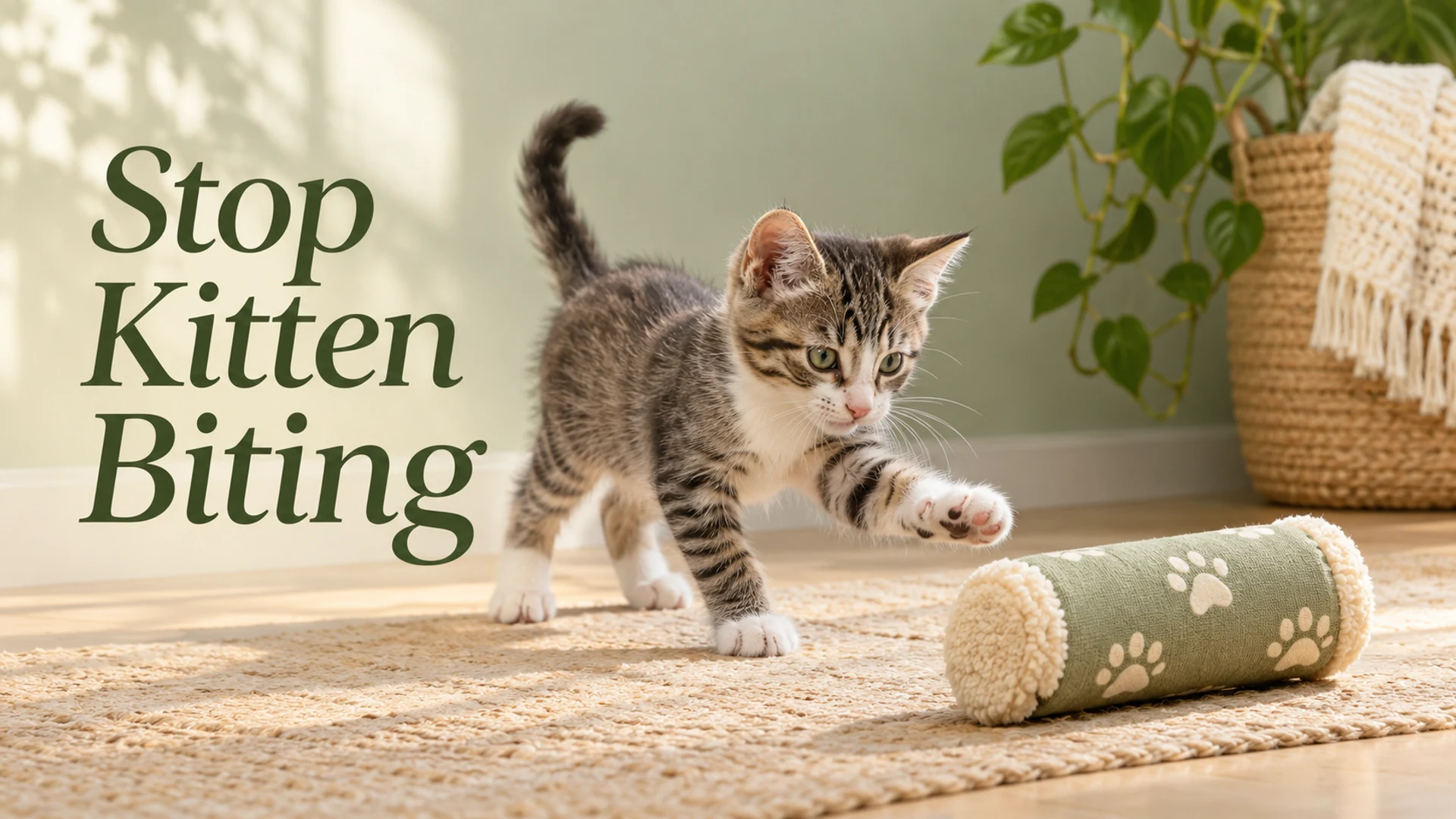
To reduce playful kitten biting, keep hands and feet out of the game, offer an appropriate toy before the kitten grabs you, and pause interaction when teeth contact skin. Build regular chances to chase, pounce and rest so the kitten can practice normal play without using people as prey. Everyone in the household needs to follow the same response.
This plan is for ordinary play and handling-related nipping, not a kitten who suddenly seems painful, frightened or unsafe to approach. Give a distressed kitten space and contact your veterinarian about an abrupt behavior change, injury or escalating aggression. If a bite breaks a person's skin, clean the wound and seek prompt medical advice; an animal's small size does not make a puncture harmless.
Work out what happens just before the bite
Watch one everyday situation rather than testing how much the kitten will tolerate. Does the kitten ambush moving ankles, catch fingers during a game, or turn toward a hand after several strokes? Those patterns suggest different changes to the setup. A kitten chasing a slipper needs a play outlet and safer movement through the room; a kitten biting during petting needs the touch to stop sooner.
Record the sequence in plain language: “chased my sleeve when I stood up,” “bit after I touched the belly,” or “grabbed fingers held close to a toy.” Do not turn a single event into a conclusion about spite or dominance. Body posture, nearby activity and the kitten's opportunity to leave give the bite more context than its intensity alone.
Our cat language guide can help you notice tension and disengagement. If the kitten goes still, turns away, repeatedly flicks the tail or watches your hand closely, pause and let them choose what happens next. You do not need to wait for a bite to discover the limit of that interaction.
Change what the kitten is allowed to chase
Use toys that put useful distance between teeth and human skin. A wand toy lets the kitten follow a moving target away from your fingers. A suitably sized soft toy can give them something to hold and kick. Keep strings and wand toys out of reach when play is over, and remove damaged objects or loose pieces that could be swallowed.
Move the toy like a target the kitten can stalk and catch, with occasional pauses. Waving it continuously at their face can produce grabbing without a clear opportunity to succeed. Let them catch the toy, then reset the game without pulling it through their mouth. Finish before the kitten is so excited that they keep missing the target and catching your hands instead.
Do not wriggle fingers beneath a blanket or invite attacks on bare feet, even when the kitten's teeth feel small. Those games teach a target you will later want to remove. If someone enjoys rough hand play while another person tries to discourage it, start by changing the human game rather than expecting the kitten to follow contradictory rules.
Use a calm response when teeth meet skin
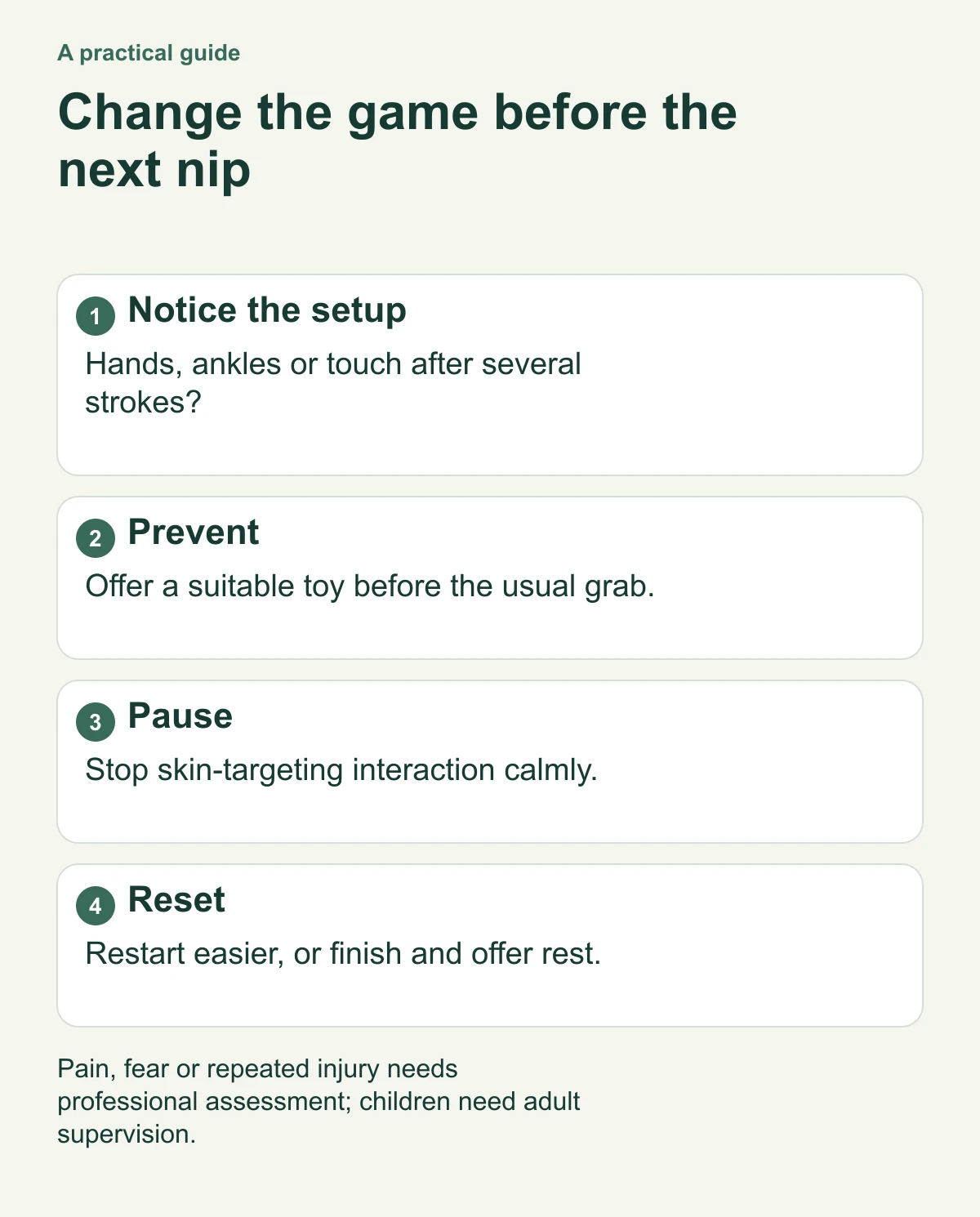
If you can do so safely, stop the movement that is making your hand or clothing an exciting target. Avoid jerking it back and forth or wrestling with the kitten. Calmly create space and pause attention. Do not hit, scruff, spray water, hold the mouth shut or deliberately frighten them. Physical punishment can add fear to an already difficult interaction.
A useful adjustment Offer the safe game before the usual ambush. If each bite immediately starts an exciting toy routine, pause and move that opportunity earlier next time.
When the kitten has disengaged, reset with an appropriate toy and a calmer version of the activity. The aim is not an elaborate reward sequence after every bite. It is making the safe game available early, stopping the skin-targeting game and arranging the next attempt so the kitten can choose the toy instead.
If the kitten immediately returns to grabbing, end that play attempt and use a safe room arrangement or barrier to give both of you space. Check whether they need rest, ordinary food or a different activity. Repeatedly restarting an exciting chase can keep the same problem going. If you cannot separate safely or the behavior is causing injuries, seek qualified help rather than adding stronger corrections.
Prevent the ankle ambush before it starts
An ambush often happens at a predictable point: you cross the hallway, climb into bed or walk past the sofa. Keep a suitable toy near that route and offer a short play opportunity before the usual rush. Secure loose, trailing clothing where practical. In a busy household, a kitten-safe area during a difficult transition can prevent repeated rehearsals while you work on a better routine.
For example, if the kitten catches your ankles every evening while you prepare dinner, arrange a short toy session before cooking and a comfortable rest area afterward. Do not try to run away faster or kick at the kitten. Compare whether the same hallway trip becomes easier after the routine changes, rather than judging progress by an unrelated quiet afternoon.
Give children a simple rule: hands stay still, toys do the moving, and an adult helps end the game. Closely supervise interactions and separate when needed. A child should not be responsible for redirecting a kitten who is already grabbing their face or legs. Safer management comes before practicing a training technique.
Common setup | Change before the next attempt | Look for progress |
|---|---|---|
Fingers beside a small moving toy | Use a toy that keeps hands farther away | The kitten catches the object, not skin |
Ankles attacked during a routine hallway trip | Offer play before that transition | The same trip happens with less pursuit |
Biting after repeated strokes | Shorten touch and allow departure | The kitten can leave before getting tense |
Repeated grabbing late in an active session | End sooner and offer rest | The next session begins at a manageable level |
Make handling shorter and easier
Try a brief touch when the kitten is relaxed and able to leave. Stop while it is still comfortable. If you need grooming or a veterinary handling routine, break it into small voluntary steps and ask the veterinary team for guidance. Gripping the kitten tighter when they turn toward your hand can make the next handling attempt harder.
Do not assume every bite during handling is a training issue. Pain, dental discomfort or fear can change how a kitten responds, and the same location may be uncomfortable on more than one attempt. A sudden or localized reaction deserves a conversation with your veterinarian. Avoid repeatedly touching the area to prove that you can reproduce the bite.
PetMira's care encyclopedia includes everyday behavior and training topics, which can help you organize questions about your play setup. Keep the actual sequence of an incident in a short note wherever you can find it. An AI response does not assess bite risk or replace a veterinarian or qualified feline behavior professional when handling is unsafe.
Judge progress in the situation you changed
Choose one repeatable target, such as a short wand-toy game without skin contact. Notice whether the kitten can engage with the toy, pause and finish calmly. Several easier attempts provide a better reason to increase play intensity than one unusually sleepy session. If grabbing returns, shorten the next attempt or make the toy easier to catch.
Keep ordinary care predictable using the first-week kitten care guide, and check why kittens meow when calling accompanies an unmet need. Neither more excitement nor punishment is a universal answer. Adjust the part of the routine that actually precedes the biting.
Keep the rule easy to repeat
Give your kitten a clear, satisfying game with toys, end skin-targeting play calmly and prevent the next predictable ambush. Progress comes from consistent, manageable interactions; pain, fear, repeated injury or a sudden change calls for professional assessment rather than a tougher response.
Everyday care with PetMira
Plan calmer everyday kitten interactions
Explore PetMira’s care encyclopedia for everyday behavior and training topics, then adapt your play setup to the kitten you are observing.
 Explore everyday behavior guidance
- Keep a digital profile for your kitten
Repeated injury, fear or a sudden behavior change needs qualified individual help.
Download iOS App