
To pick a dog breed, start with the daily care your household can reliably provide. Write down the limits you cannot change, try running your plan through an ordinary weekday, then meet dogs whose actual habits fit it. A breed name can narrow the search. The specific dog’s age, history, and response to your household decide whether the match works in practice.
Start with limits that could rule a dog out
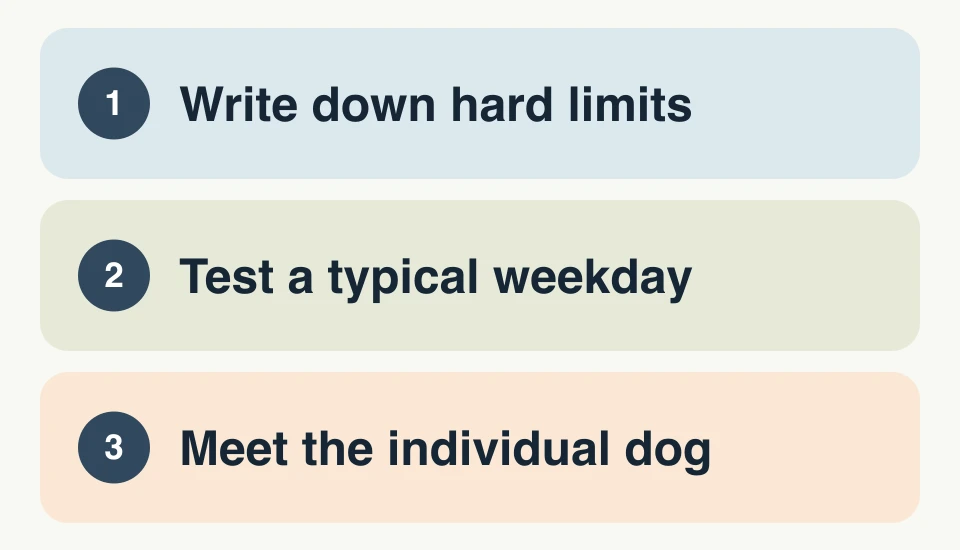
Make a list with three columns: fixed limits, things you can change, and things you simply prefer. Fixed limits include what your lease allows, stairs the dog must be able to use comfortably, and a work schedule nobody else can cover. Things you can change might include where the dog rests, who takes an early walk, or whether you pay for midday help. A favorite coat color belongs in preferences. Put a limit in the fixed column only after checking that it is real. If the building sets a size or breed restriction, get the wording before making assumptions from an adoption picture.
Decide who would physically manage the dog with one hand while holding a door or taking a call. Then think about transporting the dog. Can you fit a carrier or safe vehicle restraint into the car? Can you get the dog to a vet if it is unable to mount the usual step? This is where assumptions about size break down. A small dog can be more persistent about barking than a neighbor expects. A large adult can be calm indoors and still need enough space for safe transport and a person who can manage it outside.
When this is a hard limit | Ask this first | Good next move |
|---|---|---|
Shared walls | What sounds prompt barking, and for how long? | Ask for observations from a home setting |
Long shifts | Who handles daytime breaks every week? | Confirm routine help before applying |
Stairs or limited lifting | Can the dog manage your normal route? | Consider adult size and ease of transport |
Limited grooming budget | What maintenance does this coat require? | Call a groomer with the actual size and coat |
Children or other pets | Has the dog lived with a similar household? | Plan a managed introduction with staff |
Test the plan on a weekday
Take your most difficult regular day, then put the dog's activity, bathroom breaks, feeding, and quiet time into the schedule. A realistic plan specifies people, places, and time. If a walk depends on a partner getting home early, write down what happens on days when they do not. If the dog would need help settling while you work, decide where that would happen and what a visitor arriving at midday does. Make a plan for bad weather and the weeks when you cannot drive to an open space.
Now separate time from intensity. A household with a free half hour before work may enjoy a dog that goes on a steady morning walk, while a dog that becomes frustrated without more frequent engagement could call for a different plan. Breed groups can prompt useful questions about jobs such as retrieving or following smells. Ask staff or a breeder about the particular adult, or about dogs raised by the same breeder, before you assume a general description applies.
Make the backup concrete Write the name of the person or service that will handle a midday break on your busiest days. If you cannot fill in that one line, change the schedule before you change the breed shortlist.
Turn preferences into a shortlist you can check
Pick two or three candidates and give each the same questions. If you are drawn to a smaller dog, compare mature size and how it reacts to sounds in an actual home. If you like a more active dog, find out how it behaves after a walk. A dog can be easy to engage outdoors and have trouble putting itself to bed when the day ends. Ask what a walk looks like when another dog is across the street, when a child runs by, and when the usual walker has changed. Compare candidates on the physical traits and care needs you can check directly.
Puppies make some of the adult traits harder to assess. If you want a puppy, budget for early toilet breaks, supervision, training, and changes as the dog matures. Check a sample puppy toilet schedule to see how often someone may need to be available at first. For some households, a fostered adult with known home habits reduces that uncertainty. If you choose a breeder, request the parents’ health testing appropriate to that breed and ask how the puppies are raised. If you choose a rescue, ask what the volunteers know about vet records and behavior outside the kennel. Put gaps in a separate column so that enthusiasm for an animal does not accidentally turn an unknown into a positive answer.
Test the shortlist against the support you can afford
Ask one local groomer what they would charge for a dog of the size and coat you are considering, and how far in advance they normally book appointments. Ask a vet clinic or shelter about the routine care covered in your situation and what records will come with the dog. Put regular expenses and one-off equipment costs on different lines. This makes two candidates comparable even when both adoption profiles say they are easy to care for.
If you use a breed selector quiz, save the answers you gave as well as the results. Change only one answer, such as how much activity you can reliably provide, and see how the shortlist changes. Treat large changes as prompts to check your assumptions with a person who has lived with the dog.
Observe the dog at a meeting
Tell shelter staff or the breeder what you wrote on your schedule. They may know that a dog you had overlooked already spends part of the day resting while its foster works. During introductions, let the dog choose to approach. Watch how it moves away, comes back, and settles after mild activity. A lively first minute can reflect the setting. What happens after the excitement often gives you a better question to ask.
If another dog lives with you, ask how introductions are handled and what the organization has already observed. Plan separate spaces when necessary. If you have children, explain the management you can provide rather than asking for a breed guarantee. That can include gates, an adult supervising interactions, and a place the dog can retreat. Learn to notice when a dog has had enough with our guide to dog communication.
After adoption, give yourself a way to tell whether the plan is working. Keep a simple note of feeding, walks, and toilet breaks to see where your schedule needs adjusting. If you spot changes you can photograph, such as in your dog’s coat or skin, PetMira’s iPhone app can keep those photos in a separate care log. Together, these records describe the individual dog in your home.
The takeaway
Pick a dog breed after you have a realistic care schedule and a short list of requirements you can explain to a shelter or breeder. Meet candidates and ask what the individual dog has actually done in situations like yours. A short list of good fits and clear unknowns makes for a stronger decision than a ranking.
Once your dog comes home
Start a photo care record with PetMira
On iPhone, log visible details such as skin, ears, and fur as you get to know your new dog.
 Log visible care details with photos
- Keep a care record for your own dog
Keep feeding, walks, and toilet breaks in a separate routine log.
Download iOS App