
Different dog breeds are often grouped by the work or roles their ancestors were developed for. The American Kennel Club uses seven groups, including Sporting, Hound, Working, Terrier, Toy, Non-Sporting, and Herding. Those names help you navigate a list of breeds. Adult size, coat care, and the way a dog uses its energy are separate questions, even within one group.
A Beagle and a Greyhound both belong to the Hound Group, for example. The Beagle hunts by scent, while the Greyhound is a sighthound. The connection explains why they appear under the same heading in a directory. The distinction explains why the heading cannot tell you how either dog will use its time on a walk.
The main dog breed groups at a glance
AKC group | Breed examples | Trait to compare |
|---|---|---|
Sporting | Labrador Retriever, English Springer Spaniel | Retrieving, searching, and exercise |
Hound | Beagle, Greyhound, Dachshund | Scent or sight, size, and pursuit |
Working | Boxer, Siberian Husky, Newfoundland | Size, strength, and original jobs |
Terrier | Cairn Terrier, Border Terrier | Small-game work and handling |
Toy | Chihuahua, Toy Poodle | Small scale and coat care |
Non-Sporting | Dalmatian, Standard Poodle | Varied histories and care needs |
Herding | Border Collie, German Shepherd Dog | Movement awareness and training |
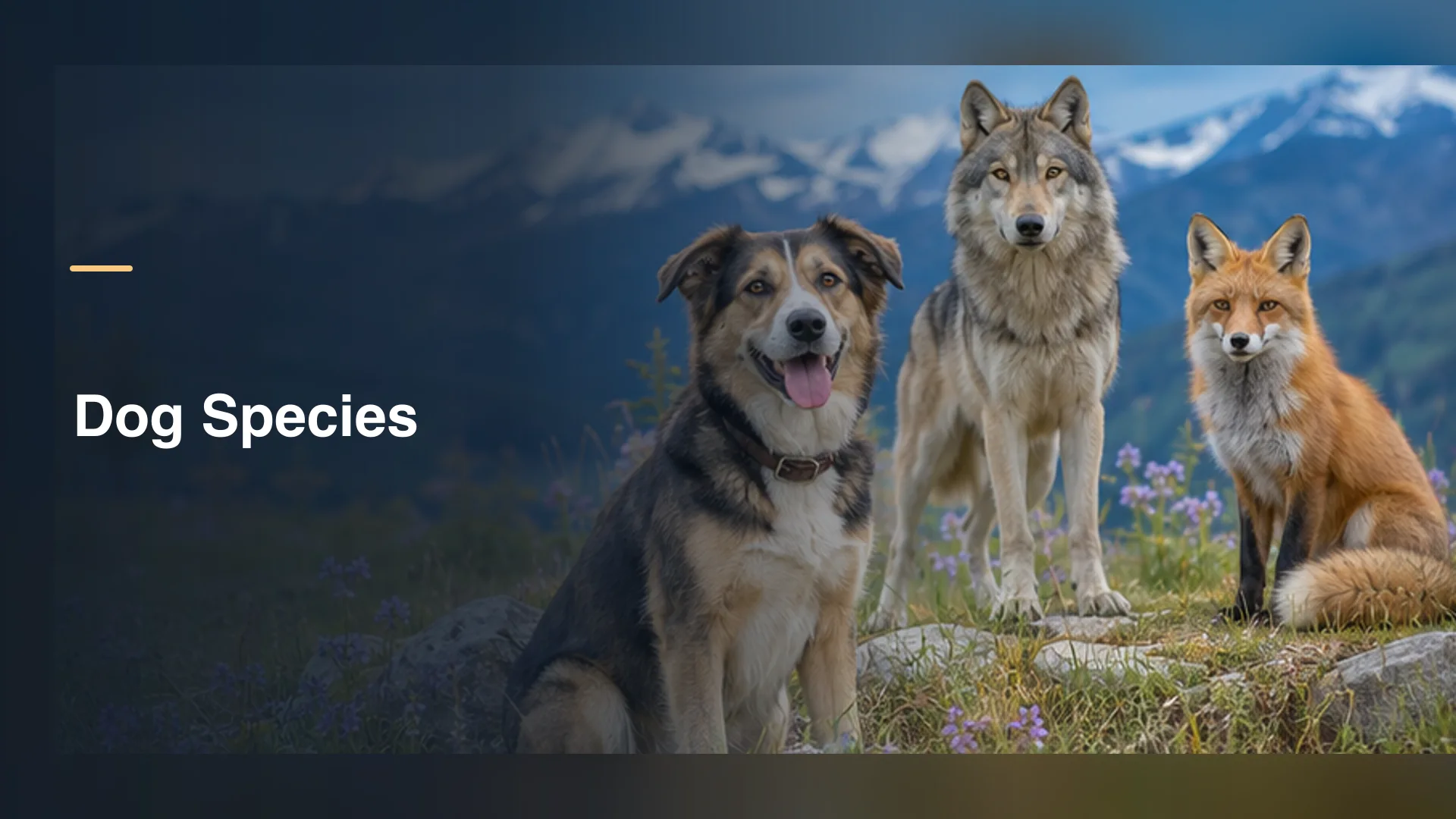
The groups reflect the registry’s way of organizing breeds. Other registries can file a breed differently or give a group a different name. Check which registry a chart uses before treating two columns as equivalents. The AKC classification also illustrates why labels such as small dog or family dog should sit in a separate column. Those are descriptions that can cut across multiple groups. For the broader classification, see how domestic dogs, wolves, and other canids fit together.
How to read the differences between groups
Sporting and hound examples
A Labrador Retriever has a history of retrieving game. That gives you a meaningful starting point for understanding an interest in carrying objects or working with a person. An English Springer Spaniel gives you a second Sporting example with a different job history and a different coat to maintain. Looking up both profiles makes it easier to see how shared working history can sit beside obvious differences in grooming and build.
The Hound examples pose a different question. A Beagle may be absorbed by a scent trail. A Greyhound is built to pursue by sight and can put on speed quickly. A Dachshund has a low, long body and a history of hunting in burrows. The work clues help you read how each breed developed, while size and movement explain why the same equipment will not fit them all. On a walk with an unfamiliar dog, observe how readily it disengages from an interesting smell or moving object before you infer what it will do next.
Working, terrier, and herding examples
The Working Group groups dogs with jobs as varied as pulling sleds, guarding, or assisting people in water. A Siberian Husky and a Newfoundland are both Working dogs, yet their silhouettes, coats, and typical work settings look different. A Boxer offers another contrast within the same group. If you compare these breeds on one page, note the job and the physical features separately so you retain the useful distinctions.
Terriers historically did work such as pursuing vermin, often at close range or underground. A Cairn Terrier illustrates that a compact dog can still have a strong interest in investigating small movements and holes. The Border Terrier illustrates how two dogs with a similar job history may still show different coat texture, shape, or behavior as individuals. Look for the traits that matter to your question, and get a separate account of the dog’s behavior away from a show or staged photo.
Herding breeds were developed to move or manage livestock. A Border Collie and German Shepherd Dog share that broader heritage while differing in build and working histories. Motion is a useful thread to watch when learning about this group. Observe where the dog looks when something changes direction and how easily it settles afterward. If you are interpreting a particular dog’s behavior, the guide to dog body language will help you read those movements in context.
Toy and non-sporting examples
A Chihuahua and a Toy Poodle are both in the AKC Toy Group. Their small size is easy to see, but coat maintenance is a separate commitment. The Standard Poodle appears in Non-Sporting, with a very different scale despite sharing the Poodle name. This is a good example of why it helps to read both the variety name and the directory heading before comparing two profiles.
Non-Sporting is also broader than any single job description. A Dalmatian and Standard Poodle have different physical traits and histories despite appearing on the same list. A group name is the starting point for browsing. The breed’s own profile contains the details that tell you what distinguishes it from its neighbors.
Compare the same trait on both profiles If one breed profile describes shedding and another describes grooming frequency, look up the missing dimension before deciding they are opposites. A coat can shed relatively little and still require regular maintenance.
Use three separate questions to compare breeds
First consider scale. Compare an adult dog’s height and usable space needs separately from its weight. An adult Greyhound may need room to turn or stretch even if its narrow body looks light in a picture. Next consider care. What type of brushing, trimming, or equipment fitting does the dog in the profile require? Finally consider the activity pattern. General exercise needs and the ability to relax indoors describe two different parts of the day.
These distinctions are useful for mixed breeds too. A rescue listing might provide an estimated breed alongside better documented observations about leash walking, settling, or coat care. Use the latter for the immediate decision. When the question is how one particular dog should be described, see the guide to photos and records for identifying a dog breed. A breed directory answers what a recognized term means. It cannot verify that the dog in front of you belongs to that group.
One way to make a breed directory feel less overwhelming is to follow a single physical trait across group boundaries. For example, compare a Cairn Terrier’s wiry coat with a Standard Poodle’s curly coat and a Beagle’s short coat. Each has a recognizable look, but the differences also give you practical questions about cleaning, brushing, and scheduling grooming. Ask the foster what the dog tolerates and how often it has needed care. This exercise lets you compare one day-to-day responsibility at a time instead of trying to rank all breeds together. If you are deciding which dog to bring home, use a shortlist based on the care your household can provide.
The most useful way to read a breed list
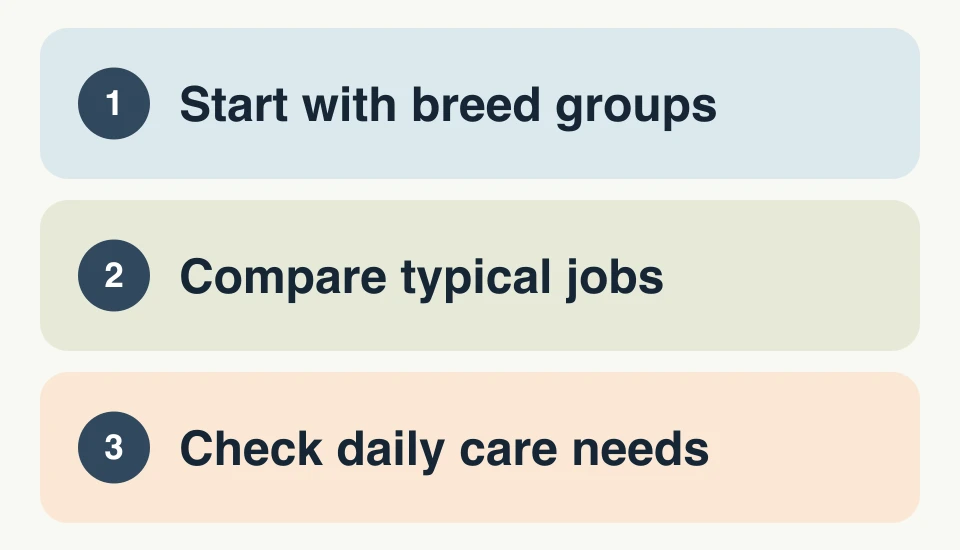
Start with the group to understand why breeds are listed together, and then compare actual care, scale, and activity traits beyond the group label. If your interest started with a photograph, PetMira’s iPhone app can suggest domestic dog breeds to look up. Treat the result as a reading list and keep any statement about the dog’s documented breed separate.
Explore a dog’s appearance
Compare a dog photo with PetMira
Use a clear domestic dog photo in the iPhone app to find possible breed profiles to read. Check any suggestion against the individual dog’s records and visible features.
 Start with a clear dog photo
- Find breed profiles to compare
Photo matches can suggest starting points for research.
Download iOS App