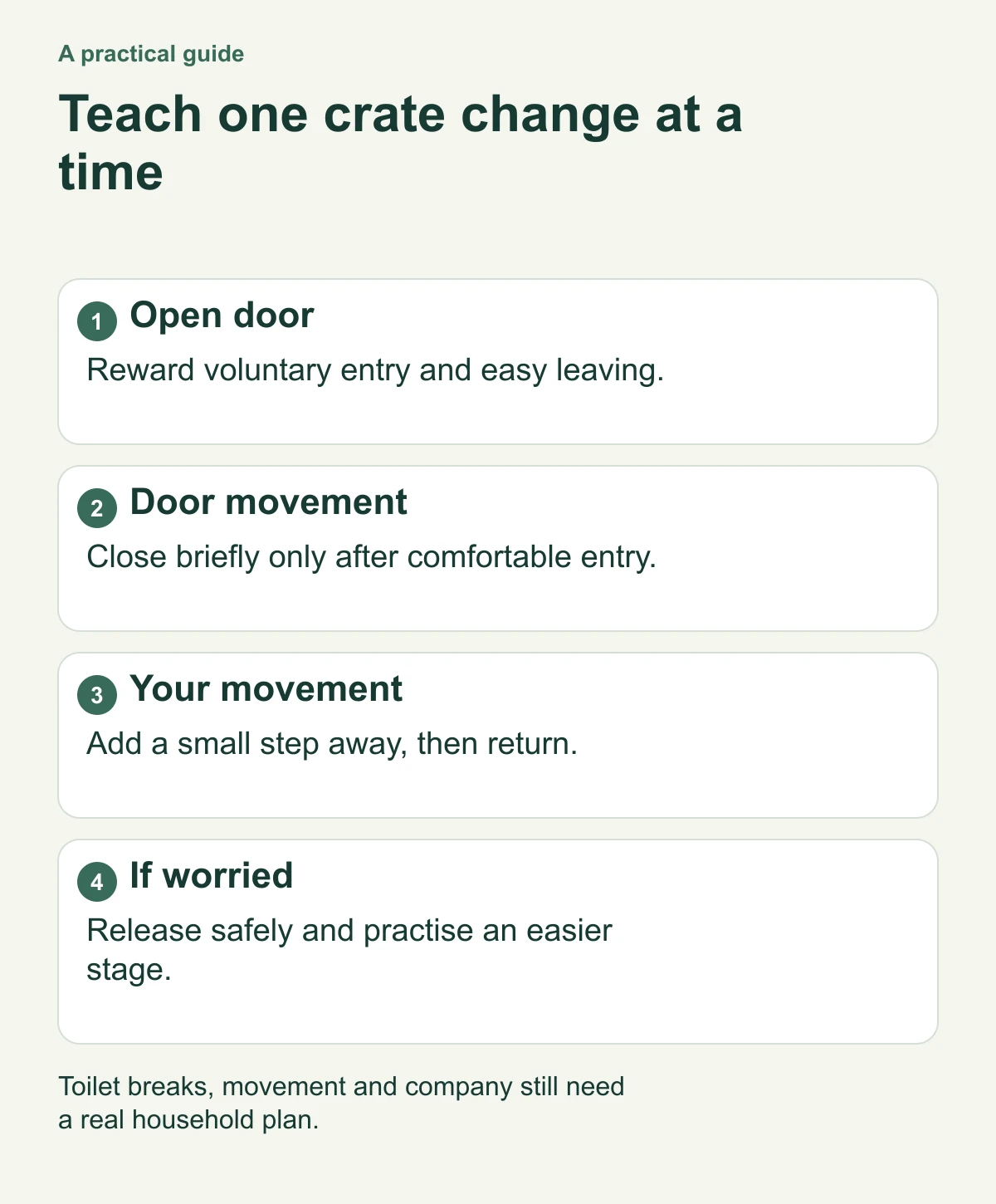
Puppy crate training works best when the puppy learns that entering, staying and leaving are safe, predictable choices. Start with the door secured open, reward voluntary investigation and add door movement only after the puppy is comfortable inside. Build duration and distance separately. A quiet puppy who is frightened or shut down has not necessarily learned to relax.
A crate is one management option, not a requirement or a way to make a puppy tolerate an unsuitable workday. Young puppies need frequent toilet breaks, movement and company. If your puppy panics, tries to escape, becomes increasingly distressed or might injure themselves, let them out safely and seek help with the plan rather than waiting for them to give up.
Choose a safe setup before starting practice
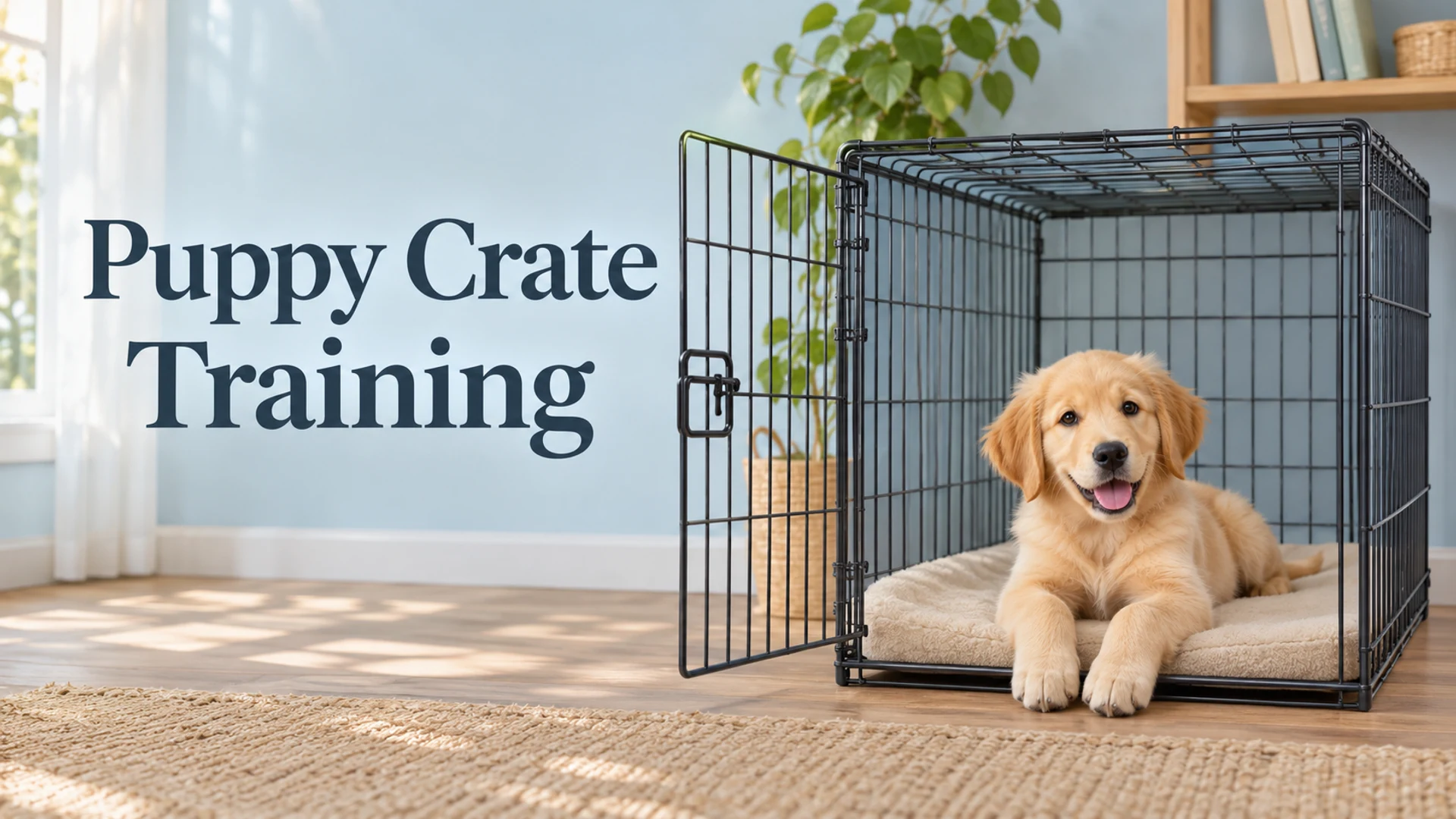
The crate should allow your puppy to stand naturally, turn around and lie comfortably. Check that the door and fittings are secure and that there are no sharp edges. Position it in a comfortable, ventilated area where the puppy can be near ordinary family life without being surrounded by noise. Avoid direct sun, drafts and a place where someone repeatedly bumps the door.
Keep fresh drinking water accessible in a suitably secured non-spill bowl, and plan toilet breaks around drinking rather than restricting water to extend confinement. Remove collars, tags and other equipment that might catch on the crate. Choose bedding and toys according to how this puppy uses them, and supervise unfamiliar items. A soft blanket is unsuitable if the puppy tears it apart and swallows pieces. If you cover part of the crate, keep ventilation clear and make sure the puppy cannot pull the material through the bars.
Have a puppy-safe alternative ready, such as a suitable pen or separated area. It lets you manage the house while teaching crate comfort without turning every household task into a test. Keep the puppy potty routine available to everyone sharing care, so confinement never becomes a reason to miss an obvious toilet opportunity.
Reward entering while leaving remains easy
Secure the door open so it cannot swing against the puppy. Let them look, sniff and move away. Place a little suitable food near the entrance, then gradually farther inside if the puppy willingly follows. Do not push from behind, pull on a lead or close the door while they are distracted by the first treat. You want a puppy who knows they can leave and still chooses to return.
Reward small comfortable actions rather than insisting on the final behavior immediately. A puppy who only puts their front paws inside may need several easy repetitions there. If their body stretches toward the food while their back feet stay planted outside, bringing the reward closer can make the choice easier. Do not keep putting the reward farther away just because they can almost reach it.
As entering becomes easy, offer a meal or calm activity inside with the door open. Give the puppy space and watch whether they can turn, eat and come back out without rushing. Add a simple entry cue once the behavior is becoming familiar; repeatedly saying the cue to a reluctant puppy does not teach the missing comfort.
Introduce the door as its own small change
When the puppy willingly stays inside, move the door a little and open it again. Reward continued comfort. If they rush out, become tense or stop eating, make the next movement smaller or return to open-door practice. The door moving is a new event, even when the puppy happily eats in the crate.
A useful adjustment Practise door movement, distance and duration as separate changes. If the puppy worries, return to the last comfortable version instead of increasing several demands together.
Next, close and reopen it briefly while you remain nearby. Open it before distress builds. Repeat an easy version rather than making every repetition longer. When that is comfortable, extend the closed-door moment a little, still close enough to respond. Do not simultaneously close the door, stand up and leave the room.
Watch more than silence. A puppy who settles into a loose posture and can continue a familiar calm activity gives you more useful information than one who freezes and stares at the exit. If you are unsure about the difference, our dog language guide can help you notice posture and movement, while an experienced reward-based professional can assess the individual puppy.
Stage | What should be easy first | If the puppy worries |
|---|---|---|
Door open | Entering and leaving voluntarily | Bring the reward closer or return to outside investigation |
Door moves | Staying comfortable through a small movement | Reduce the movement and keep it open |
Door briefly closes | Remaining relaxed with you nearby | Reopen safely and shorten the next attempt |
You move away | Brief closure is already comfortable | Return to a smaller distance or easier stage |
Add your movement without disappearing at once
Start with a small movement while the door is briefly closed: change your seated position or stand and sit down again. If the puppy remains comfortable, try a step away and return. Give them easy repetitions between changes. Duration, distance and being out of view are separate difficulties, so improve one while keeping the others familiar.
Plan the first out-of-view moment when you can immediately return and the puppy's ordinary needs have been met. A camera may help you observe a later practice, but it does not make a long absence suitable. If your puppy becomes upset as soon as you disappear, return to a shorter, easier version and arrange human support for necessary absences.
PetMira's care encyclopedia can help you review everyday behavior questions before practice. It is not a remote supervision service or a separation-anxiety assessment. Keep a brief note of the stage, what the puppy did and the next smaller step, then use the puppy's actual response to judge whether the advice fits.
Respond to crying by checking the situation
If a puppy cries, consider the context: when they last toileted, whether they just woke, their comfort and whether the training change was too difficult. Offer a calm toilet opportunity when needed. If they return and remain distressed, reduce the confinement challenge rather than repeatedly extending it to prove that crying will not work.
Do not require a distressed puppy to become completely silent before you can help. Open the crate safely, avoiding a sudden escape into an unsafe room, and make the next practice easier. If you need to prevent access to hazards while you reset, use the prepared pen or puppy-safe area. Comfort can be taught without making the crate the only possible place to rest tonight.
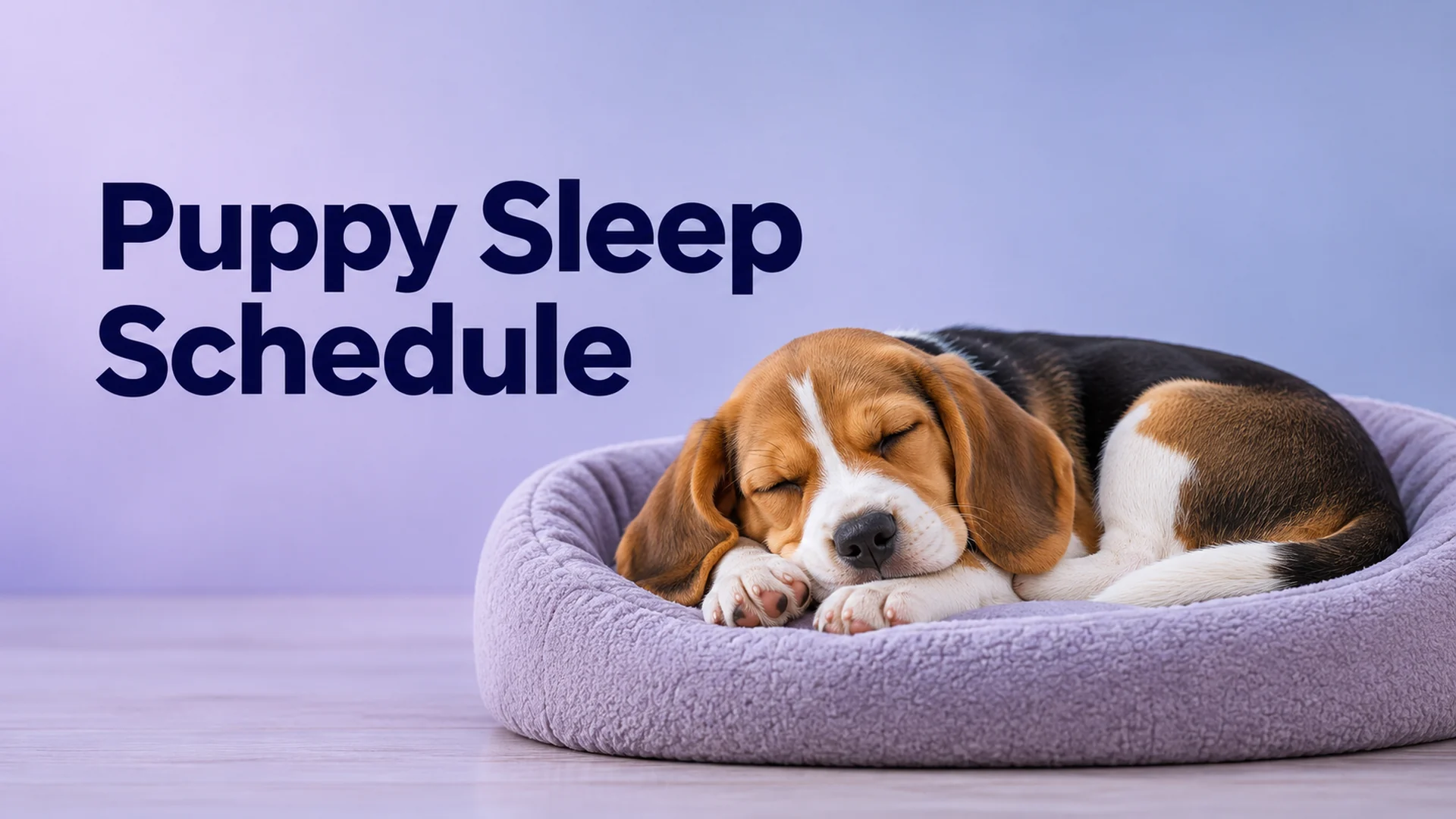
For bedtime, arrange a sleep space where you can respond to toilet needs and distress. Our puppy sleep schedule guide covers the wider nighttime routine. Crate practice teaches comfort with a space; it does not establish that a young puppy can remain there for a particular number of hours.
Keep training separate from unavoidable absences
If work, travel or family duties require more confinement than the puppy can currently manage, arrange a suitable caregiver or another safe plan. Do not use an age-based rule as proof that the puppy can wait. Health, recent activity, drinking, toileting and the individual dog's experience all affect what is appropriate.
Review the plan if distress escalates, accidents recur despite appropriate breaks, or the puppy risks injury trying to get out. Speak with your veterinarian when discomfort, illness or separation-related distress may be involved. A qualified reward-based professional can help adjust the learning steps. More demanding repetitions are not a substitute for understanding why the setup is failing.
Make comfort the measure of progress
Build voluntary entry, easy door movement and small changes in your distance before asking for longer stays. Keep toilet care and necessary absences covered by a real household plan, and use an alternative safe area whenever the crate is ahead of the puppy's current comfort.
Everyday care with PetMira
Prepare an everyday training question
PetMira’s care encyclopedia includes behavior and training topics. Use it to review questions before a short, reward-based practice session.
 Explore everyday care and behavior topics
- Keep a dedicated digital pet profile
PetMira does not supervise a crated puppy or assess separation-related distress.
Download iOS App