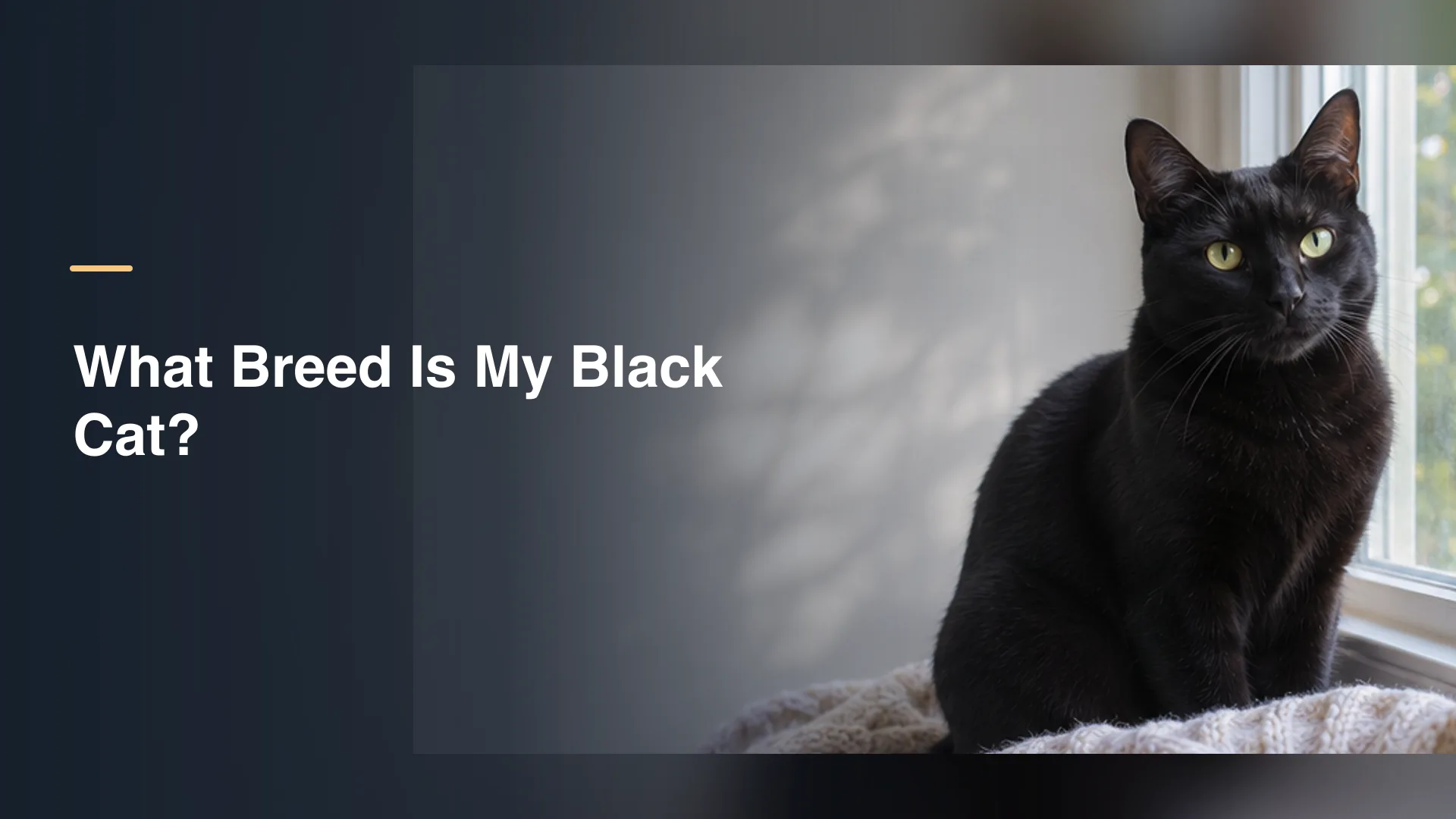
Your black cat could be a domestic shorthair or domestic longhair, or a member of a breed that allows black coats. Black fur alone does not make a cat a Bombay. To make a useful comparison, separate solid black from smoke coloring, look at coat length and structure, and ask what evidence supports any particular breed name.
The Bombay is a reasonable breed to learn about because black is central to its standard. It is not the default identity for every black cat. Other breeds also include black, and an unknown cat may share visible features with several of them. The goal is to recognize meaningful similarities without turning a resemblance into a family tree.
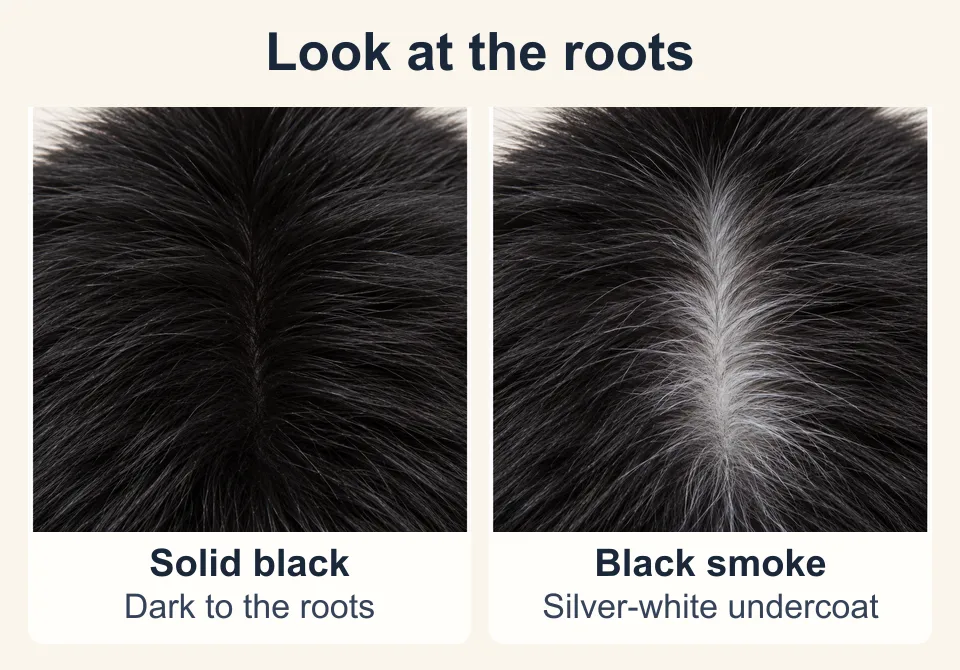
Is the coat solid black or black smoke?
A coat that looks black while the cat sits still may reveal a white or silvery-white undercoat when the fur naturally separates. Black smoke has dark outer coloring over that white base. A merely lighter-looking root in one photograph is not enough to confirm smoke: compare the same area in even light and look for a distinct pale undercoat rather than a surface reflection.
The CFA American Shorthair standard describes black smoke as an appearance that can look black at rest while revealing the lighter undercoat in motion. This is a useful visual distinction, not an identification of every smoke cat as an American Shorthair. The pattern name and the breed name answer different questions.
Watch during normal movement or gentle grooming that your cat already accepts. Do not pluck hairs or hold the cat down to inspect the roots. If you cannot see the undercoat clearly, record “black-looking coat; undercoat uncertain.” An honest incomplete observation is more useful than choosing smoke because it sounds unusual.
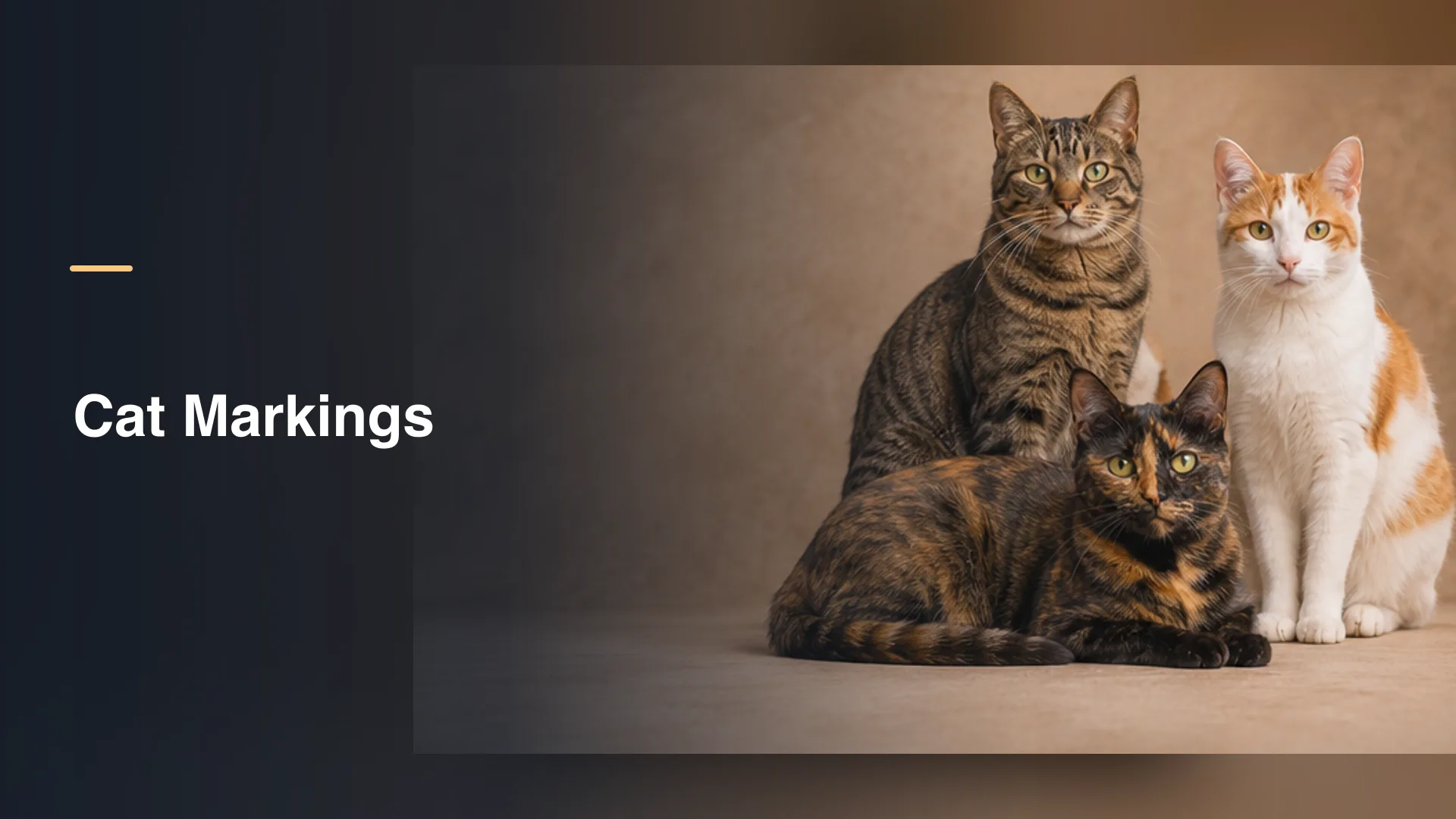
Compare two different observations. If a small area on the chest has white hairs while the rest of the coat remains dark to the roots, record a white chest mark. If dark-looking fur on the body reveals a white base as it parts, a smoke comparison may be relevant. A bright streak that moves or disappears when the lighting changes is a separate observation. Do not label it a coat pattern from that photograph alone. If white covers larger areas of the coat, compare black and white cat types as well.
What a Bombay comparison actually involves
The CFA Bombay standard describes a short, close coat, a rounded head, a muscular body, and gold-to-copper eyes. Mature coat color is black to the roots. These features form a combined breed description; one black coat or one pair of copper-looking eyes cannot stand in for the whole description.
The breed’s development involved Burmese and American Shorthair cats. That history helps explain why Bombay is a specific breed rather than a synonym for black domestic cat. It also does not mean you can identify those two ancestors in an unknown animal by picking features that resemble each parent breed.
If your cat has long flowing fur or a conspicuously pale undercoat, those observations do not match the short, root-to-tip black coat in that CFA description. If the eyes are green, they do not match its gold-to-copper eye description. These are reasons to question a visual Bombay guess, not proof that you have reconstructed every possible ancestor.
This difference matters when someone says “Bombay mix.” A cat can resemble a Bombay without documented Bombay ancestry. If the label comes from a casual visual assessment, keep it qualified. Ask whether it reflects known parentage, a breeder’s record, or simply a description used because the cat is black and shorthaired.
Other black-coated breed comparisons
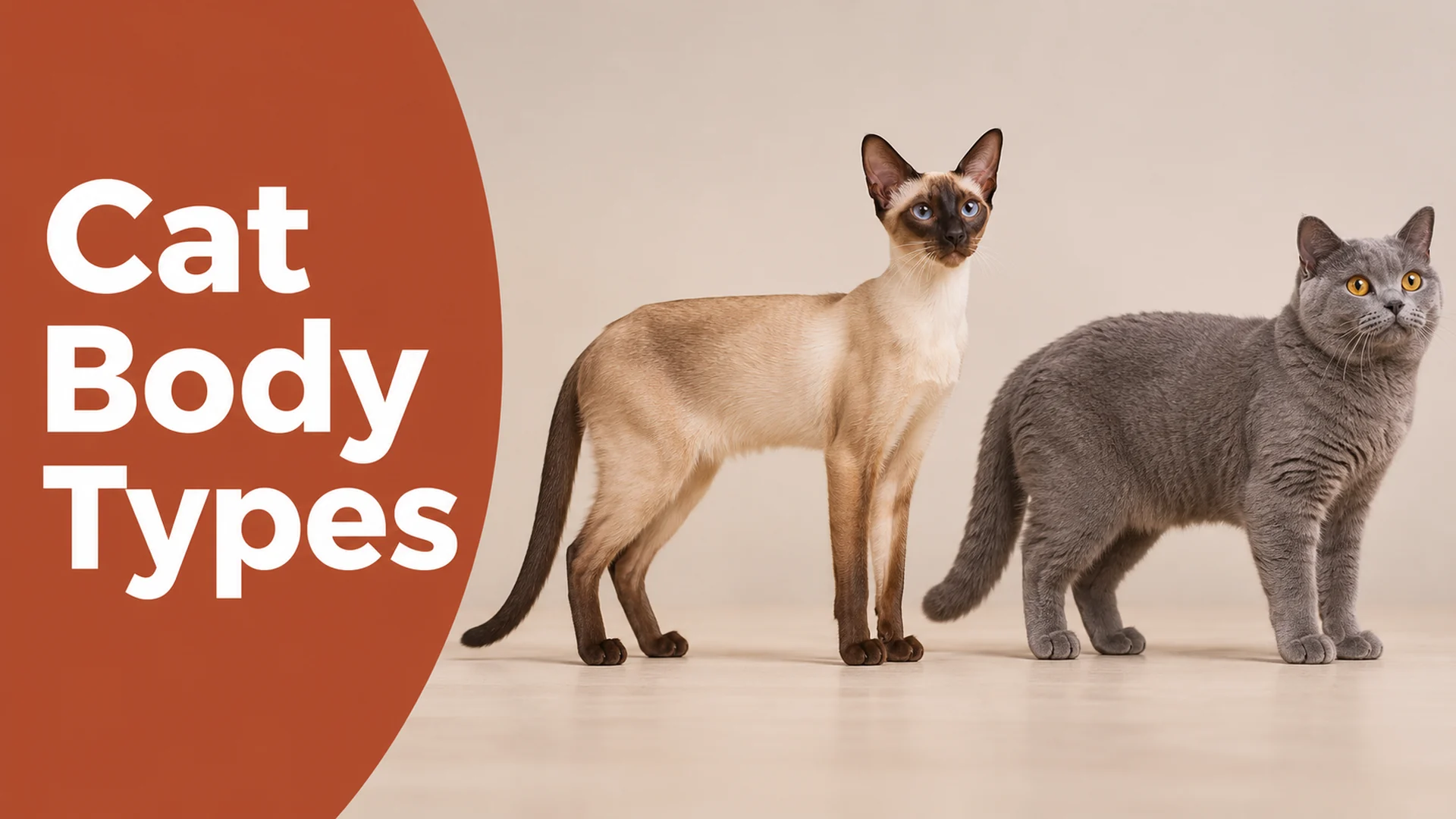
An Oriental Shorthair provides a very different black-cat comparison. Its solid black color is called ebony in CFA terminology. The CFA Oriental standard describes a tapering wedge-shaped head, notably large ears, and a long, fine-boned but muscular body. That is a different overall outline from the rounded Bombay description.
If your black cat has large ears, compare the rest of the head and body before making the leap to Oriental. A close camera angle can exaggerate ears, especially when the nose is nearest the lens. One conspicuous feature should not outweigh a collection of features that do not match the comparison.
American Shorthairs can also have solid black coats. Here the common naming trap is confusing “a shorthaired American cat” with the breed American Shorthair. A domestic shorthair can be black without belonging to that pedigree. Use the specific breed name only when the supporting information goes beyond geography and coat length.
For a longhaired cat, Maine Coon is one possible black-coated breed comparison, but the breed also has other colors. A full tail or shaggy outline can prompt the question without answering it. Longhaired domestic cats provide another valid category, so an unknown black longhair does not need a named-breed explanation to be described accurately.
Observation | Useful comparison | Limit of that observation |
|---|---|---|
Short black coat, rounded outline | Bombay description | Does not establish pedigree |
Black coat with wedge-shaped head and large ears | Oriental description | One facial feature is insufficient |
Short black coat without documented ancestry | Black domestic shorthair | Does not specify parent breeds |
Long black coat | Longhaired breed examples or domestic longhair | Fur length alone does not select a breed |
White or silvery-white undercoat beneath dark outer color | Black smoke coat | Smoke is not a breed |
Why eye color does not settle the question
Eye color can help you compare a cat with a particular standard, but its value is limited. A feature that does not match one standard can weaken that comparison. A feature that does match cannot prove the breed, because the same visible trait may occur elsewhere.
For example, gold-looking eyes can be consistent with a Bombay comparison, but that does not make every black cat with gold eyes a Bombay. Green eyes may direct your attention elsewhere, but they do not automatically make the cat an Oriental. Avoid turning an exclusion from one description into a positive identification of another.
Use a natural-light view when recording the apparent eye color, and keep photographs free of filters that change the result. If the color looks different in separate images, you can leave the description broad. You do not need a precise shade name to maintain a useful household record.
A black coat can be difficult to photograph
Very dark fur can lose visible texture when a camera exposes for a bright window behind the cat. The face then becomes a silhouette, making muzzle shape and coat length harder to compare. Move your own position so the cat is lit from the front or side, rather than trying to infer structure from the dark outline.
Avoid brightening a poor photograph until the fur changes color or fine details become artificial. A better original image is more useful than an extreme edit. If a breed suggestion changes between two views, compare what each view actually reveals before treating either suggestion as the answer.
Keep a comparison and its limitation together Write “resembles the rounded Bombay outline, but ancestry is undocumented” rather than saving only the breed name. For the coat, record solid black, possible smoke, or uncertain. This keeps a tentative visual comparison from becoming an apparently verified label later.
What to call your cat when the breed is unknown
“Black domestic shorthair” or “black domestic longhair” can be a complete, truthful description. Add a small white mark or a possible smoke undercoat if it helps distinguish the cat. These labels leave room for more information without inventing a particular mix.
If you have a specific breed claim to investigate, use our cat breed identification guide for the role of records and other evidence. The black-coat comparison here helps refine the appearance question; it cannot replace that separate ancestry check.
A black cat does not need a forced breed label
Use coat subtype, length, and overall shape to make a careful comparison, and keep Bombay as one specific possibility rather than the default. When ancestry is unknown, an accurate domestic-cat description tells the truth while still recognizing the features that make your cat distinctive.
Explore with PetMira
Look beyond a black coat
Use a clear photo in PetMira to explore possible cat breeds. Compare the suggestions with your cat’s coat length and shape, alongside any background you know.
 Choose a well-lit photo
- Compare possible breed matches
Available on iPhone. Photo suggestions are not proof of pedigree or ancestry.
Download iOS App