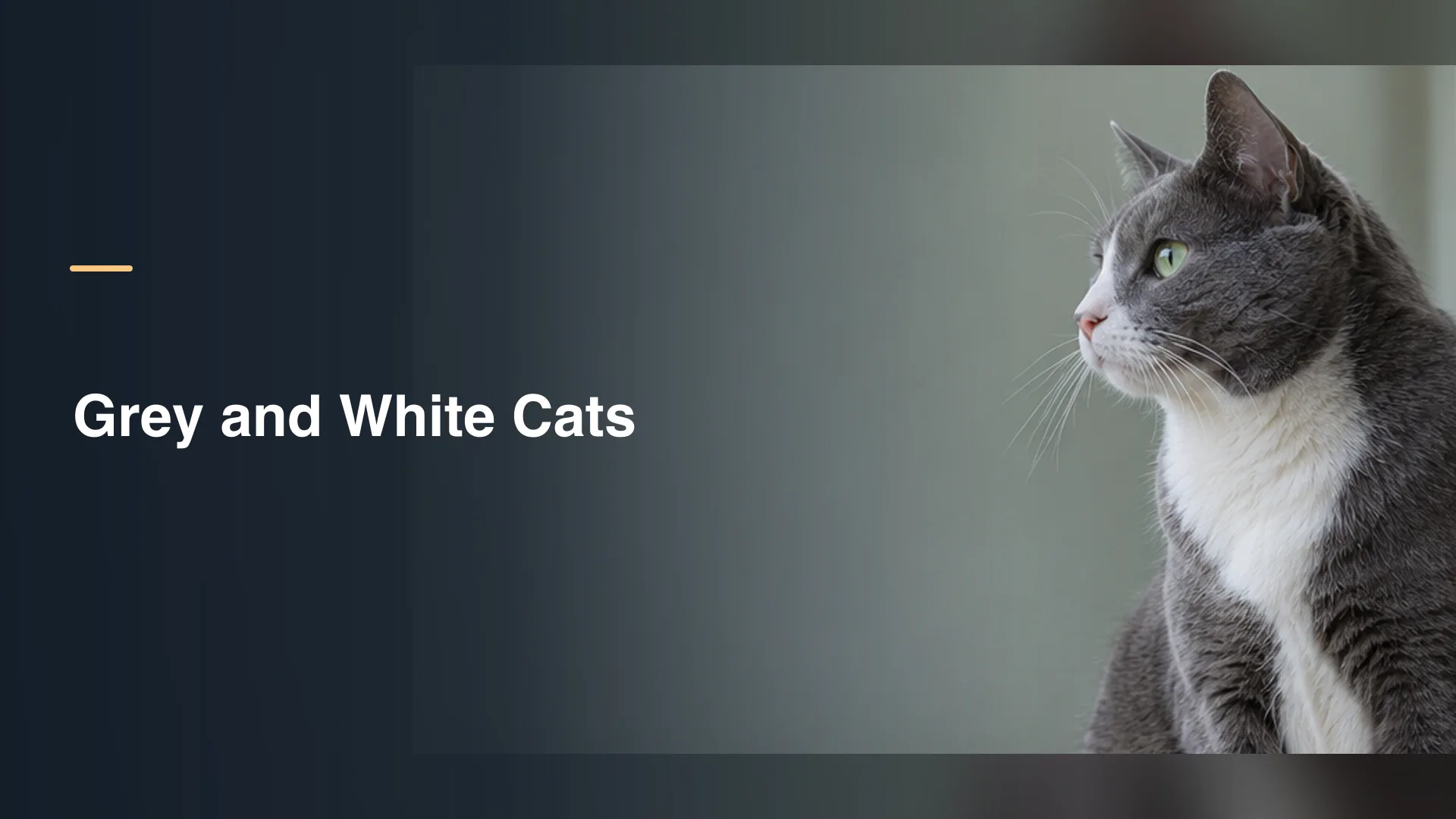
Your grey and white cat may be a domestic shorthair or domestic longhair, or belong to a breed that accepts that coat combination. In breed descriptions, grey fur is often called blue. The useful first distinction is between solid blue areas with white, tabby-patterned areas with white, and a pointed coat with white—not an automatic guess of Russian Blue.
Several breeds can fit parts of the description, so a color match is only a starting point. Before comparing breed photographs, work out what the grey areas are doing: are they even in color, striped, or concentrated on the face, ears, and tail? Those observations lead to different comparisons and can make an otherwise vague search much more productive.
Separate blue and white from tabby and white
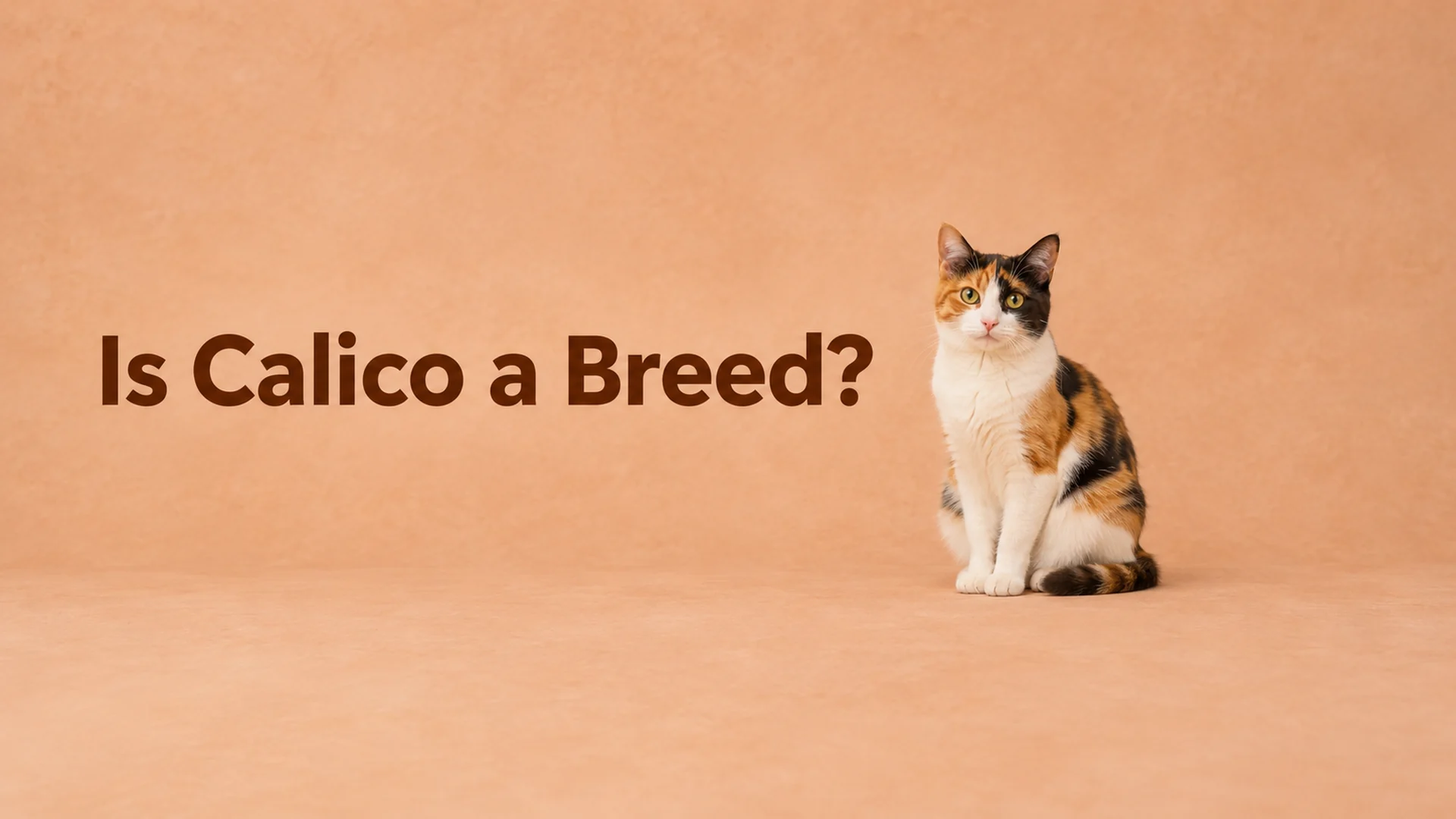
Blue is the conventional coat-color term for diluted black pigment; it refers to grey-looking fur. A blue and white bicolor has areas of that color alongside white. A blue tabby and white cat has tabby markings within the colored areas as well as separate white regions. The two may look similar in a small image. If you also see separate cream patches, compare dilute calico markings rather than describing the coat as simply grey and white.
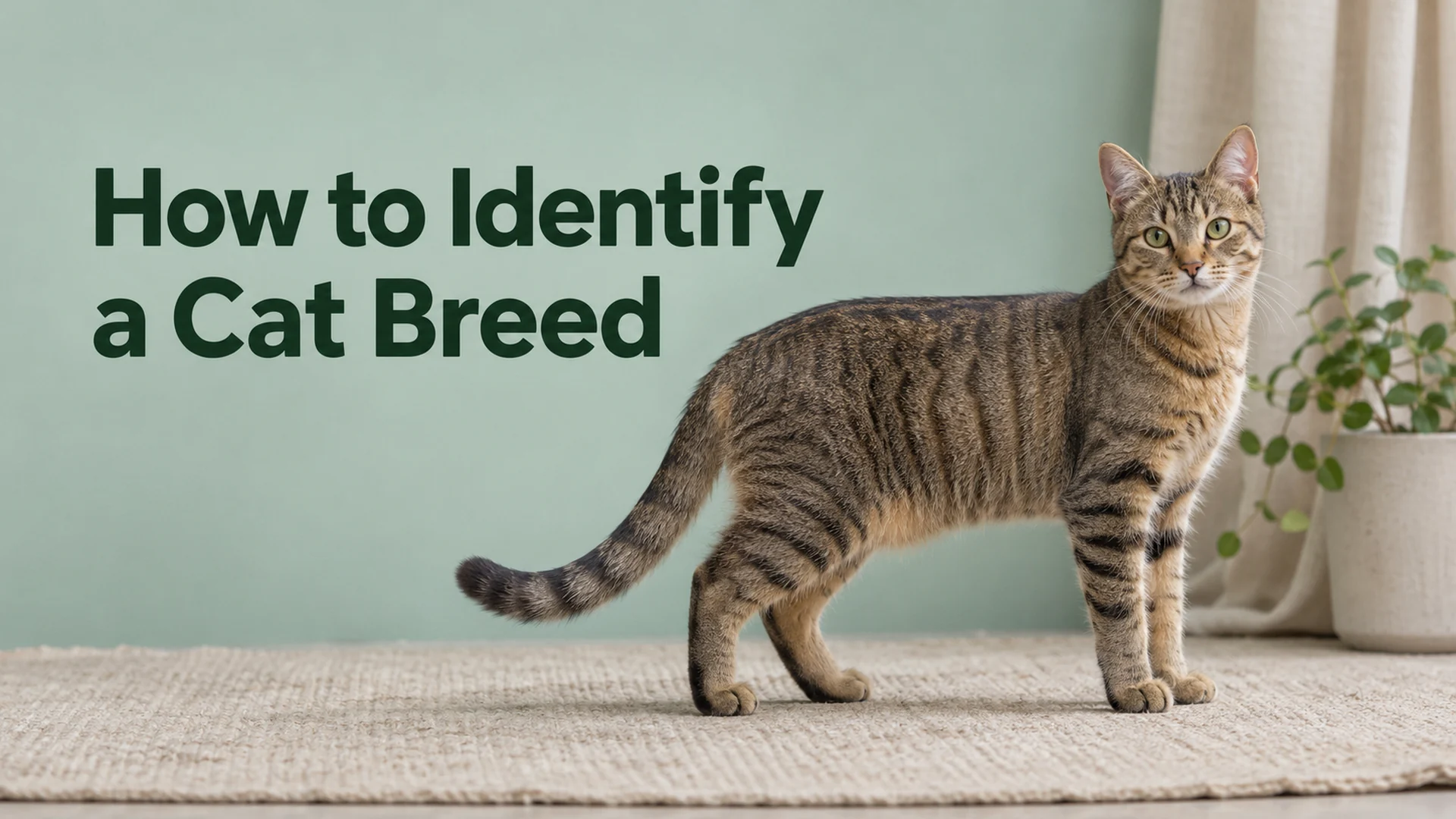
Check the broad side of the body rather than relying only on the forehead. Clear repeating stripes or swirls suggest a tabby description. If the colored areas look fairly even, blue and white may be a better provisional label. A dark ringed tail can help you notice a pattern, but examine the body before deciding on the whole coat.
Silver tabby is another source of confusion because dark markings on a pale background can look grey from a distance. “Grey tabby and white” may be a useful everyday description while the more precise color category remains uncertain. Do not choose blue or silver solely because one photograph looks cooler or brighter than another.
Visible arrangement | Description to investigate | Avoid assuming |
|---|---|---|
Even grey areas plus white patches | Blue and white | Russian Blue ancestry |
Grey-toned areas with obvious stripes plus white | Tabby and white | That all grey tabbies have the same color subtype |
Dark markings over a very pale background | Silver tabby and white may be relevant | That a distant grey appearance is solid blue |
Darker ears, face, and tail against a lighter body, plus white | Pointed coat with white | That every white facial V means Ragdoll |
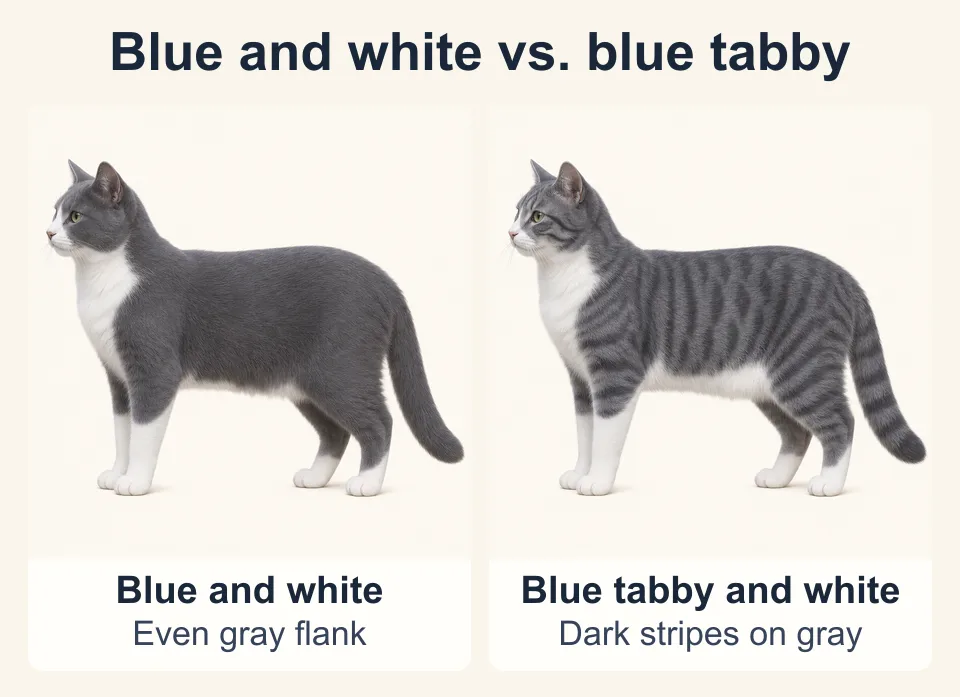
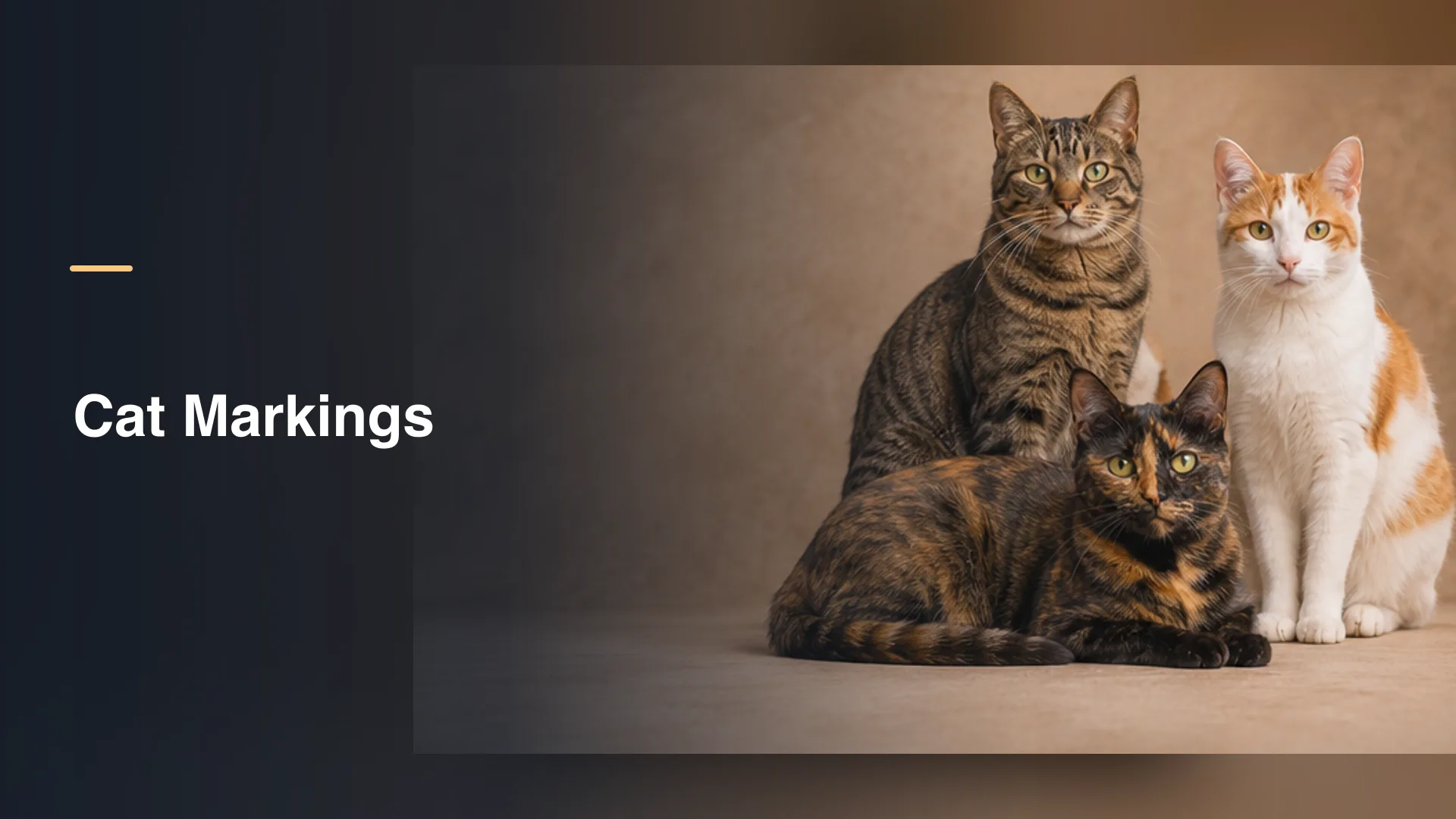
The TICA color guide is useful for the naming distinction. You can describe the arrangement accurately without claiming to have identified the underlying genetics from a photograph. If the colored areas are too small or poorly lit, keep the wording broad until a clearer view is available. For the broader vocabulary behind those descriptions, see our cat markings guide.
Why white markings complicate a Russian Blue guess
Russian Blue is a specific breed, not a general name for grey cats. The CFA Russian Blue standard describes an even blue coat with silver-tipped guard hairs and green eyes. It lists white lockets or buttons, non-blue color, and a long coat among disqualifications under that standard.
Consequently, a grey cat with a large white chest and white feet does not fit that CFA show description. Calling it a Russian Blue because the colored areas are grey overlooks a directly relevant difference. Silver tipping also should not be confused with a sharply defined white chest patch; the location and form of the pale color are different.
That conclusion has a boundary. A show standard cannot reconstruct every ancestor of a mixed cat, and a nonmatching feature does not prove that no distant relationship could exist. What it does establish is that a confident visual label of standard Russian Blue is not supported by grey and white coloring alone.
If an adoption listing says “Russian Blue mix,” ask whether the word mix reflects known parentage or a visual guess. Keep the answer with the record. There is a meaningful difference between documented family information and a convenient label chosen because the cat resembles a familiar breed in one respect.
Breeds that do include blue and white
British Shorthairs can have blue and white coats, so white does not automatically exclude that breed. The dense short coat and substantial, rounded appearance are other features to compare. Even then, a round-faced grey and white domestic cat can resemble a breed photograph without having documented British Shorthair ancestry.
Persians provide a longhaired comparison. The CFA Persian standard separately lists blue and white, blue tabby and white, and silver tabby and white. Those separate descriptions illustrate why “grey and white” is too broad to serve as a precise color classification, much less a breed identification.
Maine Coons also include blue and white and tabby-and-white varieties. The useful comparison involves the whole cat, including coat texture and structure, rather than a fluffy tail alone. A longhaired domestic cat remains a valid possibility when ancestry is unknown, even if a few features resemble a Maine Coon picture.
Use those examples to narrow a specific comparison. An evenly grey area with a sharply separate white chest belongs in the blue-and-white comparison; a striped grey area needs the tabby-and-white description as well. Coat length then helps you choose a shorthaired or longhaired reference. This sequence gives you a concrete starting point without assigning breed percentages from the color.
When blue points with white are the better comparison
A cat with a light body and darker ears, face, and tail may need a pointed-coat comparison. Ragdolls include blue points and patterns with white, as described by the CFA Ragdoll profile. The contrast between the body and extremities matters more here than the everyday description “grey and white.”
Look at a side view as well as the face. White areas can interrupt a darker mask, making the face appear patchy, while the overall body remains much lighter than the points. Conversely, broad even grey patches across the torso may suggest a different arrangement. Do not classify the entire coat from a white facial shape alone.
A pointed-looking coat still does not prove Ragdoll ancestry. Treat it as a reason to compare the appropriate coat category, then examine the evidence for any breed claim separately. This prevents the search from jumping straight from one attractive feature to a specific pedigree.
Use coat length without letting it decide everything
Short versus long fur can help organize your comparisons, but it cannot choose a breed by itself. A short blue-and-white cat is not automatically British Shorthair, and a longhaired one is not automatically Persian or Maine Coon. These are examples of a broader naming problem: a visible category is being asked to do the work of ancestry evidence.
Describe the actual coat before choosing among those examples. Does it lie close to the body, look dense and plush, or extend into a longer ruff and tail plume? Keep those observations distinct from overall build. Our cat body types guide explains why fur and camera angle can change the apparent outline.
Keep the uncertainty in the color description Use “grey tabby and white; precise blue or silver color uncertain” when that is what the photograph supports. A careful provisional label is easier to improve than a confident breed name based on a color you have not established.
A useful answer for an undocumented cat
Consider a shorthaired cat whose back looks grey in a small portrait. In a clearer side view, narrow darker stripes cross the grey areas, while the chest and feet remain white. Record “grey tabby and white, with a white chest and feet.” That is more informative than “grey and white” because it preserves the pattern. If the shade is still unclear, leave blue versus silver undecided rather than selecting a breed to fill the gap.
For a separate investigation of ancestry, use the cat breed identification guide. Keep the exact coat observations beside any tentative breed suggestion so the next person can see which parts are visible facts and which are still possibilities.
Let the coat narrow the comparison
Distinguish blue and white, tabby and white, and pointed coats before comparing breed examples. Grey fur can guide a careful description, but white markings and other visible features should be considered honestly rather than squeezed into a Russian Blue label.
Explore with PetMira
Compare your grey and white cat’s features
Take or upload a clear photo in PetMira to explore possible cat breeds. Compare the suggestions with the coat pattern, length, and other features you have observed.
 Start with a clear cat photo
- Explore possible breed matches
Available on iPhone. Photo suggestions are not proof of pedigree or ancestry.
Download iOS App