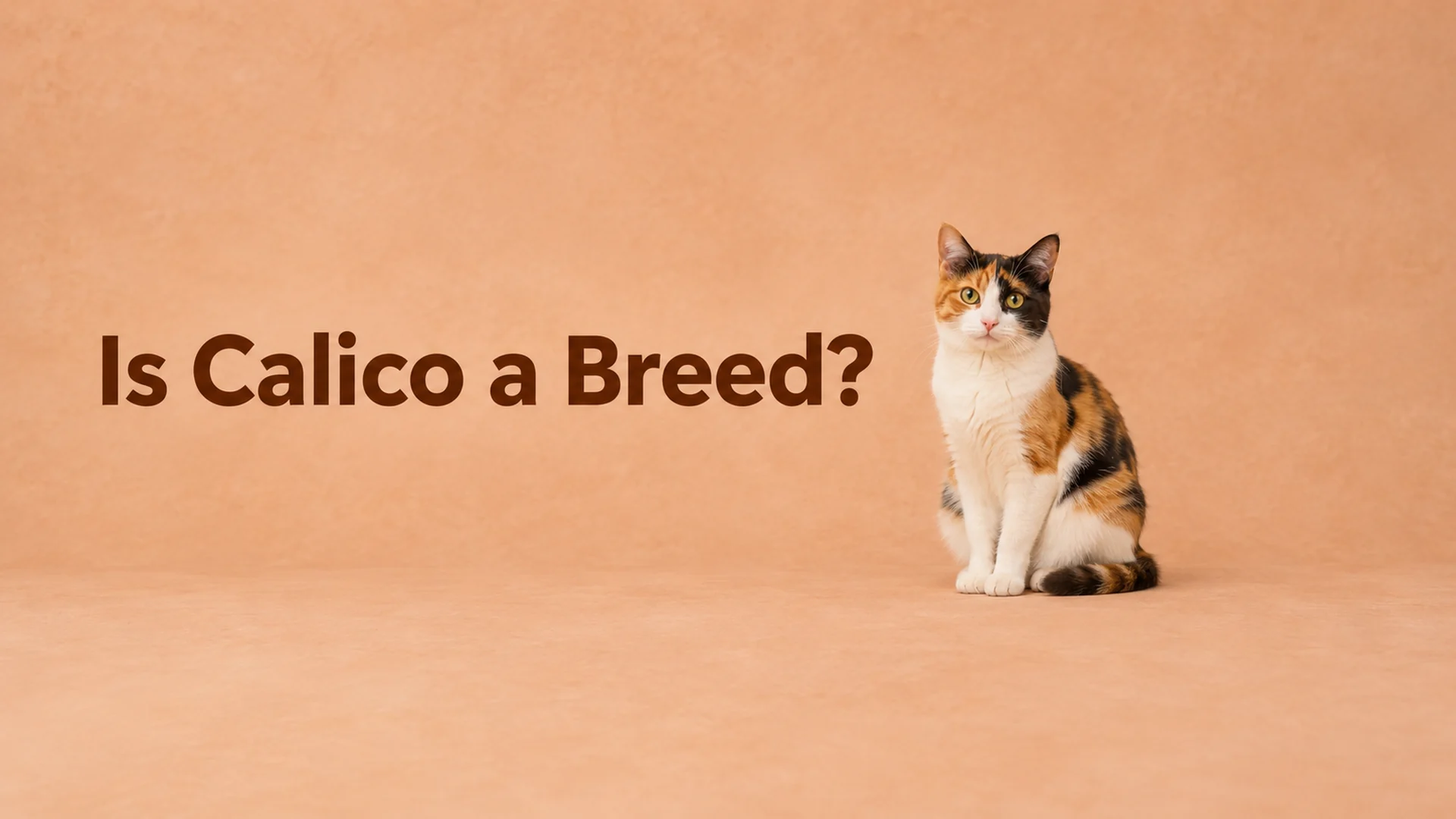
Calico describes a coat with white areas and patches of two other colors, commonly black and orange. The pattern occurs in cats with different family backgrounds, so a tricolor coat cannot tell you what breed your cat is. If your cat came from a shelter with no pedigree records, you can still describe them accurately as a calico and leave the breed unknown.
Start with the markings you can see. A white chest and black and orange patches tell you more about the coat than a guess based on the cat’s shape. A gray and cream cat with white areas can be a dilute calico. Use the examples below to choose a description for the cat you actually have, then decide whether you need to look into ancestry at all.
How to Recognize a Calico Coat
Look at both sides of the coat in daylight. One side may show mainly black and white, while a patch behind the other ear or on the far flank supplies the orange. Note the light and dark areas separately. A brown tabby with a white chest can look like it has a third color in a warm photo, so look for distinct orange or cream patches before calling the coat calico. For the brown-tabby alternative, compare brown and white cat coats.
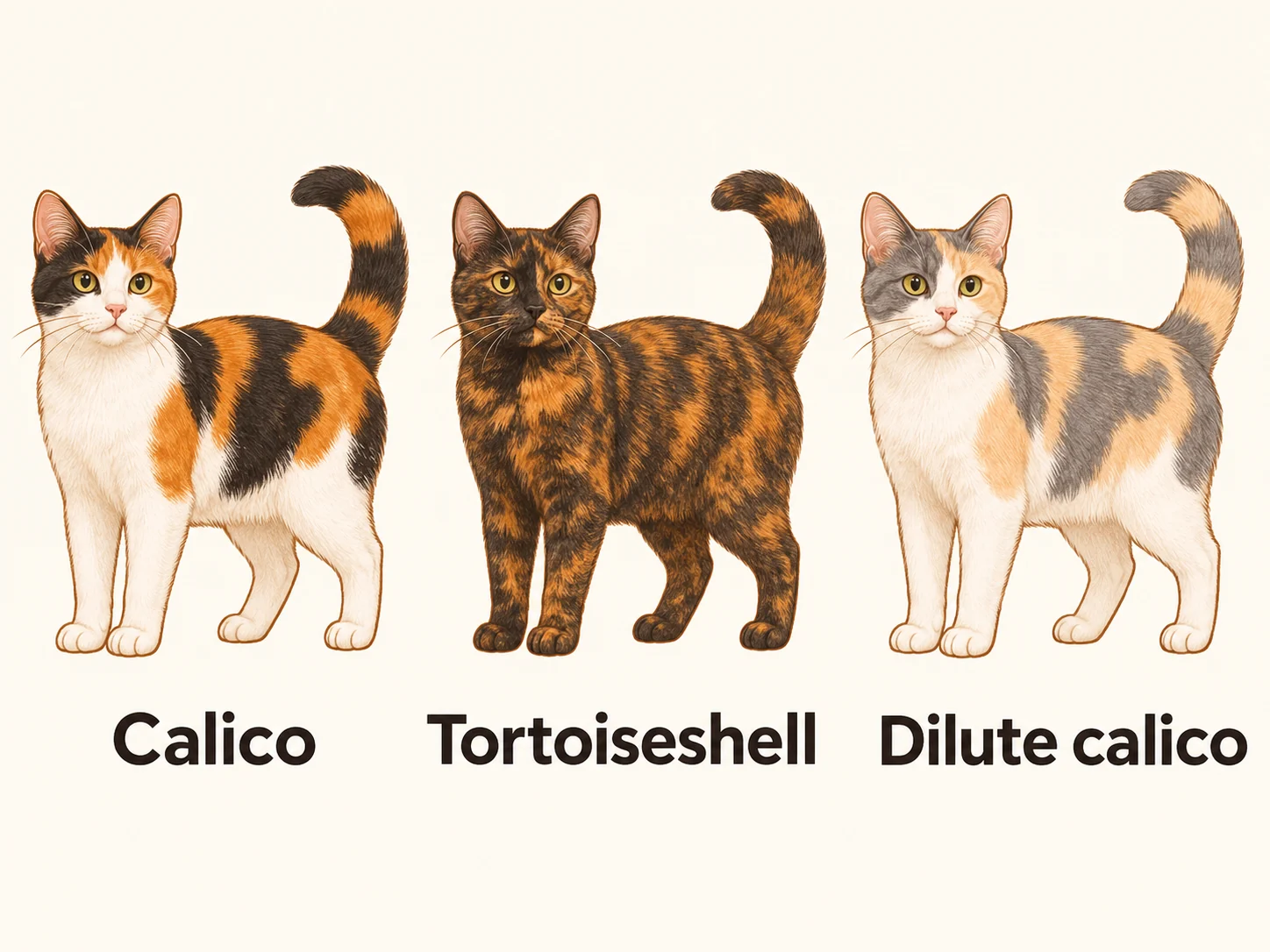
Next, look at how those colors are distributed. Calicos commonly have white areas that separate large colored patches. A typical tortoiseshell has orange and dark fur mixed together, often with little or no white. Some cats sit close to the boundary. If yours has mottled black and orange fur plus a white chest, “tortoiseshell and white” describes what you see. Registries and shelters may use different labels for similar coats.
Coat description | Look for | Record it like this |
|---|---|---|
Calico | Black and orange patches with white areas | Black, orange and white patches, white chest |
Tortoiseshell | Dark and orange fur mixed together, often little white | Mottled black and orange, small white spot if present |
Dilute calico | Gray and cream patches with white areas | Gray, cream and white, cream patch above left eye |
Dilute calicos have paler versions of the familiar colors. In coat descriptions, gray is often called blue, and orange may be called red. A person at the shelter might describe your cat as gray, cream, and white while a registry uses blue, cream, and white. Those labels can describe the same appearance. A cat that is gray and white with no cream or orange patch may simply be bicolor.
Stripes can add another layer to the description. Look for whether they sit within a colored patch or whether the whole coat is made up of one tabby color and white. You can write “black and orange patches with white, stripes visible in the orange patches” without settling on a nickname. That tells someone more about your cat than debating whether all three areas fit a particular term.
Check before adding a third color If the possible orange patch appears only in one warm-lit photo, look at the area in daylight. Leave the detail uncertain if you still cannot see it clearly. The shade can wait while the rest of the description stays useful.
What the Pattern Says About Breed
The Cat Fanciers’ Association’s coat descriptions distinguish pattern names such as calico and tabby from named breeds. Its standards include calico coloring in American Shorthair and Maine Coon cats. Those examples show that the same pattern can occur in different pedigreed breeds. The standards describe what the coat can look like in those breeds. They do not let you trace a cat’s family from its patches.
If you are reading a breed standard, check which organization wrote it and which breed it covers. It may use separate names for calico, tortoiseshell and white, or patterns with color mostly on the head and tail. Those names serve a specific registration or show context. For a pet profile or adoption note, you do not need to estimate a percentage of white or choose a class. Record where the patches sit and how they look.
Imagine two cats have orange on one cheek, black patches along the back, and white feet. One came with verifiable American Shorthair pedigree papers. The other is a longhaired rescue whose parents are unknown. Calico fits both coats. You can record the first cat’s breed and pattern together and give the rescue a useful pattern and coat-length description while leaving their ancestry open.
Fur length, ear tufts, and body shape can give you comparison points if you want to explore possible breeds. They do not make the tricolor pattern more specific to one family. If someone calls your cat a Maine Coon because of a fluffy tail, ask what they know about the parents. There is no contradiction in using “longhaired calico” on the same day that you decide you do not know the breed.
Why Most Calicos Are Female
Orange coat color is tied to the X chromosome. A cat with two X chromosomes carrying different versions can develop patches as cells switch off one X or the other early in development. In different areas, the active version can favor orange fur or allow darker pigment. Primary research on sex-linked orange coloration describes how that patchwork arises. White spotting is a separate part of the pattern, so the white patches are not a third version of the orange gene.
That explains why the familiar pattern is most common in female cats. A male calico is possible in rare cases, so the coat alone is not a reliable way to record an individual cat’s sex. If you are unsure, leave it unconfirmed or ask your veterinarian to check. Neither the amount of white nor the arrangement of the patches tells you what the cat will be like to live with.
What to Write on a Vet or Adoption Form
If the form has separate breed and coat fields, use both. For a shelter cat with no family records, you might enter “breed unknown” and “shorthaired calico, white chest and orange patch around right eye.” If the shelter uses domestic shorthair as a descriptive category, you can keep it and still record calico in the coat field. If a drop-down requires a named breed you cannot support, ask the organization how it wants you to record unknown ancestry.
Keep one current photo next to the description. A side photo shows how much white is on the body, while a face photo can show exactly which cheek or ear has a patch. When describing the cat to someone else, describe left and right from the cat’s perspective. These details help identify this cat even if two people would use different names for the coat.
If your question goes beyond the coat and you want possible breeds to compare, PetMira’s iPhone app can suggest matches from a photo. A suggestion can give you something to look up. It cannot turn the calico pattern into a pedigree. If all you needed was a name for the pattern or an accurate description for a form, you can finish with what you observed.
The Takeaway
Record calico as the coat pattern and describe the colored patches, white areas, and coat length. Check family records if you need to verify a named breed. When those records are missing, “calico, ancestry unknown” tells the reader exactly what you know.
Explore possible lookalikes
Compare a cat photo with PetMira
If you want to explore possible breeds after identifying the coat, take or upload a clear photo in the iPhone app.
 Use a clear view of your cat
- Browse the possible breed matches
- Keep coat and ancestry separate
A visual match cannot verify a pedigree. You can describe calico coloring without using an app.
Download iOS App