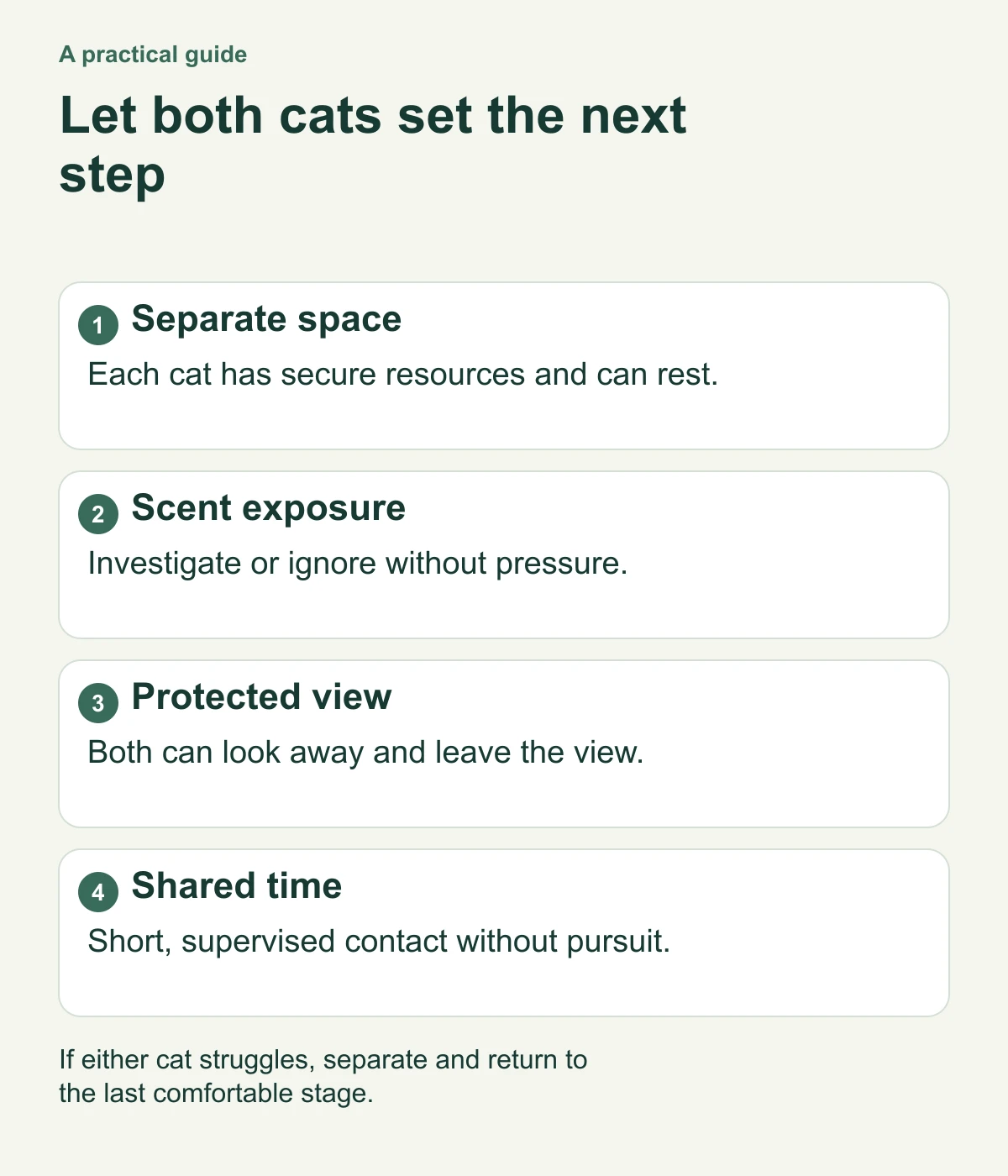
Introduce a kitten to a resident cat in stages: separate living space first, then low-pressure scent exposure, protected visual contact and supervised time together. Move forward when both cats can remain comfortable, eat and disengage at the current stage. If either becomes tense, hides, stops eating or repeatedly targets the other, create more separation and return to an easier setup.
A kitten's small size does not guarantee the resident cat will accept them. The adult may want quiet while the newcomer wants constant play, and a fast encounter can leave both with reasons to avoid the next one. Arrange the introduction around each animal's behavior rather than a promise that they will be friends within a particular number of days.
Prepare separate space before the kitten arrives
Give the kitten a room with their own litter box, food, water, resting place, scratching surface and safe toys. Keep resources apart and leave a comfortable hiding option. Check gaps behind furniture and make sure the closed door actually separates the animals. A kitten can fit through openings that an adult cat cannot, including some ordinary gates.
Keep the resident cat's established resources and favorite resting places available. Moving everything to make room for the kitten adds an unnecessary change. If the adult usually sleeps beside you, maintain that familiar opportunity while somebody checks the kitten. Our first-week kitten care guide covers settling the newcomer; this introduction plan adds a separate process for the relationship between the cats.
Ask your veterinarian about the kitten's health records and appropriate precautions before shared contact. If either animal is unwell or their vaccination or parasite history is uncertain, get an individual plan. Do not share bedding or arrange face-to-face meetings until any recommended health separation has been addressed. A behavioral introduction cannot replace that assessment.
Let them investigate scent without a confrontation
When each cat is comfortable in their own area and health precautions allow it, place a familiar resting cloth from one area in the other. Put it somewhere the cat can approach or ignore. Do not hold it against their face or remove their own familiar bed. The useful observation is whether they investigate and return to ordinary activity, rather than whether they sniff for a prescribed number of seconds.
If the scent causes prolonged staring, retreat or agitation, move the item farther away or remove it and make the next exposure smaller. Pair a comfortable distance with an activity the cat already enjoys. Food can be useful only when the cat willingly eats; pushing a dish close to a worrying doorway can make a meal harder rather than make the other cat welcome.
Later, allow each animal to explore the other's space at a different time, with secure separation throughout the changeover. A second adult can help keep doors controlled. Check where both cats are before opening anything, and avoid carrying one directly past the other. If managing the swap is unreliable, stay with simpler scent exposure until you have a safer arrangement.
Add a protected view they can leave
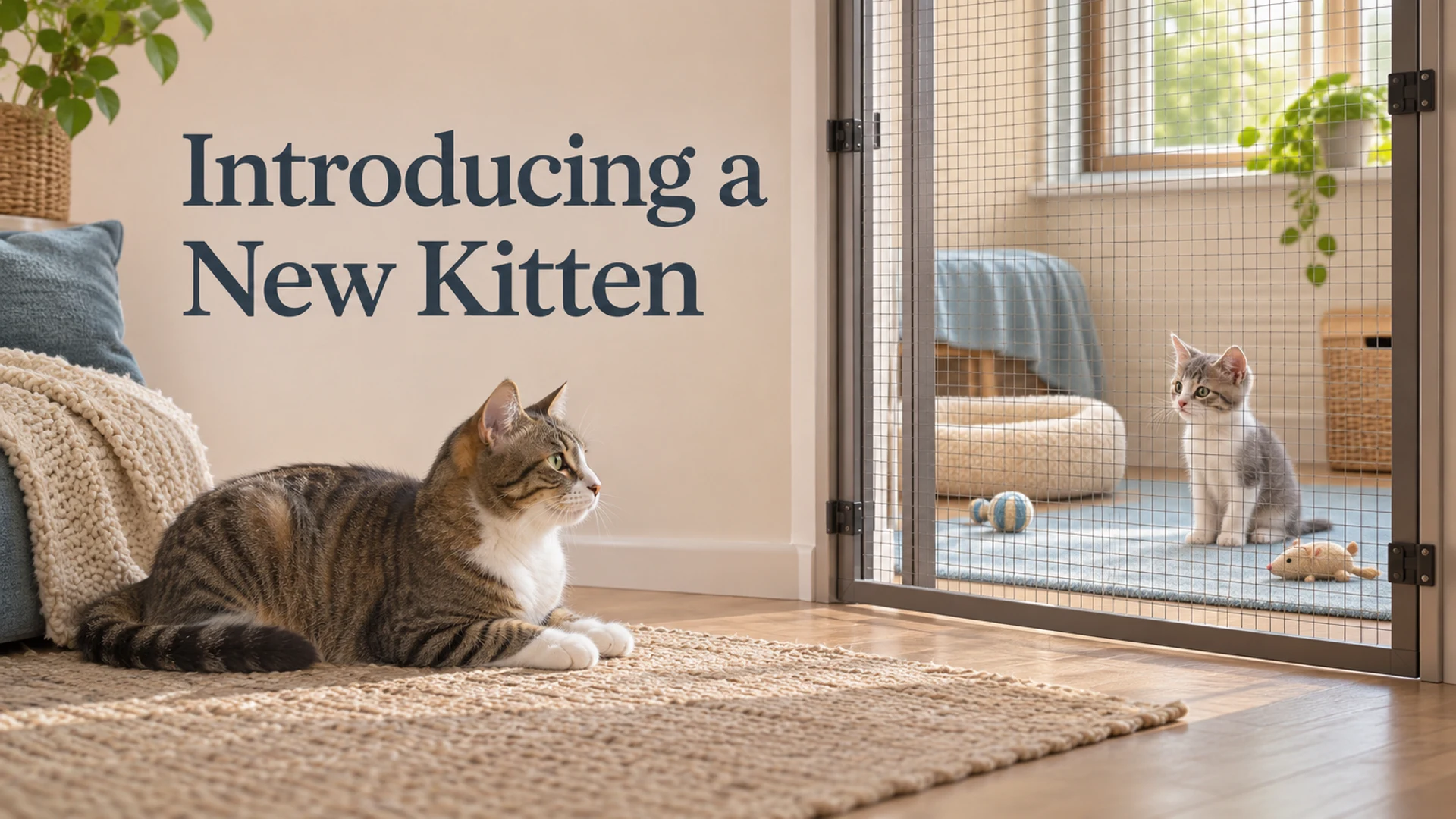
Use a secure screen or barrier that prevents the kitten climbing through or over it. Begin with a limited view and enough distance that neither cat has to approach. Give both a way to move out of sight. A carrier containing a trapped kitten while the resident circles outside does not provide the same choice or escape route.
A useful adjustment Check a barrier from kitten height before using it. A gap or climbing route can turn protected viewing into an unplanned meeting.
Look at the whole animal. Loose posture, ordinary eating or play, and the ability to look away are useful signs. Fixed staring, a stiff body, repeated lunging, flattened ears or an attempt to block access tell you the setup is too difficult. Read our cat language guide for a wider view of signals; one tail movement or a single vocalization cannot establish the relationship's meaning.
Keep this first view short enough to finish while both cats are still coping. Cover the barrier or close the door calmly, then let them return to their own routines. Repeat an easy version before increasing what they can see or bringing activities closer. A quiet session is worthwhile even when neither cat chooses to interact.
What both cats can do | Next reasonable choice | Reason to step back |
|---|---|---|
Investigate scent and resume normal activity | Try a protected view at a distance | Ongoing hiding, agitation or loss of appetite |
Look at each other and disengage behind a barrier | Repeat, then consider a short shared session | Staring, stalking, lunging or blocking |
Move around a shared room without pursuit | Gradually extend supervised access | Chasing, cornering or one cat unable to leave |
Make the first shared room easy to manage
Choose a space with several routes around furniture, reachable high resting places and no narrow corner where one cat can be trapped. Put separate toys or calm activities at a comfortable distance. Have the separation arrangement ready before opening the barrier. Keep children and additional animals out of this early meeting so you can watch the cats rather than manage a crowd.
Let the cats choose whether to approach. Do not hold them nose to nose, place the kitten on the adult's bed, or keep redirecting them toward each other for a photograph. The resident may watch briefly and walk away; that can be a useful first session. End before the kitten repeatedly chases an adult who is trying to rest.
If tension rises, create a visual interruption or guide the animals into separate spaces without putting your hands between them. Do not grab a fighting cat or punish either animal. For an actual fight, injury or persistent pursuit, keep them securely apart and seek veterinary or qualified behavior support. Resume only with an appropriately revised plan.
Separate play needs from pressure to become friends
A lively kitten can repeatedly approach an adult whose earlier signals were easy for a human to miss. Offer the kitten suitable play away from the resident, then let them rest before another meeting. The adult needs access to quiet areas the kitten cannot continually invade. Shared space should not mean the adult loses control over every nap, meal or toilet visit.
Provide multiple, well-separated resources as access expands. Check who actually reaches the bowls, trays and resting spots. A hallway that looks open to you may become unusable if one cat waits there. Success means both animals can carry out ordinary activities, not merely that no noisy fight occurred while you were watching.
Use a brief note after each meeting: the setup, what each cat did, and how they returned to normal afterward. PetMira's care encyclopedia can support questions about everyday cat behavior, but an AI explanation cannot certify that two cats are safe together. A written observation such as “adult left, kitten followed three times” is more useful for revising the next session than assigning one cat a jealous personality.
Adjust the plan when one cat struggles
A little progress can be followed by a setback after a visitor, a veterinary visit or an especially energetic evening. Return to the last arrangement where both were comfortable. Keep feeding, rest and toilet access predictable while you reduce the difficulty. Trying to recover lost time with a longer meeting can add pressure at exactly the wrong moment.
Contact your veterinarian if either cat stops eating, seems unwell, avoids normal activities or develops a persistent change in toilet habits. Seek help early when fear, chasing or conflict continues despite separation and gradual steps. Our guide to cat hissing explains responding to a request for distance; repeated distress still deserves an individual assessment rather than a generic timetable.
Aim for comfortable coexistence
Give each cat secure resources, room to leave and introductions they can manage before you ask for closer contact. Progress is both animals returning to ordinary life around each other; peaceful coexistence is a useful outcome even if they never choose to curl up together.
Everyday care with PetMira
Explore everyday cat behavior guidance
PetMira’s care encyclopedia covers everyday behavior topics. Use it to organize questions while you keep introduction decisions grounded in both cats’ actual behavior.
 Explore behavior and care topics
- Keep a dedicated digital pet profile
Persistent fear, pursuit or conflict needs an individual plan with qualified help.
Download iOS App