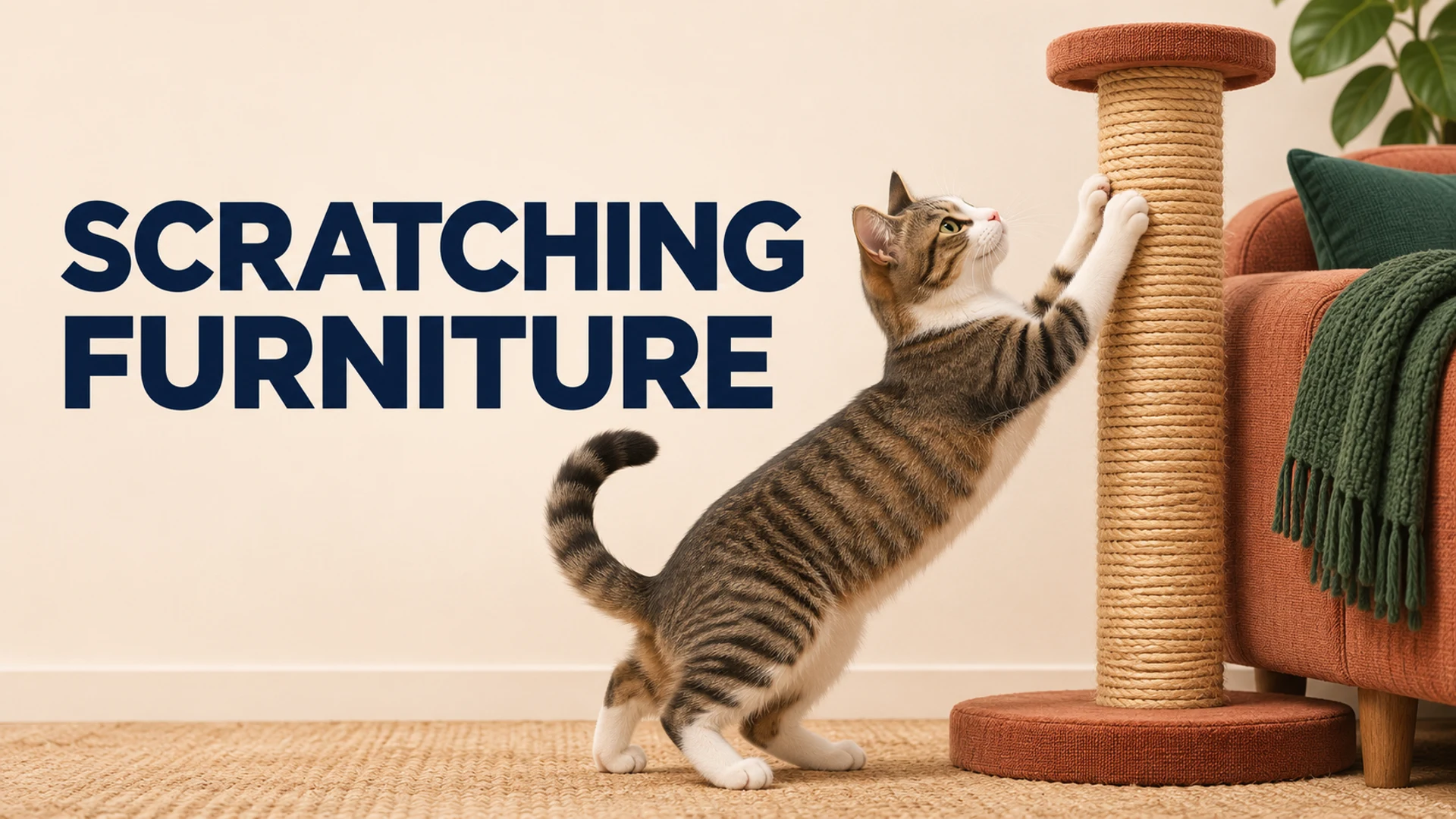
To stop a cat scratching furniture, give them a more suitable place to perform the same normal behavior. Match the alternative to the location, scratching direction and texture they already choose, make it stable, and reward voluntary use. Protect the furniture while the new setup becomes familiar. Removing every scratching opportunity leaves the need unresolved.
This guide concerns claws used on a sofa, carpet or other household surface. A cat scratching their own skin, suddenly reacting painfully to movement, or showing a broader behavior change needs a different assessment. Seek veterinary advice for those changes rather than treating them as a furniture-training problem.
Copy the part of the furniture your cat chose
Look at one target closely before choosing a replacement. Is your cat stretching upward against a sofa arm, pulling along a horizontal carpet, or scratching a particular corner after waking? Note where the front paws land and whether the animal can extend comfortably. A small pad on the floor does not offer the same action as a tall, firm sofa side.
Check the texture and support as separate features. A post may have an appealing covering but move as the cat pulls. A tall structure may stand firmly yet be awkward to reach from the usual route. You do not need to identify a universal best material. Start with a secure option reasonably similar to the surface your cat has repeatedly selected.
For example, a cat who uses the carpet near a bedroom door may benefit from a stable horizontal scratcher there. A cat stretching beside the sofa may need a tall post beside that corner. These are starting comparisons, not guaranteed prescriptions. Watch what the cat actually does with the alternative before deciding which feature needs another change.
Place the alternative where the decision happens
Put the scratcher near the current target or an ordinary scratching point, such as a route from a resting place. A beautiful post hidden in a spare room cannot help much when the cat gets up beside the sofa and immediately stretches against it. Keep enough room around the replacement for a comfortable approach and exit.
Test stability before the cat uses it. Follow the product's assembly and fixing instructions, especially for tall furniture. A post that tips during a first attempt can make the next approach harder. Check flooring too: a flat pad that slides away under the cat may need a different secure arrangement. Do not rely on the animal's weight to correct an unstable setup.
In a shared home, notice who can get to the scratcher. Two cats may not freely use a single item beside a narrow doorway, even when neither appears to be fighting over it. Offer options in separate usable areas. The cat language guide can help you notice a pause, retreat or blocked route without waiting for a noisy confrontation.
Current target | Try a closer match | Check next |
|---|---|---|
Tall sofa corner | Stable post allowing a full stretch | Does it wobble or sit too far away? |
Carpet beside a doorway | Secure horizontal scratching pad | Does the cat pass it on the same route? |
Post still unused | Change one location or texture feature | Does the cat voluntarily investigate? |
Sudden wider change | Review household changes and comfort | Ask for veterinary or behavior advice |
Reward scratching without moving the paws
Let your cat investigate. A familiar enjoyable activity near the scratcher may draw attention to it, but do not hold the cat against the post or drag their paws down the surface. Make the discovery voluntary. If the cat scratches there, respond with something they already enjoy, such as a small appropriate reward or calm attention, without interrupting the action with unwanted handling.
Keep the response close enough to the scratching that the useful event is clear. If you chase the cat from the sofa, carry them across the room and present a treat beside the post, several other events have entered the sequence. It is simpler to improve placement, notice the voluntary scratch you want, and reinforce that choice.
Ask everyone who shares care to use the same plan. One person repeatedly frightening the cat away from the sofa can undermine another's effort to build a comfortable alternative nearby. A household rule should name an action people can repeat: leave the new post in place, keep it stable, and reward its use. “Make the cat behave” offers no usable instruction.
Keep the paws voluntary If your cat does not use a post, change its location, support or surface. Forcing a scratching movement can make the object harder to approach next time.
Protect the sofa while the new habit develops
Use a securely fitted protective cover or restrict unsupervised access where practical, while leaving an appropriate scratching option available. Check that the protection does not introduce loose pieces, entanglement or an unstable surface. A household barrier should manage access without turning the cat's normal route into a frightening obstacle course.
Avoid hitting, spraying the cat or constructing a device to startle them. Strong scents and improvised deterrent mixtures also deserve caution; the fact that a smell discourages approach does not establish that it is suitable around cats or furnishings. Focus on making the desired option accessible and the vulnerable furniture less available rather than escalating discomfort.
Once the replacement is regularly used, change the protective arrangement gradually enough to see what happens. Removing the cover and relocating the post to a distant room together makes a setback difficult to interpret. Preserve the successful choice while you test whether the furniture can be exposed again. If scratching returns, restore the workable setup and review the features you changed.
Troubleshoot a post that remains unused
An ignored scratcher is a reason to inspect the setup, not a verdict about the cat's intentions. Start with the most obvious mismatch. If the post moves, fix support; if the cat scratches horizontally beside it, offer a suitable horizontal alternative. Change one feature at a time so that a new response has a useful explanation.
Watch the ordinary moment that precedes scratching. A cat may leave a bed, stretch at the nearest firm surface and continue to the kitchen. Another may scratch when activity begins around a doorway. Keeping a short description of that sequence helps you choose placement more precisely than recording only how much fabric was damaged.
Provide separate play opportunities too, particularly when excited activity regularly precedes clawing at furniture. That does not mean scratching is simply excess energy or that a longer game will solve every case. For a kitten whose active play also targets people, use the kitten biting guide for that separate training task. Do not make the sofa plan carry every behavior goal at once.
Check whether the household setup changed
A new animal, outdoor cats visible at a window, visitors or building work can change how a room is used. Note whether scratching has spread to new locations and whether the cat also hides, avoids resources or seems unsettled. These observations do not diagnose anxiety, but they give your veterinarian or a qualified feline behavior professional a clearer starting point.
PetMira's care encyclopedia and AI Q&A can help you organize an everyday comparison, such as why a carpet scratcher and a tall post offer different actions. Use the answer to refine a practical setup question. If the behavior has changed abruptly or continues alongside distress, arrange professional advice instead of repeatedly testing stronger deterrents.
Keep a scratching option where it earns its place
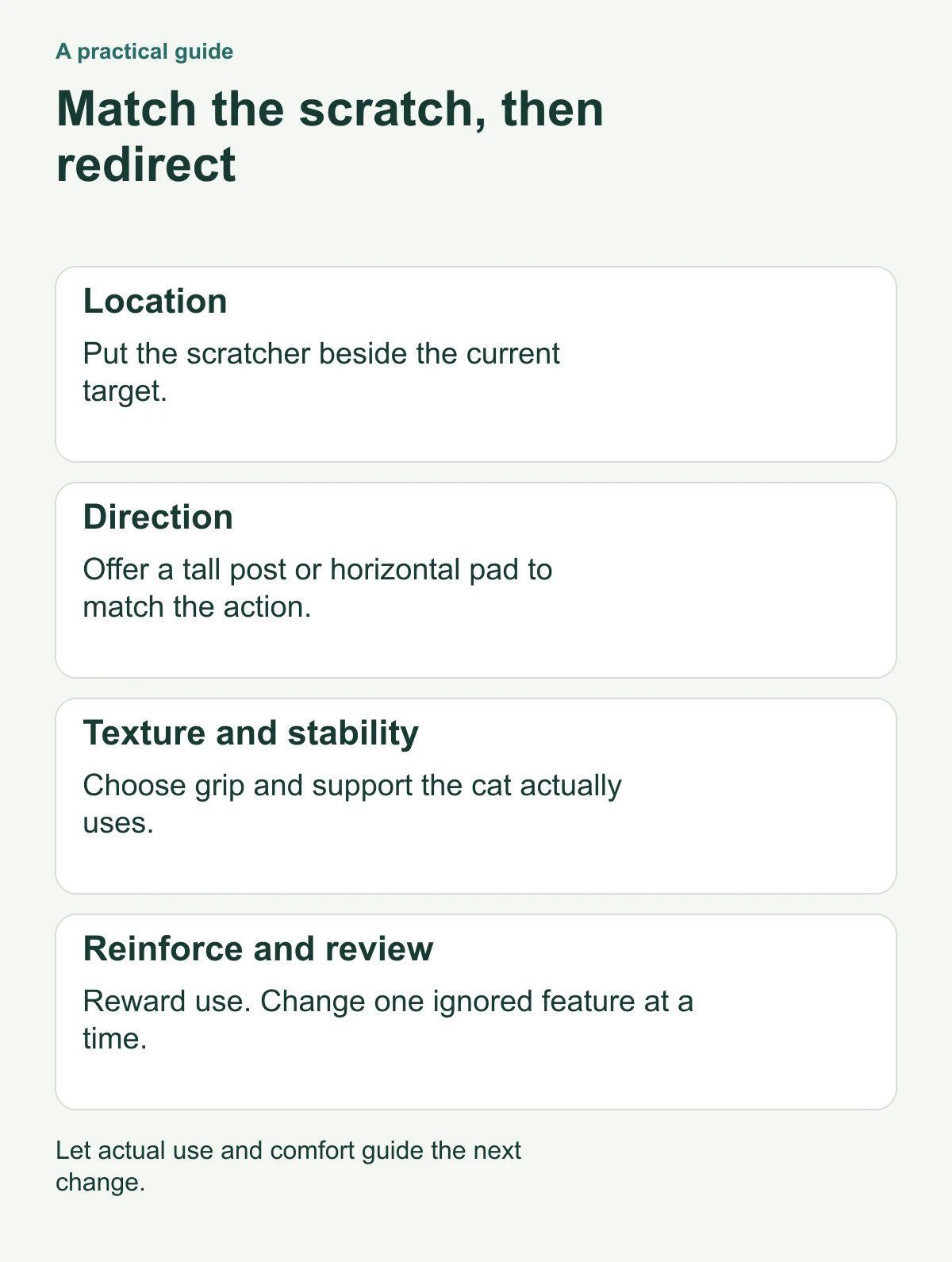
Match the replacement to the scratch your cat already chooses, place it where the decision occurs, and reward voluntary use. Protect furniture while you check the result, then change only the feature that needs adjusting. A stable, well-used scratching place is a more useful goal than eliminating a normal feline activity.
Everyday care with PetMira
Build a more useful scratching setup
Explore everyday care guidance in PetMira while you compare the location, direction and texture your cat already chooses.
 Explore the care encyclopedia
- Ask a focused everyday care question
- Use guidance alongside real-world observation
Available on iPhone. AI-generated information is for educational reference.
Download iOS App