Cat zoomies are bursts of running, pouncing or climbing, sometimes called frenetic random activity periods. A familiar burst followed by an ordinary return to rest or other normal activity can fit a cat's usual routine. Clear the route and give them space. A sudden change, apparent distress or abnormal recovery deserves veterinary advice; breathing difficulty or collapse needs urgent veterinary care.
The nickname describes movement, not its cause. It does not tell you that a cat is happy, bored or ill. Notice what happened before the rush, whether another animal was involved and how the cat behaves afterward. Those details give you a better next step than trying to read an emotion from speed alone.
Watch the rush and the recovery
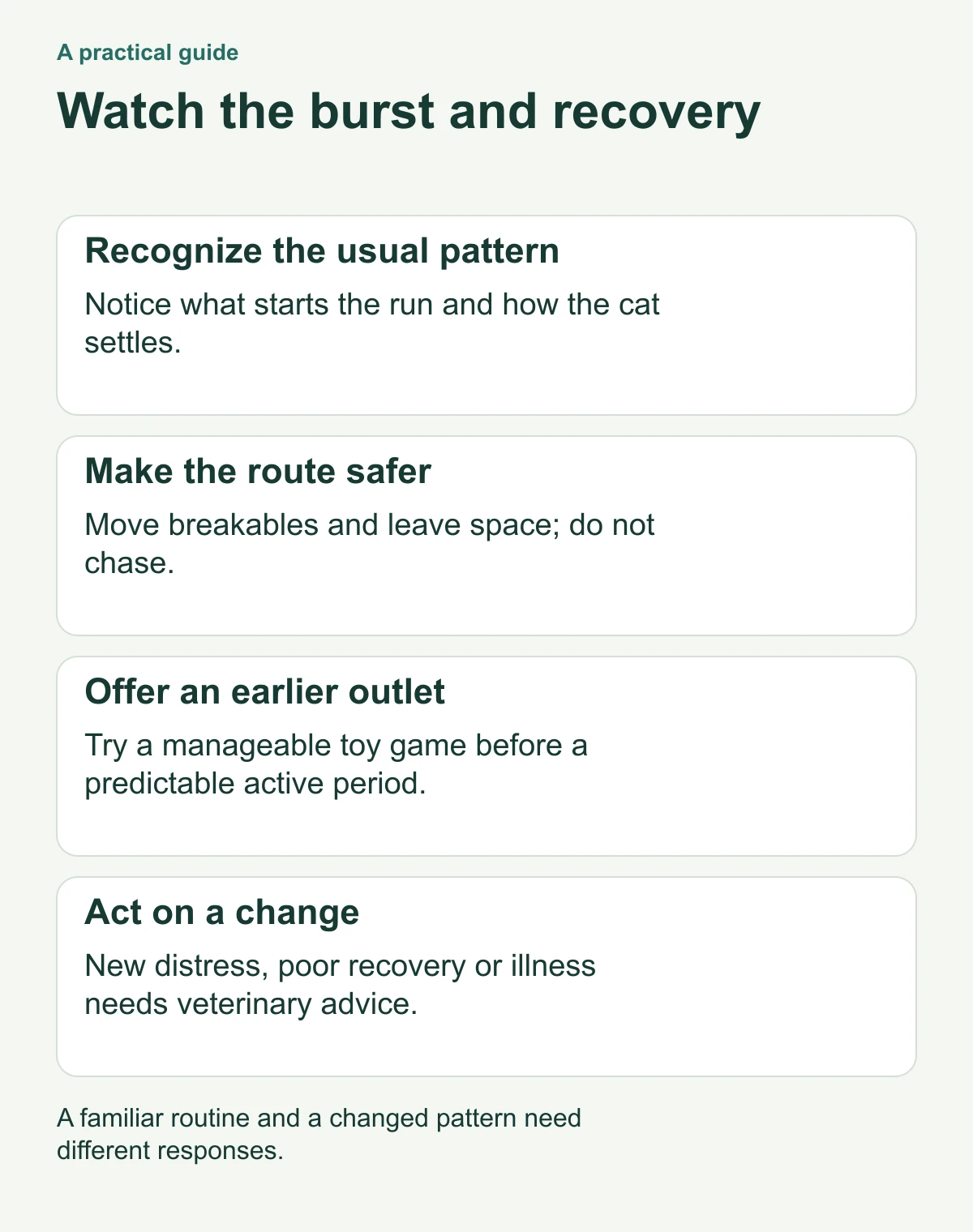
Compare the episode with an ordinary day. Some cats take a quick lap after waking or become active when household routines change in the evening. Notice the starting point and what follows: a toy chase, a return to a resting spot, more repeated running or an attempt to get away from something. There is no need to provoke another sprint for confirmation.
Pay attention to the whole sequence. A cat who runs, pauses to play and later settles offers a different picture from one who repeatedly bolts while looking back at a pursuing pet. A cat who cannot move comfortably or seems disoriented also needs a different response. Do not let an amusing label hide the part of the event that is unusual.
Daily occurrence alone cannot establish boredom or a medical condition. Look at whether the timing, intensity and recovery are familiar for this animal and whether ordinary eating, toilet use and movement continue. If you are unsure about a changed pattern, describe the uncertainty to your veterinarian. You do not need a count of laps before asking for advice.
Clear the route before trying to change the behavior
Remove obvious collision risks from places your cat regularly runs through. Keep breakable objects away from edges, secure unstable furniture and leave usable floor space. Check sliding rugs and difficult landing areas. A practical rearrangement reduces the consequences of an active period without requiring you to catch a fast-moving cat in the middle of it.
Avoid adding a chase. Shouting, running after the cat or grabbing as they pass can make the event harder to control and expose people to scratches or falls. Keep children and other animals out of the path where you can do so calmly. If a door is part of the route, check the cat's location before closing it rather than attempting a sudden interception.
Make sure the safer route does not lead to a new hazard. An open balcony, unsecured window or area containing hot cooking equipment is not an acceptable extension of a play space. Arrange the home ahead of a predictable active period where possible. You can protect those boundaries while leaving a comfortable indoor area available for ordinary movement.
Running context | Check beyond speed | Useful response |
|---|---|---|
Usual active period; settles normally | Familiar timing and ordinary routine | Clear the route and offer planned play |
One cat repeatedly pursues another | Can both disengage and reach resources? | Separate safely and seek help if persistent |
Immediately after a litter visit | Output, straining and comfort | Urgent help for repeated attempts with little/no urine |
New activity with other changes | Appetite, movement, weight or recovery | Contact your veterinarian |
Give active periods a predictable outlet
Offer a manageable toy game before a time when your cat is usually awake and interested. Let them stalk and catch an appropriate object, keeping hands out of the target. Stop while movement is comfortable and the interaction can end calmly. The goal is an available outlet, not exhausting the cat so that they cannot run later.
Change one part of the routine at a time. If you add a game, move the bed and alter feeding together, a quieter evening does not tell you which feature mattered. Preserve essential care and any prescribed feeding plan while testing one realistic adjustment. A small routine that caregivers can repeat is more useful than an intensive schedule that lasts one night.
For a cat who runs and calls at bedtime, check the calling pattern separately. Our nighttime meowing guide covers access, needs and the event around the first call. Running alone and repeated overnight vocalizing are different tasks, even when they happen in the same home and share an evening play opportunity.
After the litter box, check more than the sprint
If running follows a toilet visit, look at the visit and output rather than assuming a particular nerve or relief response. Did the cat pass urine or stool comfortably? Were there repeated squats, crying or unsuccessful trips? Repeated straining with little or no urine, or uncertainty about output during repeated attempts, calls for emergency veterinary advice immediately.
A cat who clearly passed a usual amount and walked away comfortably provides different information from a cat repeatedly entering and leaving without a result. In a multi-cat home, a clump found later may belong to another animal. Describe what you personally saw. The guide to meowing after the litter box explains that output-first distinction.
Do not wait for the next episode, an app interpretation or a perfect recording if a toilet problem is possible. Call with the information you already have. For an otherwise comfortable cat with a familiar post-visit sprint, keep the exit route clear and notice the wider routine. The timing of a run does not by itself establish a health diagnosis or a universal explanation.
Separate a game from one-sided chasing
When more than one cat is involved, watch both animals after the movement stops. Can each disengage and use ordinary resources, or does one remain hidden while the other waits nearby? A fast interaction can look playful from another room while leaving one animal unable to reach a preferred place. A quiet interval afterward does not automatically mean both enjoyed it.
Create separation safely if the interaction is escalating, without putting hands between fighting animals. Revisit usable routes, resources and the level of shared activity. Seek qualified help for repeated fear, pursuit or injury. Our cat language guide provides broader context, but no single posture can resolve the meaning of an entire relationship.
Notice when the old explanation stops fitting
Contact your veterinarian about a newly intense pattern, uncomfortable movement, persistent agitation or other changes such as appetite, thirst, weight or litter-box habits. Explain the previous routine as well as the new one. A familiar nickname is not evidence that an established cat's abrupt change is harmless, and a list of possible conditions cannot identify which applies.
PetMira's care encyclopedia and AI Q&A can help frame a low-risk routine question, such as offering play before a predictable active period. Keep the actual event in a short note with the time, nearby activity and recovery. An everyday planning answer should not decide whether a changed pattern needs veterinary assessment or delay a call you already know is needed.
Make space for activity and keep the change in view
Give familiar bursts a safer route and an appropriate outlet without turning running into a problem by default. Watch how the rush starts and ends, particularly after a litter visit or around another animal. When the pattern or comfort changes, act on that new information rather than relying on the word zoomies.
Everyday care with PetMira
Plan for your cat’s active moments
Read everyday care guidance in PetMira and choose a manageable play or environment question to explore before the next familiar burst.
 Explore the care encyclopedia
- Ask a focused everyday care question
- Use guidance alongside real-world observation
Available on iPhone. AI-generated information is for educational reference.
Download iOS App