
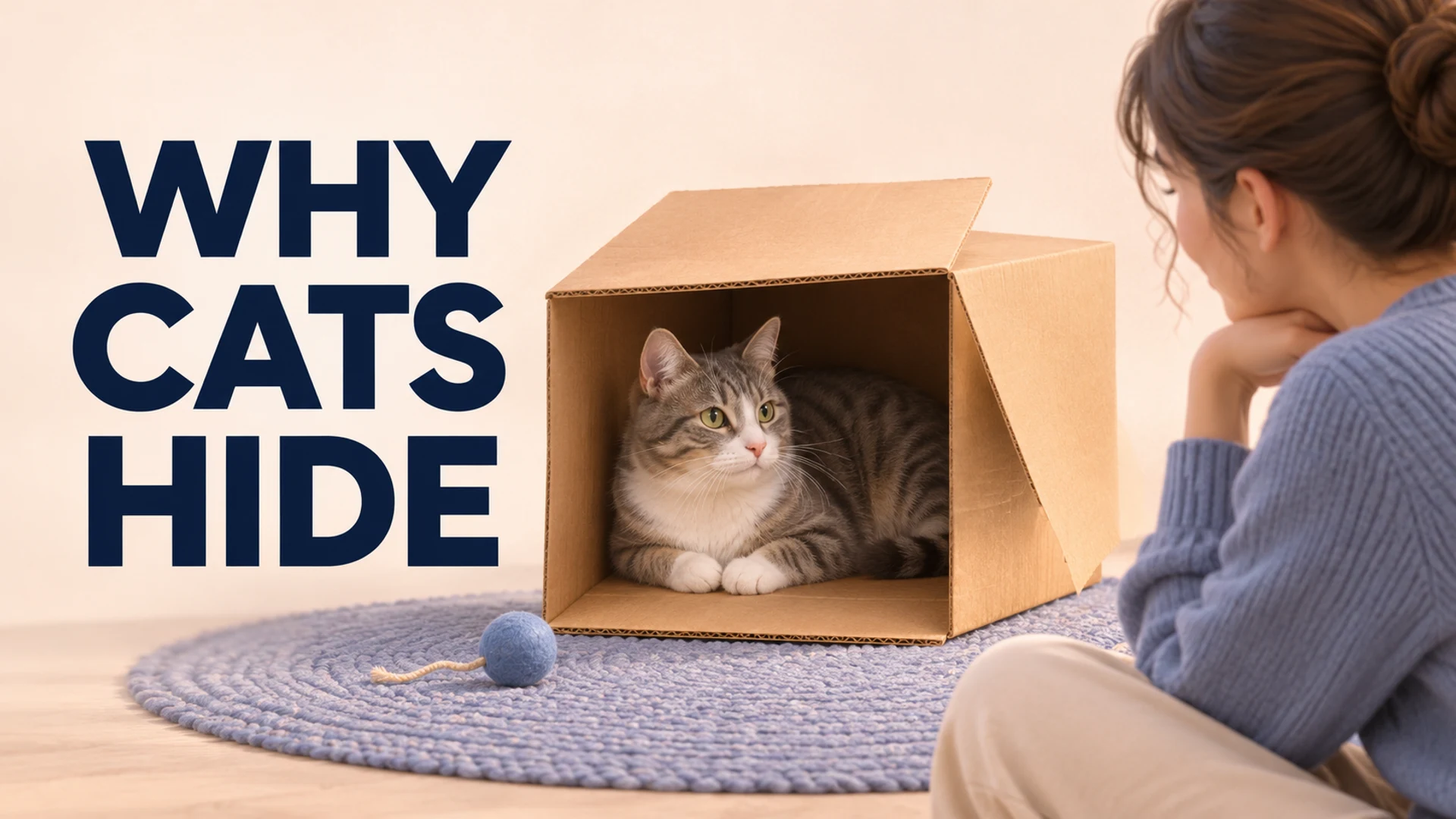
Cats hide to rest, watch from cover or get distance from activity, but a sudden increase in hiding can also accompany fear, pain or illness. Compare the retreat with your cat's usual eating, movement and litter-box habits. New withdrawal or missed normal activities warrants veterinary advice. Breathing trouble, collapse, or repeated attempts to urinate with little or no urine require emergency veterinary care.
When your cat is safe, avoid pulling them out simply to make them interact. Keep a quiet route to essentials and note what you already know. If they may be trapped, injured or need urgent care, call the veterinary team for a safe handling and transport plan. Do not wait for an app assessment, photo or a complete observation log before getting help.
Decide whether this is a familiar retreat or a change
Start with the individual rather than the furniture. One cat routinely naps inside a box and comes out for meals; another usually joins the household and has unexpectedly remained behind the sofa. Both are hidden from view, but only the second description establishes a clear departure from that cat's ordinary day. The hiding location alone cannot tell you why it happened.
Think back to the last normal activities you personally saw. Did this cat eat a usual meal, walk comfortably, use the litter box and choose any familiar interaction? Separate what you observed from what you assume because a bowl was empty or another cat visited the box. In a multi-cat household, those shared results may not belong to the animal you are worried about.
Avoid an arbitrary waiting test. “They have only been hiding since this morning” does not cancel a missed meal, apparent pain or abnormal breathing. Tell the clinic about both the timing and the other changes. A familiar retreat with normal activities may call for quiet space; a new pattern needs its own explanation rather than being assigned to a shy personality.
Check access without making the cat come out
Look at the route from the hiding place to food, water and a usable litter box. A closed door, a visiting dog or another cat resting across a narrow exit can make ordinary care difficult to reach. If you can safely restore access without crowding the hidden animal, do that. Keep the path predictable and avoid stationing people at the entrance to watch.
Check the location for immediate hazards. Reclining furniture, appliances, unsecured windows and small gaps behind heavy items can create problems that an ordinary open box does not. Confirm where the cat is before operating furniture or machines. If reaching the animal would require dismantling something heavy or unsafe, arrange practical help rather than pulling blindly or moving the object with the cat inside.
Do not turn every check into a coaxing session. Repeatedly reaching toward a retreat, waving food at the opening or blocking the exit to encourage contact can add pressure. You can leave an appropriate quiet setup available while you contact your vet about a change. The animal does not have to perform normal behavior on demand for your concern to be valid.
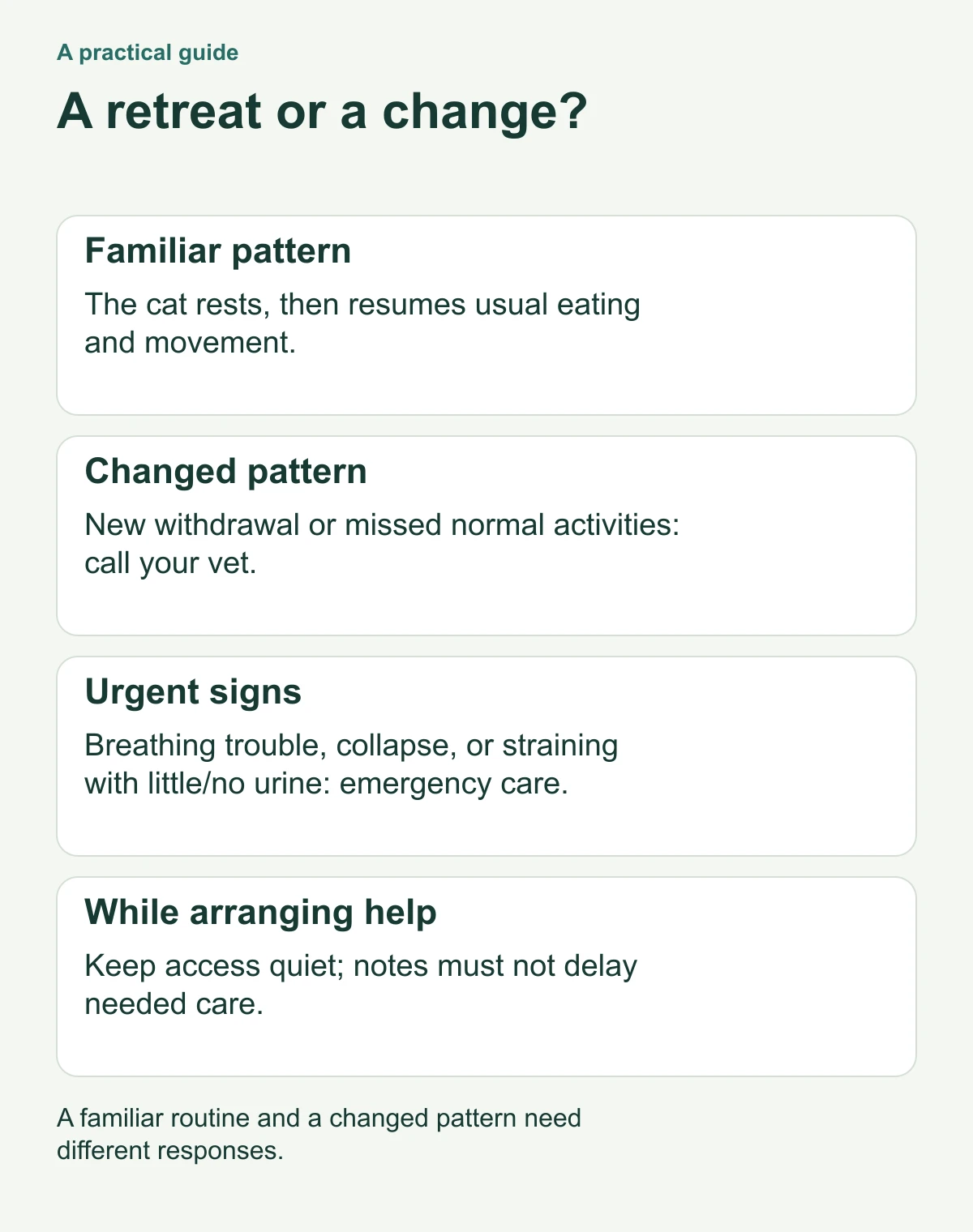
What you know | What it changes | Next step |
|---|---|---|
Familiar retreat; usual activities resume | Cover may be part of the normal routine | Leave a quiet, usable exit |
New hiding or missed eating/activity | A change needs more than a personality label | Contact your veterinarian |
Another pet blocks the route | Resources may exist but be hard to reach | Separate access without forcing an encounter |
Breathing trouble, collapse or little/no urine | Potential emergency | Seek emergency veterinary care now |
Make a safe hiding place easier to choose
A clean stable box on its side, a suitable covered bed or an open carrier can provide cover with an accessible exit. Put the option in a quiet place where household traffic does not continually pass the entrance. Let your cat discover it without repeatedly moving the animal into position. A retreat only functions as a choice when it is possible to leave.
Preserve a familiar resting option while introducing another. Removing all existing cover to force the use of a purchased bed can make the room harder to navigate. If the current spot is unsafe, work on a safer arrangement with appropriate help, but do not assume that exposing the cat is itself a treatment for hiding.
Children can participate by leaving the entrance clear and waiting for the cat to approach elsewhere. A blanket rule that the cat is not touched inside their retreat is easier to repeat than expecting a child to judge subtle signals from a small opening. Our cat language guide explains how giving space changes what you can observe about a voluntary interaction.
Look for the event that changed the room
Consider what happened before the retreat: an unfamiliar visitor, a sudden noise, a new animal or a rearranged route. A connection in time gives you a useful question, not a confirmed cause. If the cat remains withdrawn after the apparent trigger has gone, mention that persistence rather than assuming the original event explains everything.
In a multi-cat home, look beyond obvious fights. One animal may quietly wait for another to leave before going to food or water. Separate usable resources and open routes where practical, avoiding a forced meeting to test the relationship. If an introduction is involved, return to a manageable stage; the kitten-to-cat introduction guide covers that particular process.
Record a concrete comparison such as “usually rests on the chair after breakfast; today stayed under the bed and did not come to the bowl.” That is more useful than labeling the cat depressed, offended or guilty. Other caregivers can check the same visible actions, and your vet can ask questions about a change without having to unravel the label first.
Describe what you know when you call the vet
Say when you first noticed the difference, what the cat last did normally, and which daily activities have changed. Mention eating, drinking, urination, stool, movement, breathing, vomiting or an injury if relevant. Tell the team when you cannot attribute a shared bowl or litter-box result to this cat. Honest uncertainty is part of the information, not a reason to delay the call.
If there is an easily visible change in skin, fur, eyes or another relevant area, a photo you already have may help you describe it. PetMira's category-specific care logs can keep such images with a pet profile, but there is no need to handle a hidden or distressed cat for an image. Follow the clinic's advice about what to bring and how to transport them.
Help a newly arrived cat without treating every hide alike
A new home can make cover especially valuable. Provide a quiet starter space with reachable essentials and let the cat choose when to explore. Keep checking actual intake and ordinary activity, and seek advice about concerning changes. Our first-week kitten guide describes the younger newcomer's setup; an adult or unwell cat may need a different individual plan.
Ask the shelter, rescue or previous caregiver what routine they saw before the move. A report that the cat normally eats after the room becomes quiet gives you a useful comparison, but it does not guarantee that every missed meal is expected. Tell your veterinary team both the earlier history and what is happening now.
Leave the retreat available and follow the change
Read hiding alongside the cat's normal routine and access to essentials. Preserve safe cover and optional contact, while taking new withdrawal or signs of illness seriously. A useful next step is based on what changed and what your cat can still do, not on proving that they will come out when called.
Everyday care with PetMira
Keep useful care images together
PetMira’s category-specific photo journals can organize visible changes your cat comfortably allows you to capture. Needed veterinary care comes first.
 Explore the care encyclopedia
- Ask a focused everyday care question
- Use guidance alongside real-world observation
Available on iPhone. AI-generated information is for educational reference.
Download iOS App